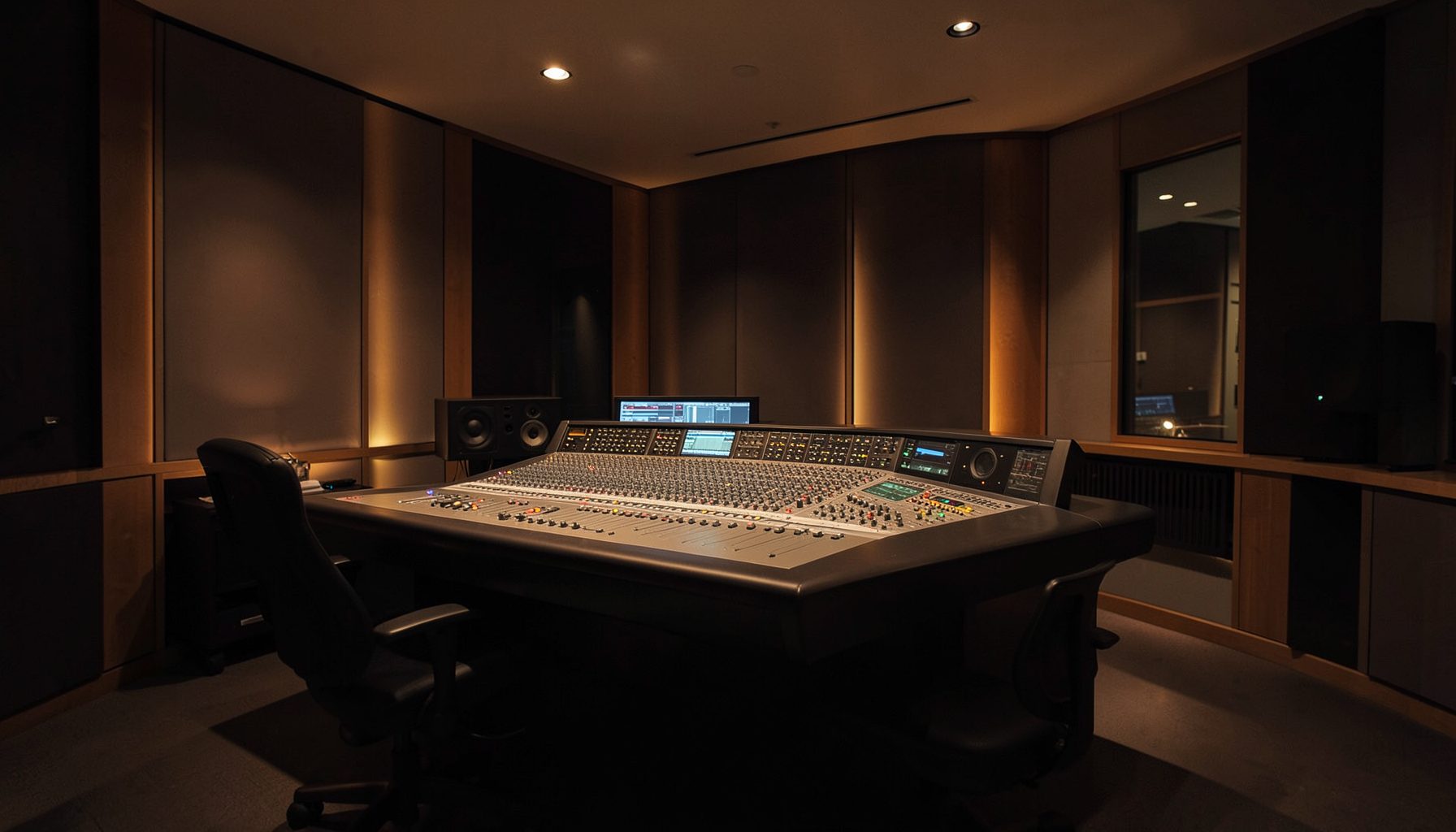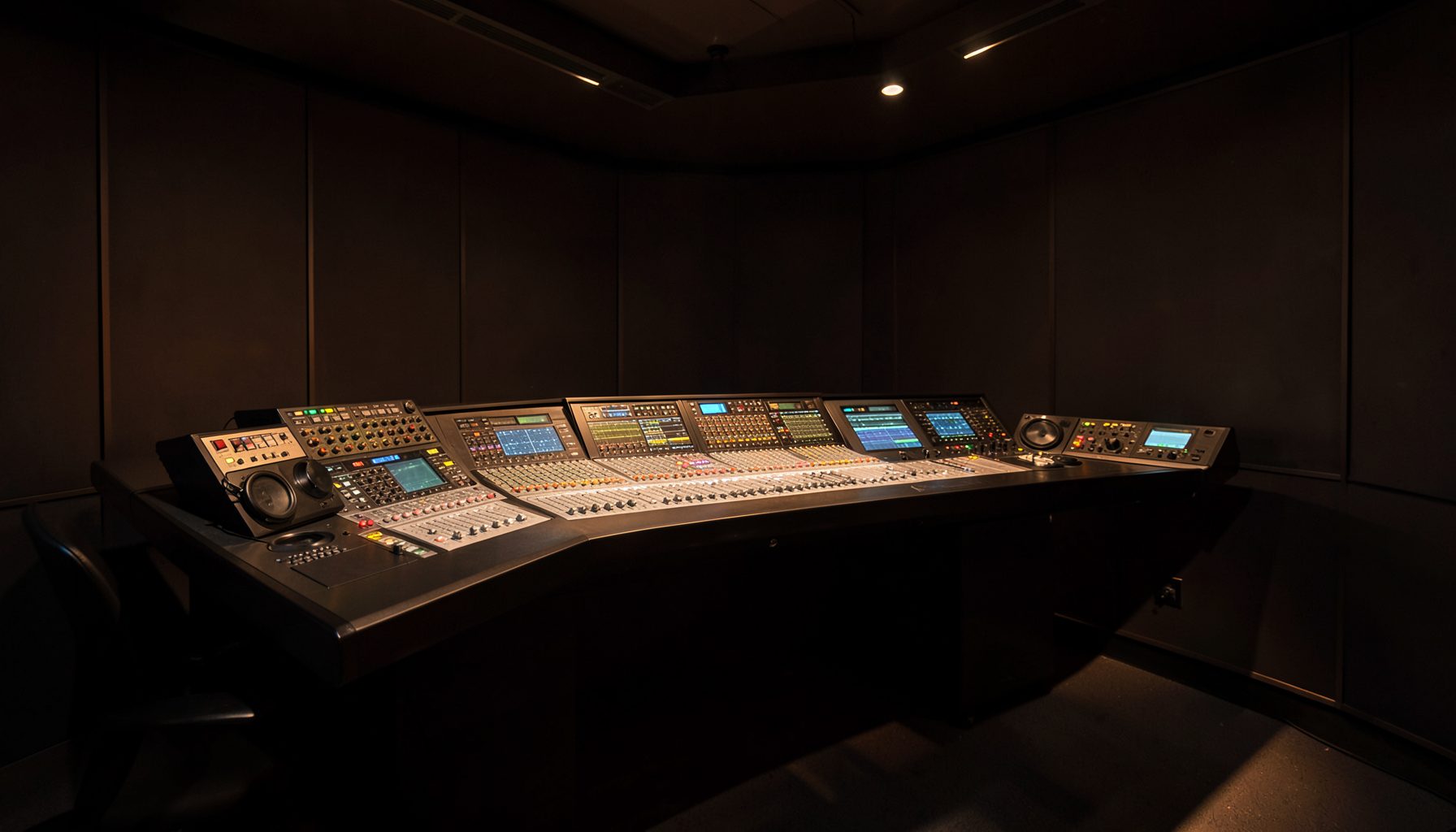
Separate Headphone Mixes with Ruby Aux Sends
Using Ruby’s Aux Sends to Feed Separate Headphone Mixes for Announcer and Producer gives a live studio two intentional listening paths rather than one shared feed. The announcer needs speech, programme audio and a private production cue; the producer often needs a wider confidence feed, room sound and talkback. Separating these paths keeps countdown noises, side conversations and talkback from contaminating an open microphone or the broadcast output.
On Ruby, selected channels can be routed to dedicated headphone destinations with levels controlled independently of the main mix. This supports live radio, post-production, live performance and theatre, where the person speaking may need a clean programme reference while the operator needs to hear more of the room. It also gives shifts a repeatable template: assign sources once, label the sends and restore the same balance for the next show.
A cleaner two-person broadcast workflow
A shared headphone splitter makes both operators hear the same information, even when their jobs differ. The producer may raise an external talkback channel to coordinate a caller, while the announcer still needs an uninterrupted microphone cue and programme bed. Ruby aux sends turn that conflict into signal routing: the unwanted source simply is not assigned to the relevant send, rather than being mixed down and hoped to remain inaudible.
Lawo’s overview of software-defined console design explains why this flexibility matters as radio desks handle more live production, automation and remote contribution. An independent monitor path allows levels to be adjusted without moving programme faders, gives the announcer predictable timing cues and leaves the producer free to monitor the wider studio without disturbing the audience mix.
Assigning the announcer and producer mixes
For the announcer send, begin with the active talk microphone, any assigned co-host or guest feed, and the programme playback required for timing. Add producer talkback only when it is meant for the announcer. A guest channel that should remain private to the producer should be excluded, while a channel required for the announcer’s timing can be included at a controlled level. Clear source names and visible send assignments prevent a cue from being sent to the wrong pair of headphones.
The producer send can carry a broader confidence mix: a programme feed or selected source feeds, active studio microphones where useful, and room references. Talkback to other staff belongs here if the producer needs to hear it, but the producer-to-announcer talkback should be handled as a separate path. Where a talkback microphone feeds the headphones, use a mix-minus arrangement or omit that source to prevent sidetone. Patch each send to its own headphone amplifier or distribution output rather than splitting one feed.
Creating balanced headphone blends
Levels matter as much as routing. Start with the announcer’s speech at a comfortable reference level, then add programme material underneath it; the aim is intelligibility without a permanent boost that becomes fatiguing. The producer’s mix may sit differently because it is used for source recognition and timing. Check both with normal studio headphones, move through fader movements and confirm that no talkback or automation artefact becomes distracting.
Small operational habits keep the two mixes stable. Label every source and send, avoid sudden level jumps when a fader is touched, and make any temporary cue obvious in the software. The same discipline also helps teams working with acts or production partners such as Atomic Bands, where performer monitoring and the public audio mix are separate design decisions. A clean headphone feed supports the performance without leaking internal cues into the audience feed.
Ruby across Australian broadcast operations
Australian stations can apply this pattern across very different operating environments. Commercial clusters in Sydney and Melbourne often move quickly between news, traffic, interviews and live inserts, while ABC and SBS services distribute programming nationally. Regional stations around Brisbane, Adelaide and Perth may coordinate contributors across time zones and uneven network paths. Separate monitoring sends give staff a consistent local cue even when the programme feeds originate elsewhere.
Local compliance and support needs are equally practical. ACMA licence conditions and on-air requirements should remain separate from internal monitoring choices, so talkback routes must never become accidental programme paths. Community and campus stations can use the same workflow on a smaller scale. For imported Ruby systems, Australian customs clearance and GST, 230 V mains checks and local spare-part support should be confirmed before handover. Ruby’s Declutter Mode can then reduce on-screen clutter during critical broadcasts, making the active source and send assignments easier to verify.
Testing and documenting the result
Test the arrangement with a short rehearsal that covers every planned source, both talkback directions and a programme start. Listen first for unwanted material, then for missing cues, and compare the headphones against the main output at matched levels. Raise or lower each send independently, then repeat the test with the announcer and producer performing their normal tasks. Record the final settings with the show template so an engineer covering a different shift can reproduce them.
The final sheet should record which sources belong to each send, their starting levels and any conditions for changing them. It should also identify emergency or programme-alert sounds that belong in one mix but must remain out of the other. This prevents a late-breaking news alert from being heard only by the producer when the announcer must respond immediately.
| Monitoring requirement | Announcer headphone mix | Producer headphone mix |
|---|---|---|
| Core audio | Active microphone, assigned co-host feed and programme playback | Programme confidence feed plus relevant studio or room sources |
| Talkback | Producer cue intended for the announcer | Calls, room talkback and production coordination |
| Private sources | Exclude producer conversations and internal guest feeds | Include all sources needed to manage the show |
| Priority | Speech and emergency cues remain clear | Wide monitoring supports cueing and source checks |
The next concrete step is to assign the two send destinations in Ruby, load a five-minute station rehearsal, and capture one announcer cue and one producer cue for an A/B check before the next live shift.