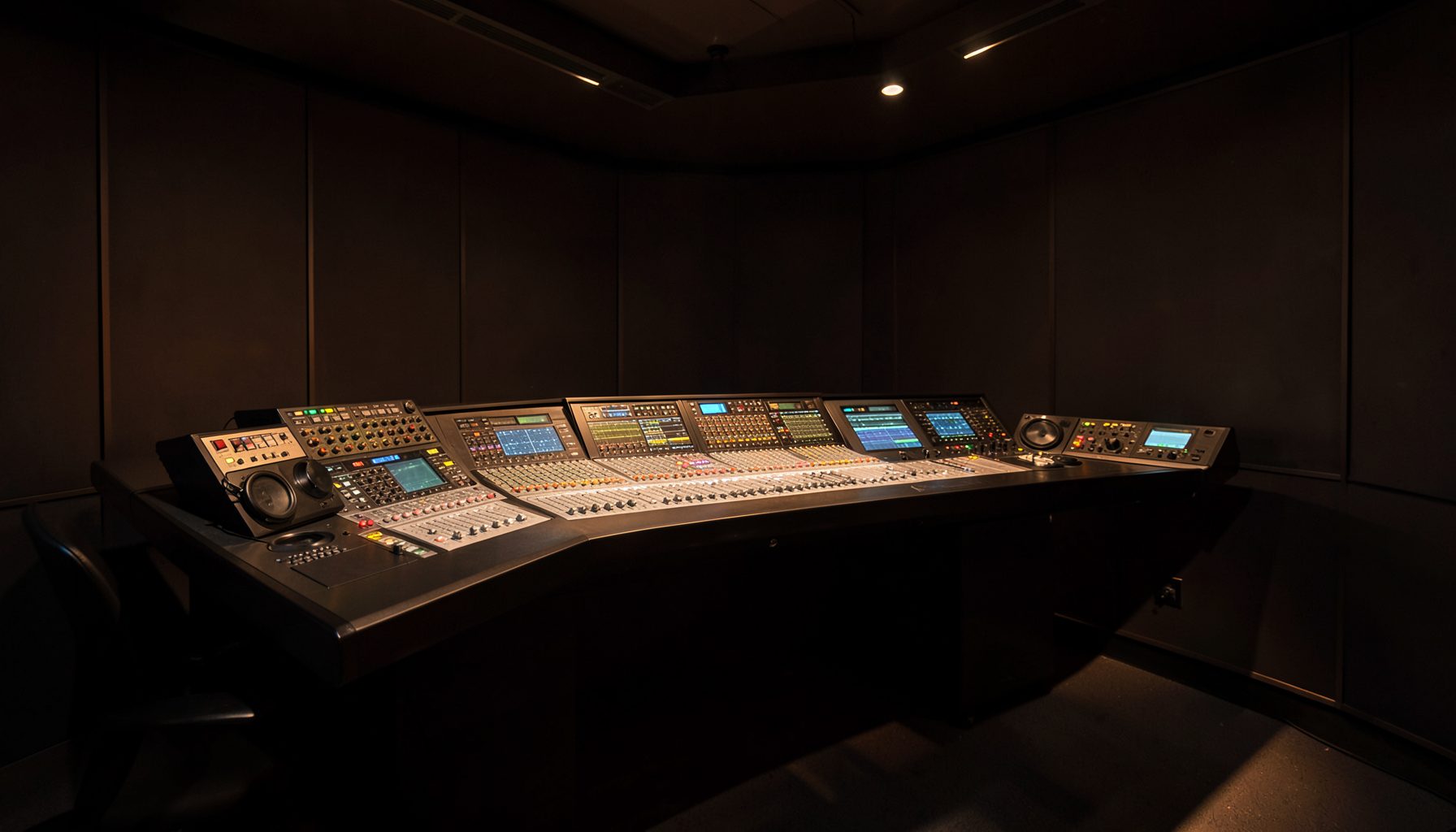
AutoMix priority settings for emergency announcements
Emergency audio should not depend on an operator noticing a flashing light and moving a fader before the first syllable. AutoMix’s priority settings create a repeatable access rule: when a designated announcement source becomes active, lower-priority material is reduced or removed, allowing the alert to enter the programme path immediately.
For Australian broadcasters, that rule must work across local desks, remote contributors and regional links. It should complement national Emergency Alert messages, state agency information such as NSW SES or Queensland Fire and Emergency Service, and the governance surrounding ACMA Broadcasting Service Performance Plans and the Communications and Media Act 2017. The goal is controlled precedence without compromising the clarity or timing of an alert.
How AutoMix establishes audio precedence
The operating model is straightforward: AutoMix gives an active source precedence according to its configured priority, reducing lower-priority paths when required. Priority is an ordering mechanism, not another volume control. An input can therefore have a modest recording level and still take precedence over programme material with a higher fader position.
A sensible hierarchy places verified emergency announcements at the highest level, live studio and remote microphones below them, and playout, jingles, talkback and auxiliary feeds at the lowest levels. Assigning every commentary microphone to emergency priority would make routine interruptions automatic and defeat the purpose of the setting.
Designing a fit for Australian operations
Major markets such as Sydney, Melbourne and Brisbane run round-the-clock news, talk and sport services, often with several presenters, music beds and remote feeds. AFL coverage in Melbourne and NRL coverage in Sydney illustrate why commentary channels need predictable relationships with the emergency path. For busy live desks, Ruby multi-fader layouts illustrate how commentary, effects and programme sources can be separated before their priorities are set.
Regional stations around Wagga Wagga or Rockhampton may cover large areas with fewer staff and varying IP-link conditions. Many motorists also rely on a vehicle radio, making a clear broadcast warning valuable when mobile coverage fails or an Emergency Alert cannot reach a particular phone.
Setting a clear source hierarchy
Begin with the purpose of each source rather than its physical position on the desk. Reserve the highest priority for a dedicated, verified emergency announcement input. Place live studio and remote microphones below it, then position playout, talkback, jingles and ambience beneath those sources. Record the hierarchy in operational language so a relief presenter does not have to infer the order from unexplained numbers.
Give the emergency source adequate pre-fader gain without relying on priority to compensate for a poor feed. Check polarity, delay, codec artefacts and the alert’s long-form dynamics through both headphones and the main monitoring speaker. Priority determines which source gains access to the mix; it cannot repair a noisy, clipped or late signal.
Comparing operational approaches
Manual and automated precedence solve different risks. Manual control preserves human discretion, while priority settings remove reaction-time and miss-routing errors. The appropriate choice depends on staffing, source complexity and the availability of a protected fallback path.
| Method | How precedence is created | Best fit | Main limitation |
|---|---|---|---|
| Manual fader control | An operator raises the emergency fader and reduces other sources | Productions requiring deliberate human control | Depends on speed and training |
| AutoMix priority levels | An active higher-priority source reduces lower-priority paths | Live radio with numerous routine sources | Incorrect assignments can interrupt programme audio |
| Hardware emergency override | A dedicated bus replaces the programme feed | A simple backup for essential-alert systems | Less flexible and requires separate verification |
For most live radio desks, AutoMix provides a practical primary method when a hardware fallback remains available. Keep the highest priority narrow and clearly named so a talkback signal assigned to the wrong source cannot silence normal programming.
Verifying the override in real time
Test both entry and exit. Start with studio programming at a realistic level, trigger the announcement and confirm that the emergency path appears promptly. Record the transition on a station monitor and listen for clicks, pumping, clipped words and delayed first syllables. Let the announcement finish, then check that lower-priority sources return without an unexpected surge.
A bench check of the signal path, including monitoring and talkback hardware from Cavendish Instruments, can expose channel-routing or calibration errors before they reach air. Repeat the exercise through headphones, near-field speakers and the off-air feed. In a busy 24-hour newsroom in Melbourne or Brisbane, run the scenario during quiet programming as well as beside a live sports segment.
Integrating emergency access with the wider plant
AutoMix should form part of a documented Lawo signal chain rather than operate as an isolated console feature. Establish where the emergency source enters, which processing applies, how it is distributed and who can trigger it. For a station feeding radio, linear television and online services, Power Core processing illustrates why clean routing and consistent loudness matter across every destination.
Fail-safe behaviour matters when a remote contribution fails. A local override should remain available if a regional studio’s VoIP link disappears, while loss of the announcement input must not mute the main programme. If VisTool and RƎLAY are part of the installation, ensure their source names and status indications agree with the console. Test the fallback at the desk, in control software and on the transmission side.
The rule broadcast teams should retain
Configuration works only when the people using it know what it means. Name the emergency source clearly, define its trigger, identify who may issue an alert and display the active state wherever operators work. Priority logic cannot determine whether information is genuine, so editorial verification and authority to interrupt remain human responsibilities.
What should remain is a simple, rehearsed rule: verified emergency audio enters at the highest priority, every routine path yields, the alert stays intelligible and programme audio returns only after it has cleared.