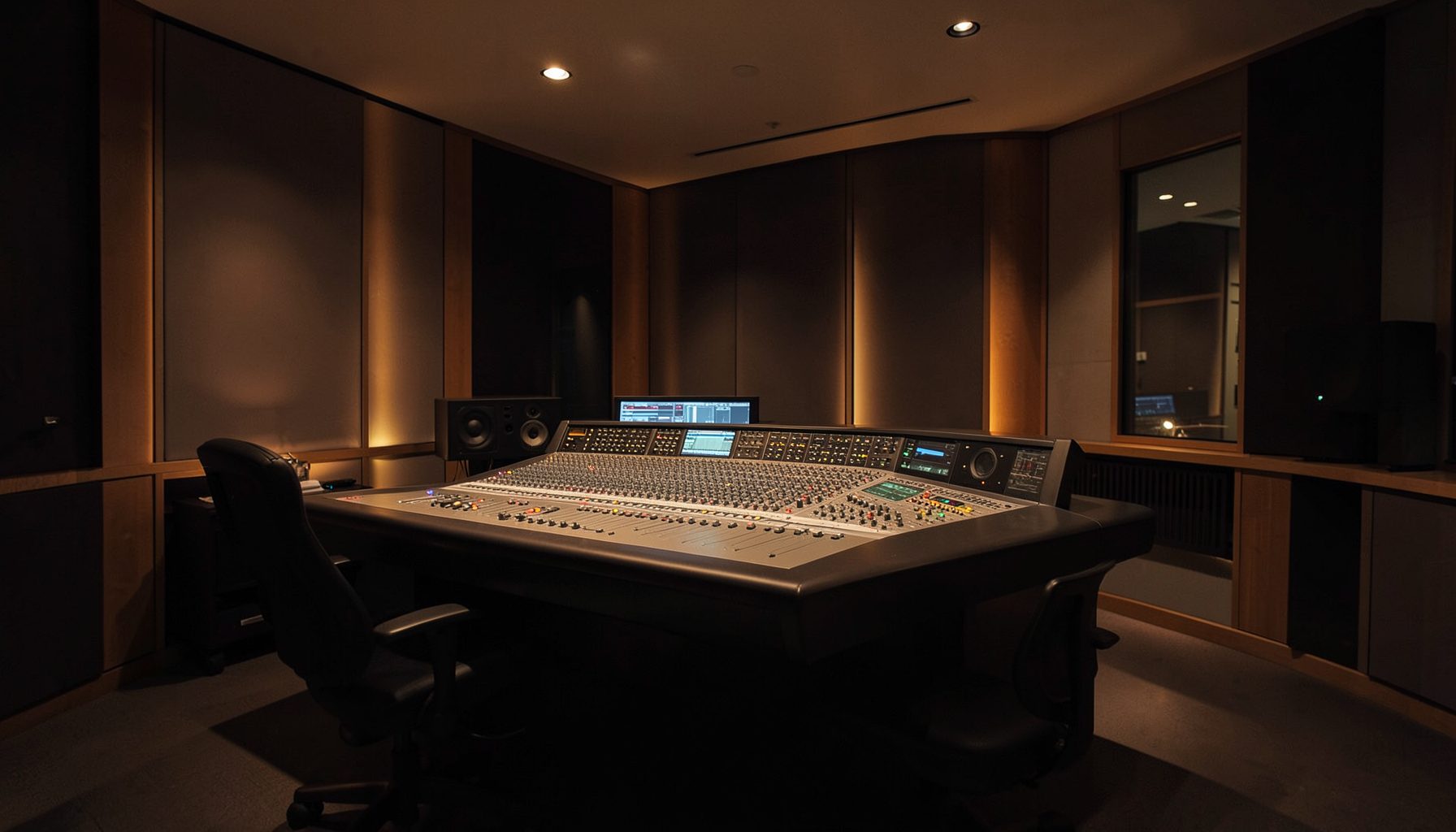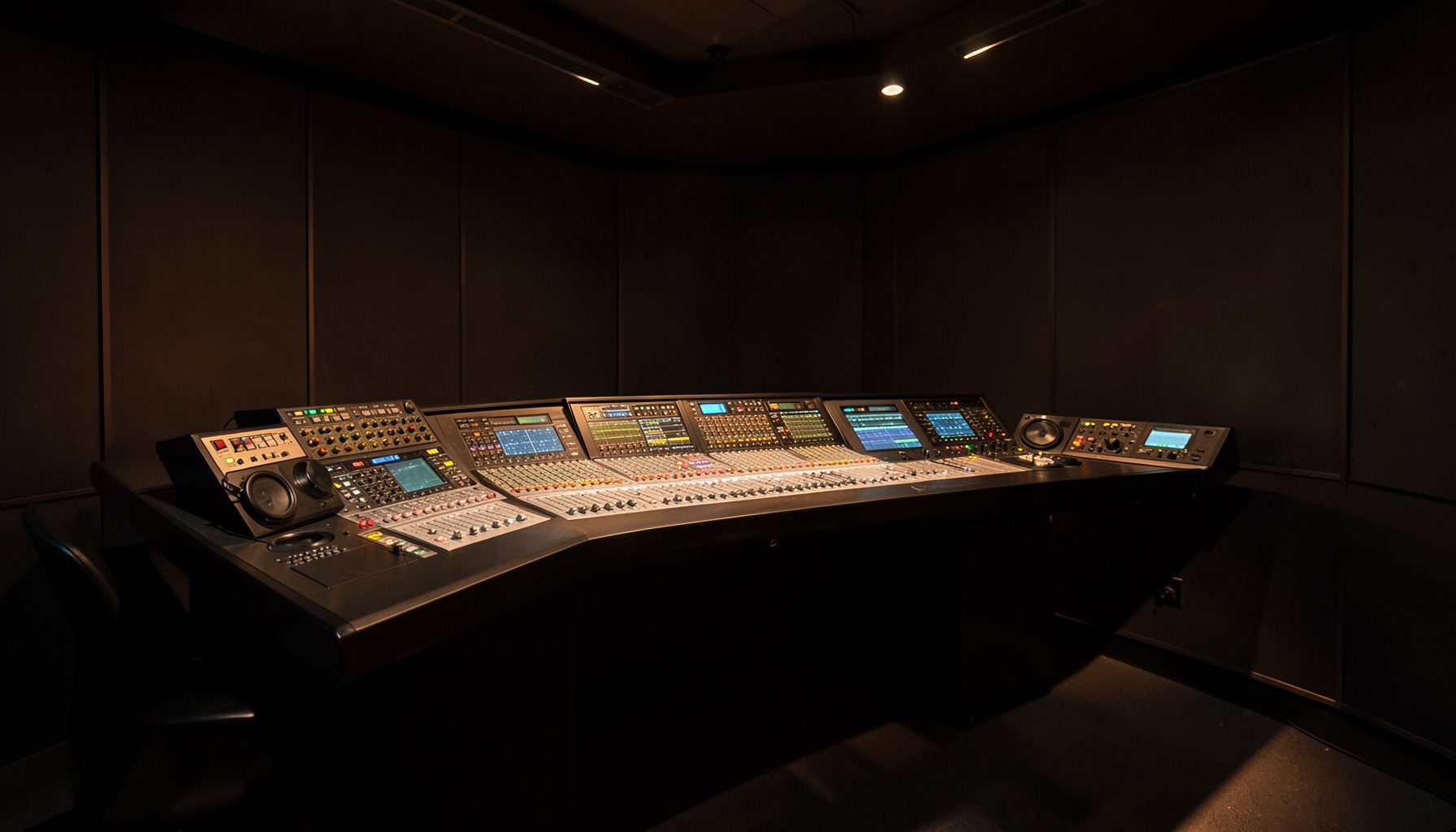
Why Networked Audio Nodes Fit the Modern Post-Production Studio
Post-production studios are moving away from isolated hardware rooms and toward connected production environments. The change is driven by tighter deadlines, distributed teams, higher channel counts, and the need to reuse the same audio resources across radio, streaming, video, and live content.
Lawo’s networked approach places processing, routing, control, and interfaces on an IP-based infrastructure rather than tying every function to a single physical console. For post-production teams, this can make a studio easier to scale while preserving the low-latency performance and operational clarity expected from professional broadcast equipment.
The result is a workflow built around shared resources. Editors, producers, voice talent, and engineers can access the appropriate signals and tools without duplicating entire equipment chains in every room.
Shared processing without fixed-room limitations
A networked audio node separates core processing from the surface used to control it. Lawo Power Core, for example, can provide centralized audio I/O, mixing, routing, and signal processing through a networked system. A workstation, console, or software interface can then access those resources according to the production task.
This architecture suits facilities with multiple edit suites, voice booths, control rooms, and remote contributors. Inputs do not have to remain permanently assigned to one room. A microphone preamp, playback source, or incoming feed can be routed wherever it is needed, reducing idle equipment and simplifying room changes.
For post-production, that flexibility matters when several projects share the same recording spaces. Engineers can configure signal paths for dialogue editing in the morning, podcast production later in the day, and a live voiceover session without rebuilding a physical rack.
A practical bridge between broadcast and post
Many post-production studios now handle content that crosses traditional boundaries. A radio package may include recorded interviews, live links, music beds, and social video. A podcast facility may also support streaming, commercial production, or theatrical playback. Networked audio helps these teams work across formats without maintaining separate technical ecosystems.
The same infrastructure can support multitrack recording, monitoring, mix-minus feeds, contribution audio, and studio-to-studio routing. Engineers gain a consistent operating model even as the content changes. This is especially useful for teams already familiar with broadcast-style redundancy, fast source selection, and predictable signal flow.
Lawo’s experience across broadcast and professional media environments is reflected in its broader company background, where audio, video, networking, and control are treated as connected parts of a production platform rather than isolated product categories.
Why Power Core is attractive to post teams
Power Core is designed as a high-density audio node that can centralize processing and connectivity in a networked environment. Instead of filling each room with dedicated mixers, converters, and outboard processors, a facility can share a managed pool of audio capabilities.
This can reduce hardware duplication and create a cleaner technical design. Studios can place I/O where it is physically useful while keeping processing and control available through the network. If a room’s purpose changes, the system can be adapted through configuration rather than extensive rewiring.
Reliability is another important factor. Professional post-production depends on stable clocking, controlled routing, and predictable monitoring. A structured networked system can make those elements easier to supervise, document, and expand as the facility grows.
| Studio priority | Networked audio node advantage | Practical result |
|---|---|---|
| Flexible room use | Centralized routing and shared I/O | Rooms can support varied productions |
| Fast reconfiguration | Software-defined signal paths | Less patching and downtime |
| High channel counts | Dense processing in a compact system | More capability per rack space |
| Distributed production | Network access to sources and mixes | Remote contributors fit the workflow |
| Operational consistency | Common control and monitoring logic | Engineers move between rooms easily |
Faster workflows for editors and engineers
Post-production efficiency depends on minimizing interruptions between recording, editing, mixing, and review. A networked audio platform can keep source management and monitoring close to the operator while the underlying processing remains centralized.
Lawo’s Ruby mixing consoles are relevant when a studio needs tactile control alongside software-based production. Their broadcast-oriented design supports fast access to sources, buses, monitoring, and automation. A useful example is this overview of Ruby workflow benefits, which shows how a physical surface can simplify demanding live audio operations. Similar principles apply to post rooms where quick, confident control is essential during review and final mixing.
Software tools such as VisTool can extend control to custom interfaces, while other Lawo technologies support virtualized or automated workflows. This gives facilities a choice: use a console for hands-on operation, a graphical interface for specialized control, or both within the same infrastructure.
Scalability for changing production demands
A studio’s technical requirements often change faster than its physical layout. More remote contributors may require additional mix-minus paths. A new content service may demand extra loudness processing or multichannel delivery. A larger editorial team may need simultaneous access to shared sources.
Networked nodes make these expansions more manageable because capacity can be added and assigned through the system architecture. The facility can scale from a compact voiceover room to a multi-room production hub without replacing every central component.
This model also supports gradual investment. A studio can begin with a focused deployment for recording and monitoring, then add control surfaces, I/O, processing licenses, or additional rooms as the workload grows. That approach protects existing infrastructure while leaving room for future production formats.
Operational priorities before deployment
Networked audio is most effective when the technical design reflects the studio’s real working habits. Before implementation, teams should map source ownership, monitoring requirements, room schedules, and fallback procedures. Clear naming conventions and documented routing are as important as the hardware itself.
The following priorities help establish a reliable foundation:
- Define which sources and processing resources must be shared across rooms.
- Separate critical live or client-facing paths from experimental and temporary routing.
- Plan redundant network, power, clocking, and monitoring options where appropriate.
- Create role-based control views for engineers, editors, and producers.
- Test remote contribution, recovery, and reconfiguration procedures before daily operation.
Training also deserves attention. A powerful networked system should feel straightforward at the point of use. Consistent layouts, sensible permissions, and repeatable presets can help staff benefit from centralized capability without adding operational complexity.
A more adaptable studio model
Post-production studios are adopting networked audio nodes because the technology aligns with the way modern content is produced: across rooms, platforms, teams, and schedules. Centralized processing, flexible routing, and shared I/O can improve utilization while reducing the dependence on fixed, single-purpose rooms.
Lawo’s ecosystem connects audio nodes, mixing surfaces, software control, and automation in a way that supports both broadcast discipline and creative post-production. For facilities planning a new build or modernizing an existing plant, that combination offers a route to greater agility without abandoning hands-on audio control.
Evaluate your room requirements, map the shared signal paths, and explore how a Lawo networked audio architecture can support the next stage of your post-production operation.