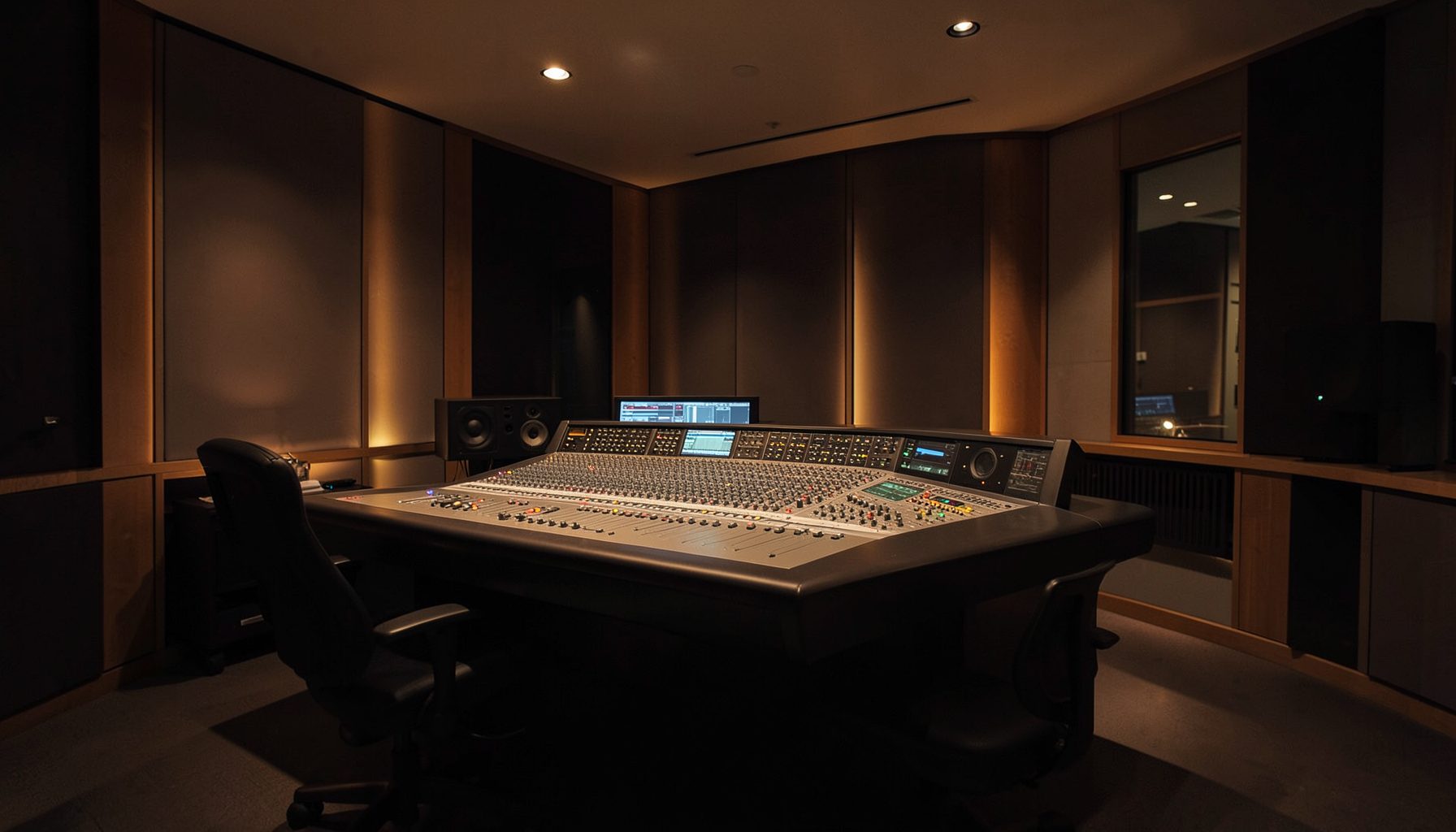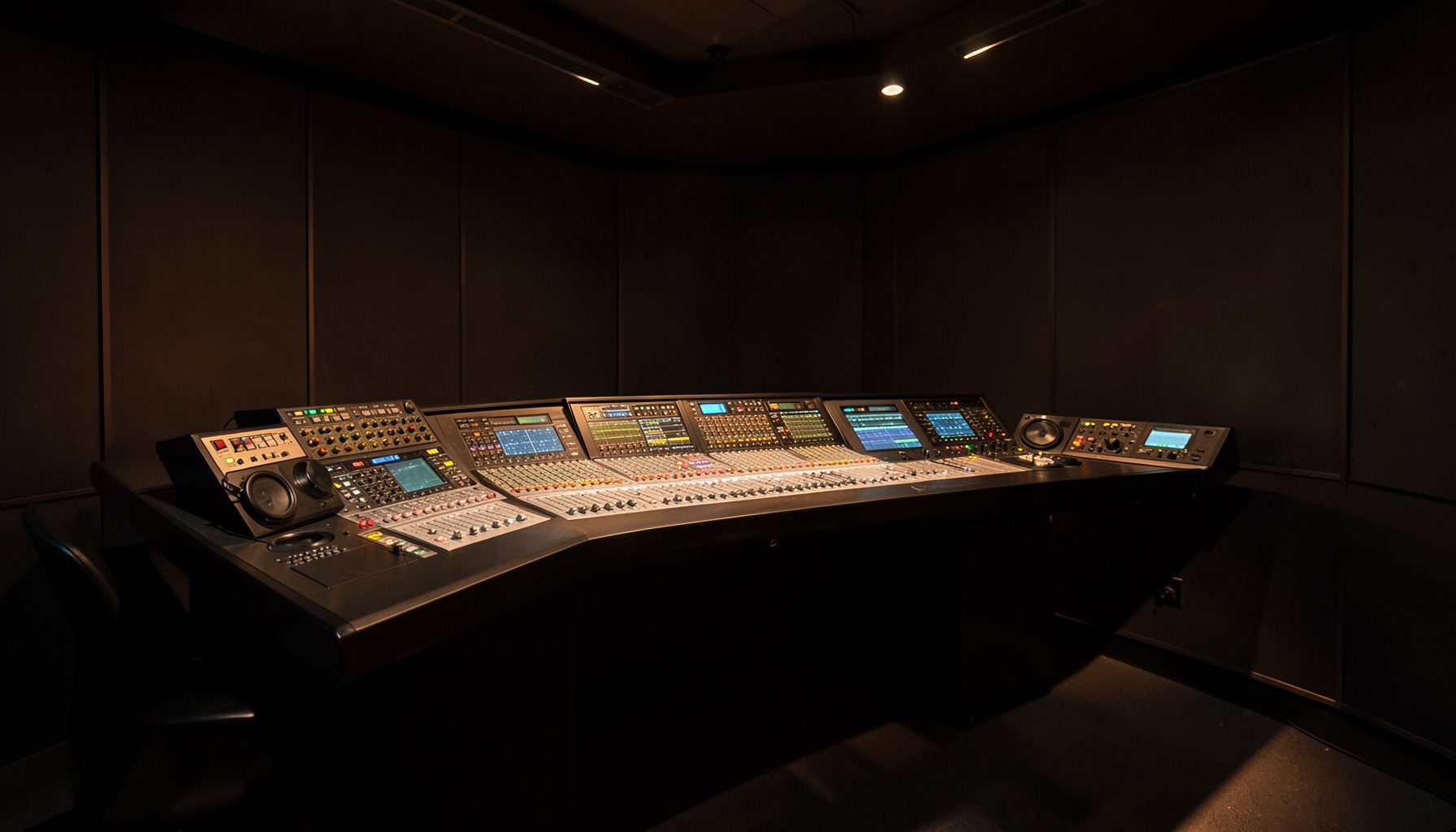
How Ruby mixing consoles simplify live radio production workflows
Live radio depends on timing, clarity, and confident decisions. Hosts may move from a prepared interview to a breaking update, while producers manage callers, remote guests, music beds, jingles, and station identifications in the same hour. The mixing console must make these changes feel immediate rather than turning every transition into a technical task.
Lawo’s Ruby platform addresses this pressure with a radio-focused approach to mixing, routing, and control. Its configurable surface and networked workflow help operators keep essential functions close at hand while supporting the wider infrastructure behind a modern studio.
The result is a production environment where fewer actions interrupt the presenter’s attention. Sources can be organized logically, audio paths can be managed centrally, and studios can adapt to different programs without rebuilding the entire system.
A surface designed for live radio pace
A live radio console has to support quick reactions. Operators need direct access to microphones, telephone hybrids, remote contributions, codecs, playout channels, and monitoring. Ruby brings these functions into a structured workspace so the most important controls remain visible and easy to reach.
Its layout can be adapted to the station’s operating style, whether a studio focuses on talk radio, music programming, news, or a mixed format. This flexibility helps each presenter or producer work with a familiar arrangement instead of navigating an unfamiliar set of controls during a live segment.
The Ruby mixing console also supports a consistent operational experience across different rooms. A station can design workflows around shared conventions, making staff movement between studios easier and reducing the time needed for training.
Fewer steps between sources and output
Live production becomes more efficient when source selection, level adjustment, and monitoring are close together. Ruby helps reduce the number of separate devices and manual workarounds needed for everyday tasks. Operators can focus on the editorial moment instead of tracing a signal through disconnected equipment.
This is particularly valuable during fast-paced shows. A presenter may need to bring in a correspondent, fade under a music bed, cue a commercial sequence, and restore the main microphone within seconds. A coherent control environment gives those actions a predictable rhythm.
Configurable control also supports different responsibility models. In a smaller station, one person may handle presentation and technical mixing. In a larger operation, the console can help divide duties between a producer, an audio operator, and a presenter while maintaining a shared view of the program output.
Networked audio supports flexible studio design
Modern radio facilities increasingly rely on audio-over-IP and shared network resources. Rather than tying every source permanently to one physical input, a networked design allows audio and control to move where they are needed. This supports studios, production rooms, news booths, and remote contribution points within a connected environment.
Ruby can operate as part of a broader Lawo workflow that includes networked processing and routing. Power Core, for example, can provide audio-node functionality for managing sources, processing, and signal distribution. This approach makes it easier to expand a facility or change room roles without redesigning every cable path.
Network connectivity also supports operational resilience. If a studio’s function changes for a special broadcast, resources can be reassigned through configuration rather than extensive physical intervention. Engineers gain a clearer way to manage the infrastructure, while operators receive the controls relevant to their program.
Clear comparisons for different production priorities
The best console configuration depends on the station’s scale, staffing, and program mix. Ruby’s value becomes clearer when its workflow benefits are considered alongside common production requirements.
| Production requirement | Conventional fragmented setup | Ruby-centered workflow |
|---|---|---|
| Source management | Several devices and control points | Centralized access to key sources |
| Live guest contribution | Manual routing between equipment | Structured handling within the studio workflow |
| Format changes | Physical changes or complex workarounds | Reconfigurable control and routing |
| Operator training | Different layouts across rooms | Consistent operating principles |
| Facility expansion | More dedicated wiring and hardware | Networked resources that can be reassigned |
| Monitoring | Separate or inconsistent monitor paths | Integrated workflow for program awareness |
This comparison does not mean every station needs the same configuration. A small talk studio and a multi-room broadcast center have different demands. The important point is that a modular, network-aware design can scale with those demands while preserving a familiar operating logic.
For producers, that consistency has a direct editorial benefit. Less time spent searching for controls means more attention available for guests, timing, scripts, and the flow of the show.
Automation and control where they matter
A radio console should support human judgment rather than make every operation fully manual. Repeated tasks such as level management, routing changes, and source handling can benefit from structured control. At the same time, the operator needs the ability to intervene quickly when a caller becomes louder, a remote line changes quality, or a presenter departs from the running order.
Ruby fits into workflows that combine live operation with software-based control. Lawo’s wider ecosystem includes tools such as VisTool and AutoMix, which can extend visualization and mixing support for suitable applications. These tools can help stations create more repeatable workflows while leaving important editorial decisions with the production team.
This balance is especially useful for hybrid shows. A presenter may manage a straightforward music segment with limited assistance, while a producer takes control during a complex panel discussion. The same infrastructure can support both modes without forcing the station to maintain separate technical philosophies.
Practical ways to configure a Ruby workflow
A successful deployment begins with the way the station actually works. Instead of copying a generic layout, engineers can map controls to the sequence of decisions operators make during a typical program.
Useful priorities include:
- Place microphones, telephone sources, and remote contributors in an immediately recognizable order.
- Group music, jingles, commercials, and playout channels according to the program’s running order.
- Define monitoring paths clearly for presenters, producers, guests, and off-air confidence checks.
- Use shared naming conventions across studios so staff can move between rooms with less retraining.
- Document backup routes and alternate source handling before the first live broadcast.
Testing should include ordinary programming and stressful scenarios. Simulate a dropped remote connection, an unexpected news insert, a last-minute guest, and a change from local to network output. These exercises reveal whether the workflow is genuinely intuitive when time is limited.
A foundation for evolving broadcast operations
Radio production is moving toward more software-defined and distributed operations. Studios may share resources across locations, presenters may contribute remotely, and production teams may need to create content for broadcast, streaming, podcasts, and social channels from the same facility. A console must therefore support today’s live show without limiting tomorrow’s workflow.
Ruby provides a practical control point within that larger transition. Its radio-oriented design can help stations organize live mixing while networked infrastructure supports flexible routing, processing, and expansion. This makes the console relevant to both traditional broadcast rooms and facilities adopting Broadcast 3.0 principles.
Explore Ruby’s capabilities and evaluate how its control surface, routing model, and integration options can fit your studio. Build a workflow that gives operators faster access to the right sources and gives your station room to grow.