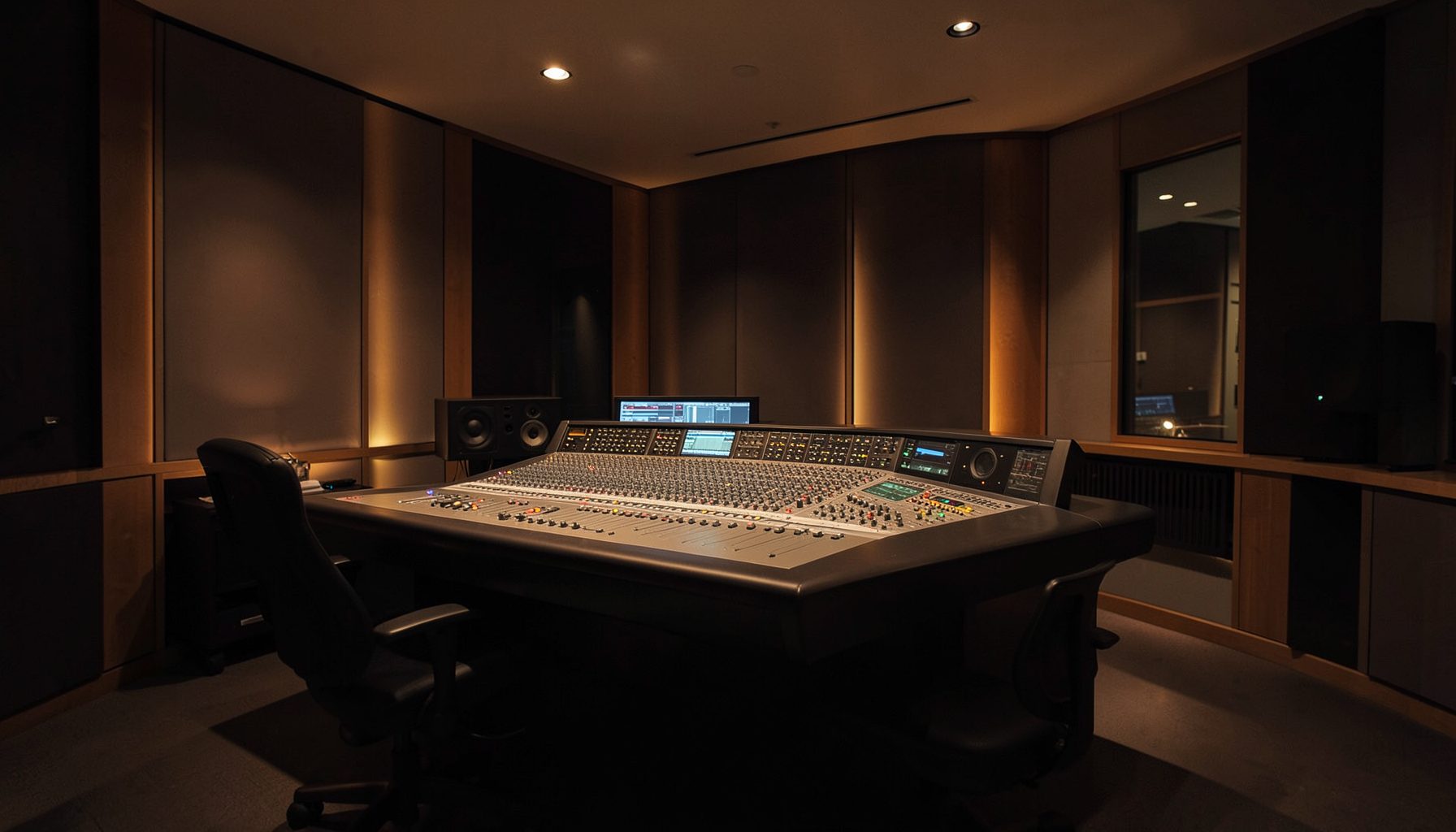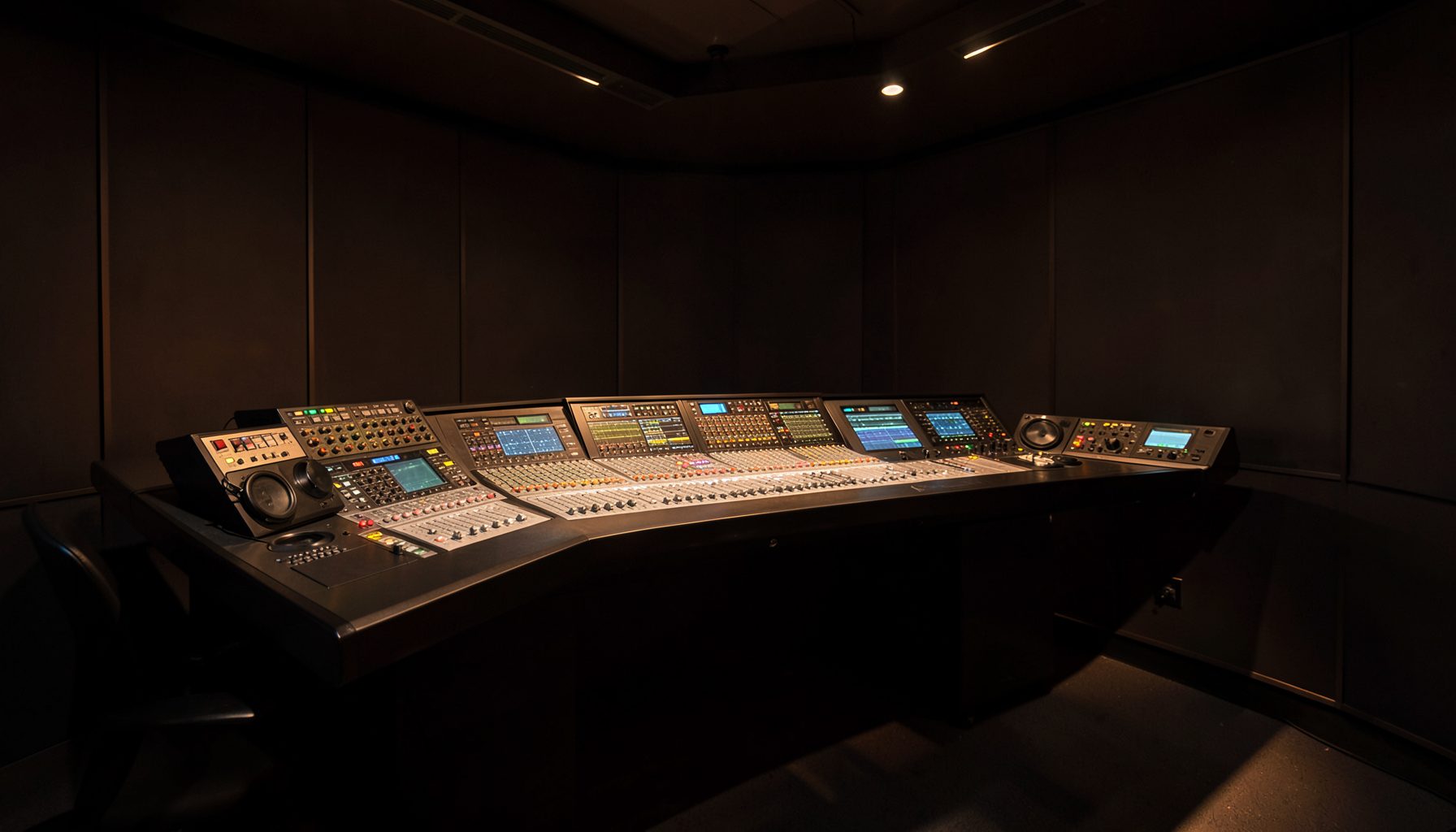
Using Ruby’s Fader VCA Groups to Manage Multiple Guest Microphones
A three-way interview can look simple from the guest’s side, but the studio desk may be handling a host, two guests, a shared microphone and several remote feeds. Each open microphone adds noise, handling risk and another fader movement that can distract the person speaking.
Ruby’s Fader VCA groups give operators a shared level-control layer for related microphones. An engineer can raise, lower or mute a collection while preserving its internal balance, provided the channels, routing and monitoring are prepared deliberately.
Why talk show mixes become harder to control
When a guest becomes quieter than the host, moving that guest’s fader is often the quickest adjustment. Repeating the movement across several guests slows speaker handovers and makes it easy to leave an unused microphone contributing noise to the programme.
As the roster changes, the same physical channel can represent different people. A fixed “guest” fader position then loses its meaning, while an accidental unmute can bring an open microphone straight into the broadcast mix.
Role-based grouping makes the desk easier to understand. The operator can identify which inputs belong together, preserve deliberate offsets between voices and manage several channels with one control.
How a Fader VCA group changes the workflow
A VCA group lets one master fader influence the channels assigned to it. Their relative balance remains under the operator’s control, so three remote guests can be trimmed as a unit without flattening the individual voice levels.
Give each group a clear job: voice-level control, programme muting or a transition between active and standby participants. Avoid placing every studio input in one large group, since adjusting a guest would then affect the host, floor microphones and playback sources together.
A VCA group controls level rather than confirming that a microphone preamp has been switched off. Lawo’s explanation of Ruby crosspoint logic shows how unused studio sources can be removed from the relevant mix paths. Combining this routing discipline with VCA grouping separates two tasks: choosing where a microphone should go and deciding how prominently it should be heard.
Choosing groups that match the conversation
Plan groups around production states rather than individual names. A persistent host channel can remain outside the guest groups, rotating participants can share a guest group, and a performance microphone may need independent control. A shared instrument microphone should follow its production task instead of being forced into a voice group.
Set channel faders and input gains to useful starting levels before moving any group master. The VCA then provides a predictable group trim, with less chance of one channel masking another or an operator compensating for excessive gain.
| Control approach | Best suited to | Trade-off |
|---|---|---|
| Individual faders | Fine balance of one voice | More movements when several microphones change together |
| Shared guest VCA group | Managing several guest levels | Internal channel balance still requires setup |
| Separate production-state groups | Scenes with different active participants | More groups and labels to maintain |
| Crosspoint-off control | Removing unused sources from the mix | Requires correct routing and confirmation |
Where guests change frequently, group membership should follow the active segment. Record the assignments in production notes and confirm them during the pre-show check, particularly when switching between local and remote participants.
Setting levels, routing and monitoring
Keep preamp and channel settings stable, then use the group fader for shared changes. If the VCA is already attenuating a channel, it becomes harder to judge whether a quiet voice needs more input gain or simply more group level.
Monitoring can reveal problems that a quiet control surface hides. Listen separately to the group output, individual guest paths and confidence feeds. Cues should reflect the intended audience mix, or an operator may hear a guest clearly while the programme feed remains too low.
Consistent routing and documented states also improve fault-finding. The same disciplined approach appears in SAG mill media sizing, where operating performance depends on matching equipment variables to defined conditions. Studio teams need equivalent clarity: measured levels, predictable routing and consistent group states are easier to diagnose than repeated ad hoc fader movements.
Adapting the workflow for Australian studios
Melbourne and Sydney productions commonly combine local presenters with contributors joining from Perth, Brisbane or regional centres. These locations operate across different time zones, and daylight-saving changes can coincide with a segment handover when a guest microphone has been left open.
Australian operations range from ABC services and community broadcasters to commercial networks. Regional community stations in particular may have small teams handling the desk, guest coordination and playback simultaneously. One clearly labelled group control can return attention to the presenter without requiring another operator position.
Australian budgeting discussions also encounter promotional consumer offers. A comparison of AUD deposit options illustrates how payment terms influence decisions in another sector, but broadcast investment should remain tied to operational requirements, support coverage and total ownership costs.
Making group control part of the show rundown
Build the routine around predictable states: interview, group off, single-speaker segment and performance. Assign those states to the relevant VCA groups and crosspoints, then rehearse the changes with the presenter rather than relying on a last-minute fader movement.
For a live talk show, the most useful control is often the single action that removes several open microphones without disturbing the host or performer. Label the group, identify its members in the production notes and check the result in both the main mix and cue feeds.
Keep adequate headroom and avoid using the group master to compensate for a poor source. Confirm guest positions, preview the next segment and listen for unexpected microphone contribution before going to air. The practical takeaway is to use Fader VCA groups as a disciplined layer over well-gained channels and deliberate routing, giving operators one predictable control for the busiest parts of a talk show mix.