Ruby's crosspoint logic for silencing unused broadcast microphones
Radio consoles have moved from steel switches into software-defined matrices. In Australia, where networks like ABC, SBS, ARN and Southern Cross Austereo run studios from Melbourne's South Bank to Ultimo in Sydney, that shift matters. A host in Sydney, a producer in Brisbane and the cricket caller at the Adelaide Oval can all feed the same network through consoles that share one DSP budget.
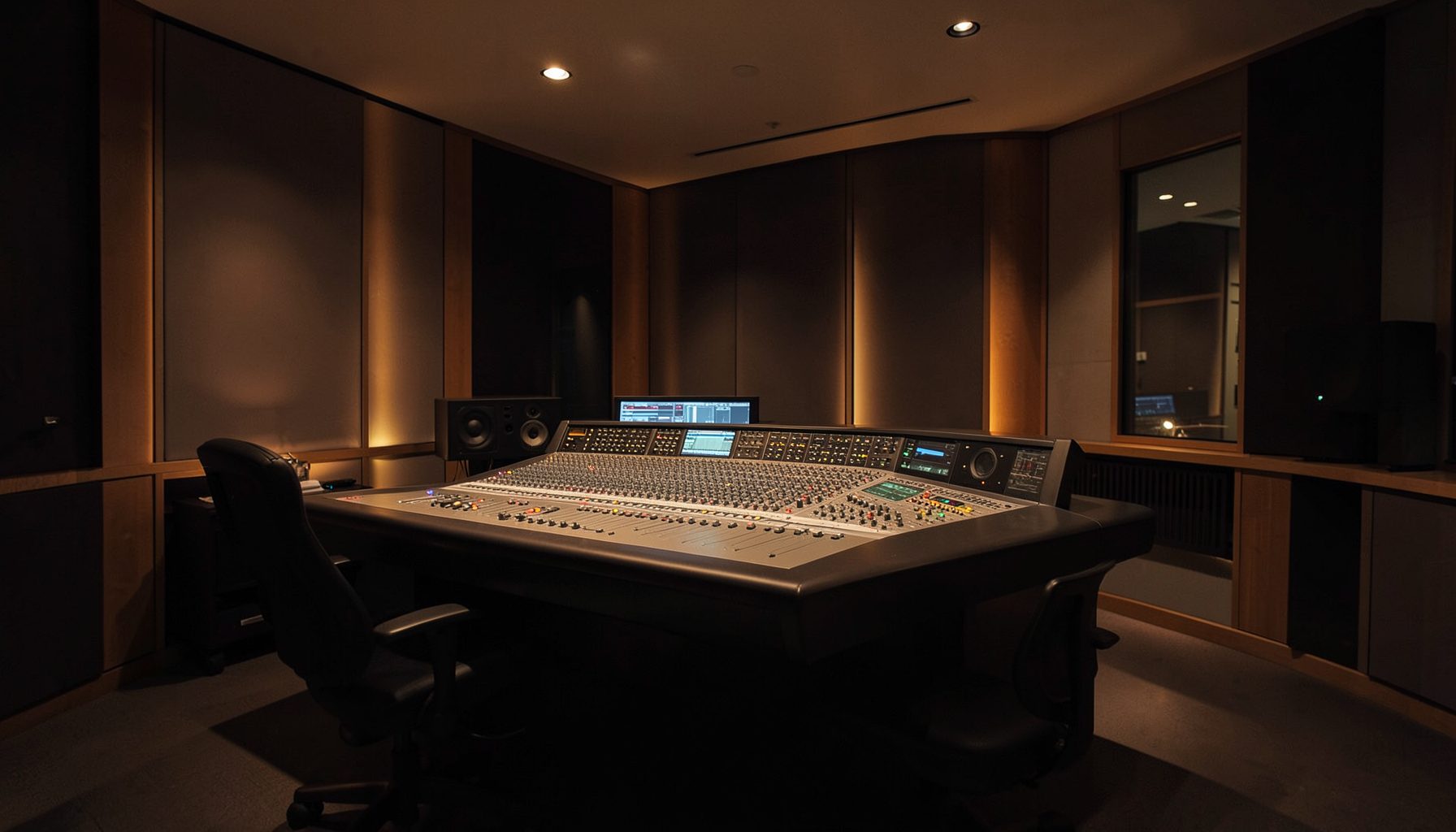
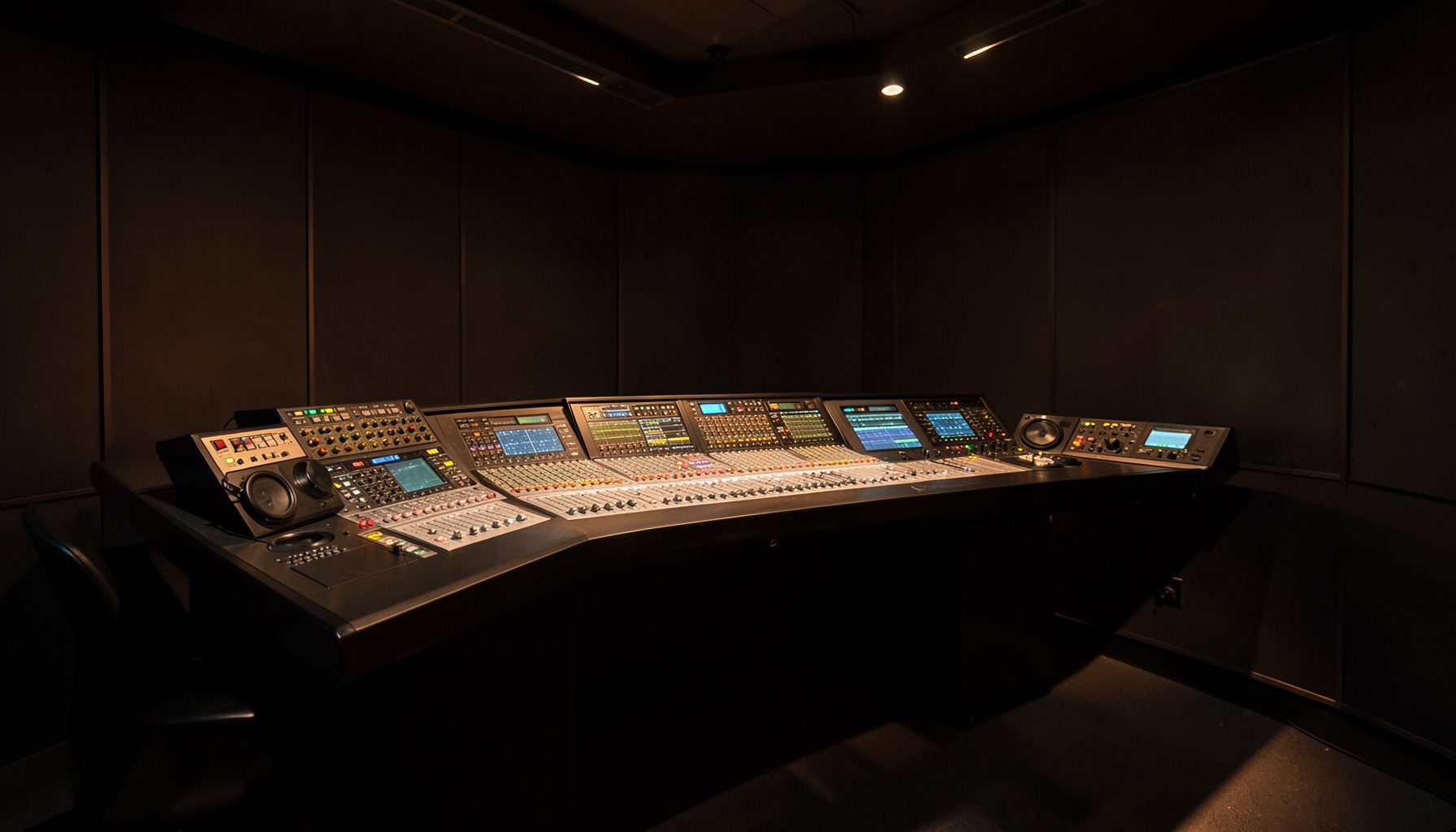
Ruby is Lawo's console surface for radio, paired with a Power Core audio node. Power Core has a fixed resource pool, and one of the silent drains is microphones nobody is currently using. In a four-host panel only one or two faders might be live during a song break, yet the other inputs keep being summed, processed and passed downstream.
Ruby's answer is crosspoint logic that watches the console's fader and on/off state and physically disconnects unused mic channels from the summing matrix. On older generations, open but inactive mics produced background spill and phantom-rail hum creeping into the programme bus.
Rather than software-muting at one point, the crosspoint itself turns off the path so no DSP cycles are spent. Talkback studios in capital cities run tight input counts, and any drop in self-noise helps the producer setting levels in the dark when a caller is breaking up on a Tasmanian landline.
Crosspoint logic in a software console
The crosspoint is the switch that decides which input lands on which output. The term came from the crossbar of relays used in telephone exchanges. In a software console it is a virtual routing matrix, but the principle is the same: a controlled point where audio is either connected or not.
Ruby's crosspoint layer sits between Power Core's input frame and channel processing. Every fader and monitor send has a crosspoint address. Rules tell those addresses when to open and close; when a fader drops below threshold or is marked inactive, the crosspoint is released.
That release is the key difference from mute automation. A mute ducks the audio and lets the chain keep consuming DSP. A crosspoint disconnect removes the audio entirely, freeing resources for another studio or caller.
Why idle microphones matter
Radio studios rarely use every mic at once. A panel show with a host and three guests can have six inputs but only two are needed during a music break. In AFL coverage the on-air mics change every few minutes as callers rotate across the eastern seaboard.
When unused channels stay live, the noise floor rises and crosstalk increases. DSP resources are spent on channels contributing nothing, and a host who leaves a fader up will hear spill from the room. Ruby treats these as downstream effects of one issue: if the mic is not contributing, it should not be in the summing tree.
How Ruby decides when to disconnect
Ruby's crosspoint logic runs on rules driven by console state. Default behaviour disconnects any channel whose fader has been below a threshold for a configurable time, and any channel the operator has explicitly marked as off. Rules can be set per fader, so a sports desk in Sydney keeps multiple call channels connected while a music show in Perth lets everything else drop.
Power Core also recognises operator cuts from the surface. Pressing the off key on a Ruby channel releases the crosspoint and tells the network to drop the channel from any sums. Coming back on air is clean: the crosspoint re-engages, the fader ramps up and the audio returns without a pop.
Configuring thresholds through Power Core
Configuration is handled through Ruby setup pages and the Power Core control panel. Engineers set the threshold, release time and behaviour of outputs like talkback and PFL. Once saved, the logic runs without further intervention and can be reviewed as part of the daily studio check.
For shared studios in regional hubs the automation pays for itself. A board operator running four stations from a Bourke Street control room in Melbourne does not want to chase phantom power issues across the network. The wider thinking behind this lives in the about section of the Lawo Broadcast site, which discusses crosspoint logic in modern radio. Letting Ruby's logic isolate unused inputs keeps the leanest air chain possible.
Daily use in Australian broadcast studios
A typical morning at an ARN newsroom in Sydney will see three presenters and two producers. Without crosspoint logic, every mic below threshold stays in the mix bus. With it, paths disappear from the matrix until a fader rises, so the producer's tally lights reflect what is actually on air rather than what is patched.
Talkback formats in particular benefit. Stations like 2GB, 3AW and 4BC have built their identity on continuous call-in sessions where the host needs the right amount of caller audio. A crosspoint-disconnected call channel cannot accidentally contribute to an open mic, which removes a long-standing source of embarrassment in live radio.
Crosspoint mute versus traditional mute groups
| Method | What it does | DSP impact | Spill control | Operator action |
|---|---|---|---|---|
| Software mute | Ducks audio at the fader | Full resource use | Limited | Manual or scripted |
| Mute group | Mutes several channels together | Full resource use | Limited | Manual button press |
| AutoMix | Adjusts gain on shared mics | Full resource use | Strong for spill | Automatic |
| Ruby's crosspoint logic | Disconnects unused mic paths at the matrix | Frees resources | Strong | Automatic with thresholds |
The table shows where Ruby's approach sits. Mute groups are useful on stage, but in a tight radio cell they waste DSP. AutoMix handles spill elegantly, yet it does not solve the resource question. Crosspoint logic does both at once.
Wiring crosspoint logic into the wider workflow
Ruby's crosspoint rules interoperate with VisTool, RƎLAY and AutoMix tools from the broadcast product portfolio. VisTool can surface crosspoint state to the operator, while RƎLAY panels expose the same logic to a producer's tablet. AutoMix understands when Ruby has disconnected a channel and rebalances gain.
Crosspoint logic is one of the quieter pieces of the Lawo ecosystem puzzle, but in a country where talkback pulls a serious audience share and studios run lean, it keeps the signal chain tidy.
If your Ruby consoles share Power Core across several studios, every unused microphone the crosspoint drops gives back headroom, lowers the noise floor and removes one source of phantom spill, the trade-off Australian broadcasters have been chasing since on-air studios moved to software-defined consoles.