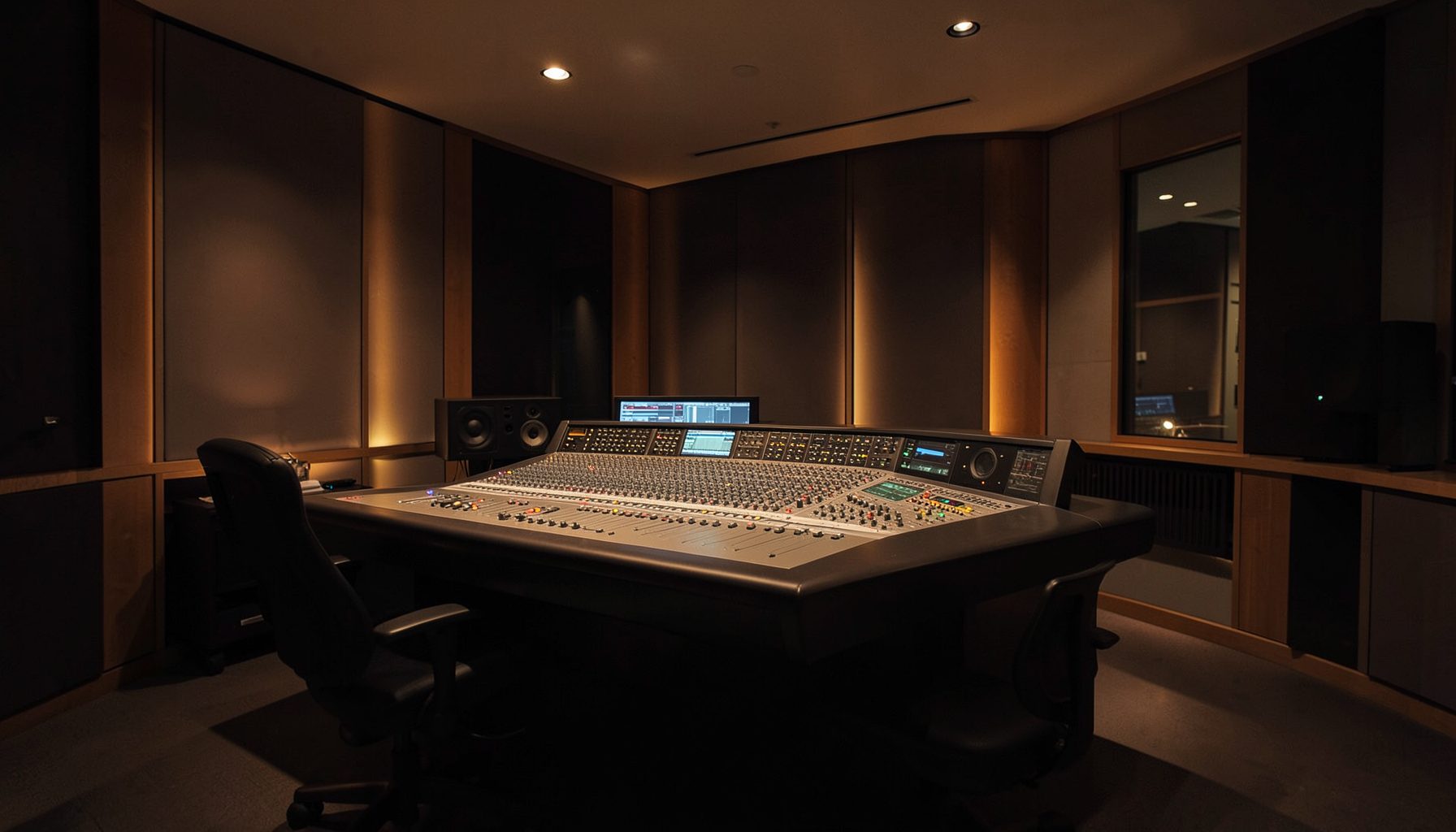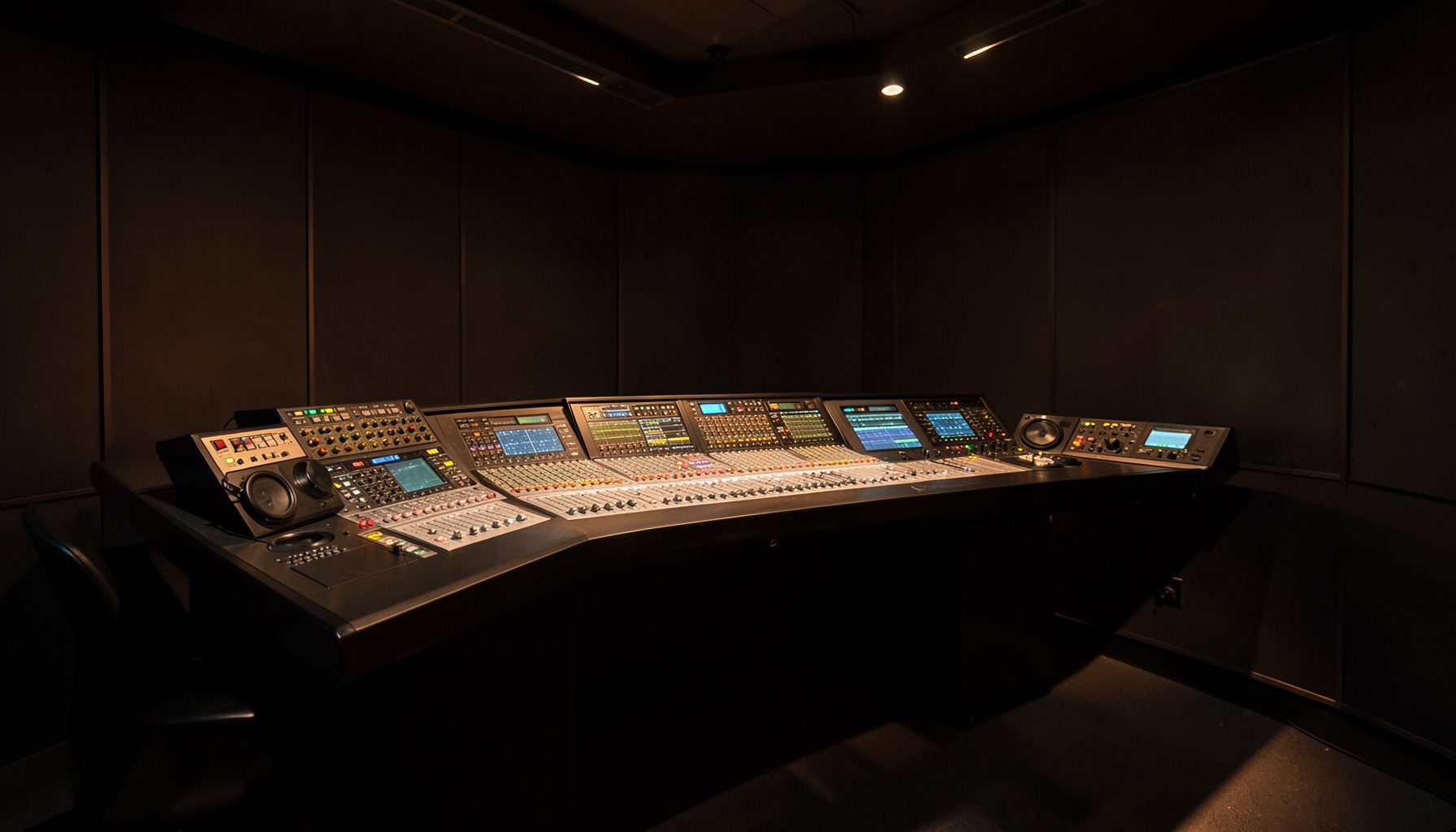
Using Power Core nodes for studio room correction
Accurate monitoring is essential when a studio is used for voice tracking, live radio, post-production, or theatrical work. Reflections, standing waves, uneven bass response, and inconsistent loudspeaker placement can make engineers compensate incorrectly, creating mixes that sound unbalanced elsewhere.
Power Core nodes provide a practical networked location for equalization, delay, routing, dynamics, and other audio processing. Instead of tying every correction stage to a single console or workstation, a studio can place these functions in a shared, configurable DSP environment that serves multiple rooms and workflows.
This approach fits the broader Lawo broadcast platform, where audio, control, networking, and software are designed to operate as connected parts of one infrastructure. The result is a correction system that can be adjusted centrally while remaining available to Ruby consoles, software interfaces, and other compatible endpoints.
Designing a correction path
Room correction should begin with measurement rather than preference. A calibrated measurement microphone, analysis software, and a consistent monitoring position help identify modal peaks, broadband tonal shifts, and time-domain problems. Power Core can then host the filters and routing needed to address the measured issues.
Parametric equalization is useful for reducing narrow resonances, while shelving or broad tonal filters can compensate for a general imbalance. Delay alignment can help synchronize loudspeakers, subwoofers, and fill systems. High-pass filtering may protect nearfield monitors from unwanted low-frequency energy, although every filter should be chosen with the loudspeaker design and room response in mind.
The aim is a transparent monitoring chain. Excessive equalization can remove useful headroom, exaggerate phase problems, or mask an acoustic defect that should be addressed physically. A sensible design uses the smallest effective correction and preserves a bypass path for verification.
Choosing where DSP lives
A Power Core node can sit between networked sources and monitoring outputs, making it suitable for control-room correction, vocal booths, edit suites, and live production spaces. With audio transported over a managed IP infrastructure, the same processing resources can be assigned to different rooms without moving hardware between racks.
This separation of processing and control is particularly useful in facilities with several studios. The node can retain the signal path while operators use a Ruby console, VisTool panel, or another authorized interface to select room profiles, monitor sources, and adjust safe operating parameters. Engineers can therefore maintain consistent correction while still allowing each room to use an appropriate workflow.
Profiles can be created for nearfield monitors, headphones, alternate speakers, or different listening positions. A controlled preset system prevents accidental changes to critical filters and makes it easier to restore a known monitoring state after a production session.
Matching room correction to acoustic processing
Room correction is only one part of studio signal management. Acoustic processing may also include microphone equalization, de-essing, gating, compression, talkback routing, cue mixes, and loudness control. Keeping these functions within a coordinated Power Core design reduces the need for disconnected processors and complicated analog patching.
For a radio studio, the same node can route presenter microphones to a console, provide clean feeds for recording, and send a processed monitor return to loudspeakers. In a production or post room, it can maintain separate paths for main monitoring, client headphones, and confidence speakers. Each path can have its own delay, level, and filtering requirements.
AutoMix and other workflow tools can complement this architecture when several microphones are active. The important distinction is to keep speech processing separate from the room-monitoring correction path. A presenter’s microphone may need tonal shaping and dynamics, while the control-room loudspeakers need a stable, neutral reference.
Comparing processing approaches
The best implementation depends on the room count, monitoring requirements, and existing infrastructure. A dedicated hardware processor may be effective in a single-purpose room, while a networked node offers greater flexibility when several studios share resources.
| Approach | Strengths | Limitations | Suitable use |
|---|---|---|---|
| Power Core DSP node | Centralized routing, profiles, network access, scalable processing | Requires careful configuration and network planning | Multi-room broadcast and production facilities |
| Standalone monitor controller | Simple operation and direct speaker management | Limited sharing and advanced processing | Small dedicated control rooms |
| DAW plug-ins | Flexible measurement and offline experimentation | Dependent on the computer and session | Post-production and temporary analysis |
| Analog equalizer | Familiar workflow and low software complexity | Fixed routing, component variation, limited recall | Legacy rooms with stable signal paths |
| Loudspeaker management system | Purpose-built crossover and alignment tools | May create another control layer | Multi-way speakers and larger monitoring systems |
Power Core is especially valuable when the facility needs repeatable recall, remote supervision, and integration with a wider broadcast control system. It can also make future changes less disruptive because routing and processing can be revised in software rather than through extensive rewiring.
Building reliable operator control
A correction system should be easy to monitor without exposing every technical parameter to every user. Engineers may need access to filter gains, delay values, and routing states, while presenters typically need only source selection, monitor level, and talkback controls.
VisTool can provide custom panels for these roles. The custom VisTool controls described by Lawo can support tailored meters, buttons, and status displays, helping operators see whether a room profile is active and whether a signal path is healthy.
Meters should be placed before and after important processing stages. Monitoring input and output levels makes it easier to detect clipping, excessive gain reduction, or an unexpectedly silent route. Clear labels for room profiles and loudspeaker destinations also reduce the risk of applying a control-room preset to a studio monitor feed.
Recommendations for deployment
A disciplined commissioning process improves both sound quality and operational confidence.
- Measure each listening position with the room furnished and configured for normal use.
- Apply broad, moderate correction before considering narrow filters for strong resonances.
- Store separate profiles for main monitors, alternate speakers, and headphones.
- Lock critical parameters while exposing safe controls for level, source, and profile selection.
- Document bypass tests so engineers can confirm that correction is improving translation rather than simply changing tonal preference.
Physical treatment remains important. Bass trapping, reflection control, speaker placement, and symmetrical furniture arrangements often provide greater benefits than additional equalization. Power Core should support these measures by making the electronic correction consistent, recallable, and easy to supervise.
Putting the system into daily use
Once commissioned, the processing chain should be tested with familiar speech, music, and reference material. Listening at more than one level can reveal compression, bass buildup, or balance changes that are not obvious during a single calibration pass. Periodic measurement is also useful after loudspeaker replacement, furniture changes, or building work.
A properly configured Power Core node gives studios a stable foundation for room correction and acoustic processing without isolating those functions from the wider production environment. Plan the signal flow, measure carefully, protect the reference path, and configure operator controls around real studio responsibilities. Explore Lawo’s networked audio ecosystem to build a monitoring workflow that remains accurate, adaptable, and ready for future broadcast demands.