Sharing Power Core DSP Across Ruby Consoles in Australian Radio
The Australian radio industry is in the middle of one of its biggest infrastructure shifts in decades. Networks in Sydney, Melbourne, and Brisbane are moving away from isolated, single-purpose studios toward shared audio cores that several control surfaces can draw from at once. Power Core, Lawo's flagship audio node, sits at the heart of this transition, acting as a scalable DSP pool that any Ruby console on the network can access.
For broadcasters running multiple studios from one facility, or juggling regional hubs in Adelaide and Perth, this changes how processing, I/O, and mixing resources are budgeted. A station can centralise its audio engine and let operators in different rooms share the same horsepower, a model that suits Australia's mix of metropolitan stations and widely distributed regional services.
Understanding how Power Core behaves as a pool rather than a single-console engine is now essential for technical directors planning the next refresh of their on-air plant.
| Aspect | Single-Studio DSP Model | Shared Power Core DSP Pool |
|---|---|---|
| Hardware footprint | Per-console DSP cards and racks | Centralised nodes, redundant pairs |
| Resource allocation | Fixed to one surface | Dynamically shared across Ruby consoles |
| Failover behaviour | Console-specific backup | Hot-swappable engines, mirrored routing |
| Expansion cost | Add a full console stack | Add processing capacity or I/O blades |
| Cabling complexity | Localised, room by room | Standardised IP network, AES67 ready |
Why a Shared DSP Pool Matters for Modern Radio
Radio workflows have grown more demanding even as studio space has shrunk. A Ruby in Sydney's CBD might handle a news block, a music show, a remote interview, and a podcast recording in one afternoon. When DSP is locked to one surface, that surface must always be sized for the worst case, leaving capacity idle the rest of the day.
A shared pool inverts that logic. Power Core presents its DSP, mix-minus logic, and I/O to every authorised Ruby, so a processor allocated to a sports remote in Melbourne can be released back to the pool the moment the interview ends. The same engine can serve a breakfast show, a late-night talk format, and overnight automation without dedicated hardware, which is especially valuable for regional operators in Hobart, Darwin, and Cairns where capital budgets are tighter and equipment rooms are smaller.
Power Core as a Central Audio Engine
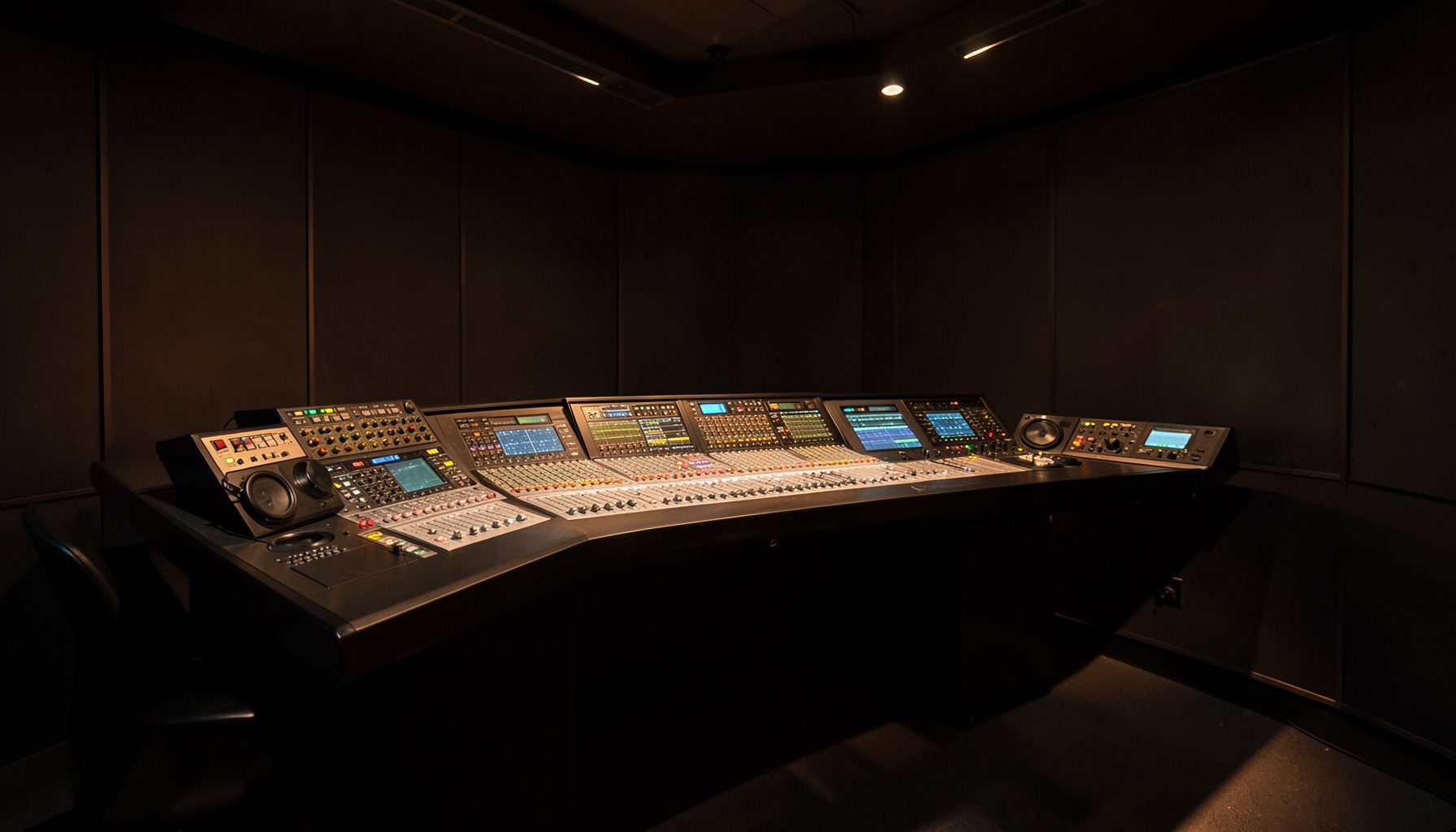
Power Core is a networked audio node rather than a desk-in-a-box. Its modular I/O cards, redundant power supplies, and dual-network ports allow it to slot into standard broadcast IP fabrics based on AES67 or SMPTE ST 2110, which most Australian commercial networks and the ABC have already standardised on. Operators configure it through VisTool, where channel counts, mix-minus structures, and routing can be edited visually and pushed to the engine without touching the consoles themselves.
Because the DSP sits inside the node, a station scales capacity by adding processing blades or stacking Power Core units. A regional cluster serving Ballarat, Bendigo, and Shepparton could run two mirrored Power Core engines in a central rack and feed any number of Ruby surfaces in nearby studios from the same pool of busses, EQ, and dynamics. Engineers familiar with Power Core's analog outputs for studio loudspeaker calibration will recognise how the platform extends well beyond on-air signal delivery, with calibration, confidence monitoring, and talkback all drawing from the same engine.
Ruby Consoles Tapping Into the Same Pool
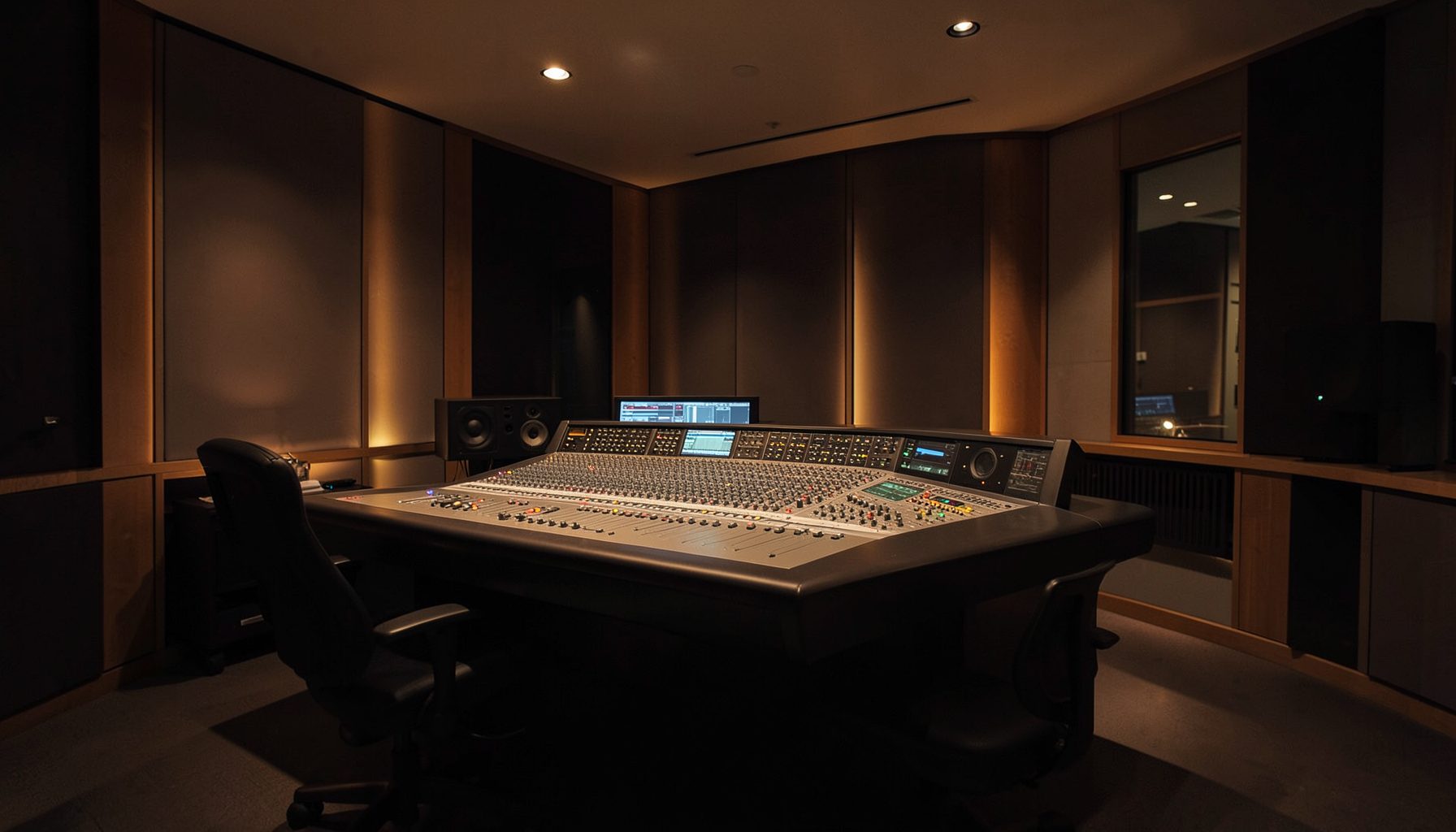
Ruby consoles are network-native devices that communicate with Power Core over standard IP, which is what makes the shared-pool model possible. Each Ruby presents only the controls, metering, and faders relevant to its current show, but the actual mixing, processing, and routing happens inside Power Core. Several Rubys can be online at once, each with its own login, snapshots, and permissions, all feeding from the same underlying DSP.
A typical metropolitan setup might place a Ruby in the main on-air studio, another in a production room used for voice-tracking, and a third in a talk studio hosting syndicated sports coverage. None of those surfaces needs to know about the others, and an operator in production can prepare a complex mix-minus while the on-air presenter uses the main console, because the two tasks draw on different regions of the shared pool. When a Ruby moves to a different studio, or a temporary surface is rolled out for a state-of-origin broadcast, only a network drop and a profile push from VisTool are required, which is a meaningful advantage for networks that frequently reconfigure rooms.
Practical Workflows in Australian Stations
In Melbourne, integrated newsrooms share a single pool across radio, podcast, and simulcast operations, with each output format drawing from the same processed audio. In Brisbane, networked facilities have moved to a model where presenters hot-desk between studios, sitting down at any Ruby and finding their personal settings, show presets, and routing already loaded.
The economics matter in the Australian market, where equipment imports attract GST and local technical support is concentrated in the eastern states. Centralising DSP reduces service contracts, simplifies spare-parts holdings, and means one engineering team can manage an entire cluster from a single location. Training is also simpler because every Ruby behaves identically. For community and Indigenous broadcasters operating under the Remote Area Broadcasting framework, the shared-pool model offers a path to professional processing without equipping every studio with full-scale hardware, which is why a small station in the Northern Territory can run a primary Ruby and a secondary surface in a training room from one Power Core.
Resilience, Standards, and Local Compliance
Australian broadcasters operate under rules administered by the Australian Communications and Media Authority, with technical standards aligned to international norms but with local specifics around emergency warning distribution and metadata for digital radio. A shared Power Core architecture simplifies compliance because logging, loudness measurement, and program-associated data insertion can be handled centrally rather than re-implemented in every studio.
Resilience is built into the topology. Mirrored Power Core engines can run in active-active mode, with each Ruby able to fail over to its secondary unit without dropping audio, and the network itself can be ringed for additional protection. The same standards-based fabric that carries on-air audio can carry engineering audio for IFB, talkback, and confidence monitoring, removing a layer of dedicated cabling that older facilities still rely on. The concept of shared processing for multiple concurrent users is not unique to broadcast, and readers exploring roulette tournaments will recognise the same resource-pooling logic applied in a very different context.
The practical takeaway for Australian broadcasters planning a facility refresh or a regional rollout is straightforward: treat Power Core as a building block rather than a console accessory, size the pool for peak aggregate demand rather than per-studio peaks, and let Ruby surfaces become flexible front ends to a centrally engineered audio core. Stations that have already made this move consistently report smaller capital outlays and a smoother experience for operators moving between rooms.