Understanding Lawo’s A__UHD Core for high-density audio networks
Modern broadcast facilities are moving from isolated mixing desks and point-to-point wiring toward distributed, software-defined production environments. Audio processing, routing, control, and monitoring increasingly share an IP infrastructure that must remain flexible while handling large channel counts and demanding timing requirements.
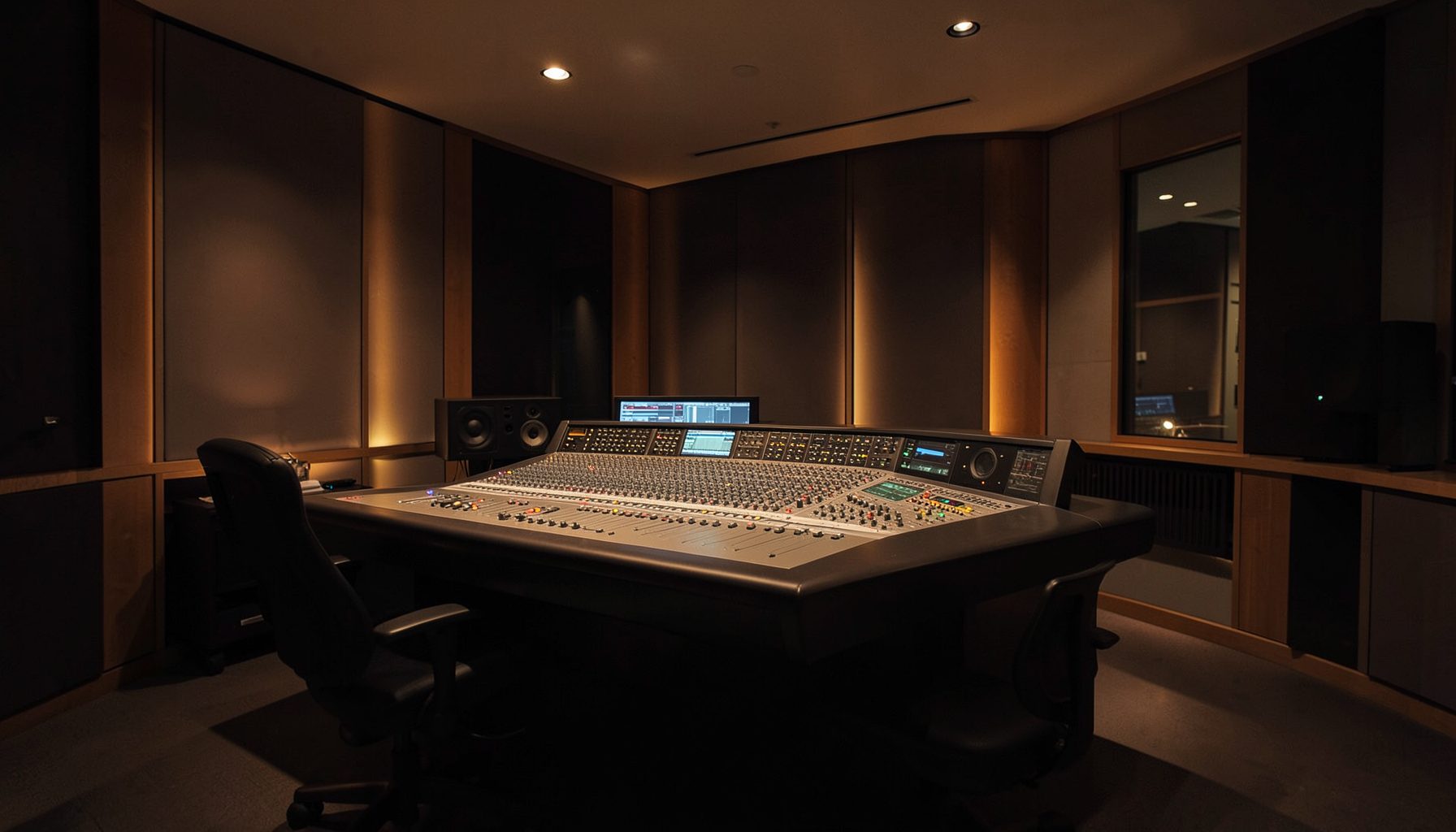
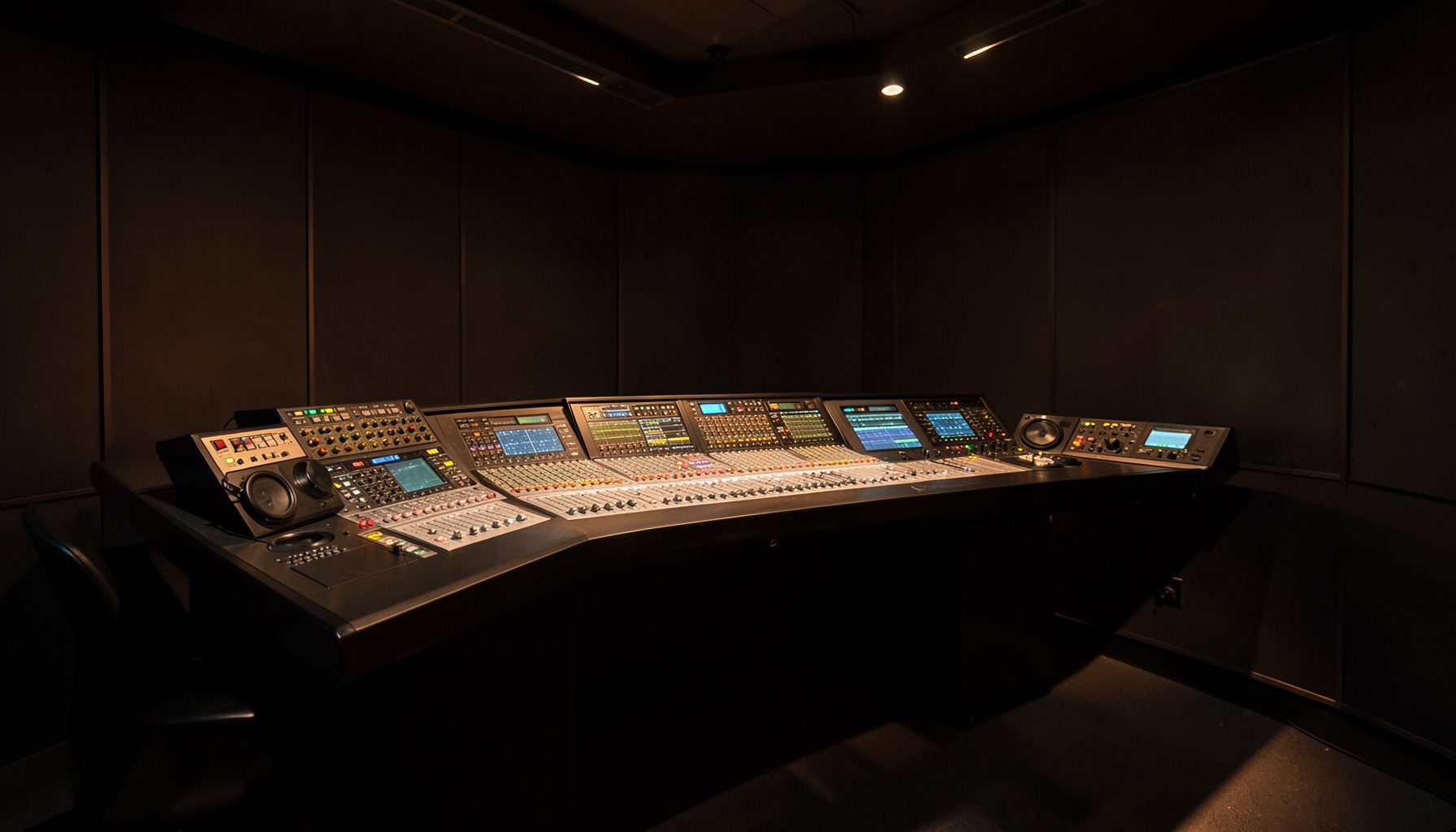
Lawo’s A__UHD Core addresses this shift as a high-density networked audio engine for mc² production systems. It separates core DSP resources from the physical control surface, allowing broadcasters to scale processing around operational needs rather than tying every function to one console frame.
That approach is especially relevant to radio groups, television studios, outside broadcasts, and venues that need to manage multiple sources, destinations, studios, and program feeds across a common audio network.
The role of the A__UHD Core
The A__UHD Core is a central processing resource within Lawo’s IP-native ecosystem. It provides the mixing, routing, signal processing, and monitoring capabilities required by mc² consoles while communicating with control surfaces and other network devices over standard media-network connections.
Instead of placing all DSP inside a console, a facility can locate processing where it best fits the network design. A single engine may support several production positions, while multiple engines can provide additional capacity and operational resilience. This distributed model also makes it easier to expand a system without replacing every operator surface.
The result is a cleaner separation between user control and audio computation. Operators work through familiar console workflows, while engineers can design a processing architecture that serves studios, edit rooms, contribution areas, and transmission paths together.
High-density processing across IP
High-density audio networks depend on efficient transport as much as raw DSP capacity. A__UHD Core is intended for IP-based environments using technologies associated with broadcast audio networking, including ST 2110 and AES67-compatible workflows. This enables audio to travel as streams across managed Ethernet infrastructure instead of relying solely on dedicated local wiring.
For broadcasters, the practical advantage is scale. A large number of microphones, playout outputs, codecs, remote sources, monitor feeds, and mix-minus paths can be routed through a common fabric. Engineers can create logical connections in software and reuse network resources across different productions.
Clocking and synchronization remain essential. A robust implementation requires a carefully designed PTP timing domain, suitable network switches, redundant paths where appropriate, and disciplined management of multicast traffic. The processing engine can be powerful, but its reliability depends on the complete network architecture around it.
Designed for flexible production workflows
Radio operations often require many variations of the same signal: clean feeds, presenter mixes, phone hybrids, codec returns, recording feeds, and program outputs. A centralized DSP engine can handle these relationships without forcing every room to contain a full collection of independent hardware processors.
The same principle applies to live production and theatrical work. A production team may need separate mixes for front of house, broadcast, streaming, backstage communication, and recording. With networked resources, those destinations can be managed as part of one coordinated audio environment rather than assembled through a patchwork of fixed connections.
Lawo’s software-oriented approach also complements virtualized control tools. For complex shows, virtual patchbay concepts can make signal relationships easier to visualize and modify, particularly when sources and destinations change between productions.
How it fits with Lawo’s ecosystem
The A__UHD Core works as part of a broader Lawo workflow rather than as an isolated processor. Ruby consoles can provide radio-focused operator control, while Power Core devices extend audio I/O, routing, and processing at the network edge. VisTool can add customizable user interfaces for studio and broadcast applications.
This ecosystem supports a mix of physical and software control points. A presenter may use a dedicated console, an engineer may work from a graphical interface, and a producer may need access to selected controls from another location. The underlying audio infrastructure can remain consistent while the user experience changes.
RƎLAY virtual radio tools and AutoMix can further support modern radio workflows, including remote production and automated microphone management. The value of the A__UHD Core is therefore greatest when its processing capacity is connected to a coordinated set of control, routing, and automation tools.
| Requirement | A__UHD Core approach | Operational benefit |
|---|---|---|
| Large channel counts | Centralized, high-density DSP | Supports complex routing and multiple mixes |
| Distributed studios | Network-based processing | Shares resources across rooms |
| Flexible control | Separate processing and control layers | Adds or changes operator positions more easily |
| IP production | Broadcast audio over managed Ethernet | Reduces dependence on fixed point-to-point wiring |
| Expansion | Scalable network architecture | Allows capacity to grow with production needs |
| Resilience | Network and engine redundancy options | Helps maintain service continuity |
Planning capacity and resilience
A successful deployment starts with a channel and workflow inventory. Engineers should document input sources, output destinations, mix-minus requirements, monitor paths, codec connections, recording feeds, and anticipated growth. This reveals whether the system needs one processing engine, multiple engines, or a combination of centralized and edge processing.
Redundancy should be considered at every relevant layer. Dual network paths, separate power arrangements, synchronized timing sources, and resilient control connections can reduce the impact of a component failure. The correct design depends on the service level required by the broadcaster and the type of content being produced.
Network engineering is equally important. Dedicated VLANs or carefully managed broadcast domains, multicast-aware switches, PTP support, and clear addressing plans help prevent audio interruptions. Monitoring should cover stream health, synchronization, packet loss, and processing status rather than relying only on listening tests.
Where the platform creates value
The strongest case for A__UHD Core appears in facilities that need to share audio resources across several production areas. A radio network with multiple studios, a broadcaster combining local and central operations, or a venue producing simultaneous live and broadcast mixes can benefit from common processing and routing.
It can also simplify long-term change. Studio layouts, show formats, and contribution methods evolve quickly. A networked engine allows engineers to adjust paths and processing structures in software, reducing the need for extensive physical repatching whenever a new service or production position is introduced.
Key planning priorities include:
- Map every source, destination, mix-minus path, and monitoring requirement.
- Define channel capacity for current operations and planned expansion.
- Build timing, switching, and multicast management into the network design.
- Separate critical services and provide appropriate redundancy.
- Align console, software, automation, and edge I/O choices around the same workflow.
For organizations modernizing their broadcast infrastructure, A__UHD Core offers a practical route toward dense, centralized audio processing without giving up distributed control. Explore how its IP architecture can support your studios, production teams, and future expansion, then discuss the required system design with a qualified Lawo broadcast specialist.