The learning curve for broadcast engineers moving to Lawo’s IP consoles
Moving from a traditional digital console to Lawo’s IP-based environment changes more than the surface layout. The familiar tasks remain—routing microphones, balancing callers, building monitor mixes and taking a programme to air—but the engineering model shifts from fixed wiring to shared network resources.
For Australian broadcast engineers, that shift can be especially significant. A metropolitan newsroom in Sydney may have different requirements from a regional operation in Bendigo, Cairns or Geraldton, yet both may need reliable remote contribution, simple disaster recovery and a workflow that a small team can manage during a busy arvo shift.
Lawo’s Ruby consoles, Power Core audio nodes, VisTool software and related tools are designed around this networked approach. The learning curve is therefore less about learning a new fader bank and more about understanding how control, processing, transport and redundancy fit together.
Engineers who already understand digital audio will recognise much of the terminology. The real adjustment is learning to think in signal paths, services and permissions rather than in console channels connected to dedicated physical inputs.
From fixed paths to shared resources
In a conventional studio, an engineer can often trace a source by following a cable or consulting a patchbay. With an IP console, a microphone may enter through a Power Core node, travel across a managed network, appear on a Ruby surface and feed several destinations at once. The audio remains tangible, but its route is defined in software.
This encourages a broader systems view. Engineers need to understand network switches, VLANs, multicast behaviour, clocking and device discovery alongside gain structure and loudness. That does not make traditional audio knowledge less valuable; it places it inside a larger operational framework.
Learning the Lawo control model
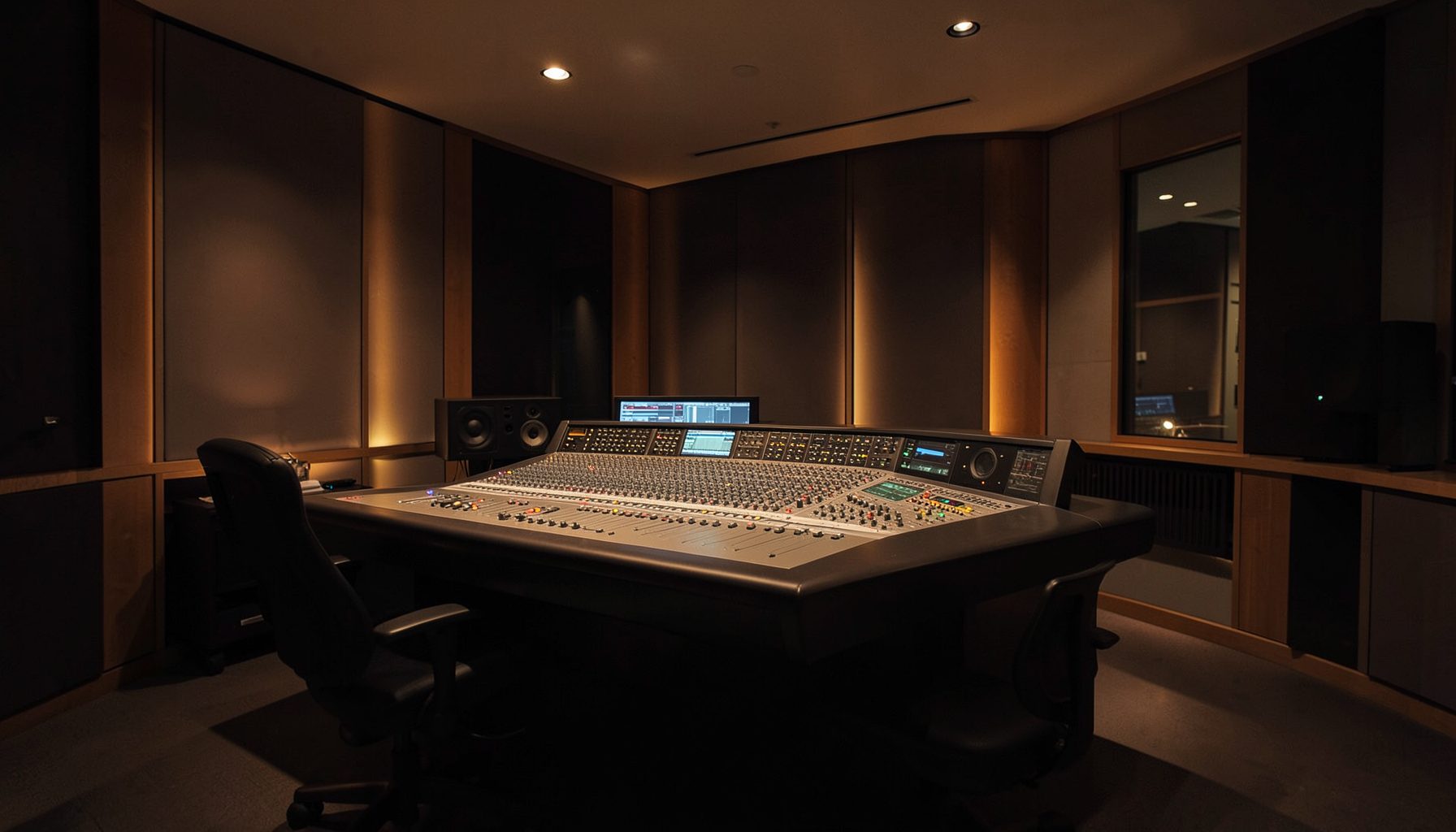
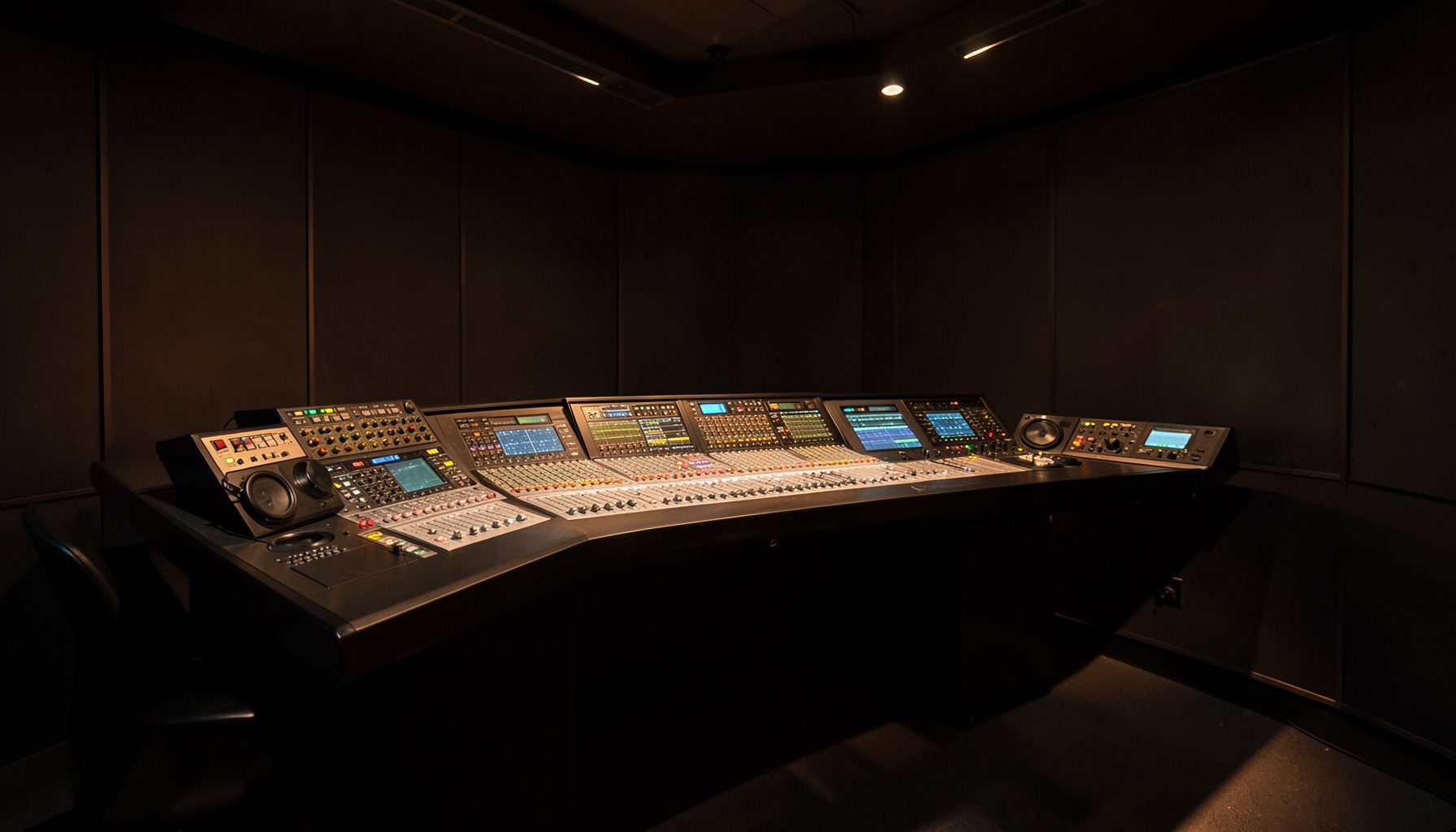
Ruby is designed to give operators a direct surface for mixing, monitoring and source management, while much of the processing and I/O can live elsewhere in the network. VisTool extends that control layer with configurable graphical interfaces, which can be useful for technical monitoring, router panels and simplified operator screens.
The adjustment comes when the console surface no longer represents the whole system. A fader may control a source that is processed in a remote node, while a studio panel may expose only the functions needed by presenters. Engineers must learn where a setting lives, who has permission to change it and how that change affects other users.
Building confidence with routing and clocking
IP audio depends on disciplined configuration. AES67 or RAVENNA streams, PTP timing, multicast addresses and network redundancy all need to work together. A small error in a switch configuration can look like an audio fault, even when the console and node are operating correctly.
A sensible training path starts with a contained test network. Patch a few microphones, playout sources and monitoring outputs, then deliberately test a failed link, a restarted device and a changed clock source. Engineers can also study modular Ruby setups to see how a console and processing core can be scaled around the station’s requirements.
| Engineering task | Traditional console mindset | Lawo IP workflow |
|---|---|---|
| Source connection | Follow physical wiring | Check networked I/O and subscriptions |
| Processing | Usually tied to a channel or rack | Assigned through a shared audio core |
| Clocking | Often local or dedicated | Managed through PTP and network design |
| Fault finding | Inspect cable, patch or module | Check device, stream, switch and timing layers |
| Expansion | Add hardware channels | Add licences, nodes, surfaces or network capacity |
Fault finding across several layers
Troubleshooting becomes faster when engineers separate the problem into layers. First check whether the source reaches the node. Then confirm that the stream is present, the subscription is correct, the clock is stable and the destination is receiving the expected format. Only after those checks should the investigation focus on fader settings or processing.
This method is valuable in Australian facilities where one technical team may support multiple studios, a remote booth and an outside broadcast position. A station in Perth working with contributors on the east coast may also need to distinguish an IP routing fault from contribution latency or an upstream codec problem.
Adapting to smaller operational teams
Many Australian stations operate with compact crews, especially outside the capital cities. The same person may handle studio maintenance, playout support, live crosses and weekend sports. An IP system can reduce physical complexity, but it also rewards clear templates, documented permissions and repeatable recovery procedures.
Operators should receive role-based interfaces rather than an unrestricted view of every route and processor. A presenter might need source selection and talkback, while a technical operator needs access to clock status, network subscriptions and redundancy alarms. Well-designed screens reduce accidental changes during a live breakfast programme.
Managing virtualisation and automation
Lawo’s wider ecosystem includes software-based tools such as RƎLAY and AutoMix, which extend the workflow beyond a physical mixing surface. Virtualised production can make it easier to add remote operators, temporary studios or event-specific processing without rebuilding the entire rack.
Automation requires careful judgement. AutoMix can help maintain consistent speech levels, but engineers still need to understand microphone placement, room acoustics, gating behaviour and the difference between a technical correction and an editorial choice. A system that is easy to recall must still be monitored critically.
For stations exploring online audio, branded streams or interactive formats, technical teams may also encounter unfamiliar production models. An example of how broadcast-style audio thinking can connect with digital entertainment is discussed in interactive audio formats, although the engineering fundamentals—clean routing, controlled levels and dependable monitoring—remain familiar.
Turning training into operational confidence
The strongest results come from combining vendor training with station-specific exercises. A generic demonstration may show how to route a source, but an Australian broadcaster also needs to rehearse a failed studio link, a remote interview from regional Queensland and a last-minute switch to backup playout.
Documentation should include network diagrams, IP addresses, clock priorities, stream names, access roles and recovery steps. Keep the language practical and consistent with the control screens. During a live incident, “check PTP grandmaster priority” is more useful than a vague instruction to inspect the network.
The learning curve becomes manageable when engineers treat Lawo’s IP consoles as part of a complete broadcast platform rather than as a replacement fader surface. Build a small lab, document every route, rehearse failures and make the first operational goal simple: identify where the audio is, where it should go and which layer is preventing it from getting there.