How SMPTE ST 2110 Shapes Lawo Broadcast 3.0 Equipment
SMPTE ST 2110 has changed the way professional media systems move audio, video, and ancillary data through a facility. Instead of carrying every component inside a single SDI or transport stream, the standard separates media essences into synchronized IP flows. Broadcasters can then route, process, monitor, and share each flow across a common network.
For Lawo, this approach aligns closely with Broadcast 3.0: an ecosystem built around software-defined production, open networking, centralized control, and scalable hardware. Products such as Ruby mixing consoles, Power Core audio nodes, VisTool, RƎLAY, and AutoMix can participate in workflows where physical inputs and outputs are less important than services, connections, and available resources.
The result is more than an interface change. ST 2110 influences system architecture, timing, redundancy, facility design, and daily operations. It also gives broadcasters a practical path from dedicated point-to-point infrastructure toward flexible, IP-based production environments.
IP Media as the Broadcast 3.0 Foundation
ST 2110 divides a production signal into distinct network streams. Audio, video, and data can travel independently while remaining aligned through precision timing. This makes it possible to send one audio source to several destinations without repeatedly converting or embedding it into a larger transport structure.
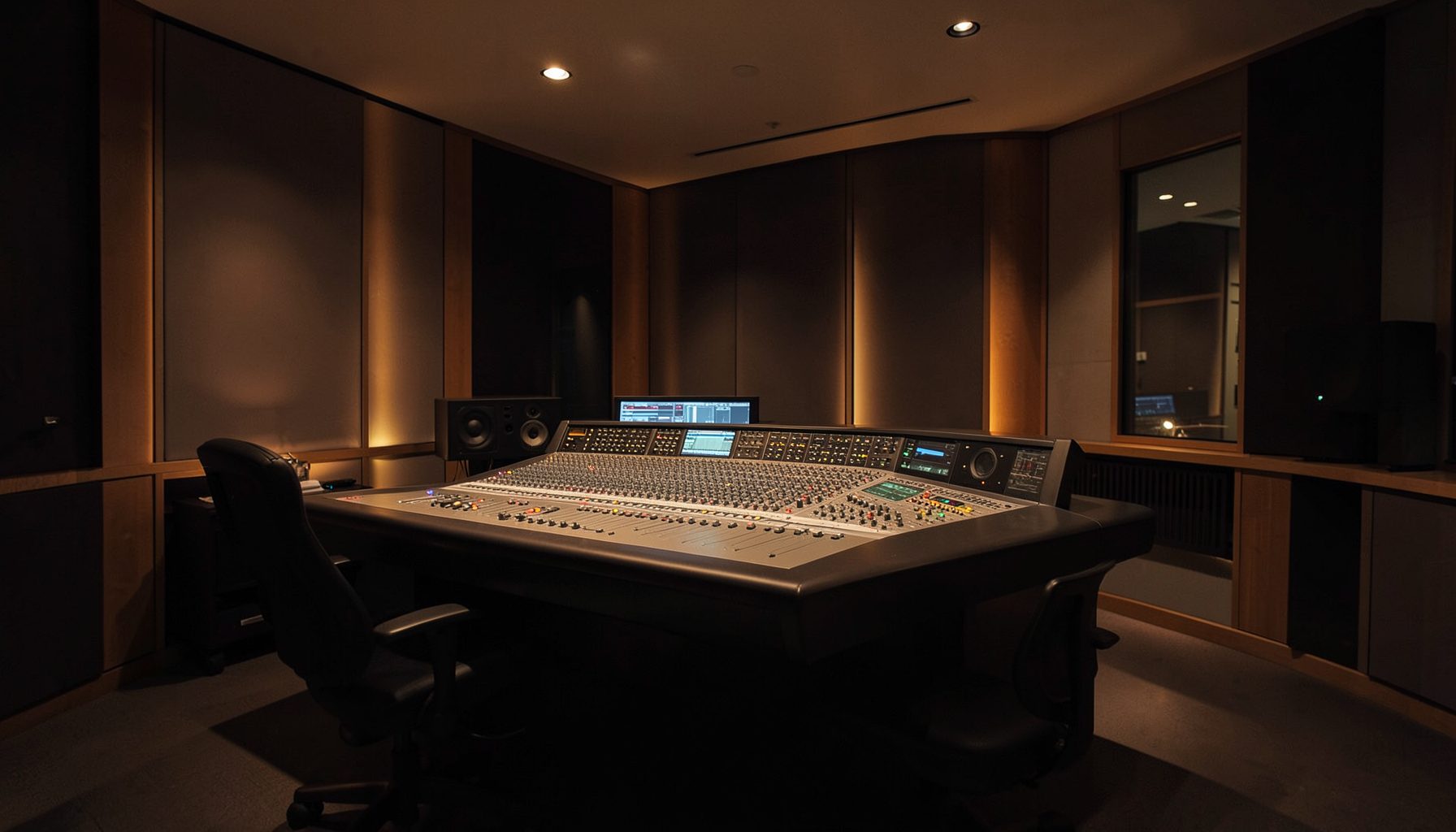
Lawo Broadcast 3.0 equipment is designed for this kind of distributed operation. A Power Core audio node can provide processing and I/O close to the source, while a Ruby console offers the operator a coherent control surface. The underlying media paths can remain on the IP network, allowing facilities to expand capacity without rebuilding every connection.
This architecture is valuable for radio groups, television operations, live venues, and post-production teams with shared technical resources. A studio, newsroom, or remote production position can access network services without requiring a dedicated equipment chain for every location.
How the Standard Changes Signal Transport
An ST 2110 implementation depends on more than Ethernet bandwidth. Precision Time Protocol, commonly associated with SMPTE ST 2059, provides the timing reference needed to keep separate streams synchronized. Network design must also account for multicast behavior, traffic shaping, clock redundancy, and monitoring of packet performance.
In a Lawo environment, these capabilities support predictable interaction between audio processing, mixing, playout, and control layers. RƎLAY virtual radio tools can use software-based workflows, while Power Core handles audio services on a networked platform. The infrastructure becomes a pool of addressable capabilities rather than a fixed row of isolated devices.
Redundant paths are another important consideration. With suitable network architecture, duplicate media streams can travel through independent routes, helping systems continue operating if a switch, cable, or interface fails. This resilience is particularly relevant to broadcast operations where continuous availability is a core requirement.
Effects on Consoles, Nodes, and Software
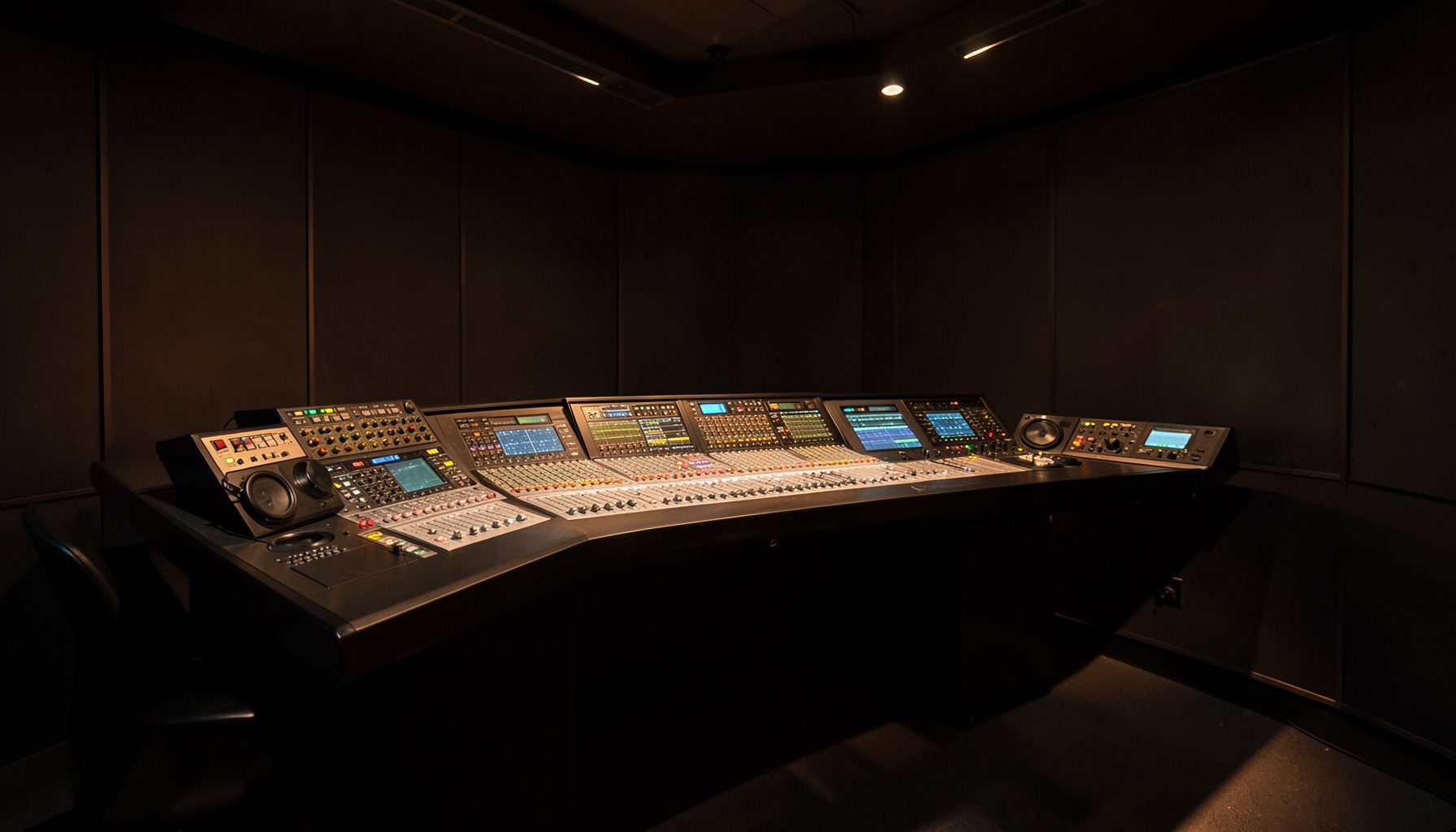
The move to IP changes what operators expect from a mixing console. Ruby remains a tactile production interface, but its source selection and destination control can extend across the facility. Instead of being limited to local connectors, the console can work with networked audio sources, remote studios, and shared processing resources.
Power Core complements this model by combining audio I/O, routing, mixing, and processing in a compact network appliance. Capacity can be placed where it is needed, with control separated from signal handling. That separation simplifies some installations and gives engineers more freedom when changing studio layouts or adding production positions.
Software also becomes a central part of the user experience. VisTool can provide custom control panels, status displays, meters, and operator views for an IP-connected system. Broadcasters exploring tailored interfaces can review custom VisTool controls to see how widgets can make complex networked resources easier to manage.
Comparing Traditional and ST 2110 Workflows
The transition is easiest to understand by comparing the operational assumptions behind each approach. Legacy systems can remain highly effective, but their expansion model is usually tied to physical routing and format-specific hardware. IP systems place greater emphasis on network engineering and software configuration.
| Area | Conventional baseband workflow | ST 2110 and Broadcast 3.0 workflow |
|---|---|---|
| Signal transport | Dedicated point-to-point paths | Routed, multicast IP flows |
| Media structure | Audio and video often combined | Separate synchronized essences |
| Expansion | Add hardware and cabling | Add services, ports, or network capacity |
| Control | Closely tied to local equipment | Centralized and software-defined |
| Redundancy | Physical backup chains | Diverse network paths and stream protection |
| Facility changes | Often require rewiring | Usually handled through configuration |
| Resource sharing | Limited by fixed connections | Supports shared processing and I/O |
This difference affects project planning. Engineers must define IP addressing, timing domains, Quality of Service policies, and management systems before commissioning. Operators also need clear naming conventions and access rules so a large pool of network resources remains understandable.
Benefits for Radio and Live Production
Radio facilities can gain particular value from low-latency, network-based audio distribution. Studios, voice booths, newsrooms, and technical rooms can share sources without long analog or digital cable runs. A central processing layer can serve several rooms, while local control surfaces preserve the speed and familiarity operators need during live shows.
AutoMix can support consistent microphone balancing in discussion, news, and production scenarios. When combined with networked audio nodes and flexible control, this enables repeatable workflows across multiple studios. Changes to a room’s function can be managed through system configuration instead of a complete physical rebuild.
For live performance and theatrical applications, the same principles support mobile or distributed production. RƎLAY and other software-oriented tools can extend the workflow beyond a traditional hardware footprint. The key benefit is the ability to place processing and control where production requires them while preserving a common operational model.
Priorities for a Reliable Deployment
A successful ST 2110 installation depends on disciplined engineering as much as on compatible equipment. The following priorities help translate the standard into a dependable Lawo Broadcast 3.0 system:
- Build redundant network paths with independent switches, cabling, and power considerations.
- Establish a resilient PTP timing design and monitor clock health continuously.
- Plan multicast, Quality of Service, bandwidth, and packet-loss behavior before equipment arrives.
- Use consistent names, access policies, and documentation for every media flow and service.
- Test failure scenarios, including link loss, clock changes, device replacement, and control-system outages.
Monitoring should cover the entire chain rather than focusing only on the console or node. Engineers need visibility into timing offsets, stream availability, network congestion, and device status. Clear diagnostics reduce the time required to identify whether a fault originates in media transport, processing, or control.
Training also matters. Operators do not need to become network engineers, but they should understand how sources are represented, how connections are made, and what redundancy indicators mean. A well-designed interface can hide unnecessary complexity without hiding important system conditions.
A Scalable Direction for Broadcast Facilities
SMPTE ST 2110 gives Lawo Broadcast 3.0 equipment a standards-based foundation for separating media transport from control and processing. That separation makes facilities easier to scale, encourages shared infrastructure, and supports a gradual shift toward virtualized and software-defined production.
The strongest results come from treating the network as part of the broadcast plant rather than as general-purpose office infrastructure. With careful timing, redundancy, monitoring, and operational design, Ruby, Power Core, VisTool, RƎLAY, and AutoMix can work together as flexible services within a unified media environment.
Review the Lawo Broadcast 3.0 ecosystem, map current signal paths, and identify the studios or production areas that would benefit first from ST 2110 connectivity. A phased deployment can preserve existing operations while creating a clear route toward a more adaptable IP broadcast facility.