BPM-Sorted Playlists for Seamless Beat-Matched Transitions
A track that lands a beat late, or a jingle that arrives a fraction of a second after the network feed returns, is the kind of detail listeners feel more than they can name. For decades, presenters and producers handled that timing by ear, cueing the next item on a stopwatch or watching a digital clock in the booth. Software playout changed the mechanics of the handover, and tempo-aware ordering changed the feel of it.
Lawo's RƎLAY virtual radio tools bring that awareness to a playout engine that runs on modest server hardware. Rather than treating every file as an isolated item in a queue, the system can grade music by BPM and reorder the running playlist so successive items share a compatible tempo. The result is a sequence that keeps its momentum, with fewer abrupt jumps, fewer manual crossfades and far less dead air between songs.
That capability matters across a range of Australian formats: the long overnight rotations of a national youth network, a volunteer-run community station in regional New South Wales, the tightly scripted hours of a metropolitan cluster in Brisbane or Melbourne, and the slow build of a drama soundtrack recorded for radio and headphone delivery.
The details that decide whether the feature helps or irritates are technical: how tempo analysis reads a file, what happens when a producer changes the running order by hand, whether the monitoring chain reveals timing errors the software cannot correct, and where the wider Lawo toolchain fits around the playout engine.
What tempo-aware ordering actually changes
Tempo is one of the strongest cues listeners use to predict what comes next. When two tracks share a tempo, a crossfade can be aligned bar for bar, so the underlying pulse stays constant and the audience hears a single continuous groove rather than two songs stitched together. When the tempo jumps sharply, the ear registers a stumble even if the levels and the crossfade are technically clean.
The practical value is an energy curve. A broadcaster can define bands — a warm-up range around 80 to 95 BPM, a daytime band near 100 to 115, a drive-time stretch from 120 to 135, and a peak band above that — and let the running order build through them without a producer moving every file by hand. The sort is not choosing music taste; it is choosing the order that keeps a tempo block coherent.
The second change is quieter but just as useful. Sorting happens before the broadcast, not during it, so the live shift keeps the simple job of firing cues, following the script and handling the interview segment, while the automated block handles pacing.
How the sort reads a track
RƎLAY works with the metadata carried in the audio files themselves and with analysis of the audio where that metadata is missing or unreliable. A properly tagged file gives the system a tempo value immediately; a poorly tagged one has to be analysed, which takes time but keeps the library usable rather than forcing someone to hunt through a folder of untagged MP3s.
Sorting applies to the music items in the running playlist. Spoken content, IDs, jingles, ads and live items stay where the producer placed them, and a manually pinned track is not dragged out of position by a recalculation. When a producer cuts or adds an item, the surrounding block is re-graded so the tempo continuity survives the edit.
There are honest limits. Half-time and double-time material can be read incorrectly, live recordings with crowd noise complicate analysis, and a track recorded at a different speed from its commercial release will not sort the way its catalogue entry suggests. Podcast and spoken-word items have no meaningful beat at all, so they need to be excluded from the tempo window rather than forced into it.
Building a tempo-graded day
Library hygiene decides most of the outcome. Consistent file naming, embedded BPM and genre tags, and a clean separation of music, speech and jingle folders mean the sort has something reliable to work with. A mixed library of rips, promo edits and voice-overs will always need manual correction, and that correction is faster when the metadata is close to right in the first place.
Next comes the window. A breakfast show's first hour might be set between 92 and 104 BPM, while the afternoon slot opens the range to 108 to 128. Sorting within that window and auditioning the first and last three transitions usually reveals whether the range is too narrow, too wide, or already right. Widening a range lets a slower ballad sit next to a faster track, which can work musically and can also sound like a mistake.
Overrides still matter. A sponsor tie-in that needs a specific track, a pre-announced premiere, or a title sequence with an exact running time are all reasons to lock an item. Beat matching handles the shape of the hour; it does not replace editorial judgement about what belongs in it.
Where beat matching earns its keep in Australia
National networks live with long continuous music blocks. triple j's overnight and daytime rotations, ABC Radio National and SBS all run sequences where a handover every ninety minutes would be jarring to a listener at home, and where the practical alternative is a producer spending an entire shift adjusting fades.
Community radio is where the automation argument is strongest. Stations such as FBi Radio in Melbourne, 2XX in Canberra and a number of regional licensees in Victoria and Queensland run on volunteers with limited time and irregular schedules. A tempo-sorted music bed lets a small team publish a day of programming that sounds considered, without hand-placing every transition.
The DAB+ trials in Melbourne and Adelaide sharpen the stakes. A compressed 128 kbit stream has little headroom for artefacts, so a badly timed transition is more audible than it would be on FM, where an audio dropout or a duplicated chorus becomes a phone call to the studio.
Radio drama adds a different requirement. The Australian serial tradition, from the afternoon serials through to contemporary drama production for ABC and independent makers in Melbourne, depends on music that supports a scene rather than a transition — which is where tempo control becomes a narrative tool instead of a technical one.
Monitoring, calibration and the human ear
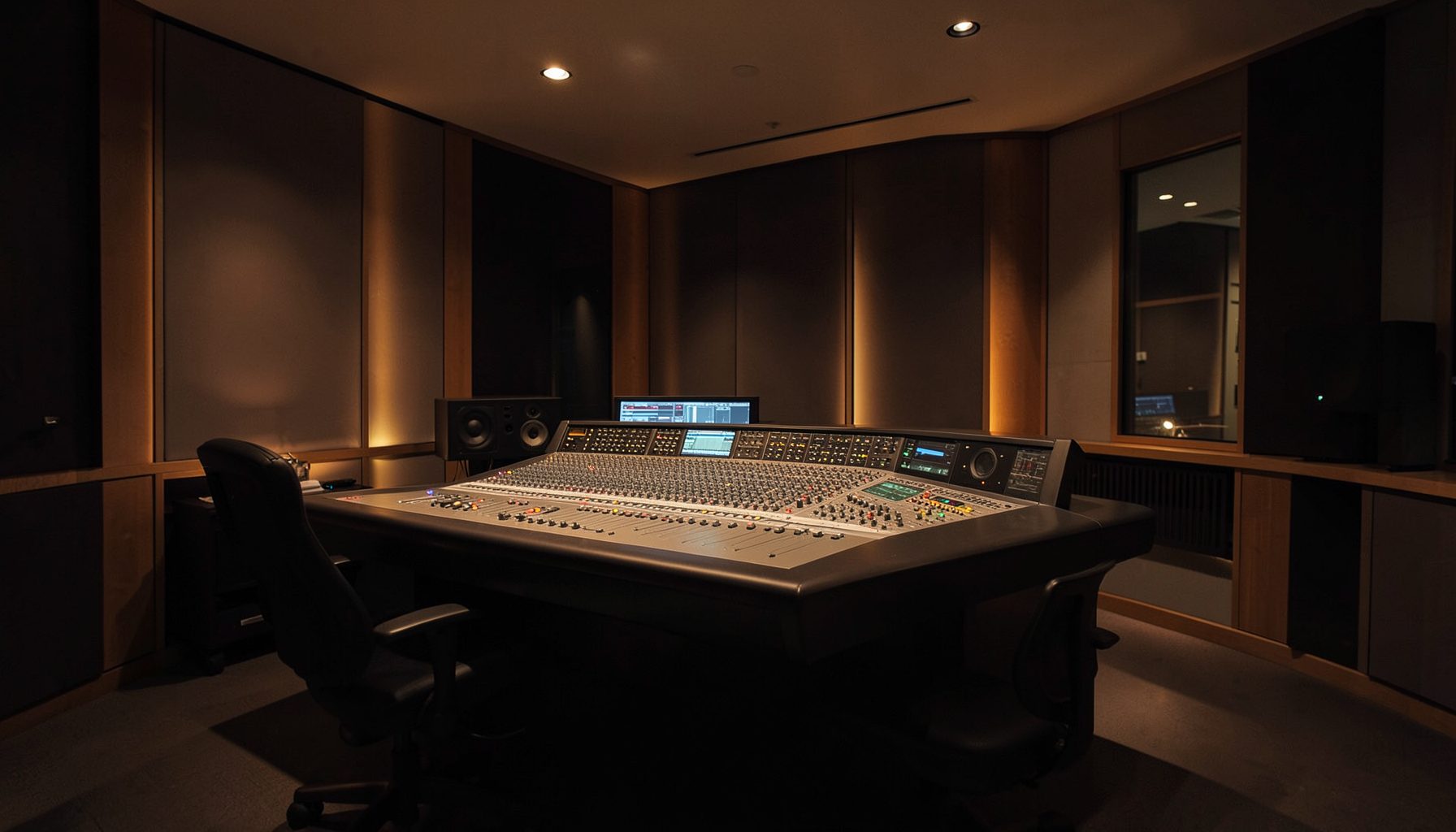
None of this works if the studio cannot reveal the problem. If the monitoring chain is misaligned or the speakers are fighting the room, a producer will judge a perfectly timed crossfade as clumsy and start compensating with a hand-nudged fader. Getting the monitoring right first is what makes the sort trustworthy, and Lawo's guidance on studio loudspeaker calibration is a practical starting point for a new build in Sydney, Adelaide or Perth.
Level matching matters as much as timing. Working to ATSC A/85 and the EBU R128 conventions, then checking the loudness continuity of a sorted block, keeps the sort from creating a new problem — a run of tracks that are correctly matched in tempo but noticeably louder or softer than the item before them.
A short audition routine catches most of it. Watch the waveform shape of a crossfade on the two decks, listen for the beat grid to hold steady through the middle of it, and check the loudness jump at the handover. A seam that sounds wrong in a treated room at moderate level will not improve overnight.
Comparing the available ordering approaches
| Approach | What decides the order | Transition control | Best suited to | Watch out for |
|---|---|---|---|---|
| Hand-scheduled playlist | Producer judgement and clock times | Exact, cue by cue | Interviews, drive-time specials, ad breaks | Consumes hours of preparation |
| BPM sort in RƎLAY | Analysed tempo, then ordered by band | Bar-aligned crossfades | Continuous music blocks | Tempo alone cannot fix key clashes |
| Genre or mood tags | Broad categories and editorial rules | Crossfades within a category | Format variety across a full day | Coarse boundaries between styles |
| Automatic mixing and level riding | Audio engine detecting speech and level | Automatic ducking and gain control | Overnight automation | Can flatten dynamics and character |
| Clock-based rotation | Fixed rotation rules and schedule | Deterministic but fixed | Simulcasts and networked feeds | No adaptation to how a block is flowing |
The methods are complements rather than rivals. A hand-authored playlist still wins for a two-minute interview break or a scripted drama sequence, while a tempo sort handles the ninety minutes of music around it. Running the sort as the baseline inside an editor's own block gives the speed of automation without surrendering the running order to it.
Hybrid workflows also suit Australian scheduling. A regional station feeding a network simulcast can keep a fixed rotation for the network feed and apply tempo sorting to the locally produced material between networked items, so the station's own music still lands cleanly against the incoming feed.
Where RƎLAY sits in the wider chain
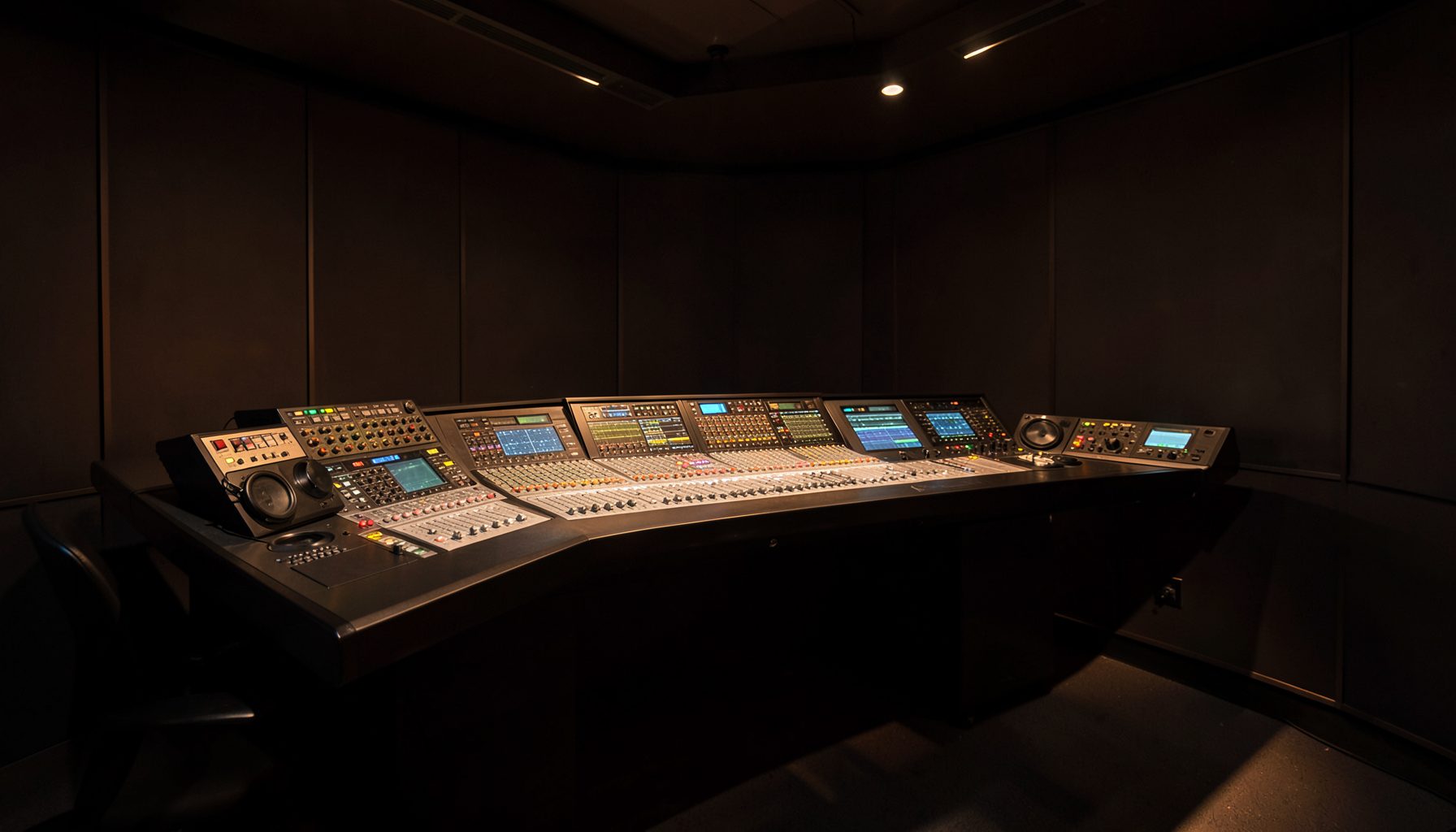
Lawo's Broadcast 3.0 ecosystem treats the studio, the network and the playout server as one IP-based system. A Ruby console handles the presenter desk, Power Core nodes move audio and AES67 signals around the building, VisTool covers recording and studio software tasks, AutoMix manages multiple microphone levels, and RƎLAY sits on the playout server where the sorted playlist becomes an on-air sequence.
That layering matters for a station running a satellite link back to Sydney. The music originates at a playout engine in one place, the presenter's desk runs in another, and the transition has to survive the hop. Tempo-graded blocks reduce the number of hand-tuned moments crossing that link, and the same library can be republished for a second region without re-cueing every file.
The practical takeaway
A tempo-sorted playlist is a well-ordered sequence, not a finished hour of radio. The practical takeaway is narrow and repeatable: set a tempo range that suits the segment, let RƎLAY grade the block, then listen to the first three and last three seams on calibrated studio monitors before the show goes to air. The sort removes the mechanical work; the listening decides whether the music actually flows.