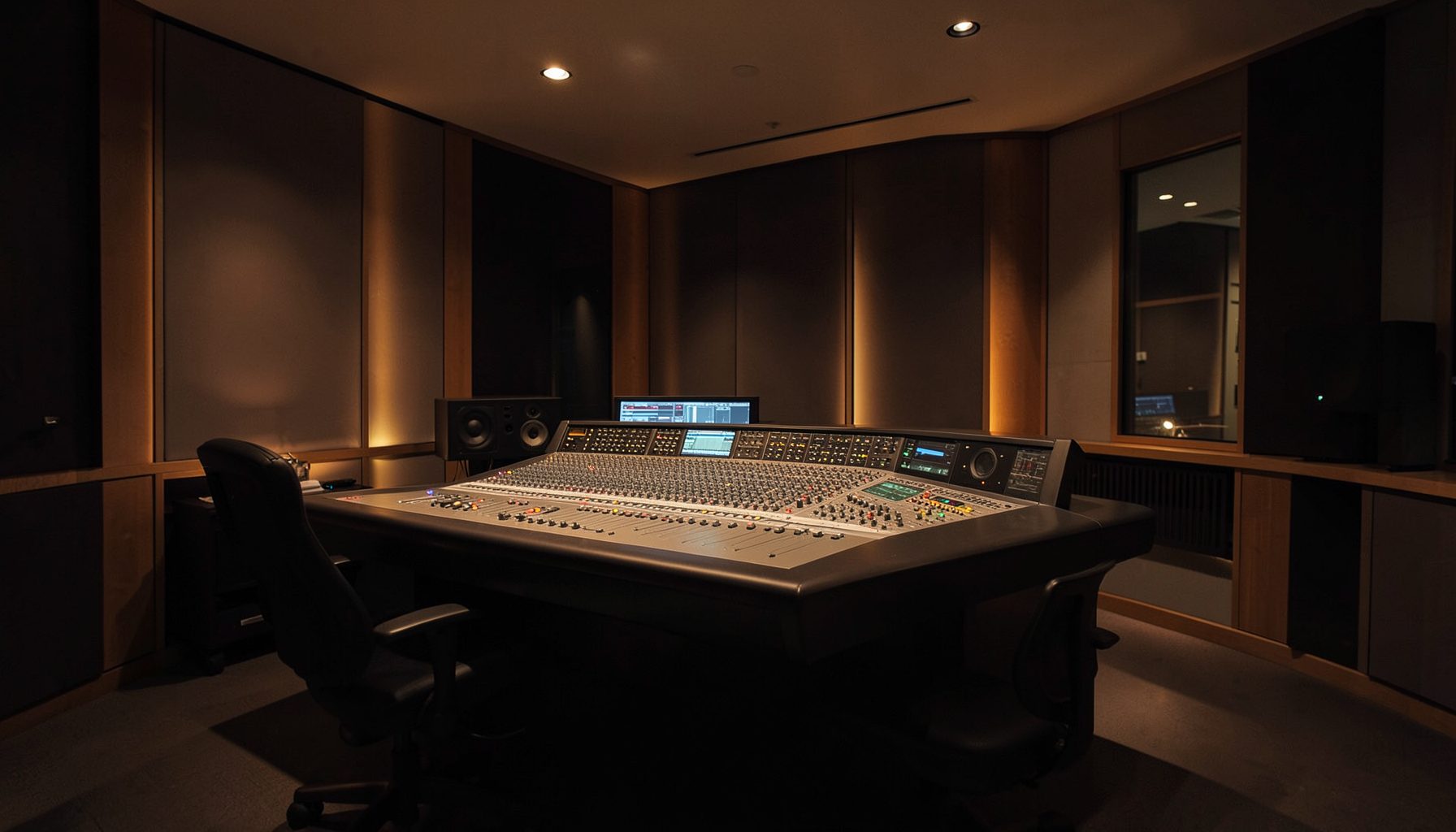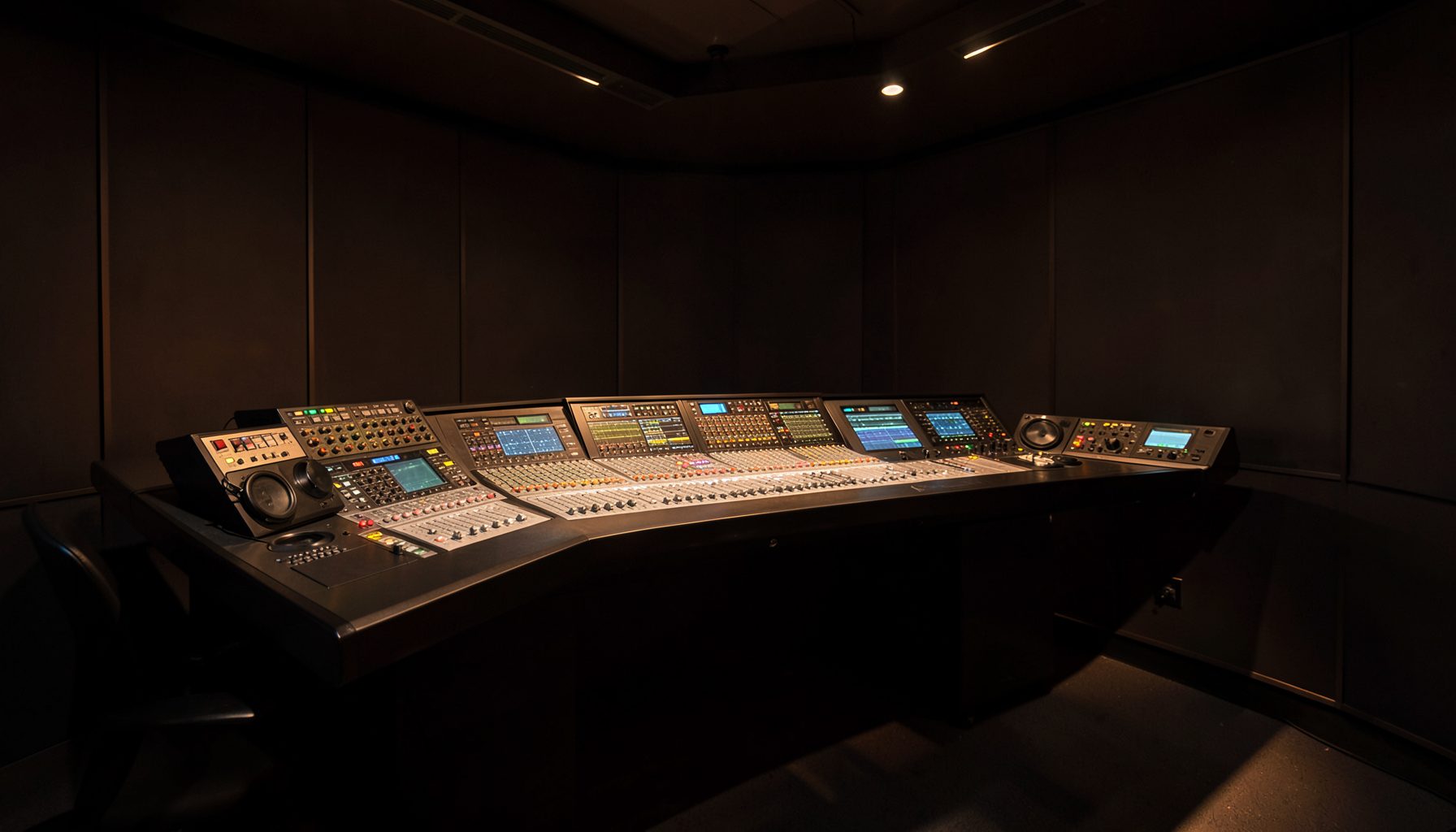
RƎLAY loop playback for continuous jingle checks
A station jingle set is short — often under fifteen seconds — and carries more brand decisions per second than almost anything else in the schedule. Imaging IDs, sweeps, beds and voiceover tell listeners who they are tuned to, and producers usually audition that material once, at full attention, in a quiet room. That listen has a habit of passing. The set sounds right on the desk, yet the real question is how it holds up when the same few seconds return every half hour for a whole shift.
Lawo's RƎLAY offers a different way to listen. Its loop playback function repeats a chosen jingle set on demand, keeping the package under the producer's ear in something closer to the exposure a listener actually gets. The aim is not a busier workstation but a fairer test: trading one subjective pass for continuous audition.
Why a jingle set deserves a longer listen
Faults that survive a careful listen usually hide in repetition. A click at a splice sits under compression; a sweep carries a stray breath before the vocal; two versions of the same ID arrive with different music; a bed ducks oddly when a second voiceover is pulled under it. In a silent studio the ear has nowhere to hide, so the set passes.
A loop changes the psychology. Once a set repeats, the producer stops hunting for faults and starts seeing them — the join that clicks on every pass, the level that creeps, the slogan that gets tiresome faster than expected. It also mirrors the listener: someone in Sydney hears imaging dozens of times before lunch, a driver between Dubbo and Parkes hears it every few minutes for hours. Continuous audition is the closest a producer can come to that without leaving the desk.
What loop playback actually does
Concretely, loop playback takes a selected jingle set and repeats it while the producer mixes, trims a vocal, or talks a presenter through the next hour. Because RƎLAY runs as Lawo's browser-based virtual radio tool, the audition can happen at the console, on a remote production PC, or from a home connection over a secure link — useful when whoever owns the imaging is not in the main studio.
Nothing reaches the playout system. The loop is an audition path, not a broadcast route, so a half-finished edit can keep running without touching what goes to air. That separation matters to engineers moving to Lawo's IP consoles, who arrive with habits built around physical switchers and now have to trust a monitor path instead. Monitoring quality follows the rest of the RƎLAY remote contribution chain: clean feed, low latency, and a picture of the studio as close as the network allows.
Where it fits in the RƎLAY workflow
RƎLAY already covers the unglamorous parts of virtual radio production: a presenter joining a show from the other side of the country, an ad auditioned and approved from home, a remote producer voicing a promo and sending it back. Loop playback sits inside that workflow. The operator hosting a breakfast shift remotely can keep the imaging under audition while waiting for the next network feed.
That suits stations spread over a wide footprint, where one producer may own imaging for several network stations in country towns, each with its own sweep and bed. Distributed infrastructure is no new idea in radio — the SELF framework has explored how stations verify schedules and content without a central owner — but the practical side still comes down to one person hearing the right material often enough to catch a mistake.
RƎLAY also keeps the loop ready when the studio is busy. Imaging revisions tend to arrive at awkward moments — a late sponsor change, a new presenter wanting a different bed — and a repeatable audition means the change can be checked in minutes instead of scheduled around the drive.
Different review habits expose different faults:
| Method | What it exposes | Where it falls short | Best fit |
|---|---|---|---|
| Single careful listen | Detail errors in a quiet room | Fatigue, no sense of rotation | Quick pre-flight check |
| Loop Playback in RƎLAY | Continuity, splice clicks, level drift, repetition fatigue | Omits the live voice chain | Imaging reviews and pre-shift checks |
| Reference monitor on the station bus | How the set sits against the live mix | Only the moment you are listening | Live checks at handover |
| Rendered playlist audition | Sequencing and timing | Nothing about spontaneity | Showreels and voice checks |
Running the loop in an Australian station
In the metro markets, imaging is usually shared across a network: ARN Media's Triple M, Hit Radio and KIIS brands in Sydney and Brisbane, Southern Cross Media's Fox and Gold networks in Melbourne and Adelaide. A jingle set is then the signature of a dozen stations at once, and every revision travels. Loop playback lets a producer in a network production centre confirm that a revised sweep still works inside an automated break rather than a demo reel.
Regional Australia makes the same case with less infrastructure. Broadcast Holdings' 2CS in Bendigo, 4IP in Toowoomba and 8HA in Darwin run lean studios where one person wears several hats, and a sister station's imaging can be a VoIP call away. With DAB+ services now on air in Melbourne and Adelaide, a jingle set has more airing routes to satisfy than an FM feed alone. If it will repeat across three platforms, hearing it repeat locally is cheap insurance. Local studio culture rewards that practicality too: a producer will call a package fair dinkum good and move on, while an engineer who wants certainty will listen for an hour before signing it off.
What loop playback will not tell you
It is a listening tool, not a compliance tool. It will not verify that sponsor copy matches what was approved, that the music is licensed for the station's use, or that delivered loudness meets the -24 LUFS target Australian broadcast relies on. Those checks sit with the traffic system, the music scheduler, the metering chain and legal sign-off. Nor does it replace the live path: a set that loops beautifully can still behave differently once processing, playout automation and the voice chain are in front of it, so use the loop to judge the material and reference monitoring to judge the station.
Rules matter in a wider sense as well. Audiences increasingly expect clear, published conditions from organisations they spend time with, and the argument over Dutch online poker rules is a reminder that vague promises get noticed. A jingle set makes a promise in sound — this is the station, this is the music — and keeping that promise consistent answers the same expectation.
Keeping imaging honest across stations
The most valuable use is administrative. When a shared imaging package changes, every affected station needs to hear the new version, not just the producer who made it. Looping the set in RƎLAY lets that check happen in parallel, on each station's own feed, with each presenter hearing it in context. The second use is diagnostic: when a jingle set starts sounding off in rotation — a click, a level drop, a vocal sitting differently — the loop narrows the fault to the material itself rather than to the playout system, the processing preset or the clock, removing guesswork from a session that used to mean playing the set repeatedly and waiting for a cue. A third use is editorial, because new imaging is signed off by people who know what they want to hear, and a loop makes disagreement visible: if the producer is sick of the sweep after twenty repetitions, so will the audience be.
What should stay with you is simple: a jingle set judged once is a jingle set that has not really been judged. RƎLAY's loop playback turns a brief audition into a continuous one, and that change of scale catches the small faults — clicks, mismatched takes, creeping levels, slogan fatigue — that only show up in rotation.
For stations sharing imaging across metro networks, regional towns and DAB+ services, continuous audition is the practical way to keep one brand sounding like one brand. The set signed off is the set listeners hear all day.