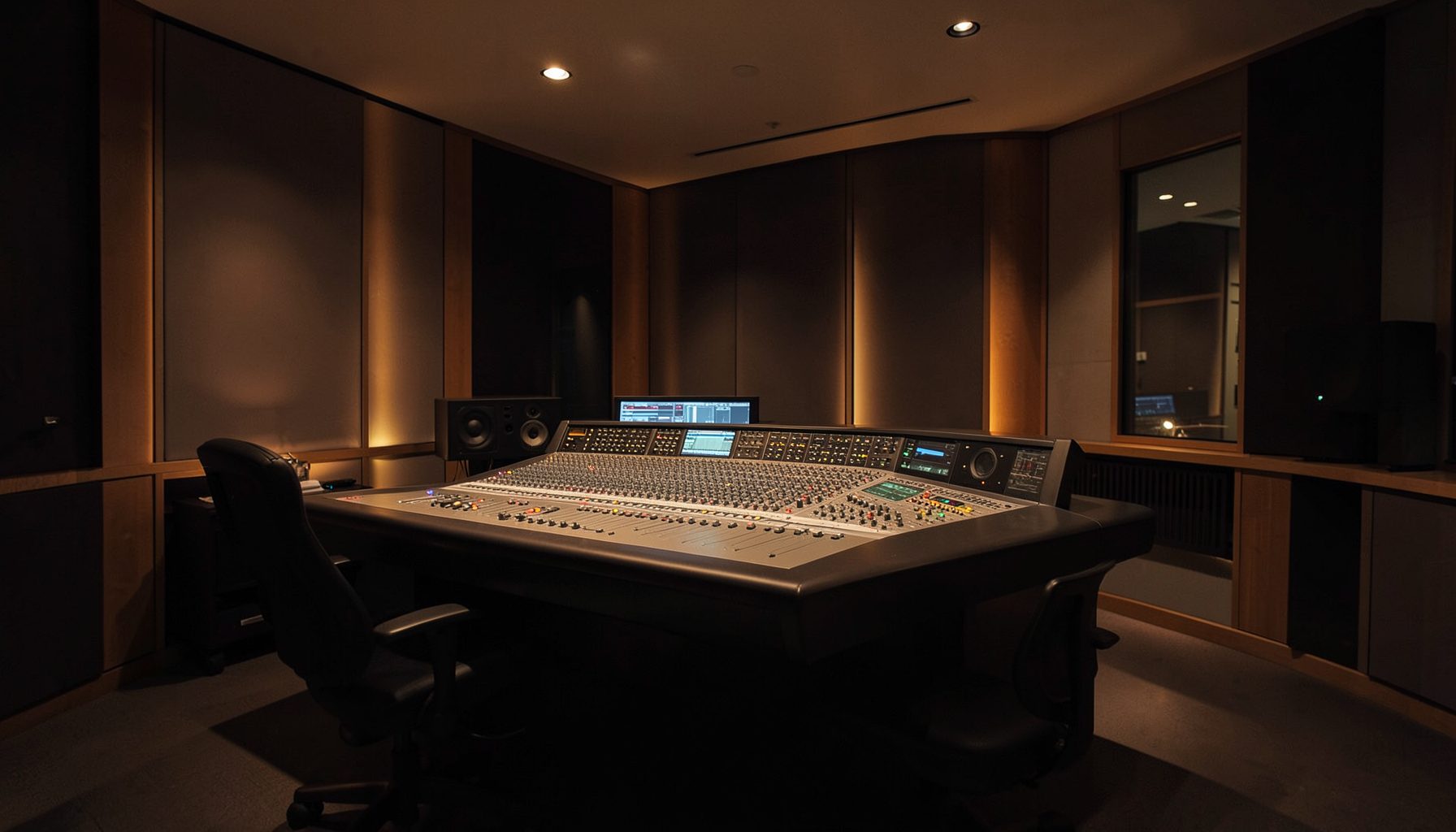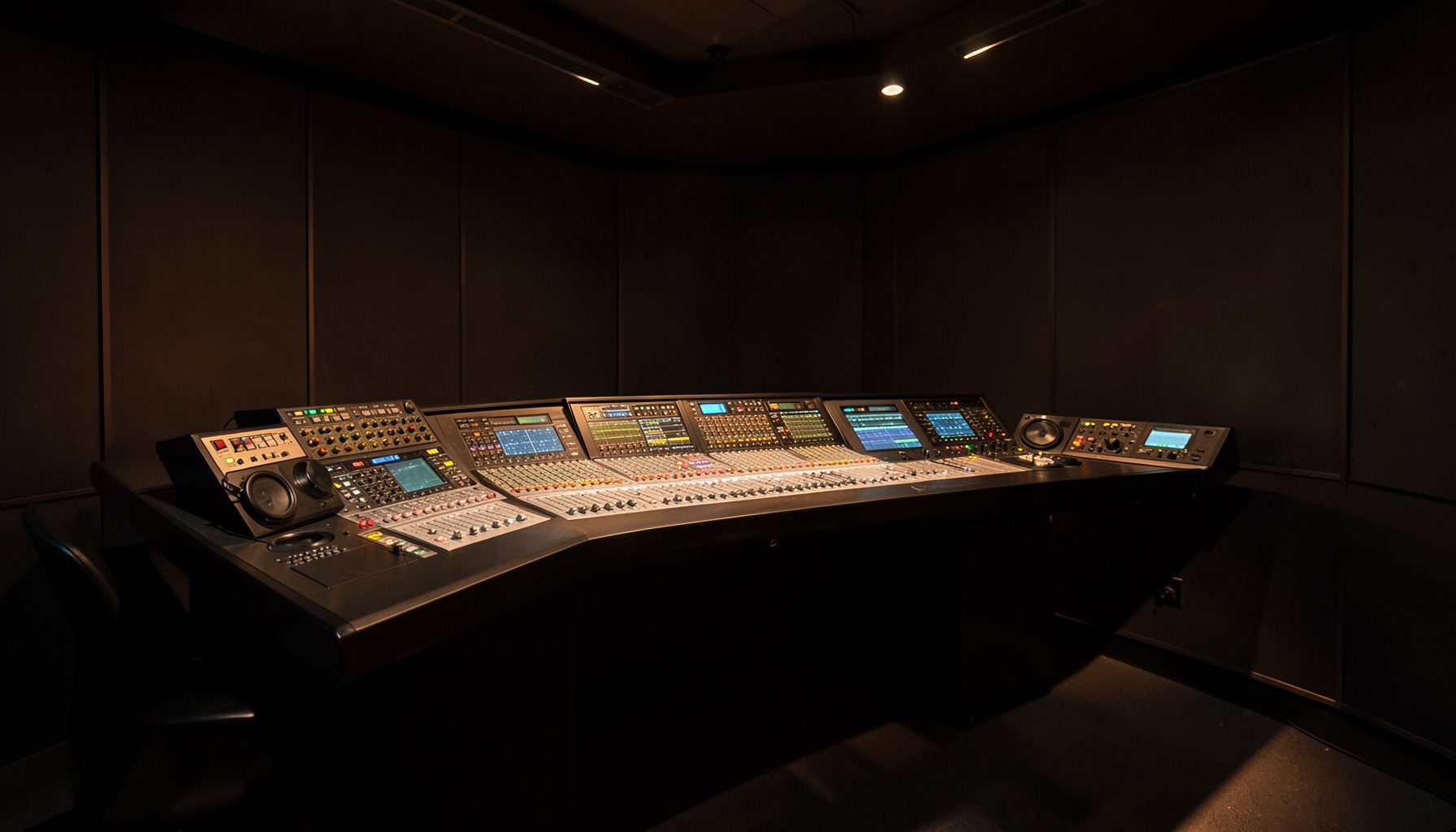
Power Core's native sample rate conversion for mixed audio networks
Power Core sits at the heart of many IP-based radio plants, handling the timing issues that used to require banks of outboard converters. For broadcasters in Sydney, Melbourne and Brisbane, mixing 48 kHz and 96 kHz sources on a single network has become an operational necessity. As facilities move deeper into software-defined workflows, the question is no longer whether to adopt sample-rate flexibility, but how cleanly it integrates into the existing signal chain.
The Australian audio landscape is unusually demanding. National broadcasters, regional commercial networks and community stations coexist, often sharing feeds with international partners running different clock domains. Native SRC on a device like Power Core removes a layer of hardware that used to clutter equipment rooms in Adelaide and Perth, where space and power come at a premium.
The clock challenge in modern broadcast plants
Sample rate mismatches are an everyday reality in facilities that have evolved over many years. A studio might run its main playout at 48 kHz while a visiting remote truck arrives carrying 96 kHz stems from a music session. Without conversion somewhere in the chain, clicks, dropouts and buffer overruns are almost guaranteed. The traditional solution was a wall of outboard converters, each adding latency and consuming another mains outlet in an already tight rack.
Australia's geography amplifies the problem. Signals routed between Adelaide and Darwin, or between regional hubs and the eastern seaboard, often traverse multiple clock domains before reaching a mixing console. Operators under the Australian Communications and Media Authority must keep audio quality consistent regardless of where content originates, so the conversion stage must be invisible to the listener.
How native SRC operates inside Power Core
Power Core's onboard SRC engine works at the input stage, accepting asynchronous streams and re-aligning them to the engineer's reference clock without external hardware. Because the conversion happens inside the same chassis that handles routing, mixing and processing, the result is a predictable latency budget and a single monitoring point.
This matters during busy production mornings in capital city studios, where a Ruby console might be feeding commercials, network news and a live cross to a regional reporter, all arriving at slightly different rates. The same Power Core can host RƎLAY virtual radio tools, AoIP streams and MADI sources, normalising them before they reach the surface. Engineers exploring the Ruby mixing platform will find that the console and the node share native SRC logic, so fader movements do not trigger format-related glitches.
AES67, ST 2110, and the Australian transition
The shift toward AES67 and SMPTE ST 2110 has accelerated across Australian broadcasters. Major projects in Sydney and Melbourne have moved newsroom audio onto fully IP infrastructures, while regional players take a measured path, often running AES67 alongside legacy feeds. Native sample rate conversion supports both, with Power Core terminating AES67, ST 2110-30 and Ravenna streams and presenting them at the studio's chosen working rate.
PTP grandmasters, increasingly common in capital city broadcast centres, deliver a stable reference, but remote sites and OB vehicles rarely enjoy the same luxury. Power Core falls back gracefully when PTP is unavailable, leaning on its SRC stage to keep audio coherent even when the network clock drifts. This resilience is one reason the platform has been adopted by networks covering state cricket to community radio in Hobart and Cairns.
OB trucks, studios and live venues
Outside broadcast work in Australia spans AFL fixtures at the MCG, rugby league matches in Brisbane, and music festivals in regional centres such as Tamworth. Each location brings unfamiliar infrastructure, often with little more than a single fibre feed and a local power source. Power Core's 1 RU form factor fits comfortably in trucks serving the Sydney Sixers or broadcasters covering the Formula 1 in Melbourne, replacing several units of legacy conversion gear.
For permanent installations, the same SRC capability simplifies multi-floor studio buildings where older tie-lines run at 48 kHz while newer edit suites operate at 96 kHz. Engineers no longer maintain two parallel patch bays. Operators using RƎLAY software alongside the hardware node route any stream and apply timing internally, rather than relying on plugins at every workstation to recreate alignment manually. The result is fewer hum, jitter and ground loop issues.
Native SRC versus external conversion
The practical differences between native conversion and a rack of external units become obvious during sustained event runs, such as summer cricket from Brisbane Heat matches through to Big Bash games in Perth. External converters add latency that varies between models, and any clock drift shows up as phasey stereo imaging on the broadcast. Power Core's internal SRC keeps the entire signal path inside a single timing domain, so what reaches the audience sounds coherent.
Operators sourcing equipment locally often work through specialist distributors who advise on integration. Cavendish Instruments and similar resellers support Australian broadcasters with both new builds and retrofit projects, helping them weigh dedicated hardware against native conversion. For news, sport and music operations handling multiple formats daily, the comparison usually favours built-in SRC, removing a failure point and reducing the rack footprint in studios from Perth to Parramatta.
| Aspect | Built-in SRC inside Power Core | External converter rack |
|---|---|---|
| Rack footprint | Single 1 RU device | Multiple 1 RU units, four to six RU |
| Latency | Fixed across the node | Variable per unit, sums across the chain |
| Cabling | Internal, no extra tie-lines | External analogue, MADI and AES patches |
| Synchronisation | Unified to studio reference clock | Each unit on its own reference |
| OB suitability | Compact, low power, resilient on the road | Heavy, power-hungry, prone to heat |
Live sports, festivals and multi-city productions
A sporting weekend from an A-League match in Sydney to a one-day cricket international in Adelaide requires more than microphones and mix positions. Producers rely on Power Core nodes at each venue, sharing a consistent SRC layer so studio anchors can switch seamlessly between feeds. The same logic applies during the Tamworth Country Music Festival, where multiple stages feed a central broadcast hub through fibre and legacy copper.
For stations running regular sports programming, the workflow described in coverage of Ruby Fader Tiles shows how tightly the mixing platform, hardware tools and distributed software are integrated in modern sports radio. Native SRC is the unsung element that lets this multi-source integration work without audible artefacts.
When sample rate conversion is handled inside the audio node itself, broadcast engineers in Australia gain a quieter signal path, a smaller rack footprint and one less variable to troubleshoot live. Any facility moving to IP audio should treat native SRC as a foundation for a network that can grow without re-engineering every clock boundary.