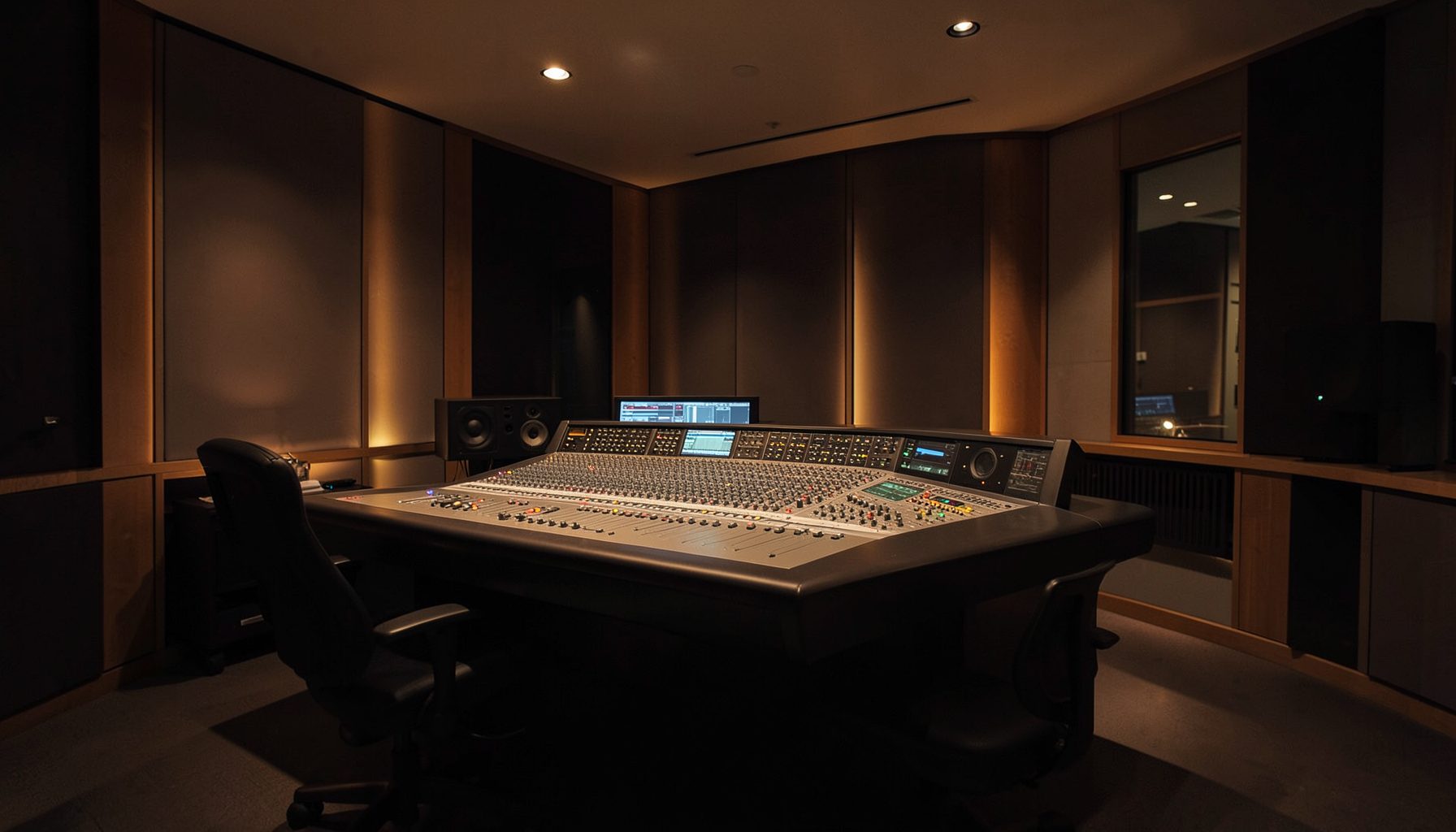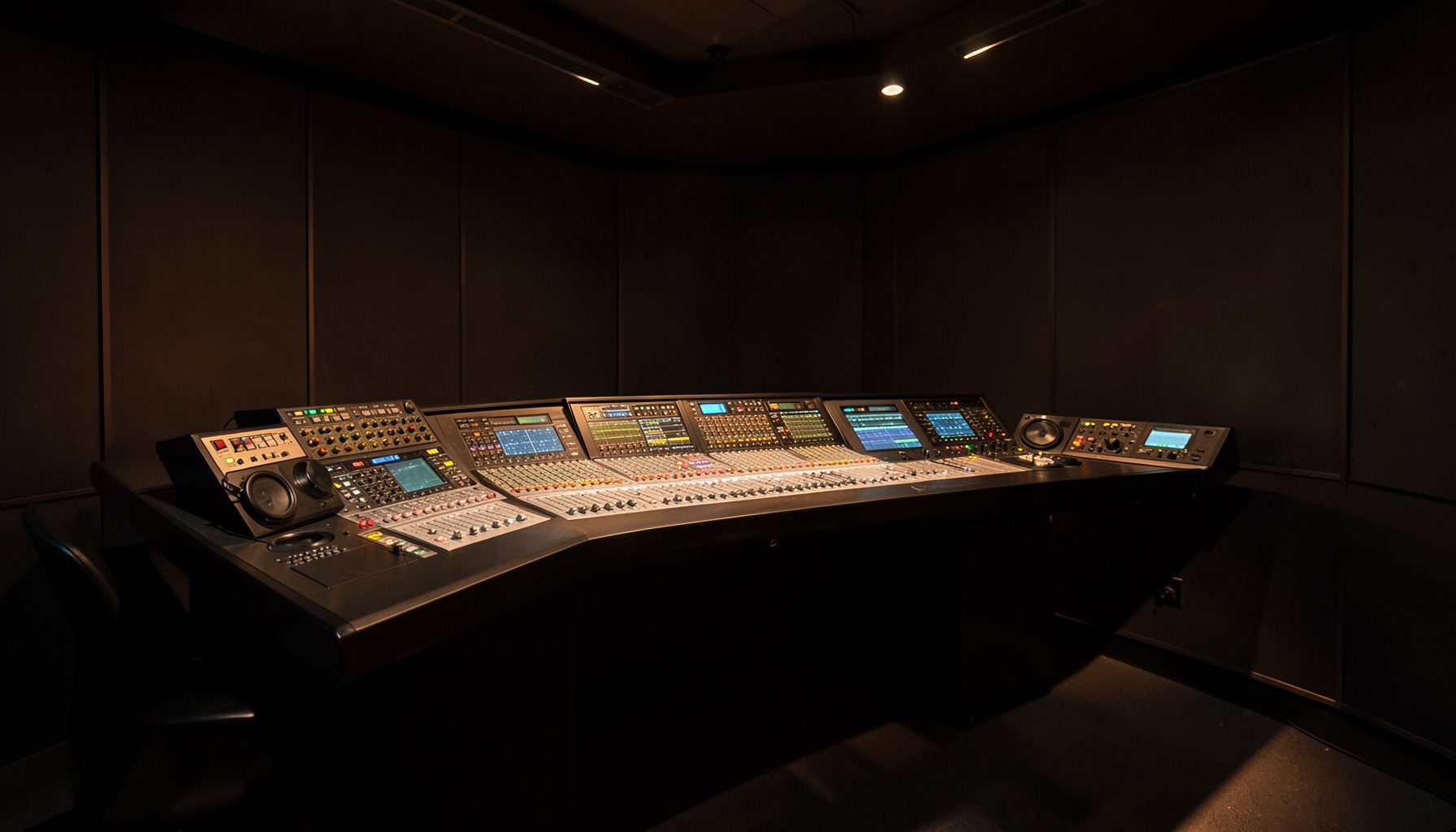
Streamlined sports radio control with Ruby event groups
Sports radio moves quickly between live commentary, presenter links, interviews, commercials, crowd sound and network updates. A console layout that works for a quiet studio can become awkward when a match adds several commentators, remote guests and multiple programme feeds.
Ruby’s Event Groups and Fader Tiles provide a practical way to organise that complexity. Instead of treating every source as an isolated channel, operators can arrange related controls around the way a broadcast is produced, then recall or adapt those controls as the event changes.
This approach suits Australian sports coverage, from an AFL call at the Melbourne Cricket Ground to an NRL broadcast in Sydney or a regional football match managed from a compact outside-broadcast position. It can also support networked production models built around Lawo’s Broadcast 3.0 ecosystem.
Match the console to the production
Sports coverage rarely follows a fixed sequence. A producer may need the main commentary pair, a boundary reporter, a coach interview and a news update within the same quarter. During breaks, the same desk might prioritise commercials, music beds and network inserts.
Event Groups help operators gather related sources into meaningful working sets. A “main call” group could contain the lead commentator, co-commentator, effects microphones and programme output. A “remote contributors” group could bring together mobile reporters, codec returns and talkback paths.
This reduces the need to search across a crowded surface. The operator can focus on the editorial moment rather than remembering where each source happens to sit.
Create roles with Fader Tiles
Fader Tiles make the physical or visual surface easier to interpret. Each tile can represent a source, bus, processing path or control function, allowing the operator to arrange the mix according to job responsibility rather than technical order.
For example, a tile set for a stadium broadcast might place commentary microphones beside crowd effects, with the producer’s talkback and remote return immediately accessible. A separate set can hold the clean feed, station mix-minus and return feed for an interview guest.
This arrangement is especially valuable when several people share responsibility. A presenter may need a simple view of programme and guest levels, while a sound operator needs access to routing, monitoring and processing. Consistent tile layouts help both users work without disturbing the wider configuration.
Prepare for changing match conditions
A live sports mix must respond to substitutions, extra time, weather and unexpected interviews. Event Groups can provide a structured starting point for these moments, while individual fader tiles remain available for fine adjustments.
An operator might prepare separate groups for pre-match, live play, half-time and post-match. These do not need to be rigid presets. They can function as operational workspaces, keeping likely sources close while leaving room for real-time decisions.
That flexibility matters in Australia, where an outside broadcast may move between a major venue and a regional ground with different microphone layouts, communications equipment and network conditions. A repeatable console design can reduce setup errors without forcing every venue into the same technical template.
Coordinate commentary and remote guests
Remote contribution is now a normal part of sports radio. Reporters may connect from a stadium concourse, a team bus or a regional location, while a studio in Brisbane, Perth or Adelaide manages the programme output. The console must keep guest audio, mix-minus feeds and off-air monitoring clear.
A dedicated Event Group can place the remote return, send mix, talkback and backup source together. Fader Tiles can then expose the controls most likely to be needed: guest level, mute, talkback, return monitoring and programme contribution.
Operators should also label sources with editorially clear names. “Guest 1 codec” is less useful during a busy broadcast than “North Stand reporter” or “Post-match coach.” Clear naming supports handovers between shifts and helps producers identify a source quickly.
Support compliance and networked workflows
Australian broadcasters work within a regulated environment overseen by the Australian Communications and Media Authority, with the Broadcasting Services Act 1992 forming part of the wider framework for radio services. Rights agreements also determine what match audio, interviews and online streams may be distributed, so clean feeds and controlled outputs are important.
Ruby can sit within a networked workflow that includes Lawo audio nodes, VisTool interfaces, RƎLAY virtual radio tools and other production resources. Separating programme, clean commentary, archive and monitoring paths makes it easier to serve different destinations without repeatedly rebuilding the mix.
For a station managing sponsor reads, emergency announcements or network inserts, labelled groups can also support disciplined source selection. Privacy obligations under Australia’s Privacy Act may be relevant when contributor information or recorded interviews are handled, so access and archiving procedures should sit alongside console design.
Compare common operating approaches
The best layout depends on the size of the team, the number of feeds and the amount of remote contribution. Event Groups and Fader Tiles are most useful when they reflect actual production decisions rather than simply mirroring the wiring diagram.
| Operating approach | Strength | Limitation | Suitable Ruby workflow |
|---|---|---|---|
| Fixed channel layout | Familiar for one operator | Slow to adapt between events | Basic Fader Tile arrangement |
| Role-based groups | Keeps related sources together | Requires thoughtful preparation | Event Groups for commentary, guests and outputs |
| Venue-specific layouts | Speeds repeat coverage at known grounds | Needs maintenance when equipment changes | Saved group and tile patterns |
| Networked multi-feed mix | Supports programme, clean and remote outputs | Demands clear routing discipline | Ruby with audio nodes and virtual tools |
A regional station might favour a compact role-based layout, while a metropolitan network covering several games may need venue templates and multiple output groups. In both cases, the objective is the same: make the next operational decision visible and fast.
Turn each fixture into a repeatable workflow
Preparation should begin with a source map covering commentators, effects microphones, reporters, guests, talkback, programme feeds and backup paths. Those sources can then be assigned to Event Groups according to the running order and the responsibilities of each operator.
Before going live, the team can test the main call, remote mix-minus, clean feed, recording path and emergency announcement route. A short rehearsal also confirms that labels, monitoring selections and tile positions make sense under pressure.
Broadcasters assessing Ruby for sports production can discuss venue templates, network architecture and operator requirements with Lawo’s broadcast team. The concrete next step is to map one upcoming fixture’s sources into four groups—pre-match, live play, interval and post-match—and build the corresponding Fader Tile layout.