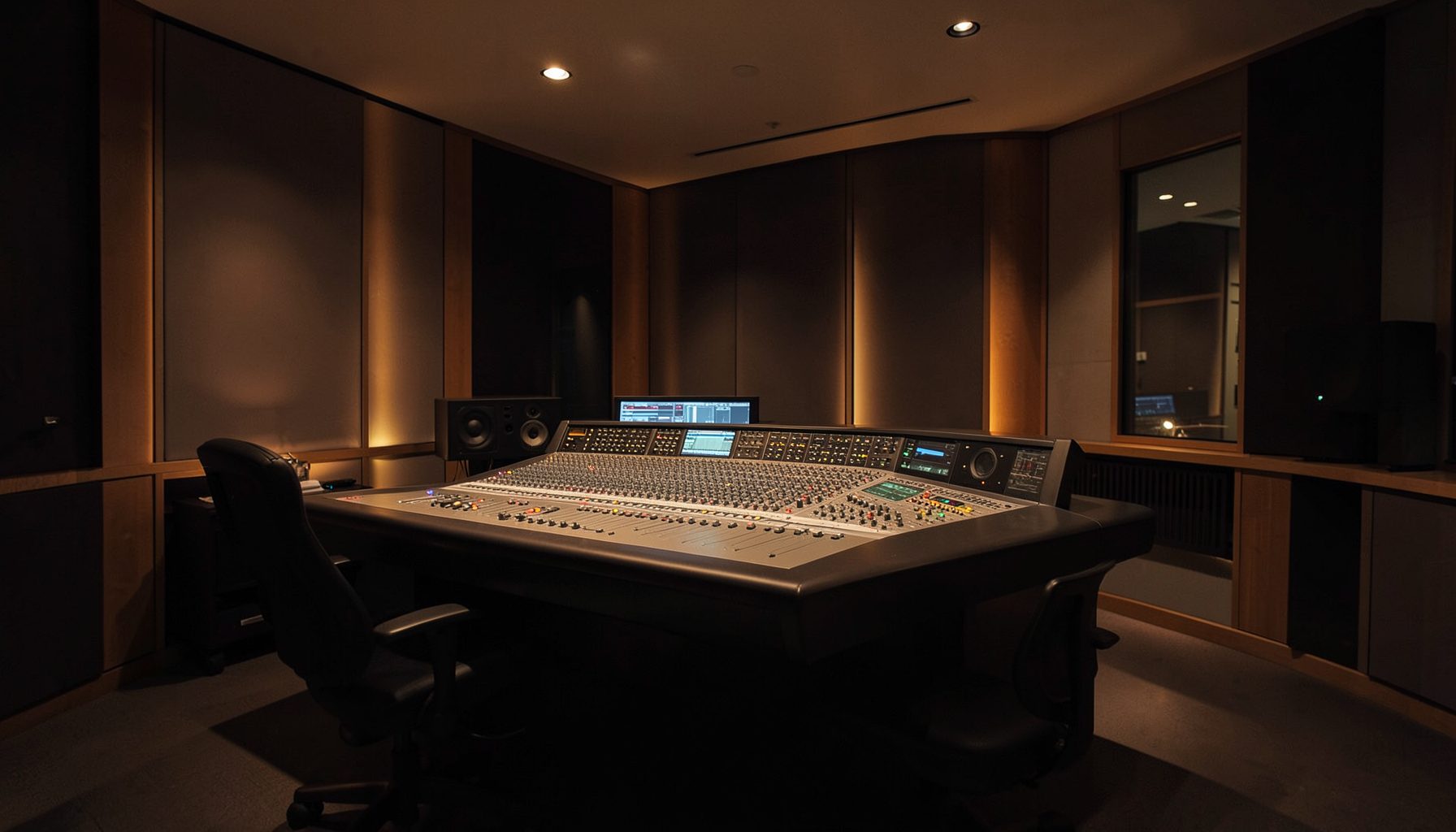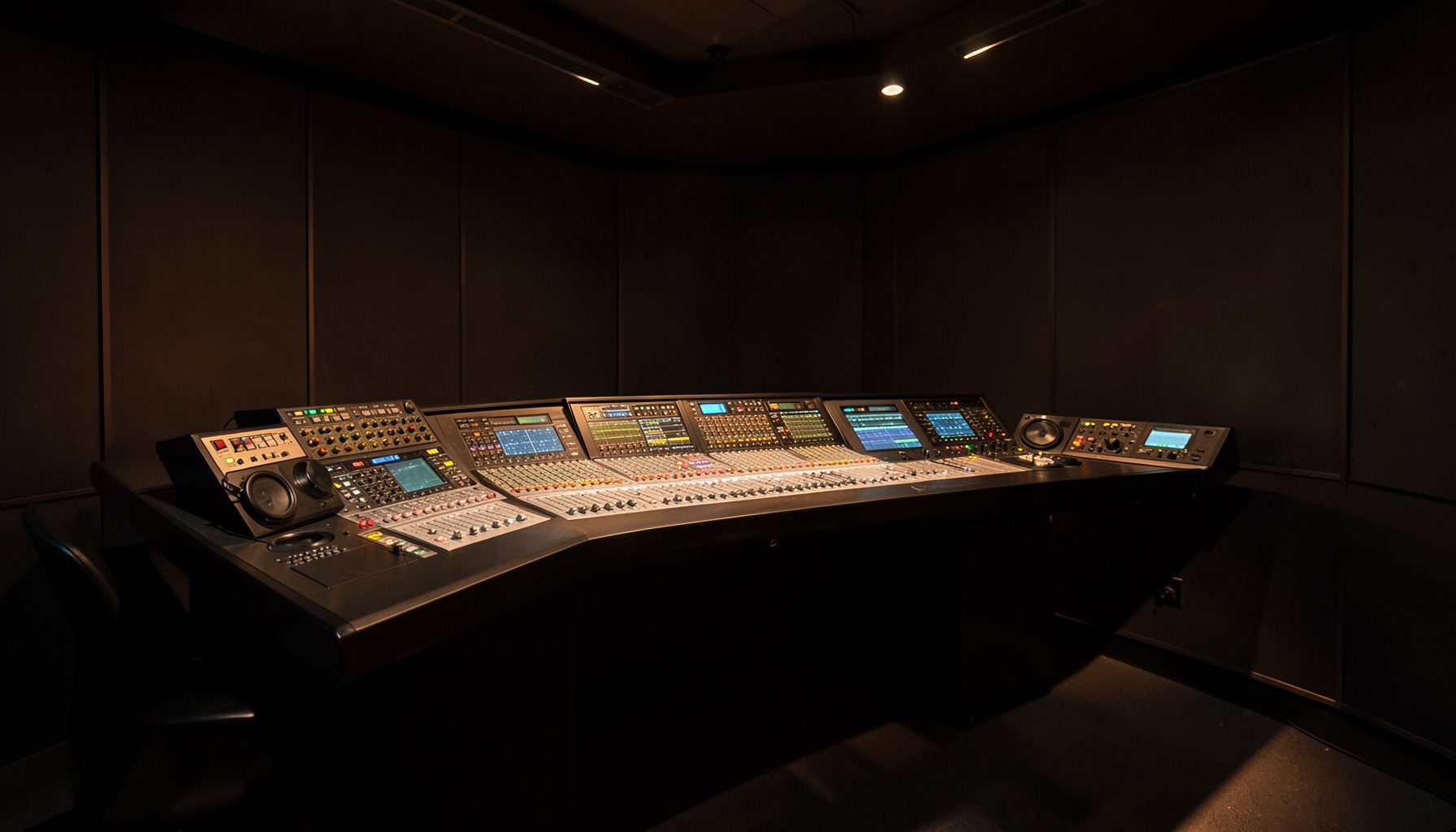
Network requirements for a full Lawo Broadcast 3.0 studio deployment
A Lawo Broadcast 3.0 studio is built around connected production resources rather than isolated hardware. Mixing, routing, playout, control, monitoring, and processing can share an IP infrastructure, allowing a Ruby console, Power Core audio nodes, VisTool interfaces, RƎLAY applications, and AutoMix to work as one operational environment.
That flexibility shifts network planning from a background IT task to a core engineering responsibility. The design must carry real-time audio, synchronization, control messages, management traffic, and sometimes video without allowing one service to compromise another.
A successful deployment therefore begins with traffic classification and timing. The switch fabric, addressing plan, multicast behavior, redundancy model, and server platform should be defined before devices are installed in racks or studios.
Build a dedicated media network
Use managed, enterprise-grade Ethernet switches with sufficient backplane capacity, non-blocking ports, and support for the protocols required by the selected Lawo equipment. A dedicated broadcast VLAN or physically separate media network is preferable to placing real-time audio on the same segment as office computers, guest Wi-Fi, or uncontrolled production traffic.
The architecture should provide clear separation between media, control, management, and corporate services. VLANs can separate these functions logically, while routed boundaries and access controls prevent unnecessary traffic from reaching audio endpoints. Keep the design simple enough for operators and engineers to troubleshoot during a live transmission.
Star, leaf-spine, or redundant ring designs may all be suitable, depending on the studio size and resilience requirements. The important point is predictable forwarding. Avoid unmanaged switches, consumer-grade wireless links, and oversubscribed uplinks in the audio path.
Plan bandwidth and multicast behavior
Network audio is usually efficient compared with uncompressed video, but aggregate demand grows quickly when several studios, control rooms, and Power Core resources share the same infrastructure. Calculate bandwidth from channel count, sample rate, packet overhead, duplicated streams, and future expansion rather than estimating from the number of devices alone.
AES67 and RAVENNA-style workflows rely heavily on multicast. Switches should support IGMP snooping, with an IGMP querier configured for each relevant VLAN. Without correct multicast control, endpoints may receive unnecessary streams, causing congestion and making faults difficult to isolate. Confirm that multicast filtering does not block discovery or required session traffic.
| Network element | Recommended planning focus | Typical engineering concern |
|---|---|---|
| Core and distribution switches | Non-blocking capacity and redundant uplinks | Oversubscription during peak routing |
| Audio VLANs | Dedicated segmentation and multicast control | Unwanted stream flooding |
| Control VLANs | Stable low-latency access for consoles and panels | Broadcast storms or address conflicts |
| Timing services | PTP-aware switches and consistent clock domains | Clock drift, slips, or loss of lock |
| Server connections | Dual interfaces where supported | Single-link failure affecting virtual tools |
| Management access | Restricted administration and monitoring | Unauthorized changes during operation |
Protect timing and quality of service
Precision Time Protocol is central to synchronized IP audio. Select switches that handle the required PTP profile correctly and document the grandmaster strategy. Decide which device or timing source becomes the primary reference, what provides backup, and how endpoints behave when the reference disappears.
Quality of Service should prioritize timing packets and real-time audio above ordinary management or file-transfer traffic. A practical policy typically gives the highest priority to PTP event and general messages, followed by audio streams, then control traffic and routine data. Apply the policy consistently across switch ports and uplinks; isolated QoS settings rarely solve congestion caused elsewhere.
Latency must be assessed end to end. Examine switch queuing, packet serialization, virtual machine interfaces, audio node processing, and console monitoring paths. A network can show ample average bandwidth while still producing audible interruptions when bursts encounter a poorly configured queue.
Connect the Lawo ecosystem deliberately
Power Core nodes may serve as centralized or distributed audio engines, while Ruby consoles provide operator control over sources, buses, monitoring, and routing. VisTool can supply custom graphical control surfaces, so its hosts should have reliable access to the appropriate control and media services without exposing them broadly to the corporate network.
RƎLAY virtual radio tools and other software-based components introduce server and virtualization considerations. Reserve predictable CPU resources, use low-latency network adapters where required, and avoid aggressive power-saving modes on hosts handling real-time workloads. Document which services are virtualized and which remain on dedicated appliances.
Remote operation also deserves a defined access model. A remote console workflow should travel through secure, managed paths rather than ad hoc port forwarding; the Ruby Commander software can be evaluated as part of that broader operational design. Separate remote administration from public internet exposure and log privileged access.
Design for resilience and security
A full deployment should tolerate at least the failures that the station considers operationally critical. Dual network paths, redundant switch power, diverse uplinks, and backup timing sources can protect against single points of failure. Test whether the actual Lawo devices and software support seamless redundancy, hitless recovery, or manual failover before promising uninterrupted service.
Security controls should protect availability as much as confidentiality. Use role-based administration, strong credentials, firmware and operating-system patch procedures, and restricted management interfaces. Permit only necessary protocols between VLANs, and monitor changes to multicast, PTP, and QoS configurations.
Do not assume that redundancy is effective merely because two cables are connected. Pull links, stop a switch, remove a timing source, and restart a virtual host during a controlled test. Record the audible and operational impact, then establish recovery procedures for engineering and studio staff.
Validate the deployment before going live
Commissioning should begin with an inventory containing device names, MAC addresses, IP addresses, VLAN assignments, software versions, ports, clock roles, and dependencies. This record makes troubleshooting faster and prevents replacement equipment from being connected with an unsuitable default configuration.
Use packet captures and switch telemetry to confirm multicast membership, PTP status, queue utilization, errors, and unexpected broadcast traffic. Test the largest realistic source and destination count, simultaneous studio operation, remote control, and any planned video or file-transfer workloads.
Practical readiness checks
- Confirm that every media endpoint has a documented address, VLAN, and clock source.
- Verify IGMP snooping, querier behavior, and multicast forwarding with real production streams.
- Measure latency, jitter, packet loss, and queue congestion under peak load.
- Test link, switch, server, and timing failures using an approved maintenance procedure.
- Back up switch, server, console, and application configurations before commissioning.
A well-engineered network gives Broadcast 3.0 components room to scale while keeping live audio predictable. Begin with a traffic map and failure analysis, then validate the design with the chosen Ruby, Power Core, VisTool, RƎLAY, and AutoMix workflow before the first broadcast.