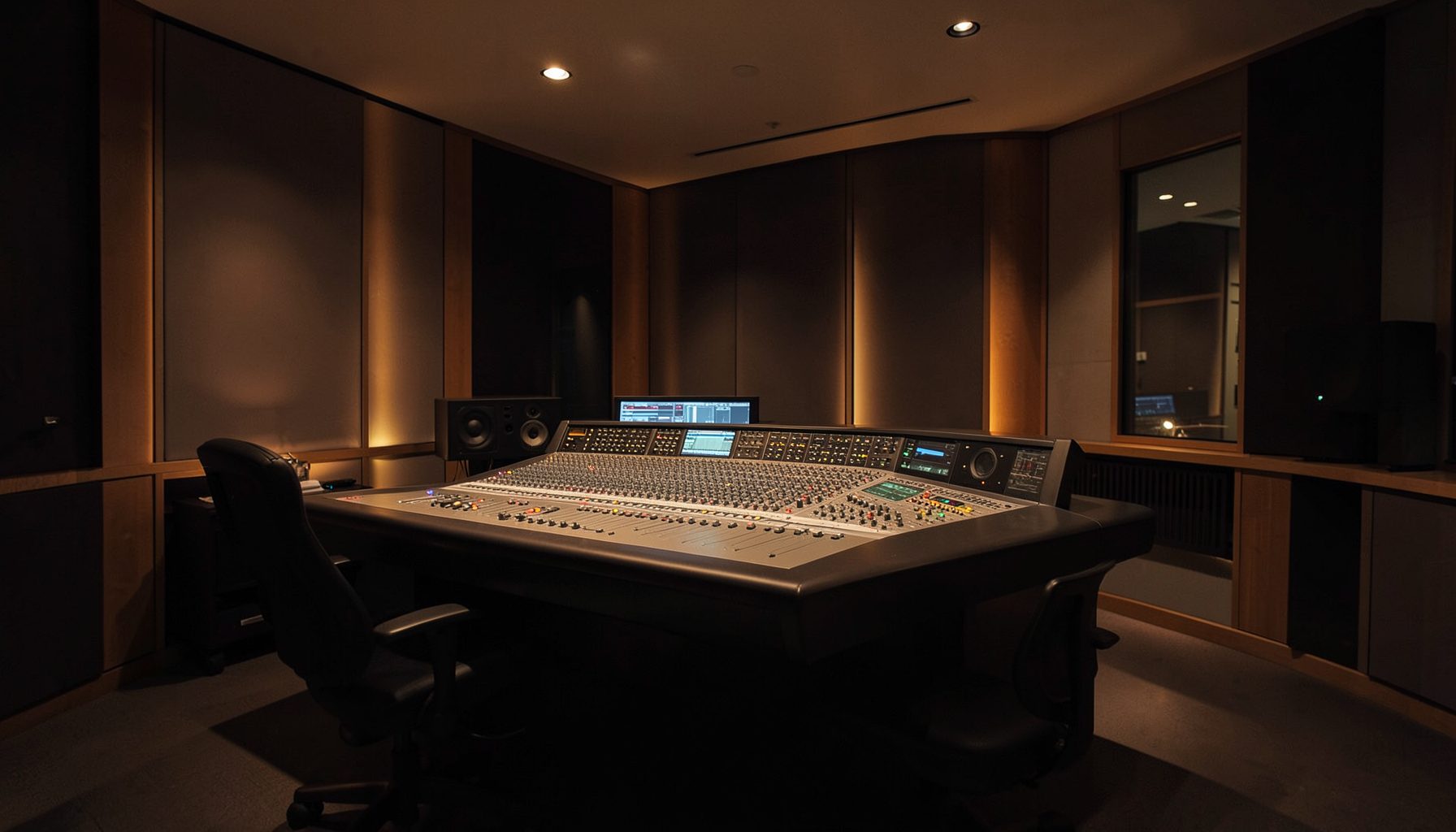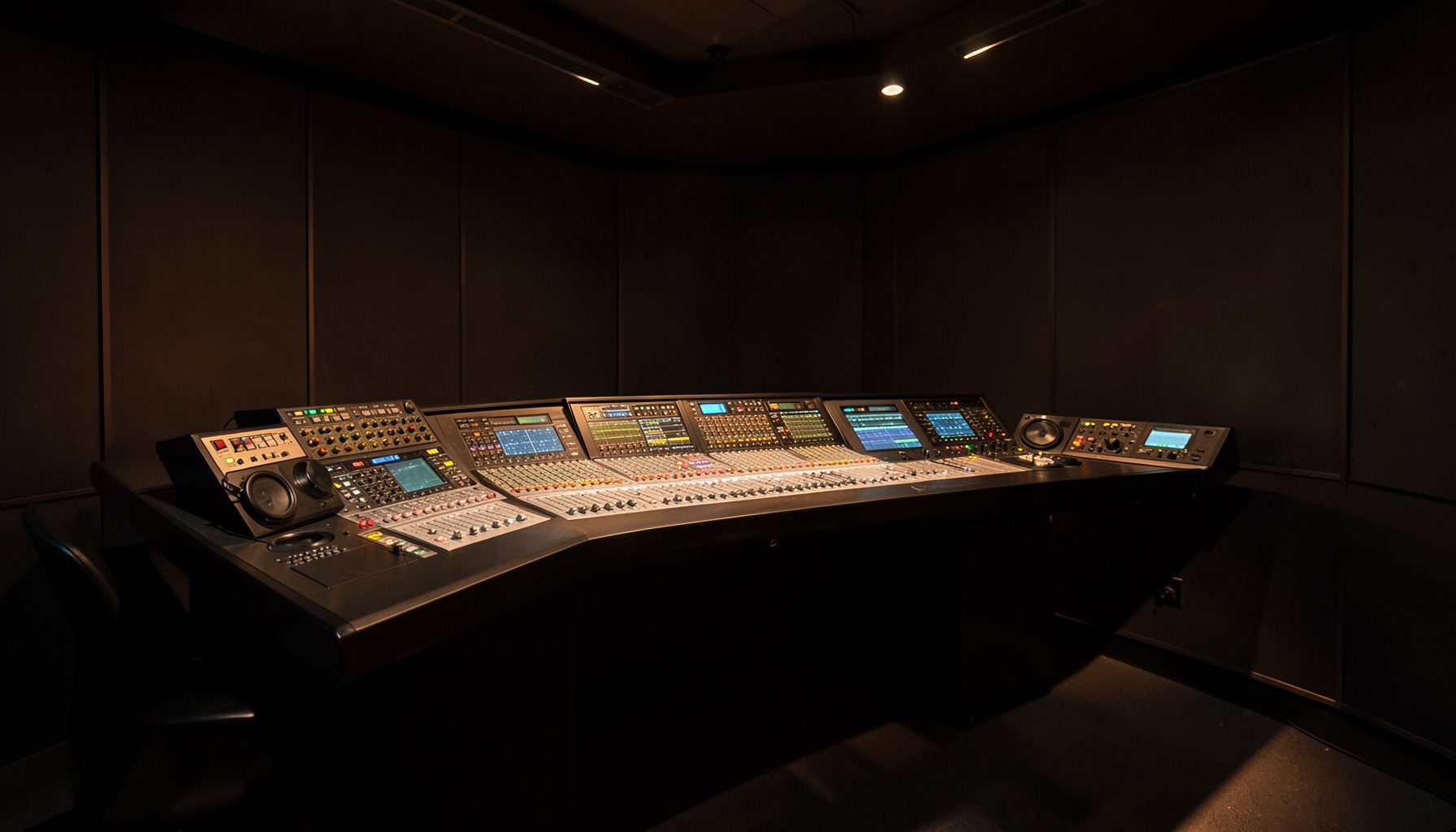
Migrating legacy analog consoles to Ruby with Power Core breakout panels
Replacing an analog radio desk is rarely a simple matter of removing one console and installing another. The old system may still be tied to studio wiring, external processing, telephone hybrids, playout machines, monitoring circuits and the habits of presenters who have used it for years.
Ruby provides a practical path into a networked broadcast workflow while retaining a familiar physical control surface. With Power Core handling audio processing, routing and connectivity, a station can modernise its technical core without rebuilding every room around a completely different operating model.
For Australian broadcasters, the migration must also account for long cable runs, regional support, 230 V / 50 Hz infrastructure, local content workflows and the operational demands of emergency broadcasting. A Sydney commercial studio, a community station in regional Victoria and a remote newsroom in Western Australia may need very different transition plans.
The most reliable approach is staged: document the analogue signal flow, introduce the Power Core and breakout panels, validate Ruby layouts with real presenters, then retire legacy equipment in controlled steps. This keeps the station on air while the new architecture is proven.
| Area | Legacy analogue console | Ruby with Power Core |
|---|---|---|
| Signal routing | Fixed patching and physical buses | Software-defined routing and DSP |
| I/O expansion | Additional analogue modules and cabling | Networked audio and configurable breakout connectivity |
| Control surface | Dedicated controls with limited reassignment | Flexible fader layouts and programmable functions |
| Maintenance | Component-level faults and ageing parts | Centralised processing with replaceable network endpoints |
| Remote operations | Usually dependent on external equipment | Better suited to distributed and software-based workflows |
Start with a complete signal inventory
Before ordering equipment, record every source and destination connected to the analogue desk. Include microphones, codecs, studio telephone systems, playout outputs, production workstations, monitor speakers, cue feeds, cleanfeeds and recording devices. A labelled spreadsheet is useful, but a current block diagram is essential.
Identify which connections are balanced analogue, digital, GPIO, headphone or monitoring paths. Mark sources that require analogue gain or phantom power, as well as any equipment that cannot be moved immediately. This inventory determines the number and type of Power Core interfaces and breakout panels required.
Use breakout panels as the migration boundary
Power Core breakout panels can create a clean boundary between existing studio wiring and the new networked audio engine. Instead of rewiring every wall plate during the console replacement, installers can terminate established circuits at the panel and move the processing and routing behind it.
That approach is valuable in older facilities where conduits are difficult to access or where studios have been modified repeatedly. It also makes fault-finding clearer: engineers can test the legacy wiring at the panel, then isolate the network, DSP or Ruby control layer separately.
Preserve familiar presenter workflows
A new console succeeds when presenters can work confidently during a busy breakfast shift. Ruby should therefore be configured around established studio routines, including microphone placement, talkback, phone contribution, remote codecs and programme-minus feeds. Avoid changing every control simply because the platform allows extensive customisation.
Create separate layouts for news, music, production and outside broadcast use. A regional station may need a compact local-news view, while a metropolitan operation may require more sources for syndicated programming. During a rollout, keep a documented fallback layout available so an operator can recover quickly after an accidental change.
Plan for sports and live commentary
Australian sports coverage brings specific requirements for AFL, NRL, cricket and racing commentary. A commentary position may need multiple guest microphones, mix-minus feeds, producer communication, crowd effects, clean commentary and an independent recording path. These requirements should be tested with the actual codec and venue workflow rather than simulated only in the studio.
Ruby’s flexible fader arrangements are useful where operators need different views for play-by-play, studio presentation and production coordination. Lawo’s guidance on multi-fader layouts can help shape a layout for live commentary positions and fast source selection.
Introduce networking without losing resilience
Power Core can centralise audio processing and support a more flexible AoIP environment, but the station still needs a clear resilience model. Map primary and secondary paths for microphones, playout, programme output and monitoring. Separate critical network equipment from general office traffic, and document switch, power and clocking dependencies.
This matters particularly for sites in Brisbane, Perth or regional New South Wales, where replacement hardware and specialist technicians may take longer to reach the station. Use monitored network infrastructure, suitable uninterruptible power supplies and tested recovery procedures. Emergency broadcasting arrangements should remain usable even if a central service or workstation is unavailable.
Match the design to Australian operations
Australian stations often combine local breakfast shows, networked content, community programming and occasional outside broadcasts. ACMA obligations, local announcement workflows and station-specific recording practices should be reflected in the Ruby configuration rather than handled through improvised workarounds.
Consider the physical environment as well. Heat, dust and long travel distances can affect remote studios and regional facilities, while daylight-saving differences can complicate networked programming between Sydney, Melbourne, Adelaide and Brisbane. A migration schedule should include an overnight cutover window, local engineering cover and enough time to test clocks, playout triggers and announcer monitoring.
Commission in stages and document the result
A sensible cutover begins with one studio or one defined signal group. Install Power Core and the breakout panels, connect a limited set of sources, and run the Ruby surface alongside the legacy console where possible. Compare levels, latency, monitor muting, talkback and off-air recordings before moving the programme chain.
Use a commissioning checklist signed by engineering and operations staff. Keep photographs of panel terminations, network diagrams, configuration backups and a written list of normal and emergency routes. For specialist production environments, an external production planning resource may also be useful when coordinating event-based workflows that connect broadcast facilities with live production teams.
Build support into the handover
Training should cover daily operation, layout selection, source naming, cue and talkback, basic fault isolation and safe recovery after a power or network interruption. Engineers need deeper instruction on routing, permissions, DSP resources, backups and firmware management.
A final acceptance test should use a real programme format rather than isolated tone checks. Run a complete presenter shift, including news inserts, phone calls, remote contribution, music playback and an off-air recording. When technical questions remain, the Lawo contact team can help clarify product configuration and deployment requirements. The next concrete step is to create a labelled inventory of every connection on the existing console and use it as the baseline for the Ruby and Power Core design.