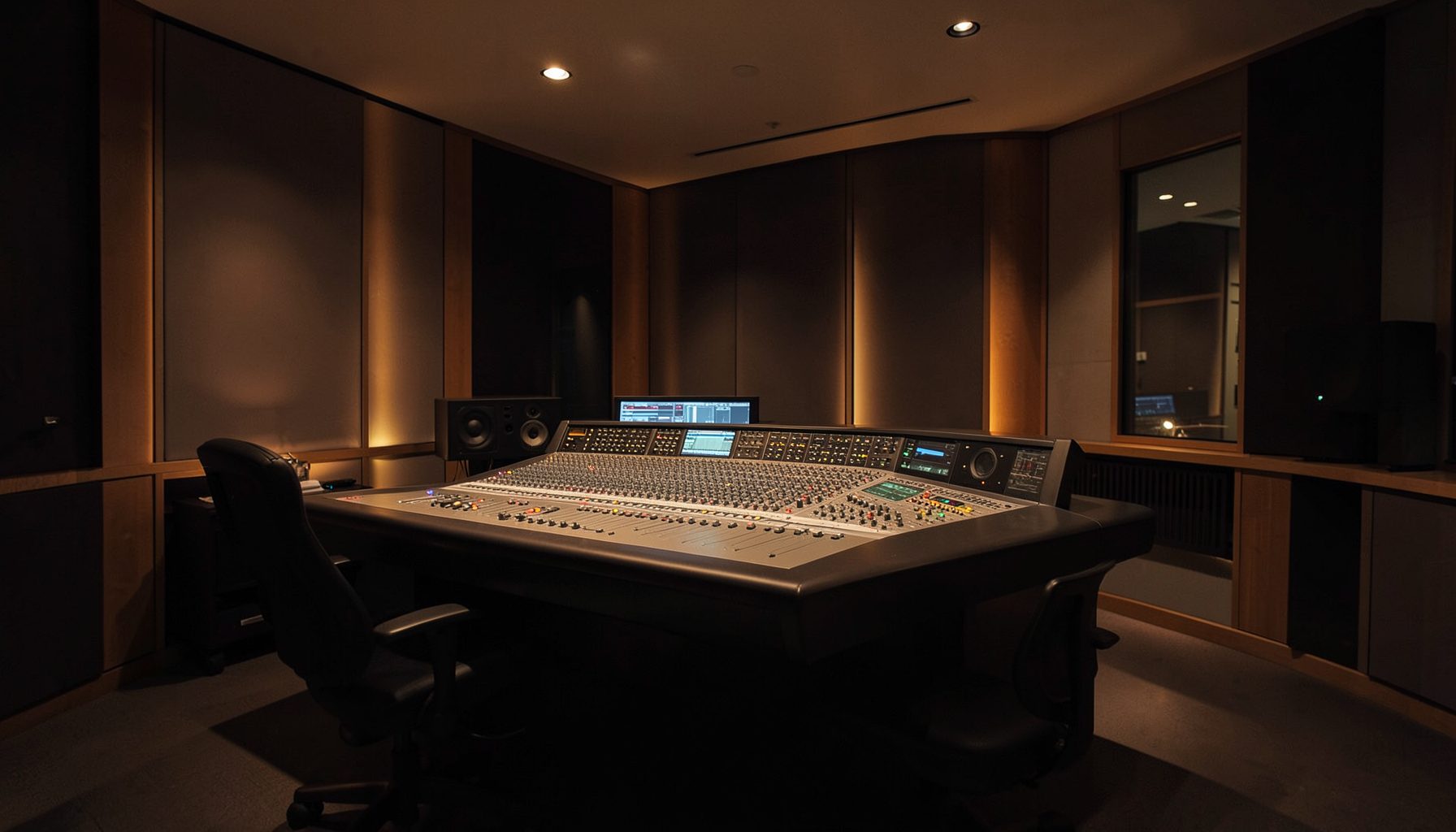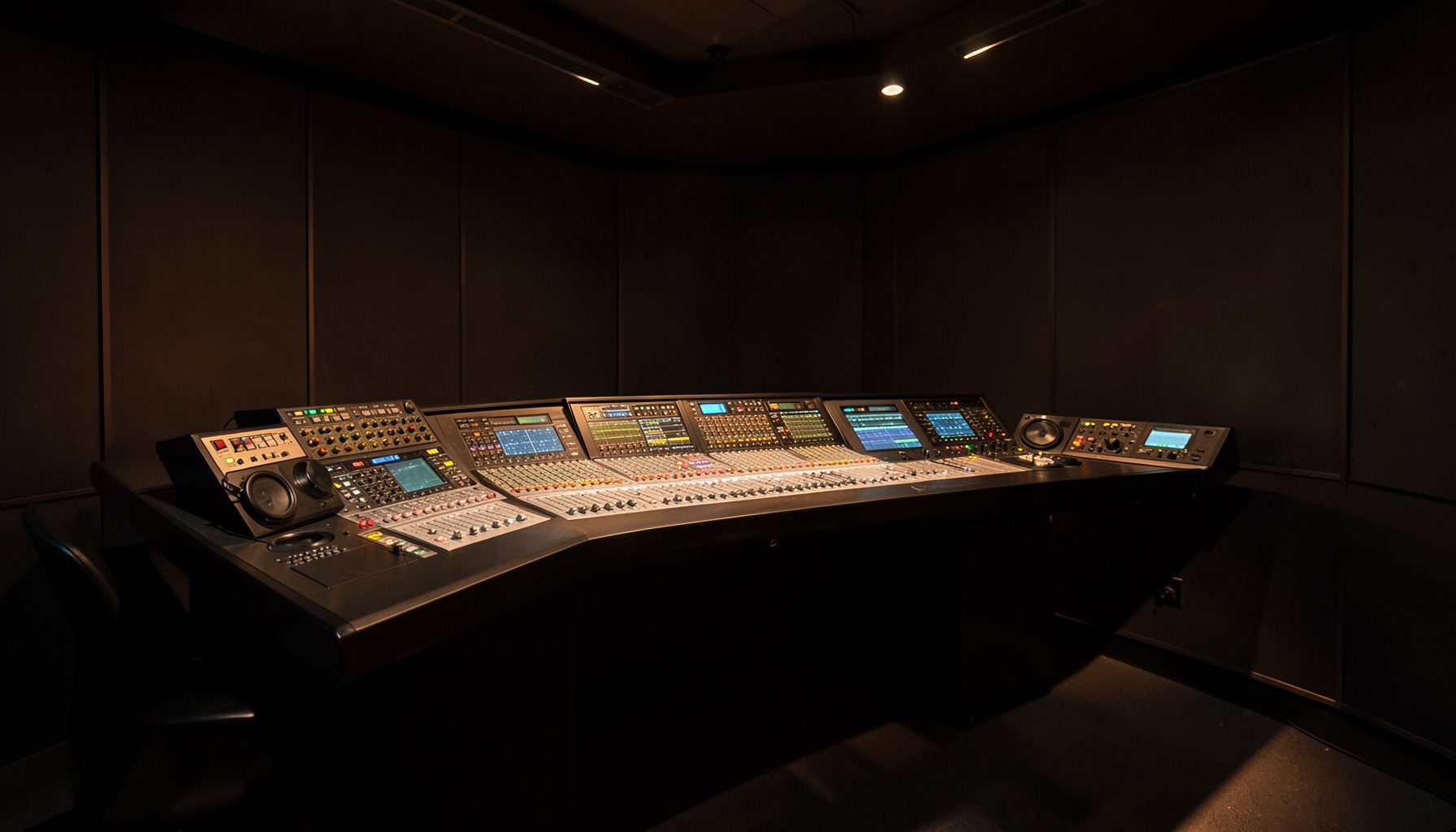
How AutoMix responds to changing theater acoustics
Theater sound changes from scene to scene. A quiet dialogue exchange may require close control of microphone levels, while a musical number, ensemble movement, or live audience reaction can create a much denser acoustic field. Reflections from hard walls, balconies, scenery, and empty seats add further complexity to the mix.
AutoMix helps manage these variations by continuously balancing active sources rather than treating every microphone as equally important at all times. Used within a networked Lawo workflow, it can support clearer speech, steadier levels, and more manageable operator workloads across theatrical productions.
The strongest results come from combining intelligent automation with thoughtful microphone placement, gain structure, and room preparation. AutoMix is therefore best understood as a responsive mixing layer that works with the acoustics of a venue, not as a replacement for sound design or engineering judgment.
Why theater acoustics are especially demanding
Theaters often combine highly reflective materials with large, open spaces. Sound from a lavalier or overhead microphone can reach the audience directly while also bouncing from the stage floor, proscenium, scenery, and surrounding walls. These reflections reduce intelligibility and can make several open microphones sound noticeably louder than expected.
The acoustic picture also changes during a performance. Curtains may open or close, scenery can alter reflections, and the audience itself absorbs sound. A rehearsal in an empty auditorium may therefore behave very differently from a full-house performance. An automatic mixer must respond to these changes without creating abrupt level movements that distract the audience.
How adaptive gain control supports clarity
AutoMix can prioritize the sources that are contributing useful direct sound while reducing the combined effect of unnecessary open microphones. When several performers share a scene, this approach helps limit cumulative room noise and reverberation. The result is a more focused mix, particularly during dialogue with multiple actors on stage.
This type of gain sharing is useful when performers move, turn away from microphones, or speak at different distances. Instead of requiring an engineer to make constant manual corrections, the system can keep the active contribution of each channel under control. Careful input calibration remains essential: automation can only respond effectively when microphone sensitivity, preamp gain, and routing are set consistently.
Matching AutoMix to the production style
A spoken drama may benefit from firm control of stage microphones and a stable, intimate vocal image. A musical theater production may require more flexibility because vocals, pit instruments, effects, and ensemble microphones occupy different roles. Automation settings should reflect the production’s priorities rather than applying one profile to every show.
The engineer can also separate sources into logical groups. Dialogue microphones, chorus microphones, announcements, and ambient audience channels may need different treatment. With a networked console and processing architecture, these groups can be managed within a broader signal flow while retaining manual access for cues, transitions, and exceptional moments. Lawo’s Ruby mixing console provides a relevant control environment for integrating automated and operator-led workflows.
Evaluating performance across venue conditions
A useful test begins with the empty room, but it should not end there. Engineers can check speech at different stage positions, compare microphones at varying distances, and listen for changes caused by scenery or curtains. Repeating these checks with audience simulation or during a dress rehearsal reveals how the automation behaves under realistic acoustic conditions.
The following factors help define an appropriate setup:
| Acoustic or production factor | Likely effect | Useful AutoMix response |
|---|---|---|
| Highly reflective walls | More reverberation and reduced speech definition | Reduce unnecessary open-channel contribution |
| Large ensemble scenes | Increased cumulative microphone level | Share gain across active sources |
| Performer movement | Uneven distance and changing direct sound | Follow the strongest useful source smoothly |
| Audience presence | Absorption and altered room response | Recheck thresholds and overall gain |
| Quiet dialogue | Greater exposure of room noise | Keep inactive channels from adding ambience |
| Music and effects | Rapidly changing source priorities | Use groups and scene-based control |
These checks should include transitions between scenes, because an automation setup that sounds natural in dialogue may respond differently when music enters or when several performers speak simultaneously. Monitoring in the auditorium, rather than only in the control position, gives a more accurate impression of intelligibility and localization.
Giving operators visible control
Automation is most effective when operators can see what it is doing. Clear metering, channel status, group activity, and gain-reduction information make it easier to distinguish a deliberate response from a setup problem. This is particularly valuable during a live performance, when there may be little time to inspect individual channels.
Custom interfaces can also simplify show operation. Lawo’s guidance on custom VisTool controls illustrates how tailored meters and controls can present the information an operator actually needs. In a theater workflow, a focused screen might combine AutoMix activity, dialogue group levels, mute states, and scene controls without forcing the engineer to navigate through unrelated parameters.
Building a reliable theater workflow
AutoMix should sit within a structured production workflow. Start by labeling channels clearly, organizing microphones by function, and establishing consistent input levels. Then define which sources should participate in automation and which should remain under direct manual control, such as a featured soloist, announcement microphone, or special effect.
- Use separate groups for dialogue, ensemble, ambience, and announcements.
- Test settings with scenery in place and with performers moving naturally.
- Keep manual override controls available for featured moments.
- Review automation during a full technical rehearsal, not only a line check.
- Monitor both the mix position and representative audience seats.
A stable workflow also makes touring easier. When a production moves between venues, engineers can preserve the logical structure while adjusting thresholds, routing, and processing to suit the new room. Networked audio and software-based control help keep those changes organized rather than turning every venue into a completely new setup.
The best way to evaluate AutoMix in a theater is through a practical show workflow: prepare representative scenes, measure speech intelligibility, listen from the audience area, and refine the balance with the production team. Explore Lawo’s broadcast and control ecosystem to see how automated mixing can fit into a flexible, networked theatrical system.