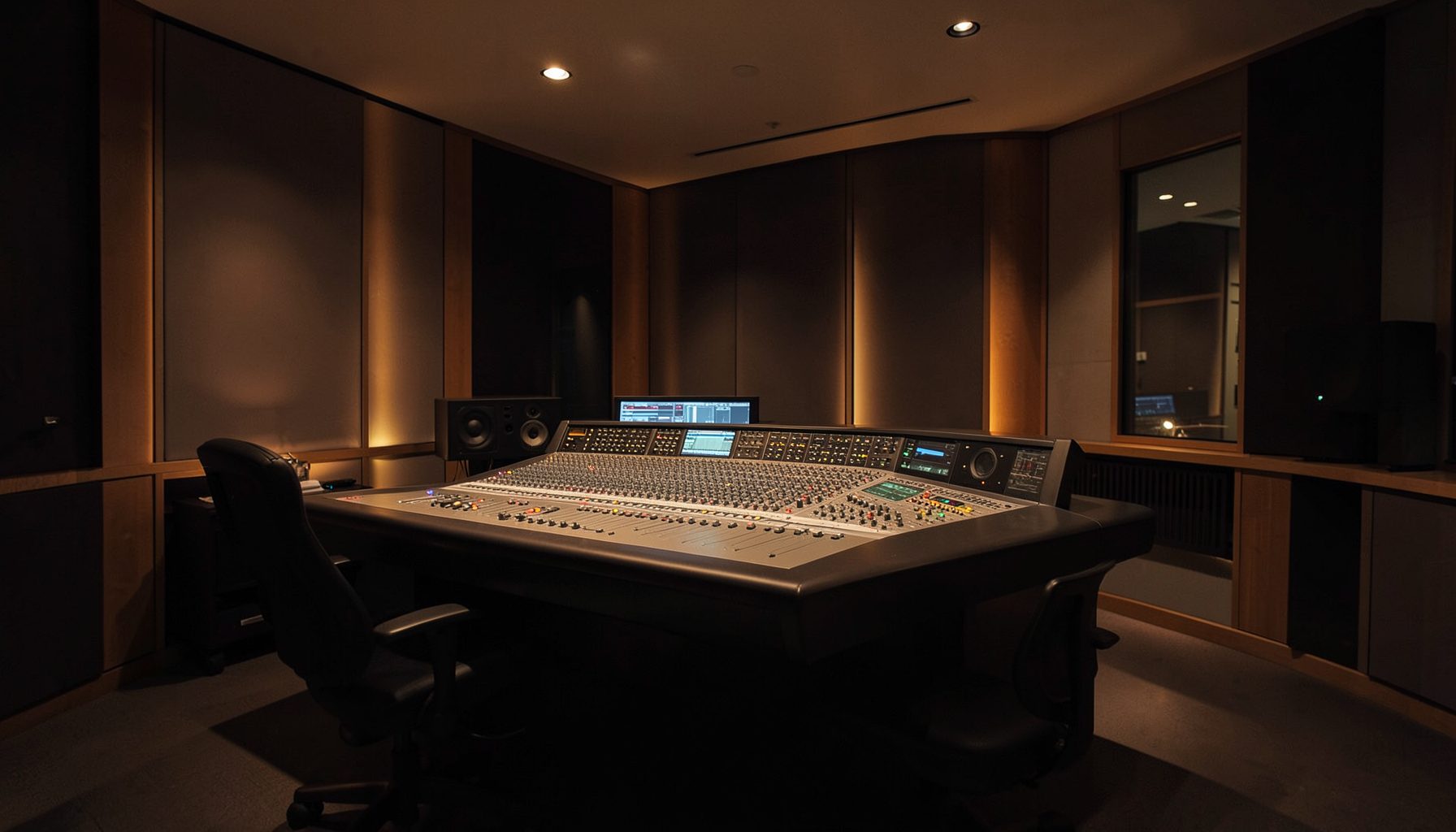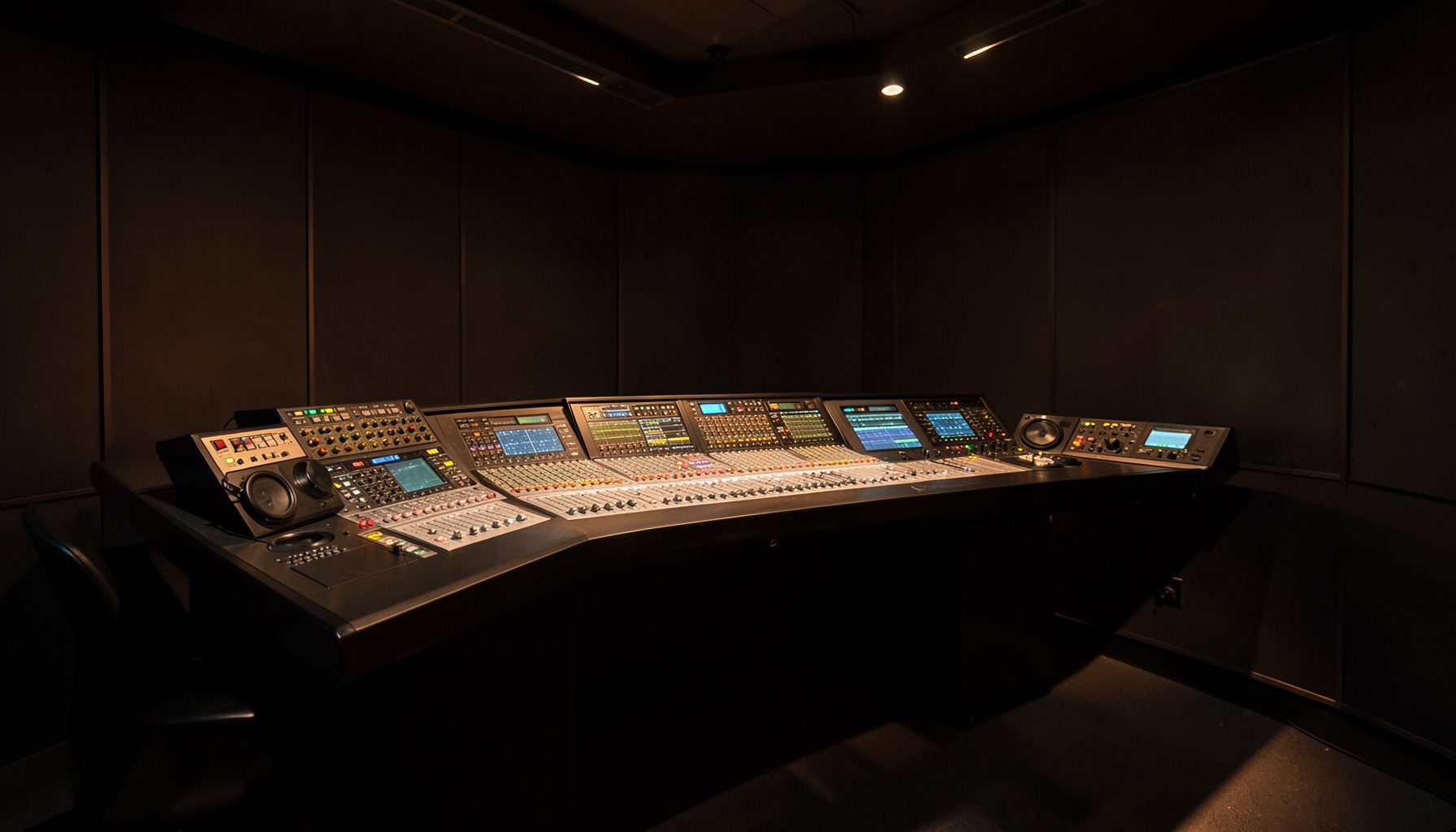
Designing a Disaster Recovery Studio with Power Core and RƎLAY
Australia's broadcast landscape stretches across vast distances, from the populous eastern seaboard to community radio in the Pilbara and Cape York. When a cyclone bears down on Cairns, a bushfire threatens transmission infrastructure near Lithgow, or a technical fault shuts down a Melbourne studio, broadcasters need a contingency plan that activates within minutes. Building a disaster recovery studio with Power Core and RƎLAY turns that plan into reality, anchored by software-defined audio processing and browser-based control.
Redundancy economics have shifted. Where once a duplicate control room sat idle awaiting the worst, networked DSP pools and virtualised radio tools now let a single resilient core serve multiple studios across state borders. This model trims capital outlay while keeping on-air continuity aligned with Australian Communications and Media Authority expectations.
Power Core acts as the audio engine, handling preamps, mixing, and format conversion for any studio that connects to it. RƎLAY extends the surface, putting virtual faders, cart machines, and processing chains inside a standard browser on any laptop. Together they form a layered approach where signal path and human-machine interface can live in different places.
For Sydney-based networks operating affiliates in Brisbane, Adelaide, and Perth, a station in Western Australia can borrow the resilience of a control room two time zones away.
Mapping the Australian risk profile
Cyclone season runs November to April across northern Australia, and the Bureau of Meteorology regularly forces broadcasters to evacuate studios. Bushfire risk peaks in summer for southern regions, with the 2019-2020 season showing how transmission towers, STL links, and studio HVAC can fail simultaneously. Salt-laden coastal air degrading connectors in Fremantle adds another everyday pressure.
ACMA licence conditions expect licensees to maintain service availability, and emergency broadcasting duties intensify under the Australian Warning System. A recovery studio built around Power Core can sit at a secondary site, ready to assume on-air duties without patching a separate console.
Core architecture principles
A disaster recovery design starts with the audio backbone. Power Core handles analogue and digital I/O, internal summing, and AoIP streaming over AES67 or RAVENNA, letting any studio on the network access the same processing pool. Centralising DSP means one node can serve a primary Ruby console in Melbourne, a secondary in Hobart, and a browser-based RƎLAY surface on a presenter's laptop in Sydney.
Redundancy is built in rather than bolted on. Dual power supplies, network port bonding, and two physically separated data centres give a genuine failover path. The same Power Core can be primary for one studio and backup for another, depending on demand.
For Australian operators across multiple licence areas, the shared DSP pool approach is documented on the LawoBroadcast insights page covering Power Core nodes feeding several Ruby consoles. It explains how licensing, clocking, and GPIO mapping work when one node is consumed by multiple surfaces.
Power Core as the resilient audio engine
Power Core's role in a recovery scenario is to stay running when everything else does not. Hot-swappable redundant PSUs keep processing alive through generator switchovers, and the internal routing matrix means a console failure at the primary site does not interrupt the signal feeding transmitters. For broadcasters on AM or FM bands regulated by ACMA, that continuity of audio path is what licensees are measured on.
Format-agnostic I/O also matters. A Power Core can ingest MADI from an existing router, AES67 from a third-party playout system, and analogue sources from legacy furniture at once. A backup studio built around this flexibility can absorb traffic from whichever primary site goes dark.
RƎLAY and the remote operator
RƎLAY reframes what a control room looks like. A presenter evacuated from a flooded Lismore studio can open a browser on a borrowed laptop, authenticate against the recovery site's Power Core, and run a full show from a kitchen table. Virtual faders, trigger pads, voice processing, and playout integration live inside the browser session, while the audio engine sits hundreds of kilometres away.
Latency becomes the practical constraint, and Australian geography works in the design's favour. Sydney to Melbourne fibre routes typically deliver round-trip times under 30 milliseconds, well within tolerance for monitor mixing and confidence talkback. Brisbane to Adelaide stretches the envelope but remains workable for most radio workflows, especially with network QoS policies.
Network design across vast distances
Australia's fibre backbone follows the population corridors, with redundancy concentrated between Sydney, Melbourne, Brisbane, and Perth. Disaster recovery planners map their STL paths against Telstra, Optus, and Vocus fibre assets, identifying where a single backhoe incident could sever a region. Diverse-path routing across two carriers is the baseline expectation.
For regional broadcasters, the picture is more complex. A community station in Broome may rely on a single fibre spur, making true geographic redundancy impossible without satellite augmentation. A local Power Core with embedded processing can keep the station on air even when WAN links drop, with RƎLAY sessions reconnecting once the network recovers.
Operational patterns during events
When a declared emergency triggers elevated broadcasting duties, staff often relocate to designated continuity sites. A recovery studio powered by Power Core lets producers in Adelaide switch broadcast origin to a backup site without reconfiguring playout or routing logs. Presenters, producers, and technical staff see the same surface whether physically present or operating remotely.
Logging, EAS integration, and compliance recording continue uninterrupted because Power Core maintains consistent audio paths regardless of which surface is driving them. For networks bound by ACMA's Australian Content and Broadcasting Standards, this continuity protects both licence compliance and audience trust when reliable information matters most.
Comparing deployment options
Choosing a deployment model depends on licence obligations, fibre diversity, and the willingness of talent to work in fully remote modes.
| Deployment model | Recovery time | Geographic reach | Capital cost | Best fit |
|---|---|---|---|---|
| Single site, dual Power Core | Seconds to minutes | Single city | Moderate | Metropolitan stations with co-located backup |
| Dual site, shared DSP pool | Minutes | State-wide | Higher | Multi-city networks across NSW or VIC |
| Hub-and-spoke with RƎLAY | Minutes to an hour | National | Highest | National networks with diverse fibre paths |
| Regional edge with local core | Seconds when WAN up, hours if isolated | Remote towns | Lower per site | Community and remote area broadcasters |
Each option pairs a different risk profile with a different budget envelope.
The next concrete step is to audit current single points of failure in your STL chain and book a consultation with the LawoBroadcast engineering team to scope a Power Core configuration sized to your network's reach across Australian time zones.