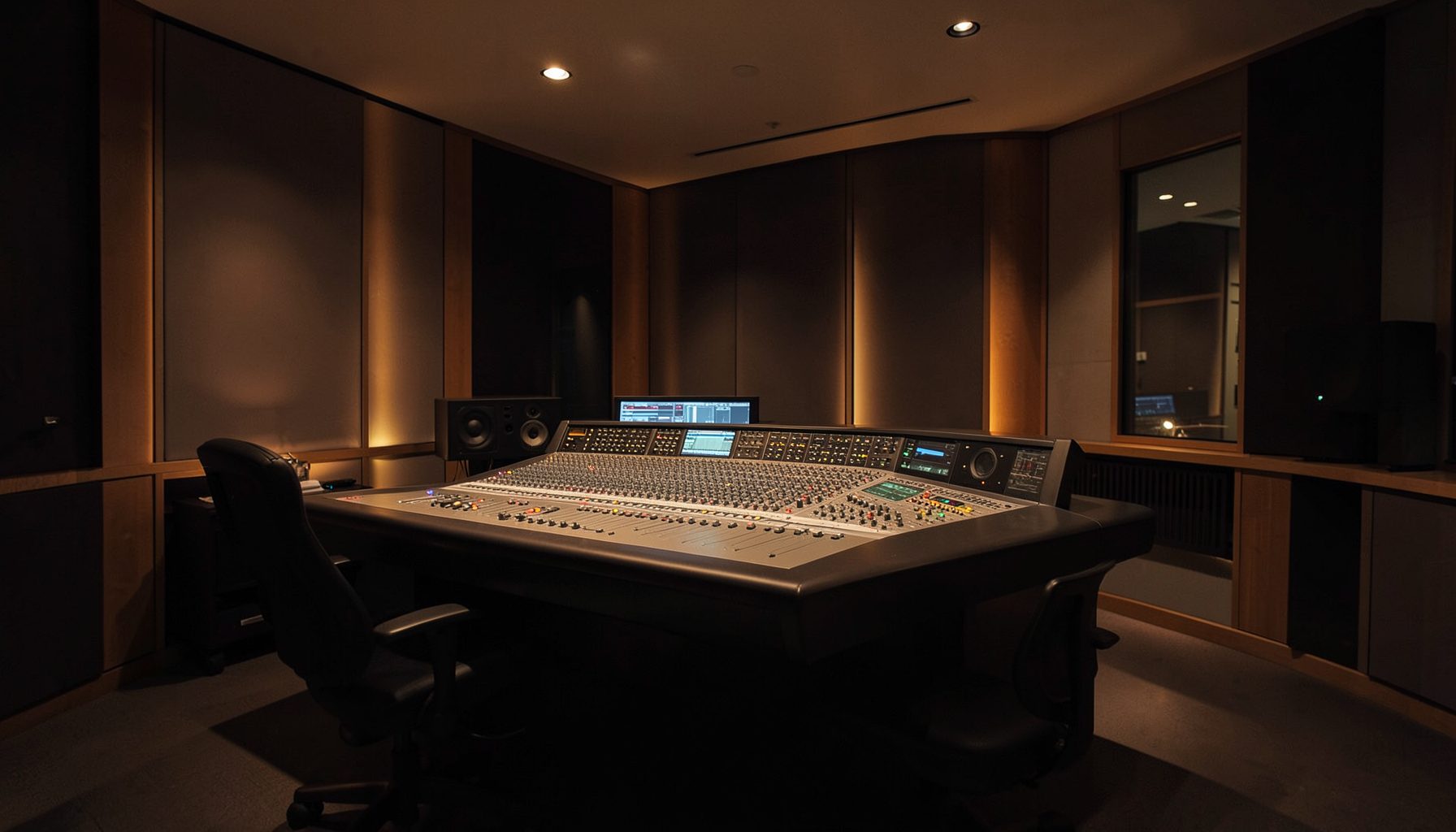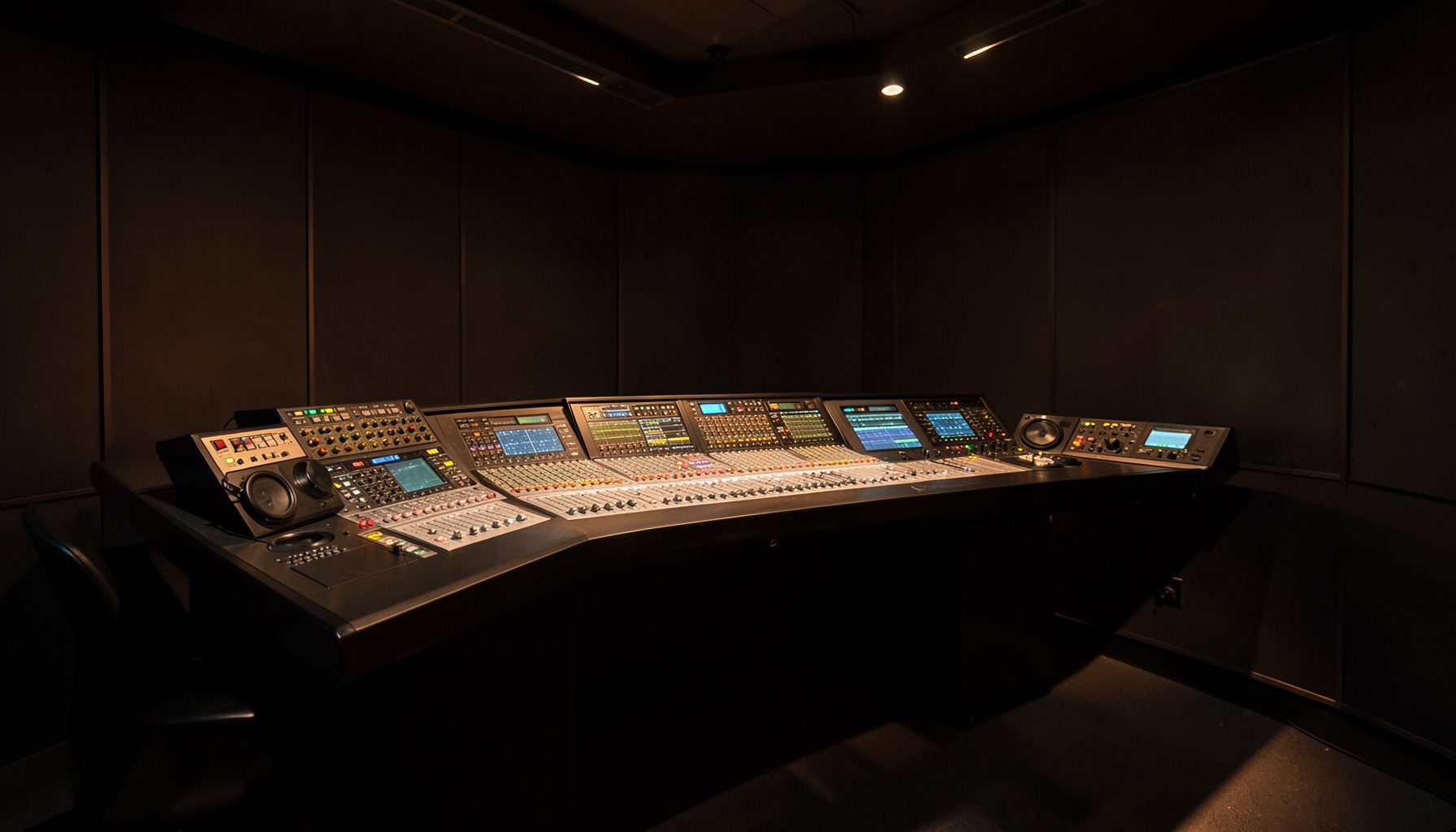
AutoMix for drama and theater: balancing wireless microphones
A theater production can place a dozen or more wireless microphones on stage, each with a different performer, vocal style, distance from the audience, and relationship to the scene. Keeping every channel open at the same level often raises stage noise, costume movement, feedback risk, and unwanted ambience. Muting manually can solve one problem while creating another: a missed entrance or an abruptly cut-off line.
AutoMix provides an intelligent layer between microphone inputs and the program mix. It continuously evaluates active speech and adjusts channel contribution, helping the operator maintain clarity while preserving the natural dynamics of a live performance. Used properly, it supports the mixer rather than replacing creative decisions.
Lawo’s networked approach is well suited to productions that need flexible routing, distributed processing, and fast changes between rehearsals and performances. A workflow built around Power Core, Ruby, VisTool, and related control tools can keep wireless microphone management close to the console while placing processing where the production requires it.
Why wireless microphones become difficult on stage
Actors rarely maintain a fixed distance from their microphones. Head-worn units change angle as performers turn, lavalier microphones shift beneath costumes, and handheld transmitters may move from the mouth to the chest during choreography. These variations produce large level differences even when the performers deliver lines at a similar volume.
Open microphones also capture reflections, audience noise, orchestra spill, scenery movement, and other performers waiting nearby. If every channel is amplified equally, the combined noise floor rises quickly. The result can be a mix that sounds distant or hollow, especially in a reflective theater.
Traditional manual mixing remains valuable, particularly for musical cues, ensemble sections, and tightly scripted effects. AutoMix adds consistency during fast dialogue, overlapping speech, and scenes where the operator cannot safely ride every fader in real time.
How AutoMix supports dialogue clarity
An automatic microphone mixer typically gives priority to channels carrying the strongest useful speech while reducing the contribution of less active channels. This keeps the combined gain under control and limits the number of open microphones competing for the same acoustic space. The audience hears the intended speaker without requiring every fader to sit fully open.
The technique is especially useful for plays with rapid exchanges. Instead of waiting for an engineer to recognize each line and move a fader, the system can respond to speech activity within the configured mix. The operator retains control over channel levels, routing, processing, and overall balance while AutoMix handles repetitive attenuation.
Correct setup matters more than simply enabling an algorithm. Input gain, microphone placement, high-pass filtering, equalization, gating behavior, and channel priority should be established before the automatic mix is judged. A poorly aligned input can make the system chase clothing noise or favor a loud but distant source.
A networked signal path for flexible productions
In a Lawo workflow, wireless receivers can feed a central or distributed audio infrastructure, where signals are routed to processing, monitoring, recording, and the theater mix. Power Core audio nodes help scale that infrastructure as the production adds microphone channels, rooms, rehearsal positions, or parallel outputs. This networked audio architecture can reduce the need for fixed point-to-point wiring and make changes easier to manage.
Ruby can provide the operator-facing mixing environment, while VisTool can offer customized control surfaces for production staff, assistants, or remote positions. A clearly designed interface might expose actor names, mute states, RF status, AutoMix groups, and emergency overrides instead of forcing users to navigate a large technical surface.
Networked routing also helps separate rehearsal and performance requirements. The same microphone input can be sent to the house mix, a recording feed, an archival stream, and a director’s monitor with independent processing or level control. That flexibility is useful when a theater must support live drama, educational events, broadcasts, and post-production from one technical core.
| Production need | AutoMix contribution | Operator still controls |
|---|---|---|
| Fast dialogue exchanges | Favors active speech and reduces inactive channels | Scene balance and priority |
| Large cast with wireless packs | Limits cumulative open-mic gain | Group assignment and input trim |
| Rehearsal changes | Provides a repeatable starting balance | Routing, labels, and presets |
| Quiet dramatic scenes | Helps control ambient buildup | Timing, effects, and artistic dynamics |
| Ensemble or chorus passages | Manages competing speech sources | Whether automation is used at all |
Preparing microphones before automation
Every wireless channel should be checked acoustically before it enters an AutoMix group. Confirm transmitter gain, receiver output level, capsule position, polarity, and headroom. Consistent input levels give the algorithm a reliable basis for deciding which performer is currently dominant.
Naming channels by performer rather than by receiver frequency speeds up troubleshooting. Color coding by cast group, scene, or dressing room can help an assistant identify the right source during a rapid change. Spare transmitters and backup routing should be visible in the same control environment where possible.
The mix should also account for microphone type. Head-worn microphones often provide more stable proximity than lavaliers, while lavaliers may need careful equalization to manage clothing noise and chest resonance. AutoMix cannot correct a capsule that is badly placed or a transmitter that is overdriven.
Shaping scenes, groups, and priorities
An effective configuration uses logical groups rather than one undifferentiated pool of microphones. Principal characters, supporting cast, presenters, backstage announcements, and audience microphones may require different behavior. Grouping lets the engineer preserve a lead performer while still controlling the combined level of secondary channels.
Priority settings can be valuable when two actors speak near each other or when a narrator must remain intelligible over stage activity. They should be used sparingly. Excessive priority can make transitions sound unnatural and may suppress an intended duet or overlapping dramatic exchange.
Scene presets provide a practical bridge between automation and artistic control. A quiet two-person scene can use a different group arrangement from a crowded ensemble scene. Store the relevant routing, processing, and AutoMix settings together, then verify each preset with the actual performers, costumes, and stage layout.
Monitoring, redundancy, and IP readiness
The operator should monitor more than the main loudspeaker feed. Headphone checks, isolated channel monitoring, group meters, and receiver status reveal problems before they become audible to the audience. A sudden reduction in one microphone may indicate an RF issue, a muted channel, or a misplaced capsule rather than normal AutoMix behavior.
A resilient system also separates control from audio where practical and provides defined fallback paths. Manual faders, bypass options, spare inputs, and local emergency control protect the performance if a network device or wireless link requires attention. Automation should make the show easier to run, not leave the team without a recoverable operating mode.
For venues moving from conventional console wiring to a networked environment, a documented IP transition roadmap helps align equipment, clocking, control, training, and operational procedures. Planning these elements together prevents a technically modern system from becoming difficult to operate under show pressure.
Practical habits for a dependable show mix
- Build and label AutoMix groups around scenes, cast functions, and production priorities.
- Match wireless transmitter and receiver levels before adjusting automatic behavior.
- Rehearse with costumes, scenery, orchestra spill, and stage movement in place.
- Keep manual override, bypass, and spare-channel procedures immediately accessible.
- Record representative dialogue and review clarity, ambience, and transitions after rehearsal.
The strongest results come from treating AutoMix as part of the show design. Use it to control cumulative microphone gain and reduce routine fader work, then reserve human attention for musical phrasing, dramatic emphasis, effects, and moments where overlapping speech is intentional.
Explore how Lawo’s networked audio and control ecosystem can support a more consistent theater workflow, from wireless microphone inputs and automatic balancing to scene-based operation and distributed monitoring. Build the configuration around the venue, test it with the production team, and make every performance easier to mix with confidence.