VisTool scripting for automatic console snapshots during commercial breaks
Commercial breaks demand fast, repeatable changes from the studio console. Presenter microphones may need to close, music playback may take priority, processing can change, and monitoring or routing requirements may shift within seconds. Manual adjustments are possible, but they create opportunities for missed cues and inconsistent transitions.
VisTool scripting offers a practical way to coordinate these changes through a graphical control layer. By connecting triggers, console parameters, and snapshot actions, a radio station can prepare a controlled “break mode” and return to the normal studio setup with minimal operator intervention.
This approach fits naturally into Lawo’s networked broadcast ecosystem, where console control, audio processing, routing, and software workflows can be managed as coordinated resources rather than isolated devices.
Why snapshot automation matters
A console snapshot stores a defined collection of settings, such as fader levels, mutes, routing, source selection, bus assignments, and processing parameters. During a commercial break, recalling a prepared snapshot can establish a consistent state faster than asking an operator to change several controls manually.
The value is greatest when the same sequence occurs repeatedly. A break snapshot might mute studio microphones, open an automation playback channel, route a playout bus to the program output, and adjust monitoring for the presenter. A return snapshot can restore the pre-break arrangement without relying on memory.
Automation also improves operational resilience. If the presenter is managing the show alone, a reliable control script can reduce workload during time-critical transitions while preserving the ability to intervene manually when editorial circumstances require it.
How VisTool scripting fits the workflow
VisTool can act as a purpose-built graphical interface for console operation. Instead of exposing every available control, a station can create large, clear buttons for actions such as “Break Start,” “Return to Live,” “Emergency Restore,” or “Safe Silence.” These controls can invoke configured commands and provide visual feedback about the current state.
A script can coordinate more than a single snapshot recall. It may sequence commands, apply a short delay between related actions, update button indicators, and prevent a second trigger from interrupting a transition. The exact implementation depends on the VisTool version, console configuration, and available control resources, so the design should follow the relevant Lawo documentation and station engineering standards.
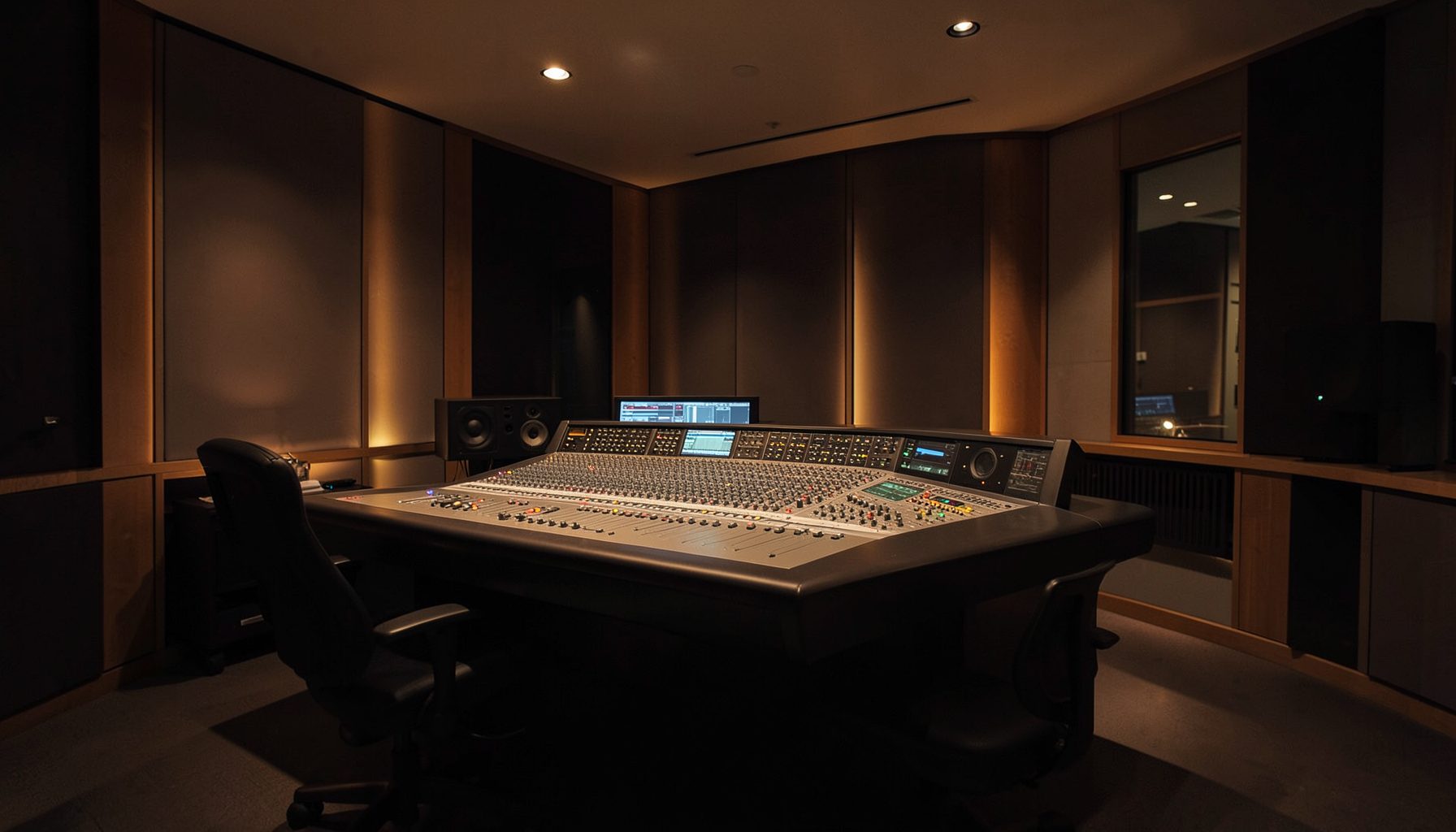
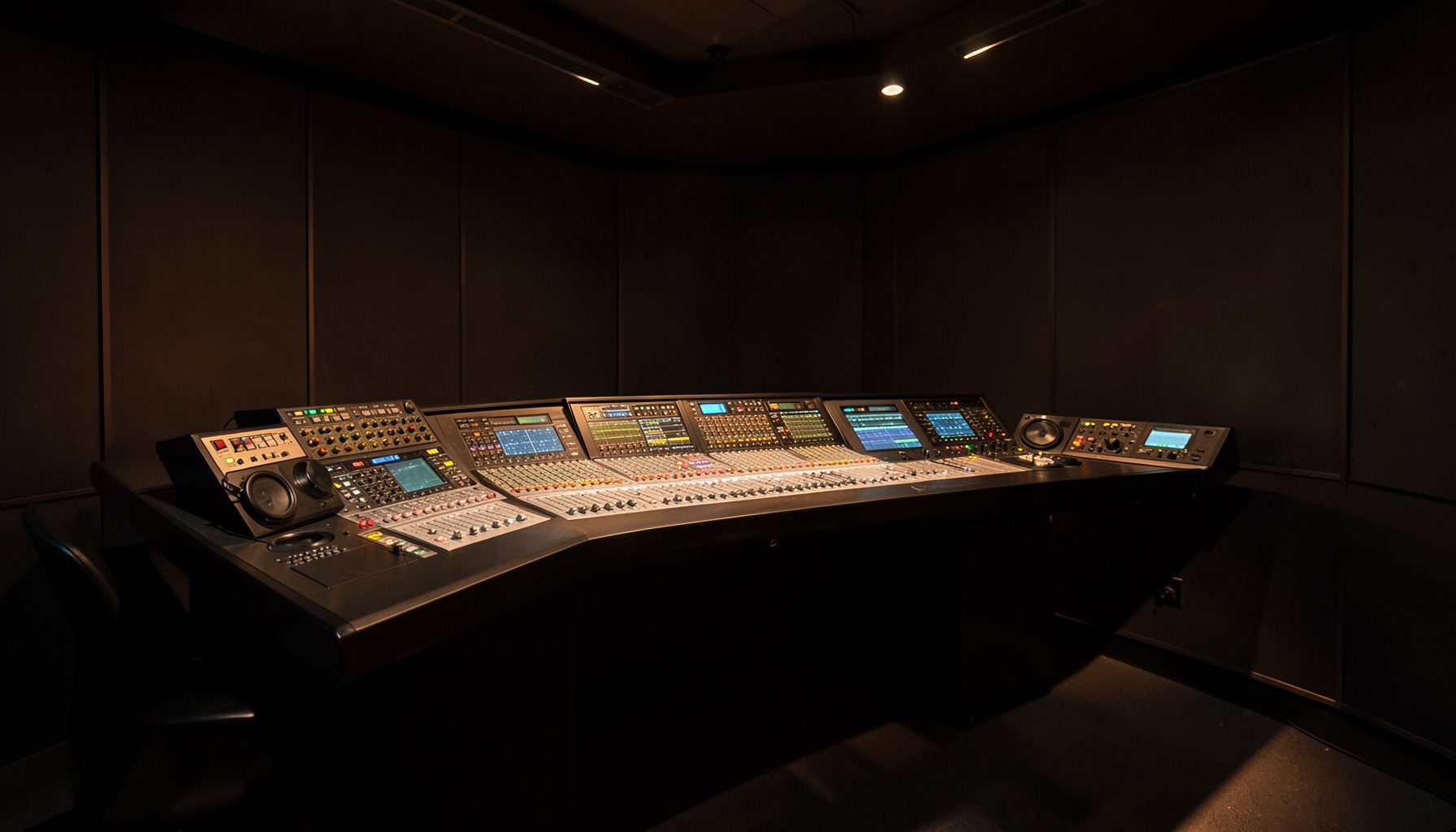
For studios built around a Ruby mixing console, this type of interface can make recurring broadcast operations easier to standardize while keeping the underlying console architecture flexible.
Map the break into deliberate console states
Start by defining the desired states rather than writing script actions immediately. A typical workflow includes a live state, a pre-break state, a commercial state, and a return state. Each state should have a clear purpose and a limited set of changes, making it easier to test and troubleshoot.
The pre-break state can prepare the studio before the actual transition. It might lower or mute open microphones, confirm that the commercial playout source is available, and set the correct program routing. The commercial state then holds the approved break configuration, while the return state restores the presenter’s microphone, music channels, monitoring, and normal mix balance.
Avoid using a snapshot as an unexamined copy of every console parameter. Broad snapshots can overwrite an operator’s legitimate live changes. Where possible, separate break-related controls into a dedicated scope or use narrowly defined snapshots that affect only the channels and buses required for the sequence.
Compare automation approaches
The best trigger depends on the station’s playout system, staffing model, and tolerance for automatic action. A manual button is often the safest starting point, while a timed or externally generated trigger can reduce repetitive work once the workflow has been validated.
| Approach | Typical trigger | Strength | Main consideration |
|---|---|---|---|
| Manual VisTool button | Operator command | Clear intent and easy override | Relies on operator timing |
| Playout-linked command | Commercial marker or event | Consistent with scheduled breaks | Requires dependable system integration |
| GPIO or tally event | External contact or studio signal | Simple, fast physical control | Needs careful wiring and state feedback |
| Timed script sequence | Defined delay or duration | Useful for repeatable transitions | Timing can drift from live events |
| Hybrid workflow | Automatic start with manual restore | Balances speed and control | Requires clear ownership of each action |
A hybrid model is often effective for live radio. The commercial start can be initiated by a playout event, while the return to live remains a visible VisTool button. This gives the system predictable behavior without removing the operator’s ability to respond to an extended break, an overrun, or a changed program decision.
Build safe triggers and recovery
Every automated action should have a known starting condition and a visible result. A VisTool button can show whether the studio is live, preparing for a break, in commercial mode, or waiting for recovery. Feedback is especially important when commands pass through a networked control environment, because a trigger being sent does not always guarantee that every target has completed its action.
Add safeguards against accidental activation. A confirmation step may be appropriate for a manual “break start” control, while a “return” control could be protected by a short lockout so repeated clicks do not recall the same snapshot multiple times. Emergency controls should be simple, prominent, and independent enough to restore a safe audio path if the planned sequence fails.
Recovery should be designed as a normal part of the script, not an afterthought. Include a fallback snapshot, a clear bypass procedure, and a way to restore microphones or program routing manually. Engineers should also decide what happens after a restart, network interruption, or partial command failure.
Recommended implementation practices
A disciplined build process keeps snapshot automation understandable for operators and maintainable for engineers.
- Name snapshots and VisTool controls by function, such as “Break Ready” or “Live Restore,” rather than by unexplained numbers.
- Limit each snapshot to the parameters needed for the commercial workflow.
- Display active-state feedback for live, break, fault, and manual override conditions.
- Add delays only where equipment or routing changes require them, and document every timed step.
- Test normal, extended, interrupted, and emergency scenarios before enabling unattended triggers.
Document the intended signal flow alongside the script. Include the source channels, buses, outputs, monitor paths, and expected microphone status. This record helps another engineer understand the automation quickly and makes future console or playout changes less risky.
Testing should take place in realistic conditions. Run the sequence with presenters, music playback, silence detection, monitoring, and external routing active. Repeat it after a cold start and after reconnecting relevant networked devices. A script that works in an empty studio may still expose timing or feedback problems during a live program.
Move from testing to daily operation
Once the workflow is stable, introduce it gradually. Begin with operator-triggered snapshots, observe several real breaks, and review whether the controls behave as expected under pressure. Only then consider adding playout markers, GPIO triggers, or automatic return logic.
VisTool scripting is most effective when it supports a clearly designed operating model rather than trying to automate every console decision. Define the states, limit the scope of each snapshot, provide visible feedback, and preserve a dependable manual path.
Build the sequence in a test environment, validate it with real broadcast scenarios, and deploy it as a documented part of the studio workflow. With that foundation, automatic console snapshots can make commercial transitions faster, more consistent, and easier to manage on air.