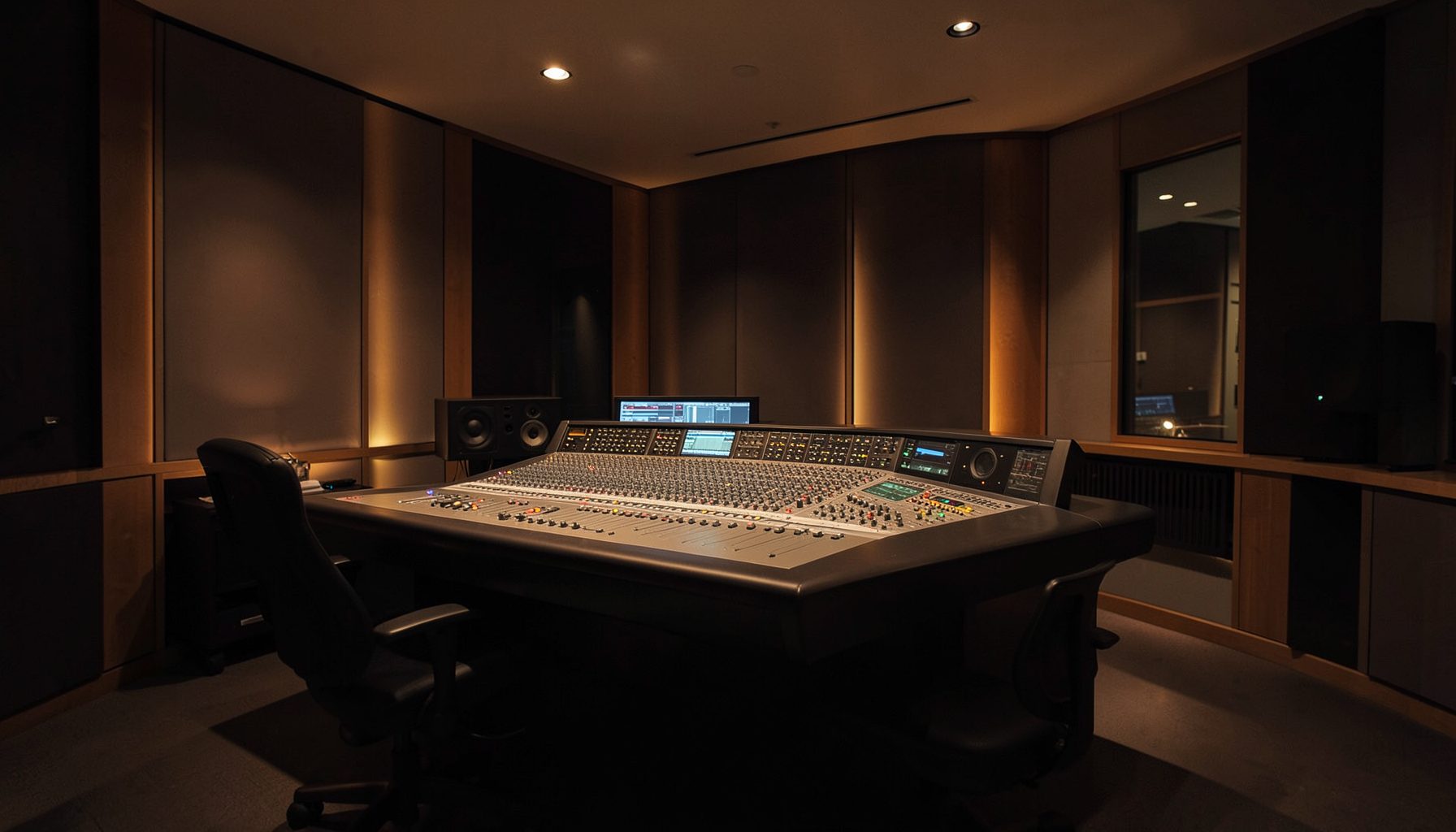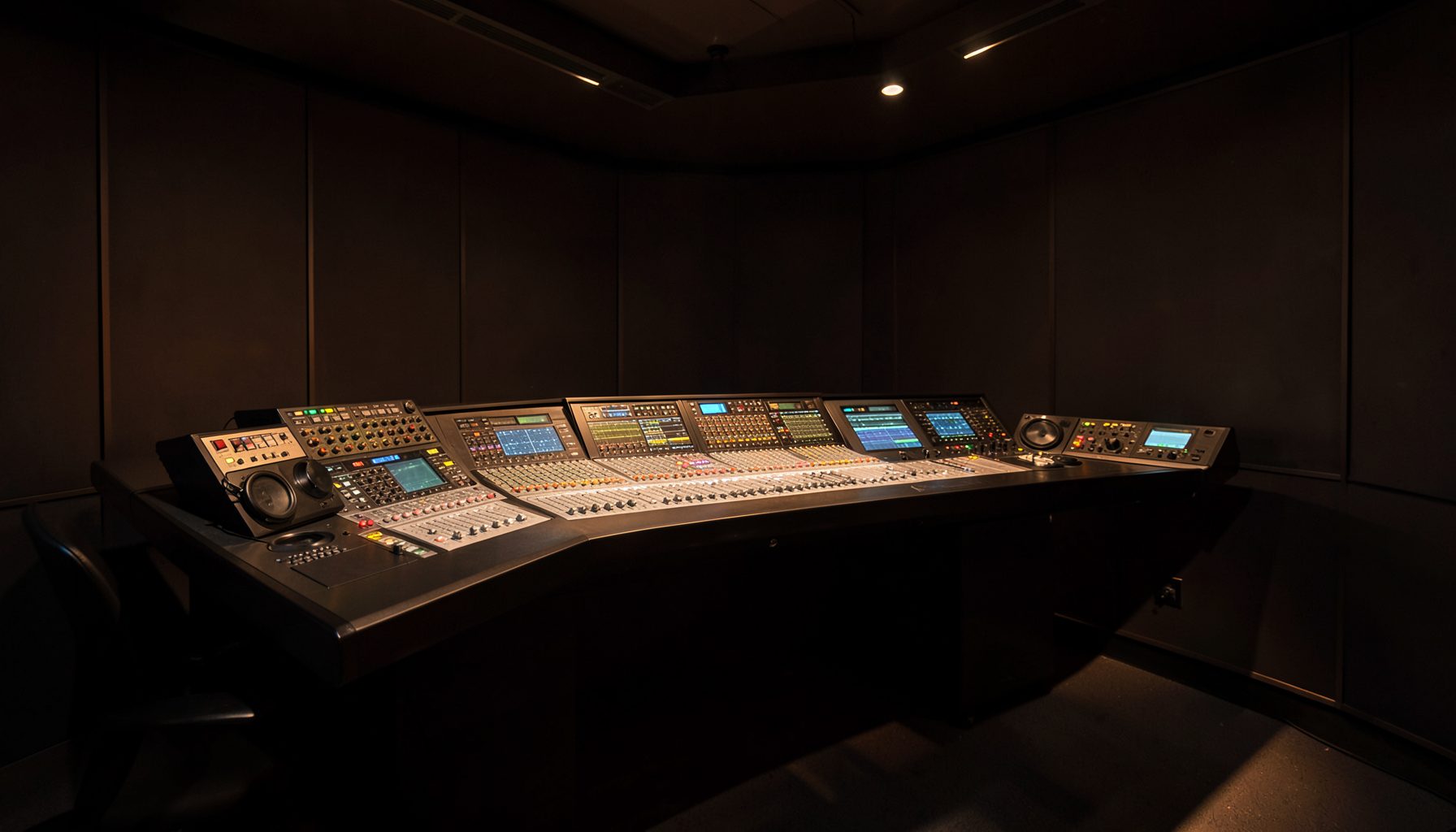
Ruby’s Insert Effects Rack for External Reverb in Voice-Over Booths
Using Ruby’s Insert Effects Rack to add external reverb to a voice-over booth lets a producer place a clean vocal inside a convincing acoustic space without rebuilding the room. The booth stays controlled while the channel gains depth, size and room character.
Radio booths are usually built to minimise reflections, rumble and background noise. That clarity protects a narration, but a very dry read can feel detached in drama, spoken-word advertising or a more conversational podcast mix.
The insert path keeps the processor outside the booth, where fan noise is easier to contain, and lets the operator set the wet level independently. The result should support the performance rather than announce that an effect is present.
Why a controlled room sound can help
A restrained hall, room or plate sound can make a close read sit naturally within a scene. Too much reverb can blur consonants, weaken a promo and reduce clarity on small radio speakers, so the comparison below should be made at the intended monitoring level.
| Approach | Signal path | Advantage | Limitation |
|---|---|---|---|
| Dry console channel | Voice directly to the mix bus | Maximum clarity and easy editing | Can feel unnaturally bare |
| External processor through an insert | Channel send to reverb and back | Broad choice of spaces and hardware | Adds routing, gain staging and possible delay |
| Console-native processing | Channel through an onboard effect | Fast recall and low added latency | Fewer acoustic choices, subject to console capacity |
| DAW processing | Recorded voice through a plug-in | Flexible revisions and automation | Not heard by the performer during recording |
Choose the shortest room that supports the story. A small studio plate may suit a sponsor message, while a larger hall may suit a documentary or fictional scene. Check mono compatibility as well, because many Australian radio audiences hear stereo programmes on fixed or vehicle receivers.
What the insert rack actually does
Ruby’s Insert Effects Rack acts as a routing layer for outboard processing: a voice channel feeds a send, the external device returns the wet signal, and that return rejoins the channel’s processing path. The console therefore controls the relationship between source, effect and mix rather than changing the physical acoustics of the booth.
Connector formats, available insert slots and pre- or post-fader options depend on the Ruby model and installed I/O. The wider Broadcast 3.0 ecosystem is explained on Lawo Broadcast, where Ruby, Power Core, VisTool and RƎLAY are presented as complementary broadcast tools.
Connecting and configuring the reverb
Patch the console’s insert send to the reverb input and the reverb output to the assigned return. A hardware plate or hall can use analogue connections; a software convolution server can use MADI or networked audio. For networked devices, clock synchronisation and consistent sample rates are essential before tuning begins.
Create the effect patch, label it clearly and set a conservative send level. Trim the return until the added space sits beneath the voice in level, then compare the insert in and out. Keep the dry signal present at all times, and check the talkback and headphone paths so the talent receives direction without an excessive wet cue.
Place the processor in a ventilated equipment room rather than beside the talent’s head. This is particularly useful in Australian studios during hot weather, when nearby fan noise and unreliable cooling can undermine an otherwise controlled recording.
Controlling latency and monitoring
An external plate or analogue reverb usually adds little perceived delay. A digital or networked processor can introduce conversion, processing and packet latency, so its return may arrive behind the dry voice. That delay can make a performer change timing instinctively, especially when a producer is monitoring remotely from another city.
Use headphones, establish a clear talkback path and avoid sending an obviously delayed wet signal to the performer. Measure or estimate round-trip latency before an important session, keep a local dry cue available and make sure any return sent to a remote listener is aligned or consciously delayed.
Fitting the workflow to Australian production
Australian production regularly spans distance. A narrator may record in Adelaide or a regional studio while a producer works in Sydney, Melbourne or Brisbane, with the session carried over a managed IP contribution link. Recording close to home is convenient, but the producer should allow for variable internet paths and use a local confidence monitor rather than judging every take through the remote link.
The local market includes commercial radio networks, the ABC and SBS, community stations, podcasters and independent production houses. ACMA licensing and broadcast obligations shape how material reaches air, while advertising work must meet Australian consumer-law and station clearance requirements. A clean, editable recording therefore often has more value than a heavily processed live sound.
Privacy also matters. Under the Privacy Act 1988, recordings can contain personal information, including addresses, health information or private details in a script. Access, storage and deletion should be covered by the broadcaster’s or agency’s procedures. In home booths, everyday sounds such as traffic, evaporative cooling units and family activity should be treated as part of the recording plan.
Recording for flexibility and quality control
Record the dry voice as the primary track and capture the effect return separately when the workflow permits. Separate tracks make it possible to adjust room size or depth in post without repeatedly asking the performer to record, and they allow the producer to create versions for radio, online video and podcast delivery.
Keep the effect preset, routing snapshot, impulse-response file and any parameter notes with the session. Do not automatically mix a dry and wet print if they have different alignment; check phase and intelligibility first. Preserve a genuinely dry take, because advertising revisions often require a new line in the same acoustic setting.
Keep the routing simple and reversible
External reverb works best when it remains subordinate to the words. Begin with a short, natural room, use the insert return to add depth, and bypass the path regularly to confirm that the underlying performance is strong. Save a version with and without the effect before delivery.
The lasting principle is simple: remember the send, the return and the clean dry signal. Those three elements give an Australian broadcaster a controlled room sound, a reversible workflow and a vocal that remains clear on radio, streaming and small speakers.