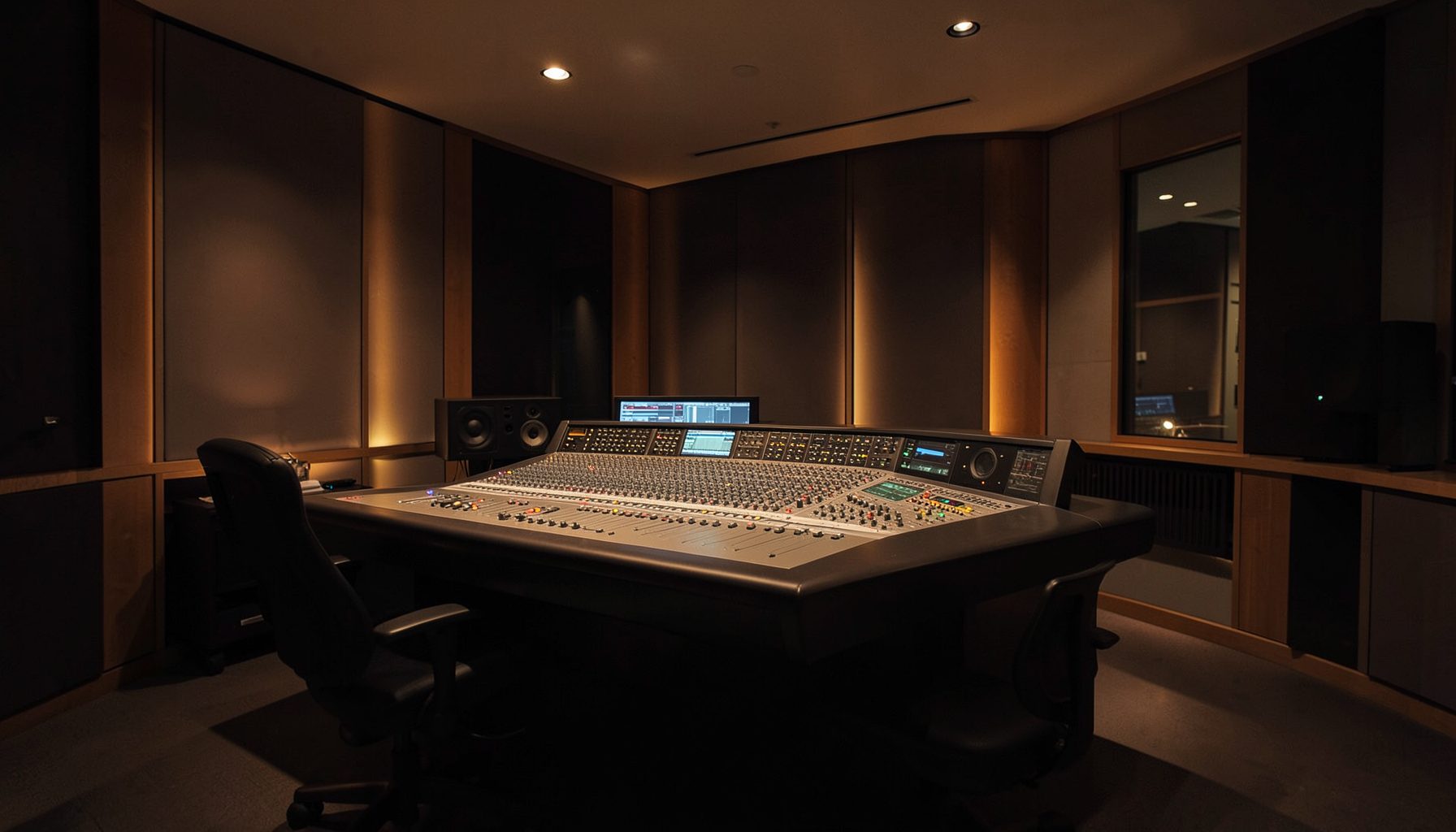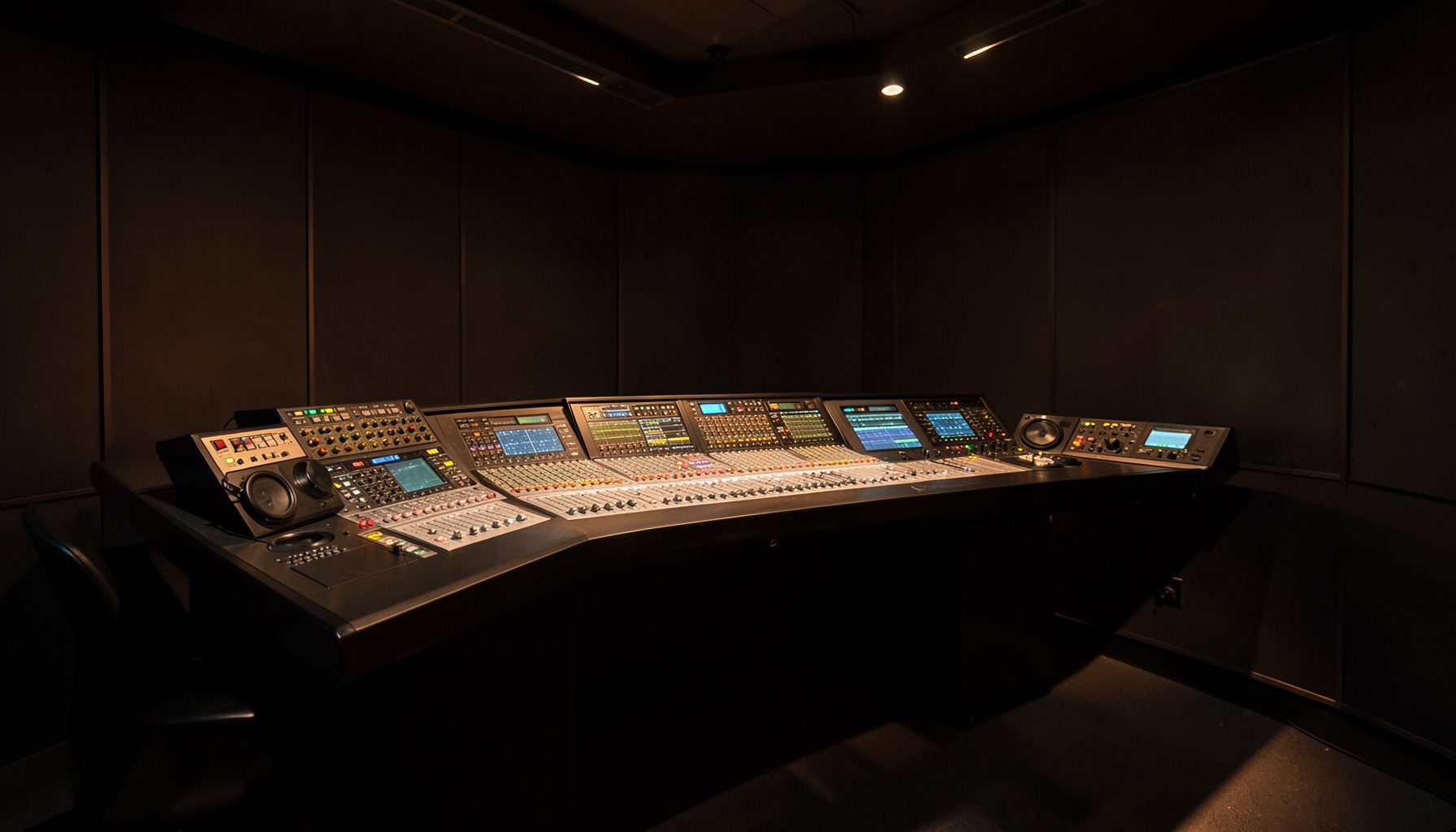
RƎLAY with ON AIR and CUE Outputs for Modern Radio Studios
RƎLAY sits at the crossroads of physical broadcast hardware and software-defined audio, giving stations a way to route microphone signals, program feeds, and talkback through a single touchscreen-friendly interface. For Australian broadcasters juggling breakfast shows in Sydney, drive-time presenters in Melbourne, and remote regional transmitters across the Nullarbor, that flexibility cuts down on rack space without cutting corners on redundancy.
The classic on-air studio relies on two distinct monitoring paths: the ON AIR bus that feeds program audio to transmission, and the CUE bus that lets a producer or co-host preview an incoming source before it goes live. Getting those two paths right is what separates a clean crossfade from an embarrassing false start, and software tools now play a bigger role in that dance than they did when most desks were purely analogue.
RƎLAY was built with this dual-path reality in mind. It exposes ON AIR and CUE outputs as routable destinations that can be patched into Power Core DSP engines, fed to Ruby consoles, or sent to a remote stream over AoIP. The result is a workflow where the presenter's mic can be muted on CUE, full on ON AIR, and confidence-monitored through a software fader without rewiring a single XLR.
RƎLAY as a Software Mixer Layer
At its core, RƎLAY is a virtual mixing surface that runs on a standard Windows PC and talks to Lawo hardware through standard network protocols. Stations using the RƎLAY VRX virtual mixer can mix microphones, phone callers, and jingle players from a laptop in a newsroom or from a permanent touchscreen in a control room.
Because the mixer is software, operators can recall show layouts for different shifts. A brekkie show in Adelaide might load a preset that brings up three mics and a music server, while a drive-time talkback segment in Brisbane pulls in two extra callers and drops the music bed. The presets live as files on disk, which makes handover between presenters much smoother than scribbling mixer notes on a printed rundown.
ON AIR and CUE Signal Paths Explained
The ON AIR path is the one the audience hears. It typically includes the presenter's microphone with processing, any active phone caller or guest, and the program output of the playout system. CUE, by contrast, is a private bus: producers use it to listen to an incoming interview, cue up a song, or chat with a talent before they go live.
RƎLAY handles both as separate output streams. A console button or a software tile can switch a source from CUE to ON AIR with a single click, and the routing engine inside the host PC keeps the two buses phase-coherent so the presenter never hears an echo of their own voice bleeding through their headphones.
Connecting RƎLAY to Power Core and Ruby Consoles
When RƎLAY runs alongside a Power Core audio node, the ON AIR and CUE outputs can be mapped directly to the node's internal matrix. That means a regional station in Tamworth or a community broadcaster in Hobart can use RƎLAY for studio mixing while still relying on Power Core for I/O, processing, and backup.
For larger setups, a Ruby console in Perth or Sydney can act as the hardware surface, with RƎLAY handling secondary mix-minus feeds, remote codecs, or voice-tracking sessions. The console's faders move RƎLAY's software channels over the network, and the software returns metering and tally information back to the surface. Presenters get the tactile feel of a real fader; engineers get a software layer they can reconfigure between shifts.
Australian Studio Workflows in Practice
Talkback-heavy formats such as ABC Local Radio or commercial talk stations lean heavily on the CUE bus. A producer in a Sydney studio can preview a caller coming in from Dubbo over IP, talk to them privately on CUE, then drop them onto ON AIR with the confidence that the presenter's mic is muted on the caller's return feed.
Music-led networks face a different challenge: keeping a clean ON AIR signal while a producer cues the next track. RƎLAY's split output design means the cue preview can carry a few seconds of pre-roll audio without that pre-roll ever reaching the transmitter. For stations broadcasting into mining regions via fly-in fly-out radio streams, the same setup allows an off-site producer to manage cues without disturbing on-air talent hundreds of kilometres away.
DSP Headroom for Bigger Productions
When RƎLAY is part of a larger event mix, such as a live music broadcast or a remote outside broadcast from a stadium, DSP resources can get tight. The DSP utilization guide walks through how to allocate processing headroom when dozens of sources need simultaneous EQ, dynamics, and routing.
Applying those principles means keeping heavy processing on hardware-accelerated engines and reserving RƎLAY for routing, mix-minus, and cue logic. An Australian broadcaster covering a Big Bash cricket match from a regional ground can run commentary mics, crowd mics, and studio returns through one Power Core chassis while RƎLAY handles the cueing of remote talent in another city.
Hardware Routing versus Software Routing
| Aspect | Hardware Matrix Router | RƎLAY Software Routing |
|---|---|---|
| Reconfiguration | Patch changes on a physical patchbay | Software preset recall in seconds |
| Physical Footprint | Rack units and cabling per studio | One PC per studio, network cabling |
| Redundancy | Relies on hardware redundancy | PC failover plus redundant network paths |
| Scalability | Limited by physical I/O | Scales with available network bandwidth |
| Cost for Regional Sites | Higher due to hardware and freight | Lower, especially across remote Australia |
For a national network with studios in capital cities and translators in remote towns, software routing often wins on logistics alone. Shipping a 1U replacement unit to a site near Uluru takes days; pushing a new RƎLAY configuration over the network takes minutes.
ON AIR and CUE are not just two labels on a console, they are two distinct audio universes that must stay separate until the moment a source crosses from one to the other. RƎLAY gives broadcasters a clean, software-driven way to manage that boundary, connect it to Power Core and Ruby hardware, and keep shows on the air whether they originate from a high-rise studio in Melbourne or a regional hub in the Top End.