Mapping fader moves to router events with Ember+
Using Lawo’s Ember+ to map fader movements to broadcast router events bridges a continuous control gesture and a discrete routing decision. A fader position alone is rarely enough intent to alter programme; the surrounding thresholds, mode and acknowledgements matter.
The control path normally starts with a configured Ember+ parameter, passes through a mapping service and ends at the router’s control interface. Audio can still travel by a separate path, so a successful command must be confirmed independently from the presence of sound.
This arrangement supports physical controls, software operation and repeatable automation without coupling routing to a particular console button. It also creates a boundary where engineers can add filtering, permissions and diagnostics instead of embedding fragile logic in every control surface.
Care is needed where talent, automation and monitoring share a console. An automatic fader move may reflect a scene, remote contributor or software process rather than a deliberate source selection, so the mapper should know which movements are eligible.
The control path
The first design choice is where Ember+ runs. A Ruby console or gateway can expose an approved control through Ember+; the exact fader and parameter availability depend on the installed software, configuration and integration profile. Record stable object identifiers during commissioning rather than relying on display labels.
The mapping service subscribes to that parameter and compares incoming values with a defined operating range. On a valid upward crossing it can address a router input and output, while a downward crossing can invoke an authorised fallback. Commands should carry a correlation identifier so acknowledgements can be matched to the gesture that caused them.
Retries need care because routers are generally idempotent: selecting source 14 on output 3 repeatedly should leave the same state. The service should avoid flooding a matrix with near-identical commands, retain the last accepted route and query the router after reconnecting rather than replaying an ambiguous queue.
Designing a dependable mapping
Treat the threshold as part of the programme policy, not as a universal fader value. An example might arm a route above –12 dB for 200 milliseconds and release it below –18 dB for two seconds. Those figures must be tested against console taper, source dynamics and the station’s switching rules.
Hysteresis prevents a source hovering near the threshold from repeatedly changing the feed. A source selector, on-air light, enabled take bus or operator assignment can supply the context that the fader lacks. If no such context exists, the design should require an explicit confirm action rather than infer intent from level alone.
Every route event should state its source, destination, command type, originating parameter and reason. Include the previous and requested states in diagnostics, but keep implementation-specific values in a versioned configuration. That makes a control change reviewable and lets operators distinguish a rejected command from a delayed one.
Ruby, Power Core and signal flow
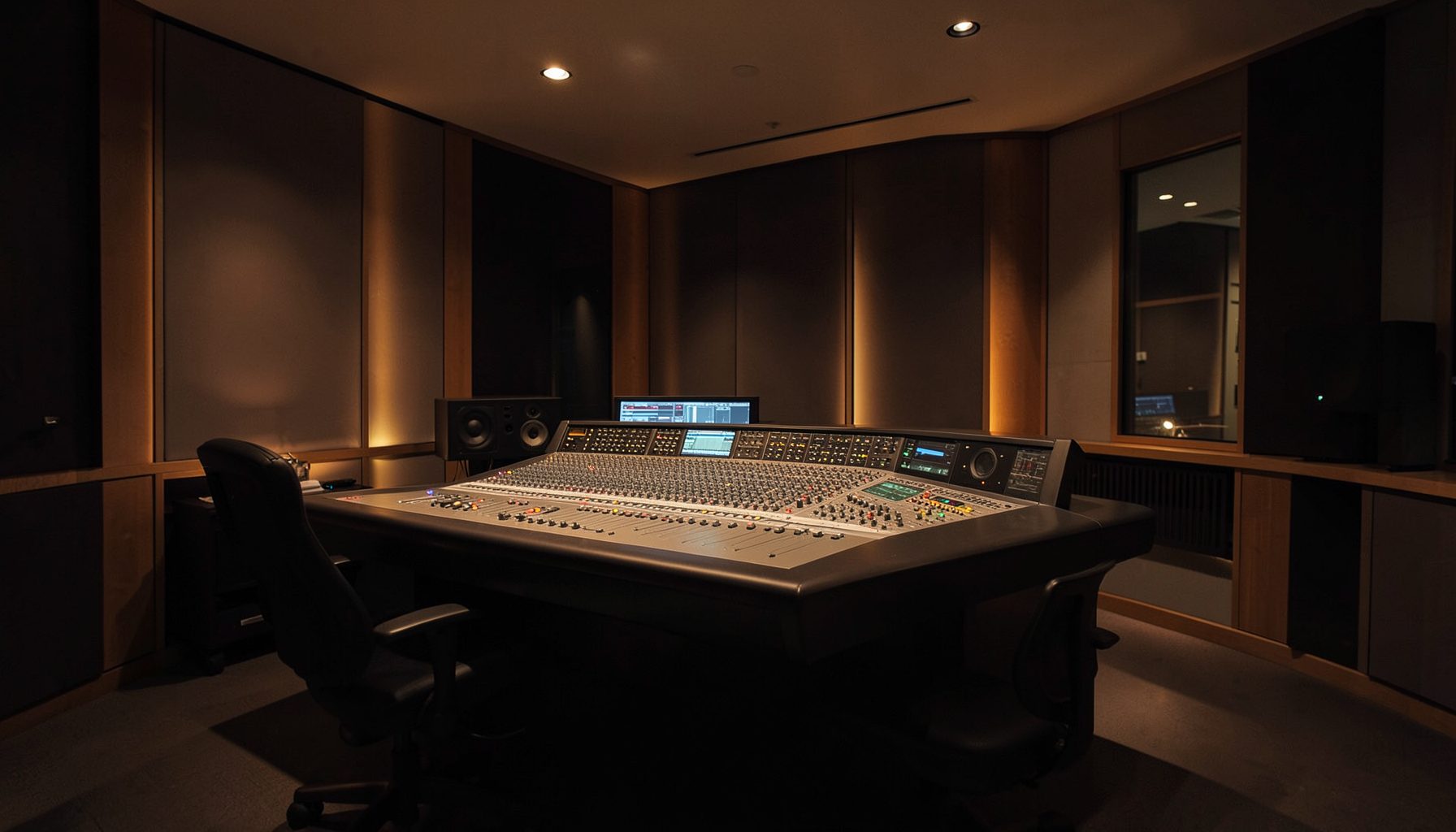
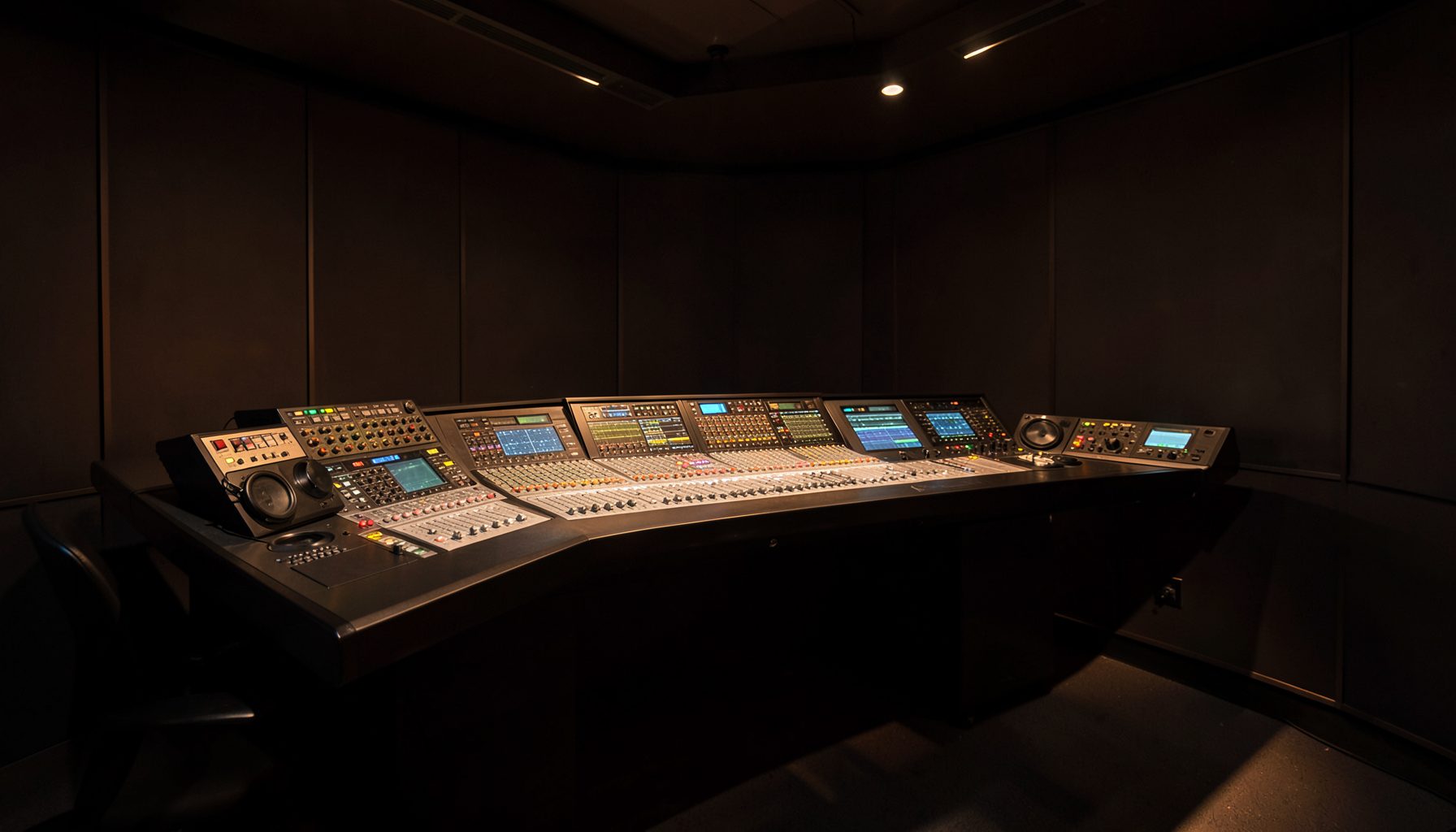
Ruby provides the physical operating surface, while a configured Ember+ endpoint can make selected state available to the mapping service. A custom interface or VisTool view can show whether the mapper is armed, above threshold or waiting for acknowledgement. This separates intent at the desk from confirmation at the router.
Where the selected feed terminates in Power Core audio nodes, routing remains a matrix decision, while gain, equalisation, dynamics and interface conversion remain in the node’s processing domain. Keeping those responsibilities clear prevents a successful Ember+ route command from being mistaken for proof that the audio itself is healthy.
The open-air case is particularly instructive. Lawo’s open-air bleed control explains how AutoMix manages crosstalk and bleed when studio activity is not cleanly separated. Such ambient movement should not necessarily trigger a transmission route; combining level thresholds with a selected source or explicit take intent reduces accidental takeovers.
Australian studio realities
Australian deployments combine metropolitan master control with a market that includes commercial networks, the ABC and SBS, and community broadcasters. Sydney, Melbourne and Brisbane host major facilities, while regional stations can be hundreds of kilometres from engineers and spares. Remote diagnostics, documented restores and a tested local manual override are therefore more valuable than unnecessary complexity.
ACMA regulates commercial and community broadcasting under the Broadcasting Services Act 1992, while approved technical plans can constrain how a licensed service is delivered. A router automation change affecting an authorised feed should enter the operator’s change-control process and receive engineering sign-off, even if it changes no transmitter settings.
Australian listeners also encounter digital radio based on DAB+, alongside FM and streaming services, so a broadcast router may feed several platform encoders rather than one analogue chain. Logs should use UTC because Sydney, Melbourne and Brisbane observe daylight-saving changes while Perth does not. Protected power and controlled equipment environments are equally important in humid, dusty regional sites.
Safeguards, monitoring and recovery
Reliability comes from bounded behaviour. Add debounce, hysteresis, rate limits and a stale-data timeout; after a network interruption, stop generating new routes and show the last confirmed router state. An automation layer should never infer that silence means permission to select an arbitrary fallback source.
Segment Ember+ and router-control traffic from production media where practical, restrict which devices can connect and keep router credentials in controlled configuration rather than embedded in scripts. Commissioning values, software versions and command logs should be retained with the station’s operational records. Monitoring should cover commands, rejections and state mismatches as separate conditions.
Teams that later want to detect abnormal fader behaviour can use captured traces to train an anomaly model. Practical machine training explains why labelled examples and a separate validation set matter; here, learned behaviour should flag suspicious movement for review, never silently drive a live router without the same deterministic safeguards.
Commissioning from one controlled move
Test against a spare or muted router output before connecting a real transmission feed. Replay slow, fast and interrupted fader moves, then verify the Ember+ value, generated command, router acknowledgement and audio result. Include loss of controller, duplicate delivery, out-of-range values and an operator override in the test record.
The runbook should name the eligible faders, sources and destinations; explain threshold changes; and tell staff how to return to manual control. Keep one named engineer responsible for approving the live configuration, and archive the tested script rather than editing it on the presentation machine.
The next concrete step is a witnessed test that records one approved fader crossing, its Ember+ value and the router acknowledgement against a test output before air operation.