Centralized Broadcast Control Across Sites With Broadcast 3.0
A multi-site broadcaster needs consistent sound, dependable contribution paths, and a control layer that operators can understand quickly. Separate studios, production rooms, and remote facilities often evolve at different speeds, creating isolated workflows that are difficult to manage as one service.
Lawo’s Broadcast 3.0 ecosystem addresses this problem through networked audio, software-defined control, and shared operational logic. Ruby mixing consoles, Power Core audio nodes, VisTool, RƎLAY, and AutoMix can work together across local and geographically distributed environments while preserving the working methods that teams already know.
Centralization does not mean putting every device in one room. It means creating a coordinated architecture in which resources, control surfaces, processing, and monitoring can be assigned where they are needed.
Build A Shared Network Foundation
The foundation is a resilient IP network that transports audio, control data, synchronization, and management information between sites. Instead of tying every function to a dedicated hardware path, a broadcaster can connect studios and technical spaces through a common infrastructure based on defined access, redundancy, and quality-of-service policies.
Power Core acts as a central element in this model. Its audio processing and routing capabilities can support local operation while making resources available to other rooms or facilities. A console in one location can access sources, processing paths, and feeds hosted elsewhere, provided the network has been engineered for predictable latency and availability.
A practical migration benefits from clear stages. Lawo’s IP transition roadmap describes how organizations can move from legacy infrastructure toward a networked Power Core workflow without treating the entire installation as a single overnight replacement.
Separate Control From Location
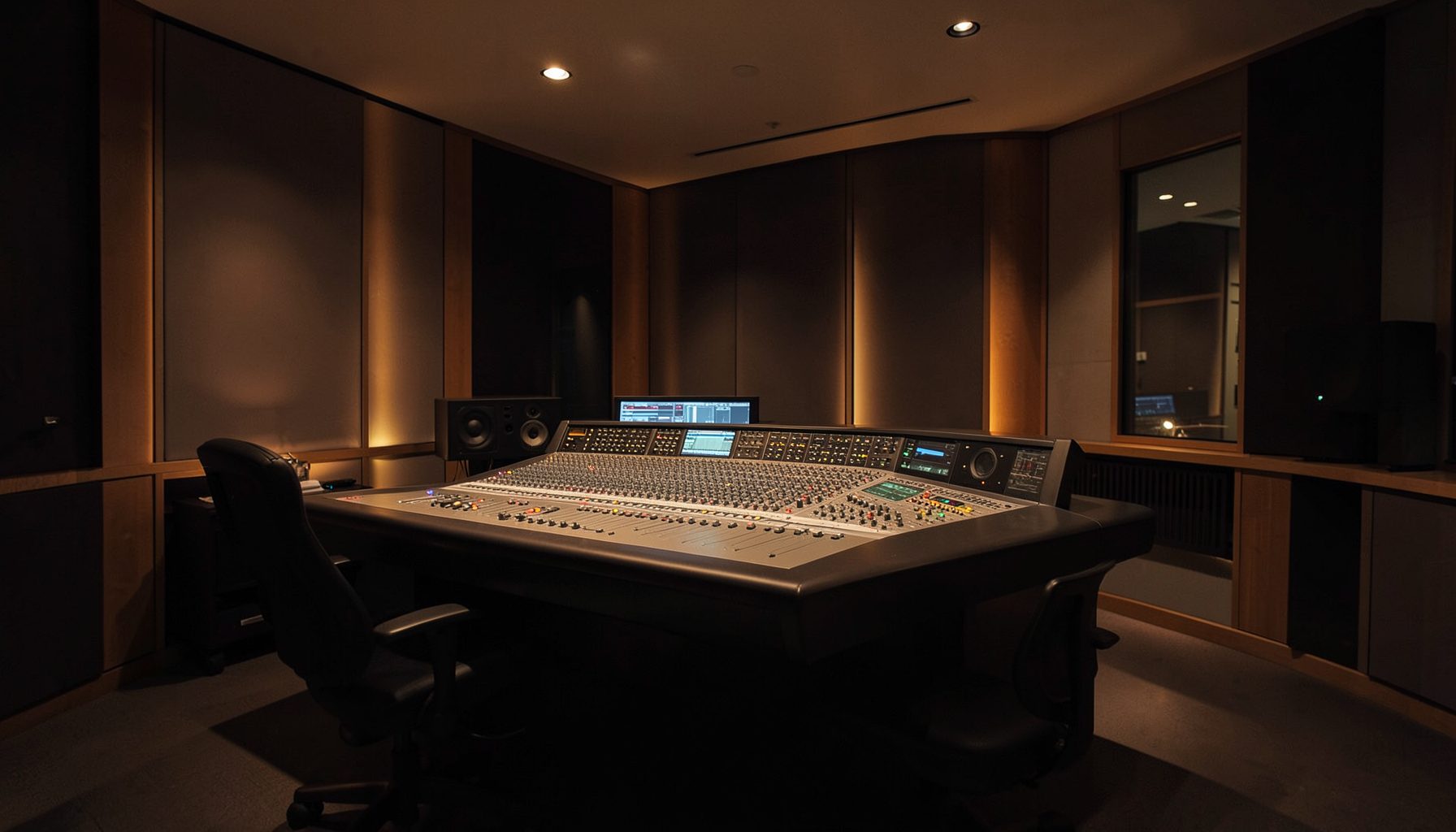
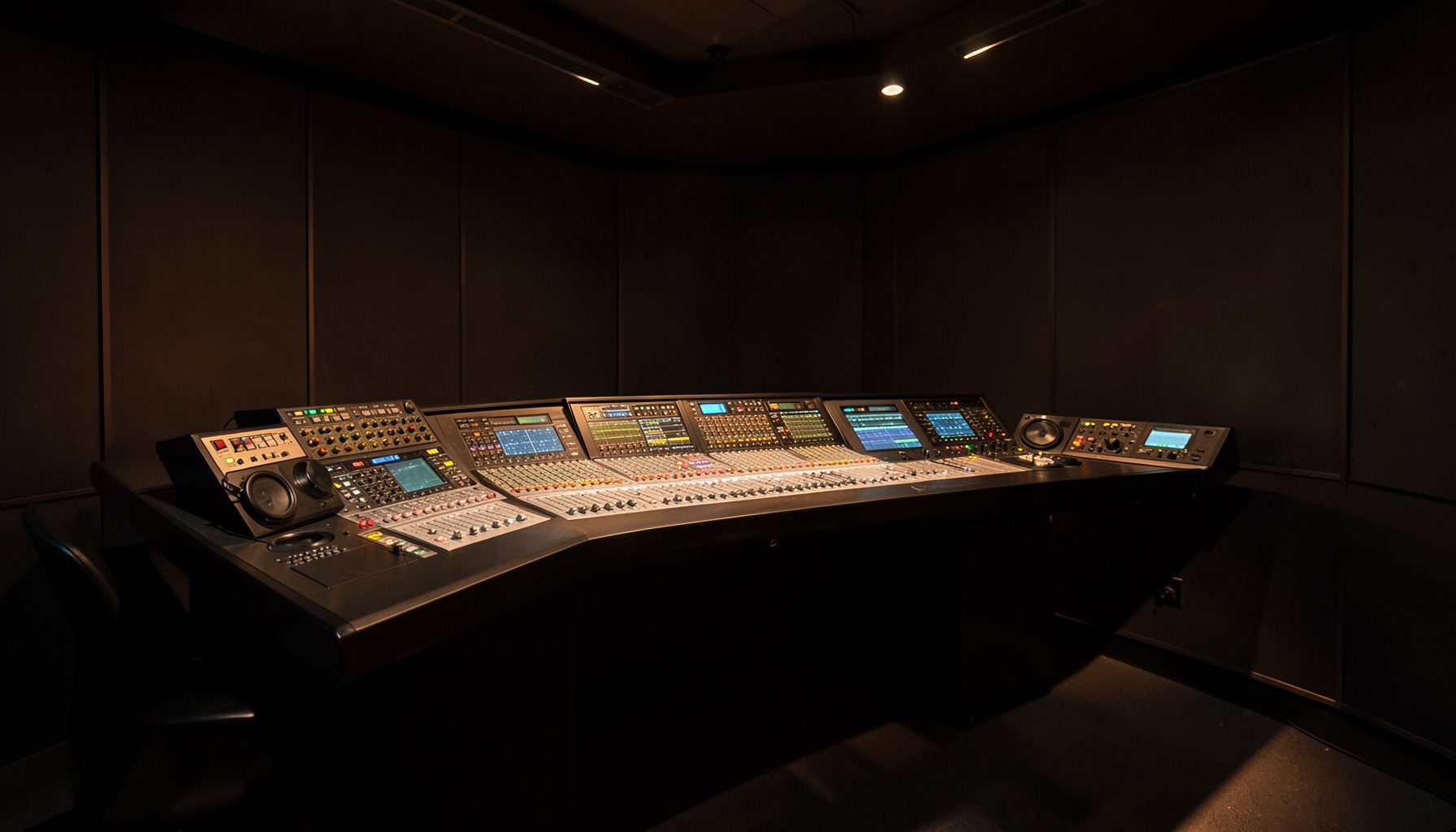
Centralized control becomes useful when operators can work with familiar interfaces regardless of where the underlying processing resides. Ruby consoles provide a physical control point for radio production and playout, while VisTool can provide configurable software panels for monitoring, routing, source selection, and facility-wide supervision.
This separation allows each site to retain an appropriate operating position. A main studio may use a full Ruby surface, while a smaller newsroom or backup room can rely on a compact interface or VisTool panel. The same operational rules can be applied across both locations without forcing every room to have identical equipment.
Remote access also supports engineering teams. Authorized staff can inspect signal paths, adjust selected parameters, and respond to alarms from a central technical position. Access policies should be carefully segmented so that operational convenience never overrides security or accountability.
Coordinate Production And Playout Resources
A shared ecosystem can connect live production, automation support, post-production, and contribution workflows. RƎLAY virtual radio tools extend production capabilities into software, making it possible to deploy functions where physical consoles are impractical or where fast scaling is important.
AutoMix can help maintain consistent speech and program balance for formats that depend on hands-free or semi-automated mixing. When its processing is coordinated with Power Core and console control, operators can switch between automated and manual workflows without rebuilding the signal chain.
The result is a more flexible resource pool. A production room can draw on processing hosted at a central facility, a backup site can take over selected services, and a remote studio can contribute to the same program environment. Routing must still be documented carefully, with clear naming conventions and ownership for every source and destination.
Compare Operational Models
Different centralization strategies suit different organizations. The right choice depends on network capacity, staffing, resilience objectives, and the degree of shared control required between sites.
| Operating model | Main strength | Key consideration | Suitable use |
|---|---|---|---|
| Local processing at each site | Simple independence during network disruption | Higher equipment duplication | Small or highly autonomous facilities |
| Centralized Power Core processing | Efficient resource sharing and consistent configuration | Requires resilient inter-site connectivity | Groups with several coordinated studios |
| Hybrid local and central processing | Balances independence with shared services | Needs careful failover design | Broadcasters migrating in stages |
| Software-led control with VisTool and RƎLAY | Fast deployment and flexible room design | Depends on endpoint and access management | Newsrooms, remote rooms, and temporary facilities |
A hybrid model is often the most practical starting point. Core services can be centralized while essential local functions remain available if a site loses connectivity. Over time, additional rooms can be brought into the shared environment as operational confidence grows.
Standardize Monitoring And Governance
Central control is effective only when teams can see the health of the system. Consistent monitoring should cover signal presence, synchronization, network status, processing load, and active routes. Alarm priorities must distinguish between a condition that requires immediate intervention and one that can wait for scheduled maintenance.
Governance is equally important. A shared configuration needs version control, documented permissions, and a change process that includes all affected sites. Operators should know which settings they can alter, engineers should be able to restore approved configurations, and administrators should be able to review access activity.
Templates can reduce variation between facilities. Standard console layouts, VisTool panels, source labels, and routing conventions make training easier and shorten the time needed to diagnose an unfamiliar room. They also reduce the risk that a local customization will complicate disaster recovery.
Plan Resilience Beyond Backup Hardware
Resilience must include people, procedures, and connectivity. Two Power Core instances or redundant network paths may protect against equipment failure, but they do not automatically provide a workable fallback for a damaged building, a misconfigured route, or an unavailable operator.
Design each site with a defined role during an incident. One facility might become the primary continuity center, while another provides news contribution or alternate playout. Test these roles under realistic conditions, including loss of inter-site connectivity and partial service degradation.
Useful priorities for implementation include:
- Map every critical source, destination, processor, and control dependency.
- Deploy redundant network paths with documented failover behavior.
- Create common naming, access, monitoring, and configuration standards.
- Train operators on local control and centralized recovery workflows.
- Schedule recurring tests for site loss, link failure, and configuration restoration.
Scale From A Pilot To A Broadcast Group
A pilot site offers a controlled way to validate the ecosystem before broader deployment. Choose a workflow with measurable value, such as shared processing between a main studio and a backup room, centralized monitoring for several facilities, or software-based production for a remote team.
Define success in operational terms: shorter recovery time, fewer duplicated resources, faster room changes, or consistent audio quality across sites. Technical metrics such as latency, packet loss, synchronization stability, and failover duration should support those goals rather than replace them.
Once the pilot is stable, extend the model through repeatable templates. Add facilities in logical groups, document exceptions, and keep the central architecture understandable as it grows. Broadcast 3.0 is most effective when it becomes an operating framework for the organization, rather than a collection of disconnected products.
Bring your studios, processing resources, and control workflows into a coordinated Lawo environment by mapping the first shared service, validating the network foundation, and planning a pilot that can expand across every site.