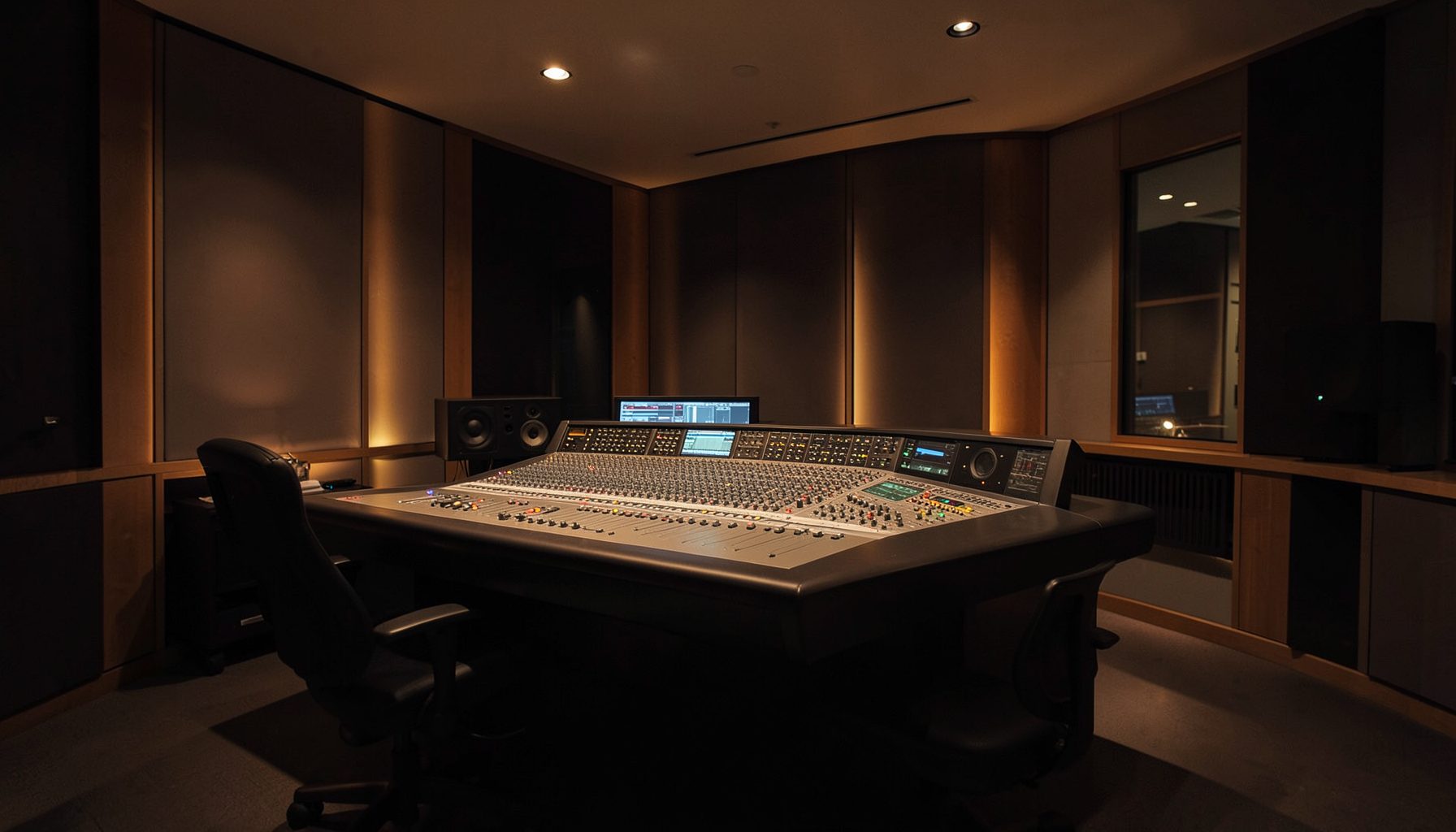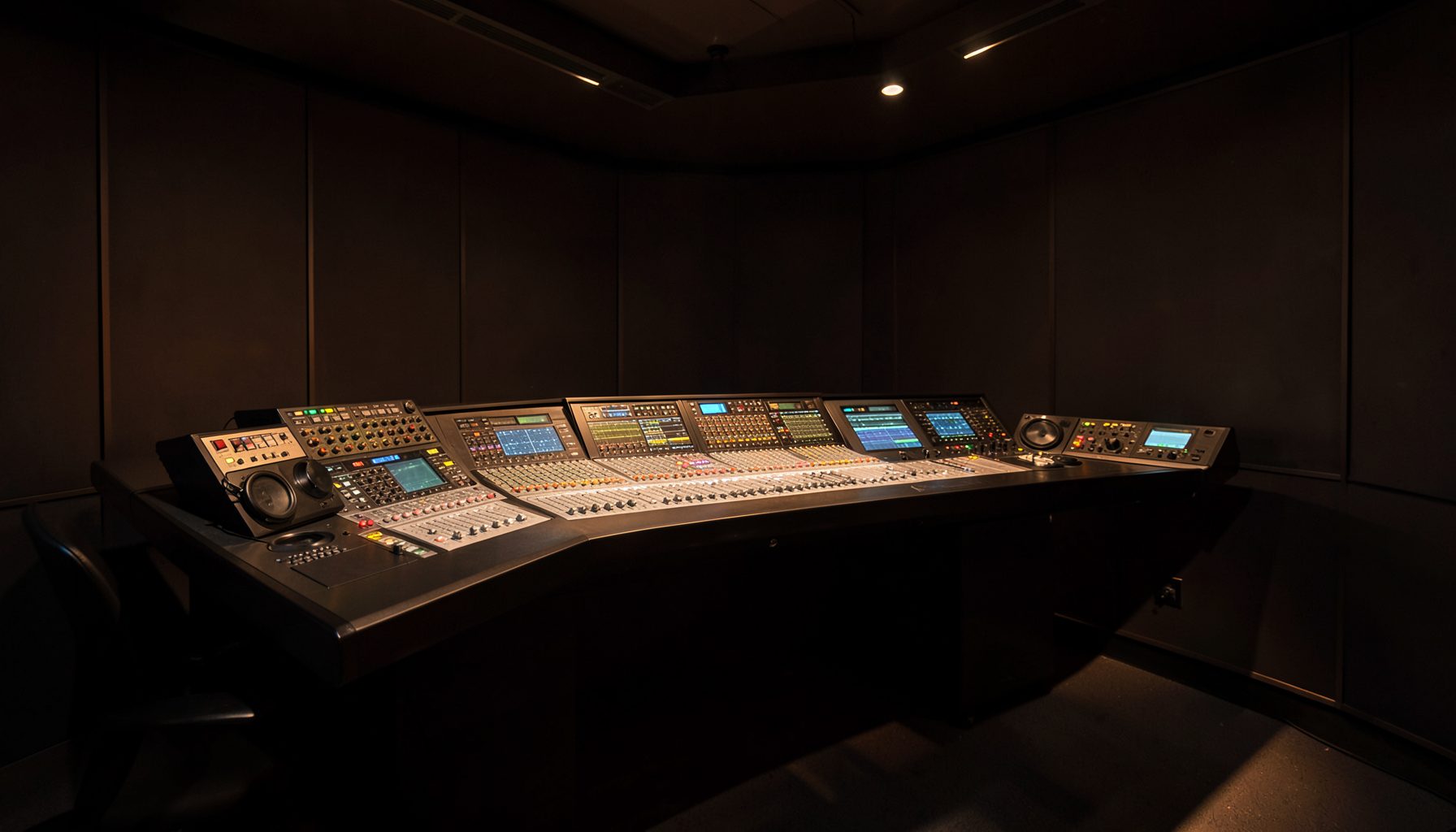
Broadcast 3.0 network slicing for isolated production VLANs
Broadcast 3.0 describes a shift towards IP-based radio production in which consoles, audio nodes and operational software participate in a coordinated infrastructure. Network slicing gives that infrastructure a way to separate live production from other studio services without requiring identical hardware for every workflow.
For Australian broadcasters, the value is operational rather than abstract: production VLANs can isolate programme audio from business traffic, keep playout systems distinct from administration, and make failures easier to trace. Separation still depends on disciplined routing, security and testing.
What Broadcast 3.0 slicing changes
Lawo’s Broadcast 3.0 ecosystem overview places consoles, audio nodes and production software within a common architecture. Rather than giving every studio its own physical network, slicing partitions shared switches and routed links into logically separated production VLANs. Traffic can follow defined paths and service policies while infrastructure remains shared.
That separation helps where live audio, enterprise data and monitoring coexist. It also gives technicians a clearer ownership boundary, although a VLAN alone cannot provide complete security or fault isolation.
The practical goal is predictable behaviour under load, not merely separate labels on ports. A slice needs defined bandwidth, priority, routing and monitoring rules before live audio travels through it.
Designing isolated production VLANs
A practical design starts by identifying traffic classes: live programme audio, voice monitoring, playout, control and administration. Each class needs an approved VLAN, addressing plan and access policy.
Production, enterprise and device-management domains should not inherit broad trust. Use VLAN-aware switching, routing policy, access controls and authenticated management to prevent a compromised workstation from reaching audio nodes.
If PTP is used, treat its distribution and multicast boundaries as part of the design rather than adding them later. Power and fibre resilience remain physical requirements because a clean VLAN cannot prevent a failed power supply or damaged cable.
Matching Australian production conditions
In Sydney and Melbourne, studios often exchange audio between separate facilities while housing staff devices and business applications on the same campuses. Dedicated production VLANs keep those dependencies out of the programme path.
For stations in Brisbane, Perth and Adelaide, distance makes wide-area bandwidth and contribution links more valuable than raw switch capacity. Remote production can receive its own slice, with return feeds and talkback governed separately.
Local programming adds practical pressure. AFL and A-League coverage, community events and fast-moving crews demand flexible kit, while Australia’s commercial networks, the ABC, SBS and community broadcasters have different support resources. Support requests to a German manufacturer may also cross six to ten hours of time-zone difference when daylight-saving rules change.
| Approach | Isolation | Scaling | Operational trade-off |
|---|---|---|---|
| Shared production VLAN | Low separation between users and workflows | Simple to deploy | Congestion, broad trust and difficult troubleshooting |
| Dedicated production VLAN | Clearer logical boundary for one workflow | Efficient for a permanent function | Requires controlled trunks and separate routing policy |
| End-to-end production slice | Consistent separation across switching and routed links | Efficient for multiple temporary workflows | Coordination of VLANs, QoS, routing and monitoring |
Monitoring the boundaries in operation
Good monitoring distinguishes a quiet production stream from a failed one. Track packet loss, jitter, latency, queue depth and clock synchronisation against each slice’s service profile, then alert on policy violations.
Configuration belongs under change control. Record VLAN IDs, routing paths, multicast boundaries and access rules in the same register used for console and node settings, so a late firmware update cannot silently alter a dependency.
Phones used for venue photographs, reporter notes and voice messages sit outside the studio boundary. A guide to automatic mobile photo backups highlights a separate endpoint concern: protecting copies on mobile devices does not isolate professional audio traffic or replace controlled production storage.
Connecting Lawo production workflows
A Ruby console remains the operator-facing control surface while its associated audio engine and I/O connect to the appropriate production slice. Power Core nodes carry streams across that domain, and redundant paths should carry critical shows.
VisTool-based monitoring and control have different security and bandwidth needs from programme audio. RƎLAY playout workflows and AutoMix processing should likewise be placed deliberately rather than assuming every application belongs on the same VLAN.
The address plan should show which server, controller and user interface may initiate a connection. This prevents a convenient firewall exception from turning a temporary testing setup into an undocumented route through production.
Preparing a controlled rollout
Test the proposed slices in a lab with representative switches, endpoints and software. Exercise link loss, node failure, congested uplinks and attempted cross-VLAN access; record what fails, what recovers and what alerts actually reach the duty engineer.
A handover pack should include diagrams, IP and VLAN registers, dependency lists, recovery steps and named local owners. Australian facilities can then schedule changes around live schedules, daylight-saving transitions and support-team handovers without redesigning the network under time pressure.
The next step is a one-hour design review of a representative production session, ending with an approved baseline slice schedule covering IP addresses, VLAN IDs, signal paths and recovery requirements.