Precision Timing Across Lawo Broadcast Networks
Modern broadcast facilities move audio, control data, and production signals across shared IP infrastructure rather than relying solely on point-to-point cabling. In this environment, timing must travel with the media. A microphone feed, mix-minus path, playout stream, and monitoring output all need a common reference if they are to remain stable and aligned.
Precision Time Protocol (PTP) provides that reference. Defined by IEEE 1588, PTP distributes highly accurate clock information over an Ethernet network so compatible devices can align their sample clocks and timestamps. For broadcasters using networked audio technologies such as RAVENNA and AES67, it is a foundation for predictable operation.
Within the broader Lawo broadcast ecosystem, PTP helps connect consoles, audio engines, software applications, and I/O devices into a coordinated workflow. Its value is especially clear in radio facilities, where several studios, remote contributors, automation systems, and control rooms may share the same media network.
Why Shared Timing Matters
Digital audio is built around samples taken at precise intervals. If two devices operate from independent clocks, their sample rates gradually drift apart. Even a small mismatch can cause buffer problems, clicks, dropouts, or the need for repeated sample-rate conversion.
A common PTP reference allows network endpoints to agree on when each sample period occurs. This does not replace audio transport protocols; instead, it gives them a stable timing framework. Devices can then send and receive streams with greater confidence, reducing the risk of clock slips in complex broadcast chains.
PTP also supports scalability. Adding another networked source or destination does not require a separate clock cable for every connection. Once the device is correctly configured and the network is engineered for timing traffic, new endpoints can join the same synchronized environment.
How PTP Works In Practice
A PTP domain normally includes a grandmaster clock, which provides the primary reference, and one or more slave devices that follow it. The Best Master Clock Algorithm helps devices determine which available clock should lead. Some network switches can act as boundary clocks, receiving timing from an upstream source and regenerating it for connected devices.
Transparent clocks take a different approach. They measure the time spent forwarding PTP packets through the switch and adjust the timing information accordingly. Both methods can improve accuracy, but the correct design depends on the switch hardware, network topology, redundancy strategy, and required performance.
PTP messages include synchronization and delay calculations. These allow endpoints to estimate network transit time and compensate for it. In broadcast systems, timing quality depends on more than the grandmaster itself: multicast handling, Quality of Service settings, switch compatibility, cable paths, and configuration consistency all influence the result.
PTP Across Lawo Workflows
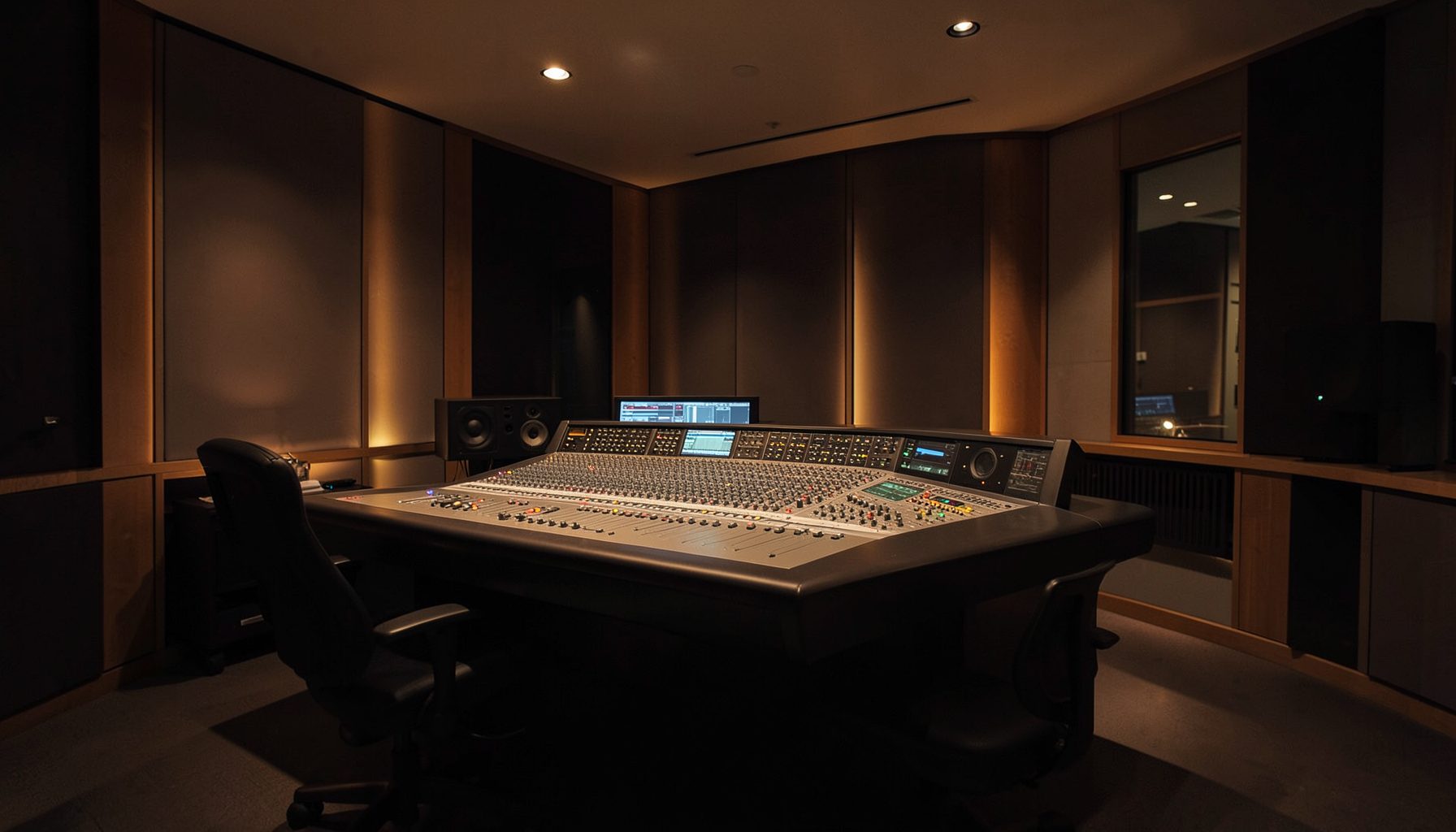
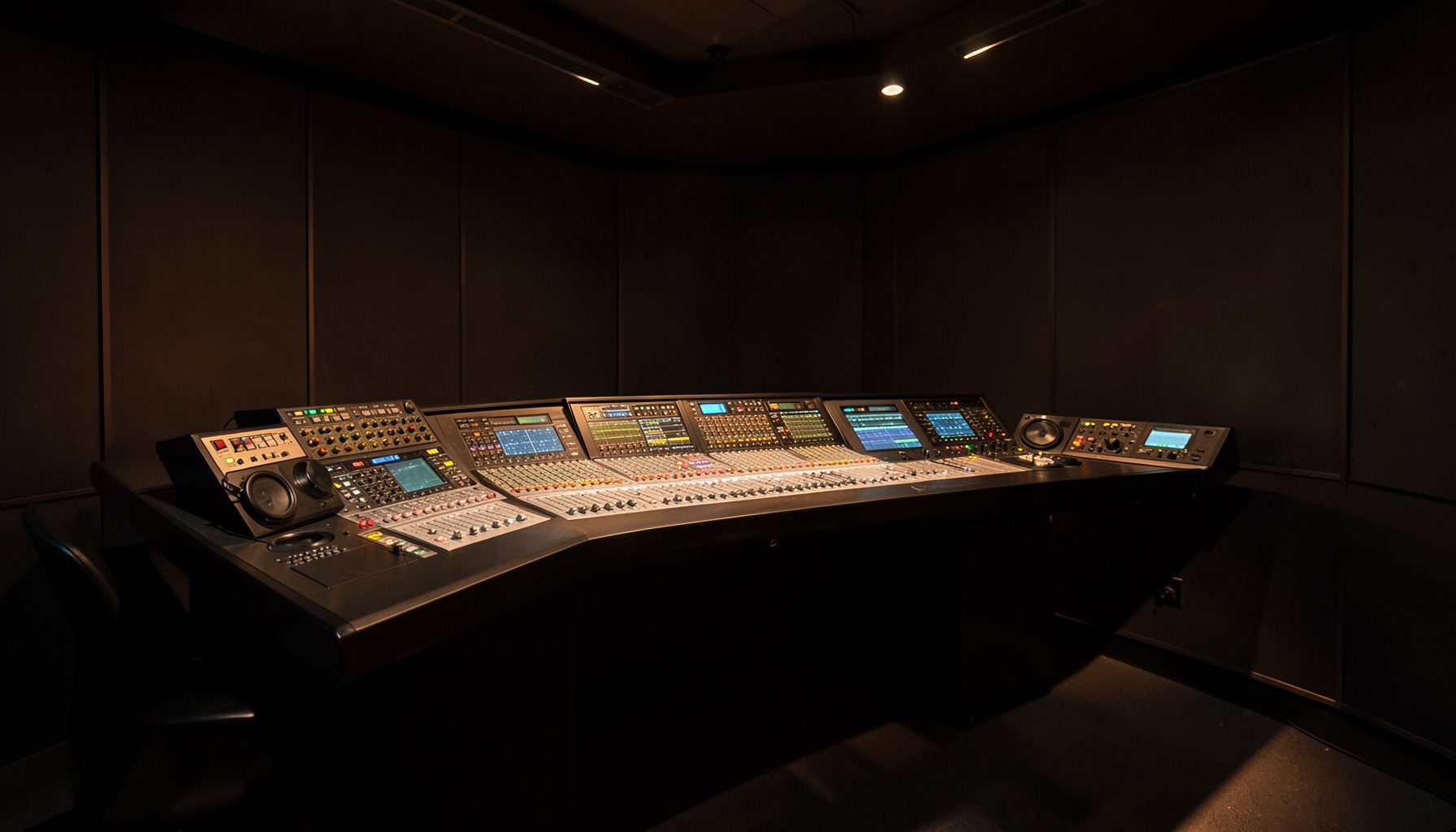
A networked Lawo console can interact with audio nodes, stageboxes, software-based tools, and other IP endpoints while maintaining a shared clock. This is useful for radio studios that combine Ruby mixing surfaces, playout, voice tracking, remote production, and contribution feeds.
Power Core provides a strong example of this architecture. The Power Core platform combines audio processing and routing capabilities with network-based connectivity, allowing facilities to centralize resources while distributing control to multiple workstations or studios. PTP helps those distributed components behave as one coherent audio system.
Software applications also benefit from reliable timing. Virtualized radio tools and control interfaces may run on general-purpose servers, while audio processing takes place in dedicated or networked resources. A disciplined clocking architecture helps keep automation events, fader actions, monitoring, and program output aligned.
| Network Element | Timing Function | Operational Benefit |
|---|---|---|
| Grandmaster clock | Supplies the primary time reference | Establishes a stable source for the facility |
| Boundary clock switch | Regenerates PTP for downstream segments | Limits timing impact across network sections |
| Transparent clock switch | Corrects for packet forwarding delay | Improves timing accuracy through the switch |
| Audio endpoint | Follows the PTP reference | Keeps sample rates aligned |
| Monitoring and control system | Uses shared timestamps or clock state | Supports consistent operation across devices |
Designing A Reliable Timing Architecture
A broadcast network should have a clearly defined PTP domain rather than allowing devices to discover incompatible clocks accidentally. Engineers should document the grandmaster priority, domain number, profile, multicast behavior, and failover approach before connecting production equipment.
Redundancy is equally important. A facility may use a primary and backup grandmaster, with automatic selection if the preferred source fails. The backup should be tested under realistic conditions, because a design that works during normal operation may still create audible interruptions during clock transitions.
Network segmentation can make troubleshooting easier. Separating media, control, management, and timing traffic where appropriate reduces congestion and makes it easier to observe PTP behavior. This does not mean isolating every function unnecessarily; it means creating a topology in which timing packets receive predictable treatment.
Configuration Details That Deserve Attention
PTP relies on accurate switch configuration. Quality of Service should prioritize timing messages appropriately, while multicast settings must permit the required PTP traffic. Some managed switches need explicit support for a broadcast or media profile, and firmware compatibility should be checked before deployment.
Engineers should also verify whether all devices use the same PTP profile and assumptions. A network can appear connected while endpoints remain unsynchronized because of mismatched domains, unsupported message rates, or an incorrectly selected master. Monitoring tools should show lock state, offset from master, path changes, and clock transitions.
Practical design habits include:
- Use a dedicated, traceable grandmaster where the facility requires dependable timing.
- Select switches with documented PTP boundary-clock or transparent-clock support.
- Keep PTP profiles, domains, priorities, and message intervals consistent.
- Test grandmaster failover without interrupting an on-air workflow.
- Monitor timing offsets and alarms as part of routine broadcast maintenance.
Operational Benefits For Radio Facilities
PTP becomes especially valuable when several studios share centralized processing. A broadcaster can route audio between control rooms, production spaces, and remote locations while preserving sample alignment. This supports flexible resource sharing without forcing every room to operate as an isolated system.
Accurate timing also helps reduce hidden complexity. When networked endpoints share a clock, engineers have fewer asynchronous boundaries to manage and less need for unnecessary sample-rate conversion. That can simplify system design, improve fault diagnosis, and protect audio quality across long signal paths.
The benefit extends to expansion. As facilities add virtualized services, IP codecs, additional consoles, or new contribution paths, a well-engineered timing layer provides a stable base. PTP is therefore more than a technical specification; it is part of the operating discipline that makes a broadcast network dependable.
Building Confidence Before Going Live
Successful PTP deployment combines compatible equipment, careful network engineering, and ongoing observation. A laboratory or staging test should confirm clock selection, endpoint lock, stream behavior, redundancy, and recovery from cable or switch failures before the system carries live programming.
Once deployed, timing should be treated as an operational service. Alarm thresholds, monitoring access, firmware control, and documented recovery procedures help teams respond before a timing fault becomes an audible incident. With that discipline, Lawo’s networked audio and control workflows can scale while retaining the precision expected from professional broadcasting.
Explore Lawo’s networked production technologies and assess how a properly engineered PTP architecture can support your next studio, radio, or broadcast infrastructure project.