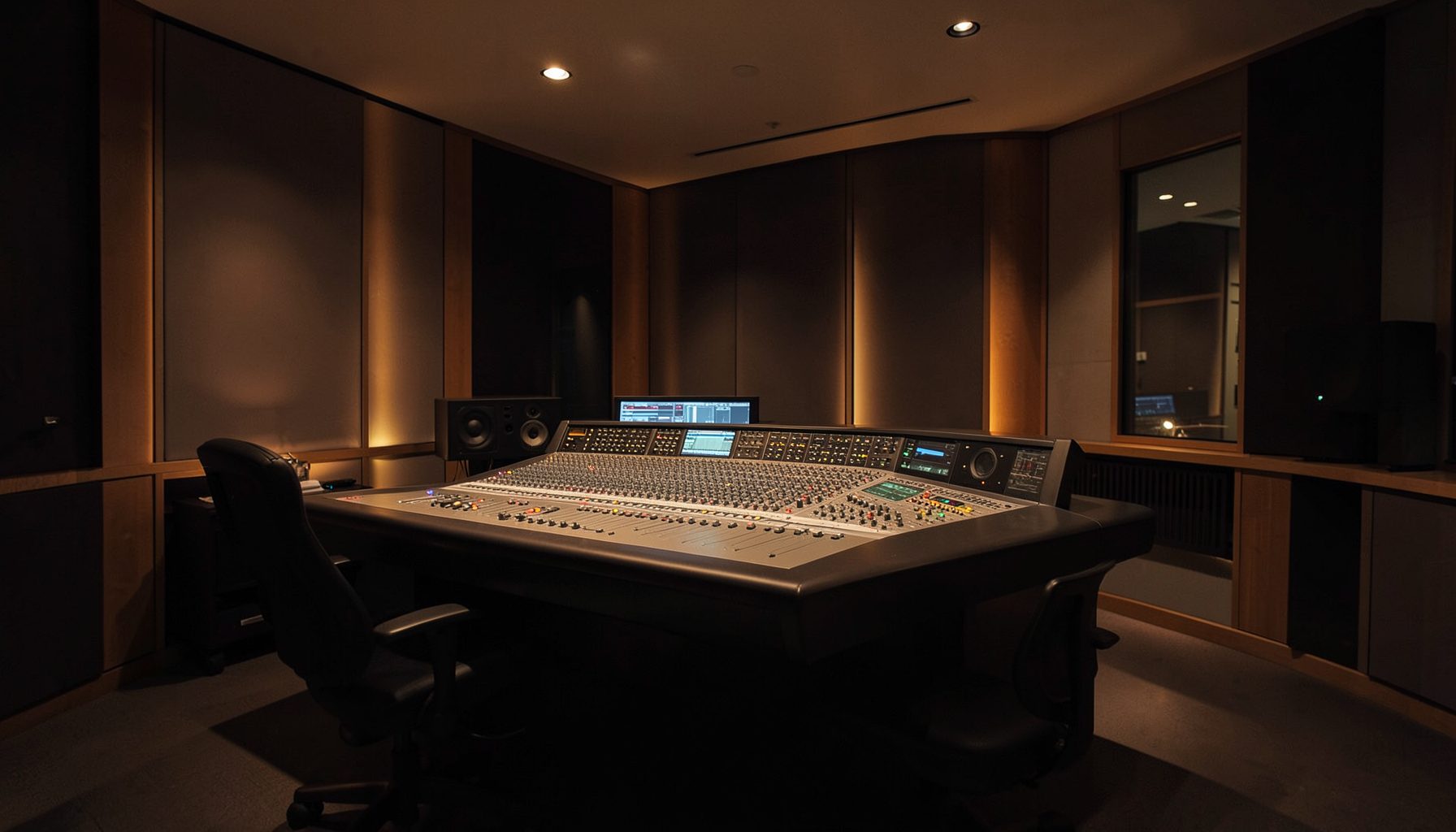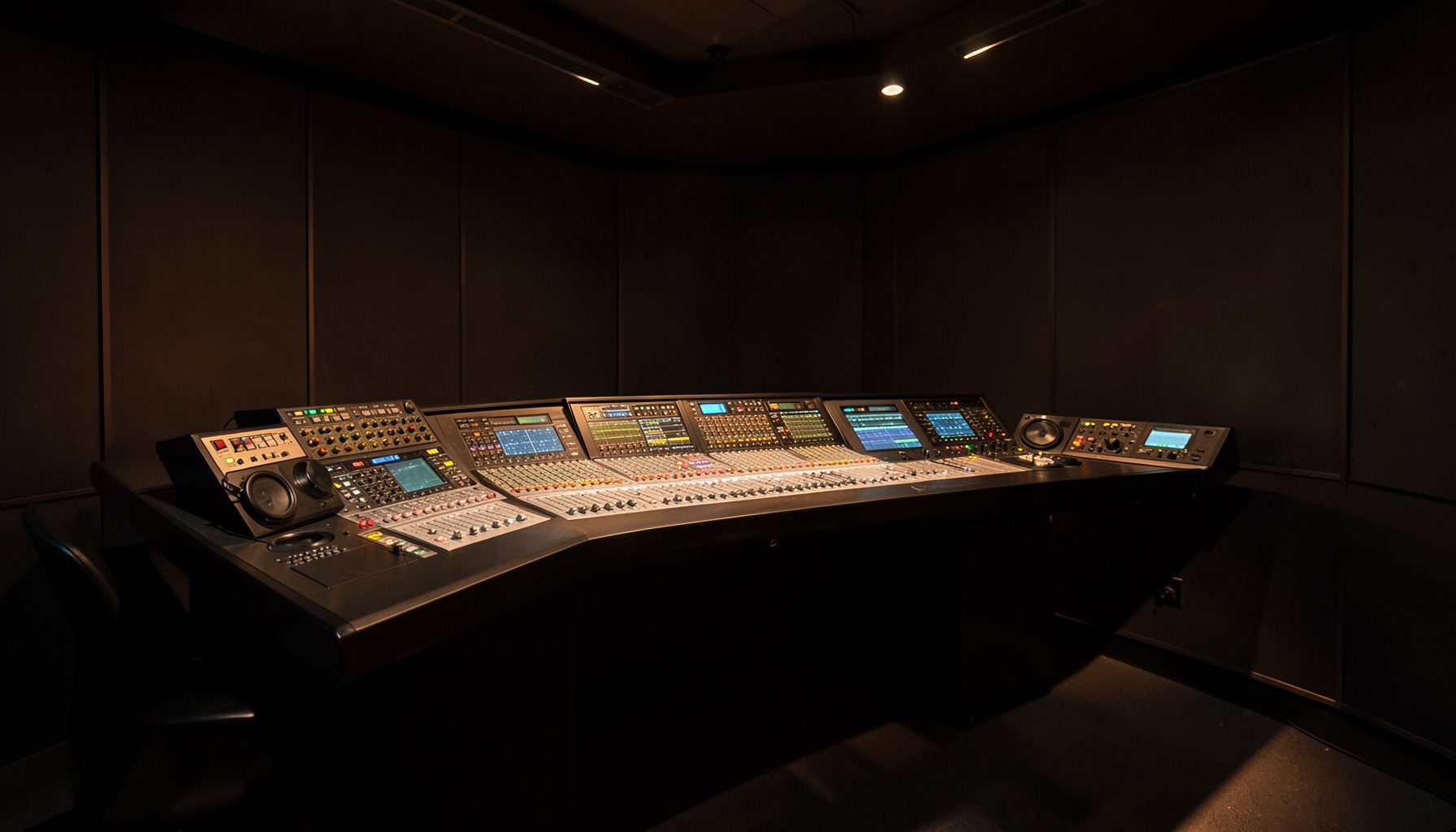
The Role of AES67 in Lawo’s Broadcast Audio Ecosystem
Modern broadcast facilities are moving from isolated hardware paths to connected, software-defined production environments. Audio must travel reliably between consoles, processing engines, studios, control rooms, and remote locations while preserving timing, quality, and operational control. This is where Audio over IP standards have become central to broadcast infrastructure.
AES67 provides a practical interoperability layer for professional audio networks. Within Lawo’s portfolio, it helps connect networked mixing, processing, routing, and automation components into flexible workflows. The result is an ecosystem that can scale from a single radio studio to a distributed operation with multiple production sites.
The Lawo broadcast ecosystem combines networked audio products with control and software tools designed for radio, live production, post-production, and theatrical applications. AES67 is one of the technologies that allows these parts to communicate across compatible IP environments.
What AES67 brings to broadcast audio
AES67 is a technical standard for transporting high-quality, low-latency audio over IP networks. It defines common methods for audio streams, clocking, discovery, and synchronization, allowing equipment from different manufacturers to exchange uncompressed audio through a shared infrastructure.
The standard typically uses RTP for media transport and IEEE 1588 Precision Time Protocol for clock synchronization. It also supports multicast-based distribution, which is useful when one source must feed several destinations. For broadcasters, this creates a predictable foundation for routing microphones, playout channels, telephone audio, codecs, and processed program feeds.
AES67 does not replace every manufacturer’s complete networking technology. Instead, it establishes a common language that can bridge compatible systems. This distinction is important in facilities that want to preserve specialized features while maintaining interoperability with third-party equipment.
AES67 within Lawo’s network architecture
Lawo has built much of its broadcast offering around IP-based signal transport and centralized processing. Technologies such as RAVENNA provide the broader media networking environment, while AES67 compatibility helps connect that environment with other standards-based audio devices.
Power Core audio nodes illustrate the value of this approach. They can provide processing, routing, and interface resources over the network, reducing dependence on fixed point-to-point wiring. A Ruby console can then operate as part of a wider audio system rather than as an isolated surface, with sources and destinations available through network routing.
This architecture also supports Lawo’s Broadcast 3.0 vision, where hardware, software, control, and networking operate as coordinated services. AES67 contributes the media interoperability needed to make that vision practical in mixed-vendor facilities.
Connecting consoles, nodes, and software workflows
In a radio environment, the console is only one part of the production chain. Audio may pass through studio microphones, telephone hybrids, remote contribution tools, automation systems, codecs, monitoring paths, and transmission processors. A networked audio fabric allows these resources to be shared across studios and control rooms.
Ruby mixing consoles can use network connectivity to access distributed inputs and outputs, while Power Core can host processing and routing functions close to the wider infrastructure. This separation between control surface and audio engine supports flexible studio layouts and makes it easier to adapt a facility as channel counts or programming requirements change.
VisTool adds a graphical control layer for Lawo systems, allowing operators to manage complex signal paths and processing functions through configurable interfaces. RƎLAY extends the software-based model into virtual radio production, while AutoMix can assist with speech and source balancing. AES67-compatible transport gives these workflows a common audio path around which the control functions can operate.
| Workflow need | AES67 contribution | Practical value |
|---|---|---|
| Studio-to-studio routing | Standardized IP audio streams | Shared sources across rooms |
| Clock alignment | PTP-based synchronization | Stable timing and phase coherence |
| Third-party integration | Common transport conventions | Easier connection of compatible devices |
| Distributed processing | Network access to audio engines | Flexible system design |
| Expansion | Software-configurable routing | Less physical rewiring |
Interoperability beyond a single manufacturer
A broadcast facility rarely replaces every component at once. It may contain microphones and consoles from one supplier, codecs from another, intercom systems from a third, and specialized processing hardware from several vendors. AES67 helps reduce the barriers created by this mixed environment.
Compatibility still depends on implementation details. Engineers must check sample rate, packet time, channel layout, multicast behavior, synchronization settings, and stream discovery methods. A device may advertise AES67 support while requiring careful configuration to exchange signals reliably with another system.
Lawo’s networked approach is therefore most effective when combined with disciplined design. Clear addressing, managed switches, redundant paths, and documented stream naming help ensure that interoperability delivers operational value rather than additional complexity.
Reliability, scale, and everyday operations
A standards-based audio network can simplify how a broadcaster handles growth. New studios, remote contribution points, or virtualized services can often be added through configuration instead of extensive copper or fiber rework. Audio resources can also be shared more efficiently, reducing duplicated hardware.
Redundancy is another important consideration. Professional IP audio systems can be designed with resilient network paths, duplicated devices, and controlled failover strategies. These measures need to be planned at the network, timing, power, and application levels rather than assumed from AES67 support alone.
For operators, the main benefit is continuity. When routing and processing are visible through a unified control environment, engineers can troubleshoot signal paths faster and make changes without entering every studio. That operational clarity is especially valuable in radio facilities running multiple channels, formats, or live programs.
Planning an AES67-enabled facility
Successful deployment begins with requirements rather than product selection. Teams should map audio sources, destinations, processing stages, latency limits, redundancy needs, and future expansion plans before configuring the network.
Useful planning priorities include:
- Define a consistent sample rate, channel naming scheme, and stream documentation.
- Design managed network infrastructure with suitable bandwidth, multicast handling, and redundancy.
- Establish a reliable PTP timing strategy and verify clock behavior across all devices.
- Test interoperability with third-party AES67 endpoints before production rollout.
- Separate control, management, and media traffic where the facility’s scale requires it.
Lawo’s combination of consoles, audio nodes, software control, virtual radio tools, and automation can then be matched to the facility’s operating model. AES67 serves as the connective layer, while the individual products provide the interfaces and functions operators use every day.
As broadcasters continue moving toward distributed and virtualized production, standards-based audio networking will remain a key design principle. Explore Lawo’s product ecosystem to see how AES67, RAVENNA, and software-defined workflows can support a more connected broadcast operation.