Ruby's internal mix minus streamlines hybrid and VoIP callers for radio
Australian talkback radio has always thrived on immediacy. Whether it is a listener in Parramatta ringing in during the Sydney breakfast shift or a panel debate streaming live from a Melbourne studio, the caller's voice is the heartbeat of the format. Modern stations in Brisbane, Perth and Adelaide now juggle traditional PSTN hybrids alongside SIP-based VoIP contributors, and the engineering challenge is keeping every caller free of echoes, delays and that hollow "in a tunnel" sound that ruins on-air quality.
Mix minus is the technique that solves this: the console sends every audio source back to a caller except their own microphone. Done well, it is invisible. Done badly, it produces feedback loops, double-talk artefacts and listener complaints that quickly surface in ACMA-monitored broadcast standards data. Australia's Communications and Media Authority keeps a close eye on technical compliance, so audio quality is not merely an aesthetic choice — it is a regulatory one.
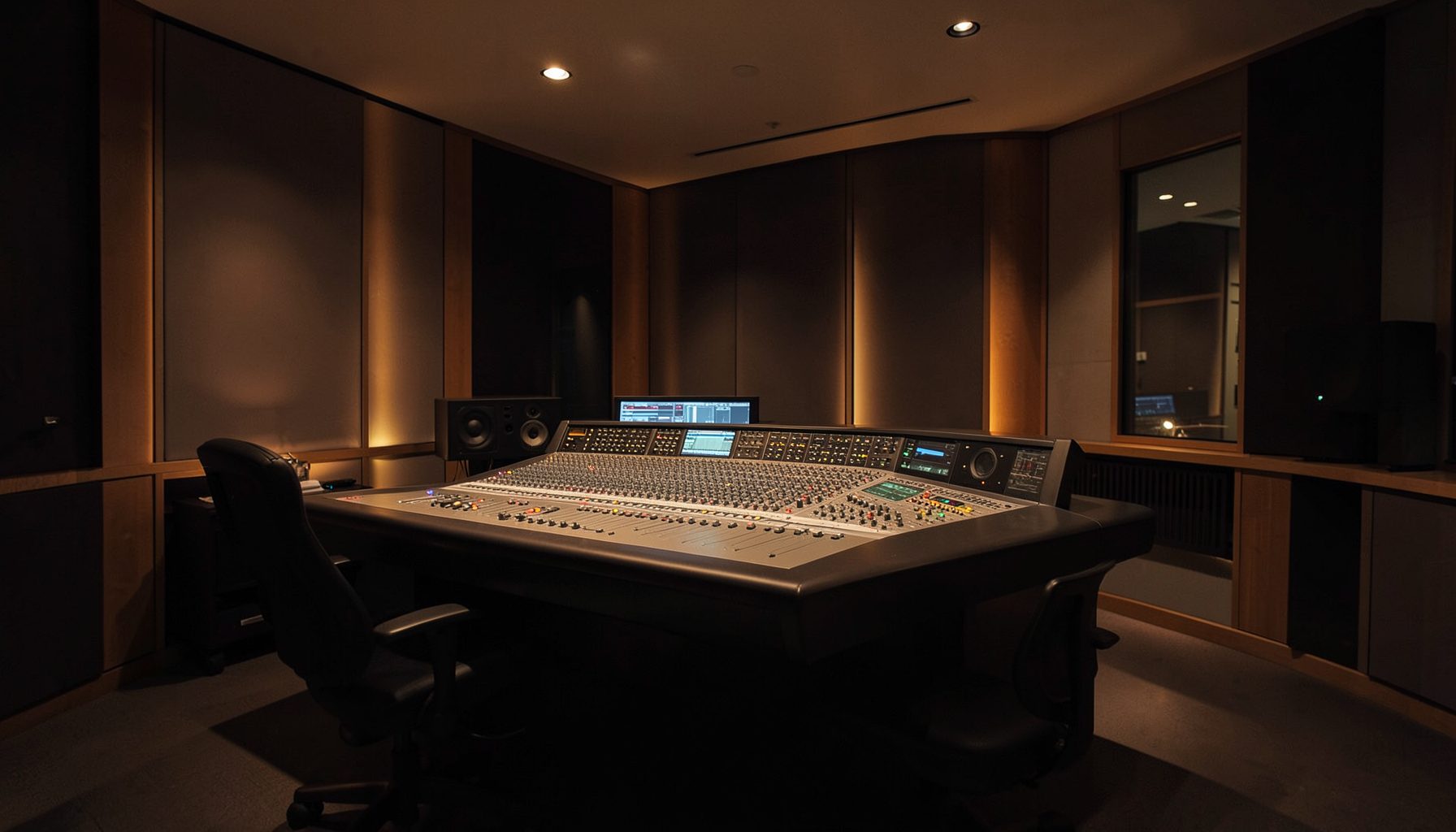
Ruby's internal mix minus removes the need for outboard mix-minus units by generating the return feed entirely within the console's DSP engine. For stations running compact spaces, say a regional Triple M affiliate in country Queensland or a community broadcaster in Hobart, fewer rack units mean simpler infrastructure, lower power draw and a tidier equipment footprint. The internal approach also means that any source connected to the Ruby, from a guest mic in Perth to a caller dialled in over VoIP from across the country, can be routed into a mix minus bus without manual repatching. Operators see one consistent workflow whether the caller lands on a traditional copper hybrid or a SIP trunk delivered over the station's WAN.
| Mix-minus consideration | PSTN | VoIP/SIP |
|---|---|---|
| Audio bandwidth | ~3.4 kHz narrowband | Up to 20 kHz wideband (Opus, PCM) |
| Typical latency | Low and predictable | Variable, codec-dependent |
| Connect time | Slower dial and handshake | Near-instant |
| Best regional reach | Rural and remote Australia | Metro centres on the NBN |
| Mix-minus source on Ruby | Analogue hybrid input | SIP channel on console |
| Configuration overhead | Minimal | Codec and buffer tuning |
Why mix minus is non-negotiable for live callers
When a caller hears their own voice delayed by even a few milliseconds, the brain interprets it as a disjointed auditory signal and the speaker instinctively slows down, raises their pitch, or — worst case — stops talking altogether. This is the classic hesitation effect that broadcasters have battled since the first phone-in shows of the 1960s, and it remains the single biggest reason talkback hosts in Sydney and Melbourne cut segments short. Ruby calculates the mix minus return at the point of mix, ensuring phase-accurate cancellation of the caller's own channel. The DSP sample rate matches the console's internal clock, so there is no resampling jitter between the mic preamp path and the feed going back down the line.
Beyond comfort, mix minus prevents acoustic feedback. If the caller's audio loops back into their earpiece and re-enters the hybrid, the result is the famous howl-round that brings a live broadcast to its knees. Australian broadcasters are particularly sensitive to this because ACMA's broadcasting standards require technical quality consistent with licence conditions — a howl-round is more than embarrassing, it is a compliance flag that can drag an operator into a formal investigation.
PSTN hybrids: handling traditional copper
Despite the march toward IP, plenty of regional Australian stations still rely on analogue hybrids connected to PSTN lines — particularly in mining communities around Kalgoorlie and in agricultural regions served by older Telstra copper routes. Ruby accepts these hybrids as standard line-level inputs, then routes them through a configurable mix minus bus. Operators assign each hybrid to a fader, label it, and the console subtracts that fader from the program bus before sending the result back to the caller.
Because Ruby can hold many mix minus configurations simultaneously, a producer can pre-set multiple hybrid feeds — one for a news call-in, one for a sports interview, one for a competition line — and switch between them with a single button without rebuilding routing each time. The hybrid's tail time and ducking depth are also configurable per fader, which matters when an older caller from a country town is on a noisy line and needs the program audio to drop further than usual. This per-channel control is rarely available from a standalone mix-minus box.
VoIP and SIP contributors: the modern path
Most metropolitan stations, and certainly the networked shows originating from Sydney, Melbourne and Brisbane, now take the majority of their call-ins over VoIP. SIP trunks delivered over bonded NBN or business-grade fibre can carry high-definition audio using codecs like Opus or linear PCM, dramatically outperforming the narrowband quality of traditional telephony. Ruby's internal mix minus handles SIP channels identically to PSTN hybrids — once a SIP leg is patched to a fader, it becomes just another input that the engine can subtract from the program bus. Codec transcoding, jitter buffering and SIP signalling are handled by the Ruby core itself, so there is no separate gateway appliance to configure.
The console also supports N/ACIP-compatible connections and AES67 stream-based SIP, which is how Australian broadcasters commonly tie remote sites into a hub-and-spoke IP backbone. AES67 streams ensure timing alignment, which is critical because an unsynchronised VoIP return will defeat even the most accurate mix-minus cancellation. For a networked show in Adelaide calling a guest in Singapore, the path is essentially identical to a local studio interview, with high-definition audio all the way through.
How mix minus looks on the console
Ruby's mix minus is configured through the same channel strip as every other input. The operator enables mix minus on a fader, chooses which return bus to use, and the console automatically routes the program bus minus that fader to the chosen output. There is no separate mix-minus matrix to learn, which shortens training time for casual operators, including weekend fill-in announcers and junior producers on board news desks.
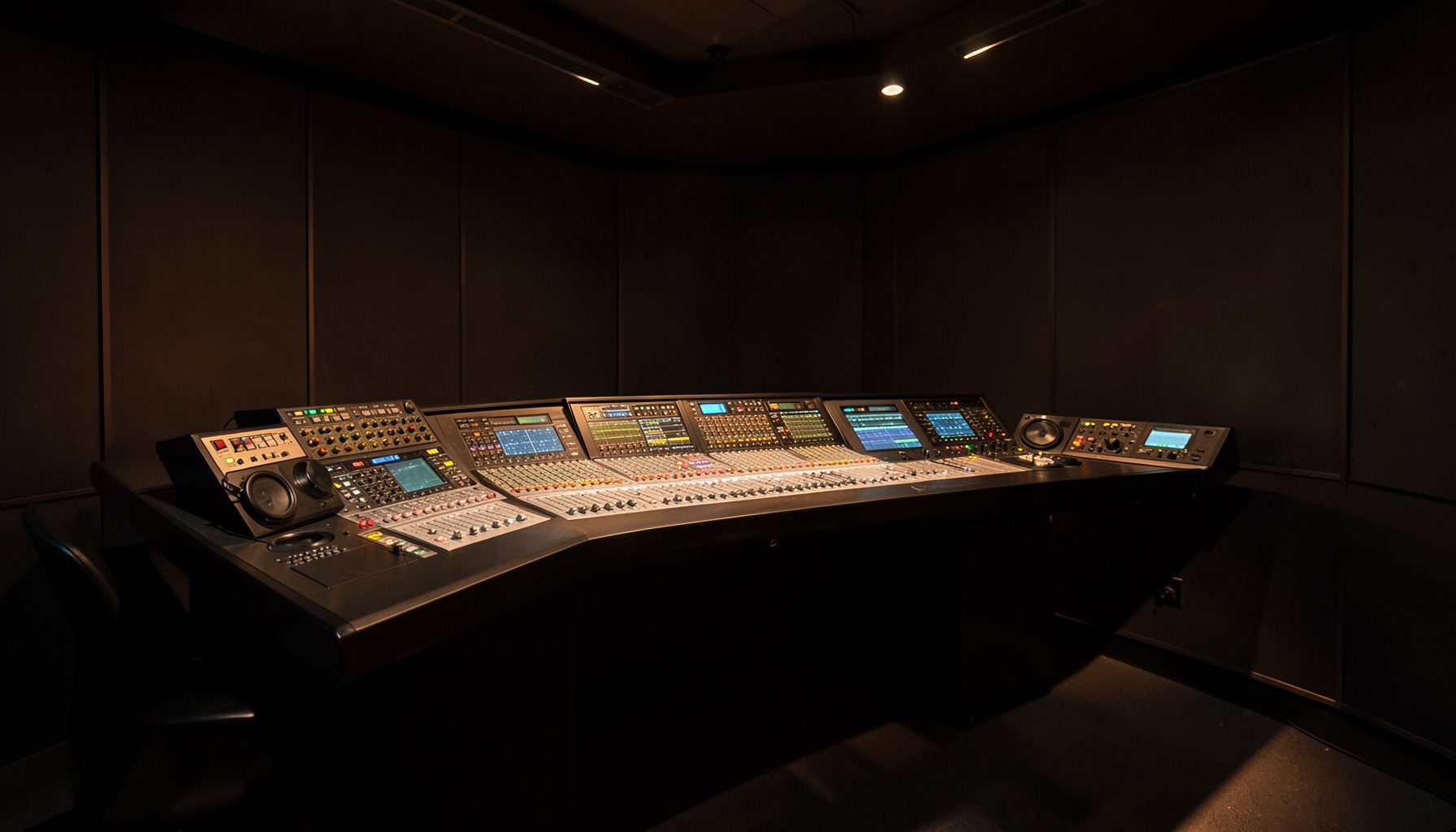
Fader strips show the mix-minus state clearly, with a dedicated indicator and a colour cue that distinguishes a mix-minus send from a standard aux send. When a contributor complains of hearing themselves, the operator can see at a glance whether the mix minus is engaged, and a quick tap on the channel toggles it without diving into menus. The status is also visible on the console's central screen, where any member of the engineering team can confirm routing before going to air.
For multi-host panel shows — say a Friday football preview in Perth with three commentators on three different lines — Ruby can assign each caller a unique mix minus return. Each commentator hears the program bus minus only their own voice, while still hearing the other commentators in full. It is the same trick that lets podcast-style roundtables work over the public phone network.
VisTool integration and visual workflow
The VisTool platform from Lawo gives operators a touchscreen-friendly view of Ruby's mix minus routing. Because VisTool renders the console's logic as customisable widgets, a station can build a dedicated callers screen that shows every hybrid and SIP channel at a glance, with a clear cue confirming mix minus is live. The same screen can be surfaced on a producer's tablet in the studio lobby, so talent can monitor line status without leaning over the engineer's shoulder during a busy break.
Australian deployment scenarios
In practice, Australian broadcasters deploy Ruby's internal mix minus across a remarkably wide range of scenarios. A national news outlet in Canberra relies on it for parliamentary reporters filed from the press gallery, where SIP connectivity back to the studio is stable but bandwidth is shared with dozens of other broadcasters. A community station in Broome uses it for Saturday morning fishing reports, where one engineer handles every hybrid and SIP line from a single touchscreen running VisTool.
Sporting coverage illustrates the flexibility best. An AFL call from the MCG needs the on-air commentator, a sideline reporter on a SIP tie-line, and a stats caller dialled in from a Perth studio to all hear clean program minus their own voices. Ruby handles all three paths internally, with VisTool surfacing the routing for the producer to monitor. The same setup is reused a day later for a Big Bash match from the Gabba, with no hardware changes between the two events.
For a regional station weighing an upgrade, the cleanest first step is to map out every external PSTN line and SIP trunk currently in service, then trial Ruby's internal mix minus with just the highest-traffic hybrid. Most Australian operators find that the time saved on routing alone justifies the console within the first on-air shift, and the rest of the lines fall into place as confidence grows.