Ruby's Approach to 5.1 and Stereo Downmixes for Simulcast Workflows
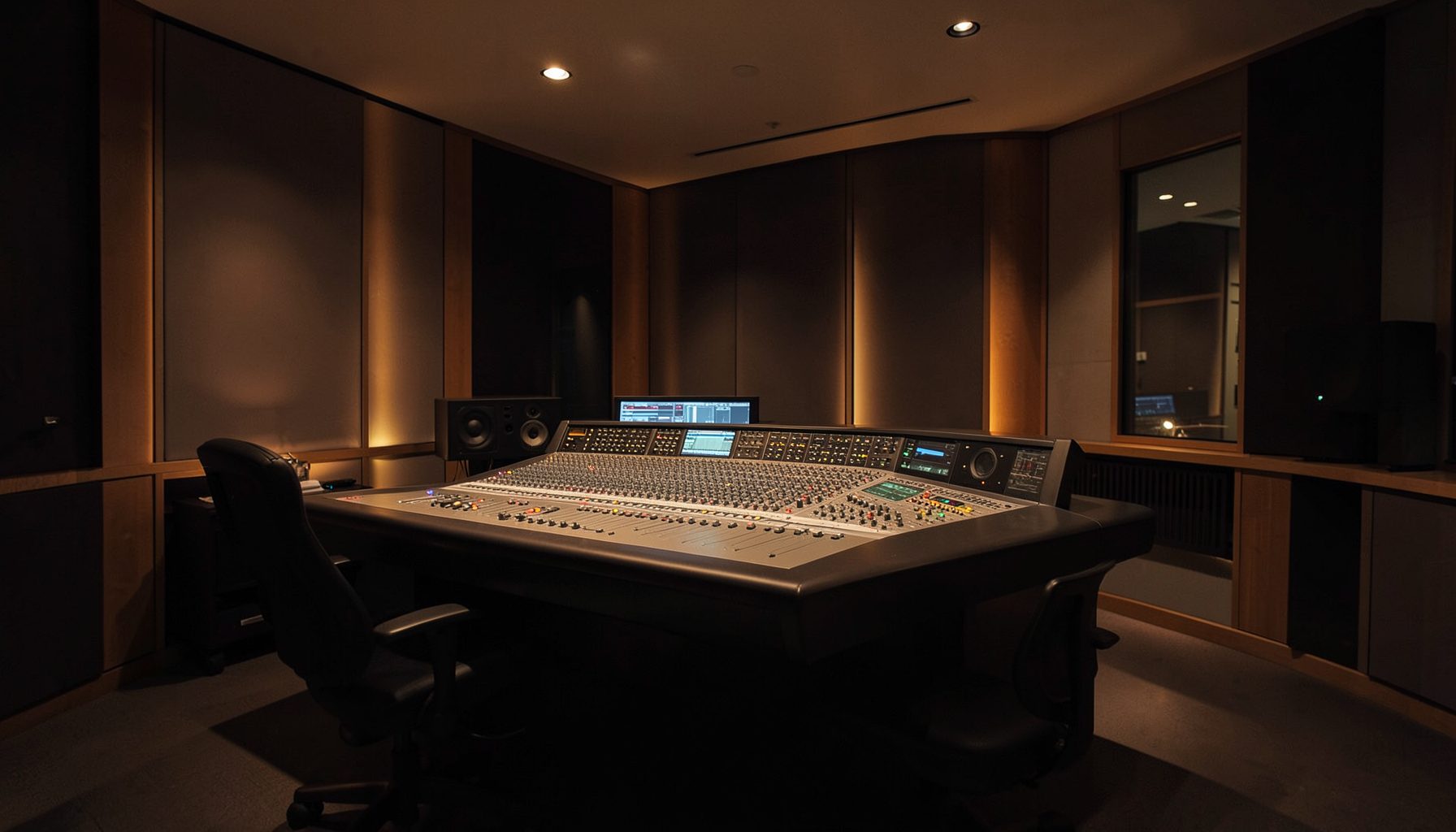
Australia's broadcast landscape stretches across five mainland time zones, from Perth's AWST to Sydney's AEST, and stations from the ABC in Ultimo to commercial broadcasters in Melbourne's South Bank routinely feed a stereo FM signal and a 5.1 television feed from the same event. Cricket at the MCG, NRL fixtures in Brisbane, or a live studio session for triple j in Ultimo all share a single operational headache: the on-air mix must satisfy two masters without doubling the workload. Lawo's Ruby console has been designed with this simultaneity in mind, treating downmix as a first-class output rather than an afterthought.
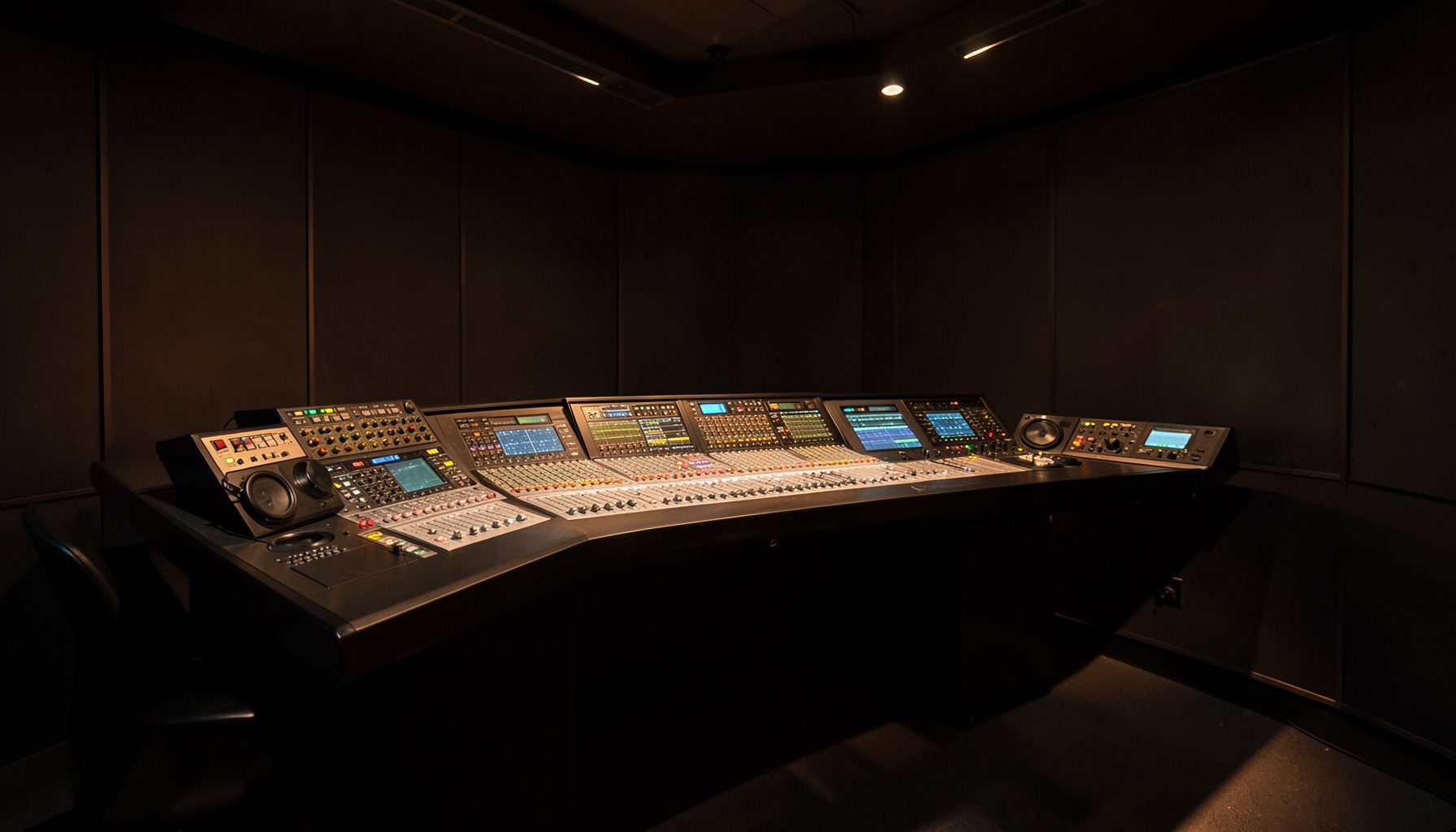
Ruby sits inside Lawo's wider Broadcast 3.0 vision, where audio lives on shared IP infrastructure and surfaces become flexible control points rather than fixed channel strips. For an Australian broadcaster juggling a Drive presenter in Adelaide with a Network feed destined for Sydney, that philosophy translates into a console that can render both surround and stereo from the same source pool. The result is fewer emergency patch jobs at 5:45am AEST, when the morning show crosses to the newsroom.
What follows is a closer look at how Ruby actually handles the math, the routing, and the monitoring required to deliver a clean stereo fold-down alongside a discrete 5.1 mix, with attention to the realities of Australian programming and regulation.
The Simulcast Dilemma Facing Australian Broadcasters
Local stations are bound by ACMA's broadcasting rules, which set different loudness targets for radio and television. Radio leans on the legacy PPM-style references familiar from commercial FM in Sydney and Melbourne, while television follows OP-59 loudness guidelines that align with international ATSC recommendations. A console that handles both has to reconcile those targets without an engineer riding the faders at every transition.
For networks like Nine or Seven, the same commentary booth might be feeding AFL coverage for television and a wraparound for stations in Perth or Brisbane. Ruby addresses this by treating the surround mix and its stereo derivative as parallel outputs derived from a single internal bus architecture, rather than as separate mixes that have to be kept in sync manually. That removes a layer of coordination that has historically been a source of late-night fixes at regional affiliates.
Ruby's Internal Surround Architecture
The console processes audio in a surround-aware domain where channels are grouped into logical objects rather than hardwired pairs. A presenter microphone routed to the centre channel of a 5.1 bed can simultaneously appear in the left and right channels of the stereo bus, with phase relationships preserved. This is what allows a Ruby operator in Adelaide to push a vocal fader and hear the change on both the television feed going east and the radio feed going north without compensating moves.
Internally, Ruby maintains a coherent set of width, depth, and divergence parameters that follow the source through every output. When a source is tagged as a mono element, the desk knows how to place it within the surround field and, critically, how to collapse it into a phase-coherent stereo image when the downmix bus is requested. This is the kind of detail that matters during a live cross from the Sydney Opera House forecourt, where ambient spill is unavoidable.
The Downmix Engine in Practice
Ruby's downmix engine offers configurable coefficients for the centre and surround channels, which is where most Australian engineers will spend their calibration time. Centre-channel content is typically attenuated by -3 dB before being summed into left and right, while surround channels can be attenuated by anywhere from -3 to -6 dB depending on programme type. A drama serial scheduled for SBS might warrant a gentler surround fold-down than a high-energy sports broadcast on Channel Nine.
What distinguishes Ruby's implementation is the availability of a manual override that lets an operator apply a temporary trim without breaking the underlying automation. If a sudden crowd roar at the SCG threatens to overload the stereo bus, the engineer can apply a surround-only trim rather than pulling the entire 5.1 mix apart. The console remembers the baseline coefficients and restores them when the override is released.
Power Core and Routing Context
Downmixing only matters when the audio actually arrives at the right place, and Ruby typically hands off its processed buses to a Power Core node for distribution. The interplay between the console's internal processing and the I/O stage is where many Australian installations benefit from thoughtful template design. For facilities that also need talkback or RF coordination between commentary positions, an understanding of RF intercom integration becomes part of the same operational conversation as the surround configuration.
This is particularly relevant for outside broadcast trucks that travel between Sydney, Melbourne, and regional centres, where the routing matrix has to be rebuilt on site. A consistent Power Core template means the downmix coefficients and the intercom routing both survive the truck's deployment, reducing setup time at each venue.
Stereo Bus Management and AutoMix
When the stereo output is destined for FM transmission, Ruby's AutoMix function helps keep levels consistent across a multi-mic panel that might include a host in Brisbane and a guest dialling in from Perth. AutoMix gain rides are applied within the surround domain and reflected in the downmix, so the radio listener experiences the same automatic balancing as the television viewer. Phase cancellation between the surround channels and their stereo derivatives is monitored continuously.
For stations carrying talk-heavy formats, the AutoMix window can be tightened so that overlapping speech is reduced before it ever reaches the stereo bus. That pre-emptive gain management is invisible to the audience but saves the operator from riding faders through every cross-talk segment.
Monitoring, Metering, and Loudness Compliance
Ruby's metering suite displays separate loudness readouts for the 5.1 bus and the stereo downmix, which is essential for ACMA compliance work in Australia. The console supports both BS.1770 meters for television and traditional PPM ballistics for radio, allowing one operator to confirm that both feeds sit within target without switching contexts. Loudness range is shown as a single numerical value alongside the momentary and short-term readings.
For mixed-mode facilities, this dual display prevents the common error of optimising the surround mix for television and then discovering that the stereo fold-down has crept several dB above target during a commercial break. Australian broadcasters running networked news across multiple time zones rely on that consistency to avoid level jumps when a Sydney bulletin is rebroadcast in Perth.
| Parameter | 5.1 Bus | Stereo Downmix |
|---|---|---|
| Channel count | 6 discrete | 2 (L/R) |
| Reference target | -23 LUFS (OP-59) | PPM, ~0 to +2 dB |
| Typical destination | Television broadcast | FM radio |
| Centre channel handling | Discrete placement | Summed into L/R, -3 dB |
| Surround channel handling | Discrete Ls/Rs | Folded in, -3 to -6 dB |
| Phase coherence | Native | Monitored continuously |
| AutoMix application | Per-channel gain | Reflected from 5.1 |
Configuration Choices for Australian Workflows
Practical setup decisions tend to revolve around three knobs: downmix coefficient presets per programme type, AutoMix aggressiveness for talk formats, and the routing template that ties the console to Power Core. A regional station in Adelaide might run a single preset for news and a second for live music, while a metropolitan broadcaster in Sydney could maintain additional templates for sport and drama.
Saving those templates as part of the showfile, rather than as one-off session settings, means the next operator walking into the studio at 4am can recall the correct configuration without consulting the previous engineer's notes. That kind of operational continuity is quietly valuable in a country where talent and crew frequently move between cities and networks.
The points worth carrying away from this are straightforward. Ruby's surround-aware architecture treats the stereo downmix as a derived output rather than a separate mix, the downmix coefficients and override behaviour give engineers precise control during live events, and the integration with Power Core ensures that both audio distribution and intercom needs are met from a unified platform. For Australian broadcasters balancing FM stereo with 5.1 television, that combination removes a long-standing source of operational friction.