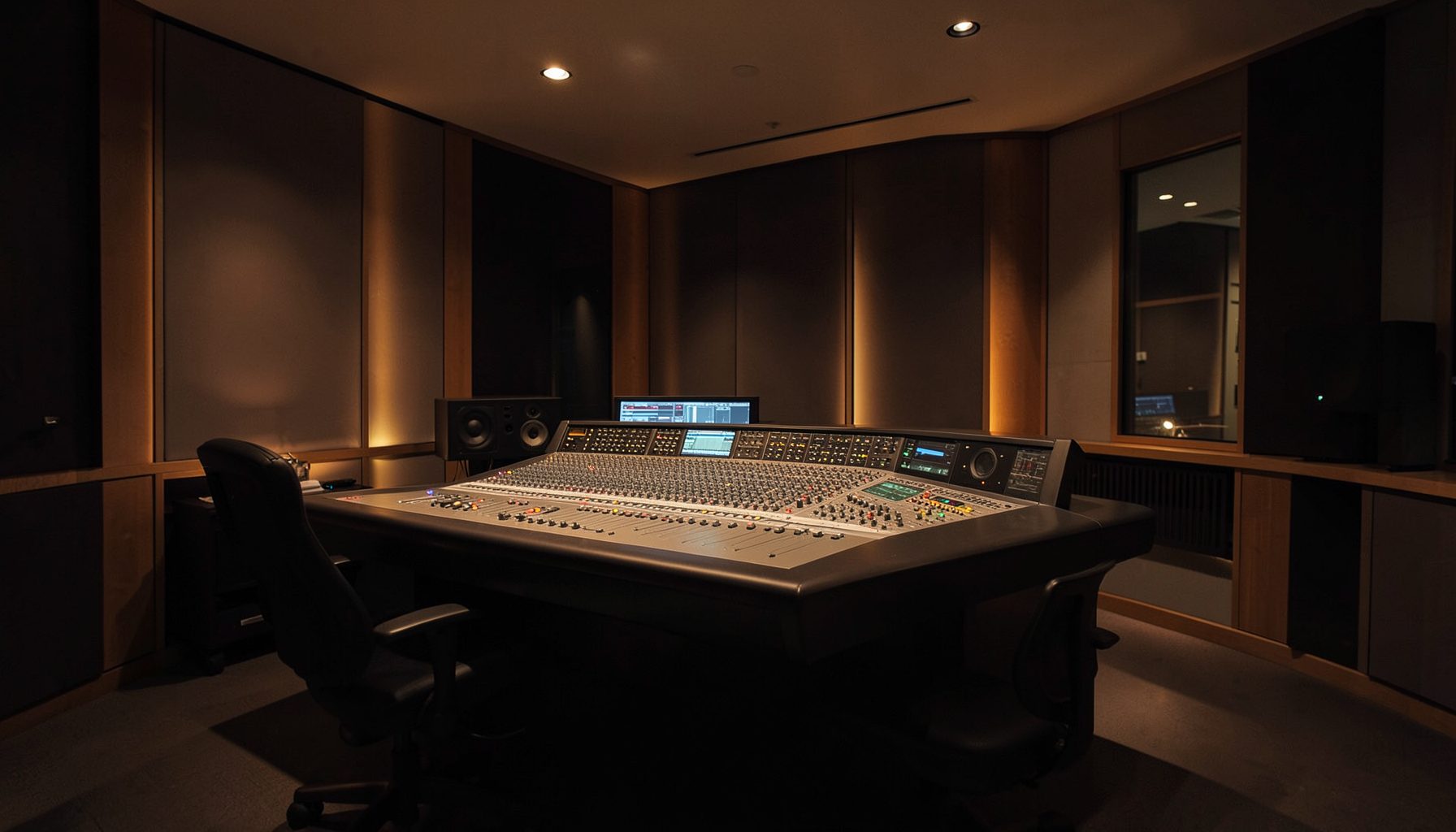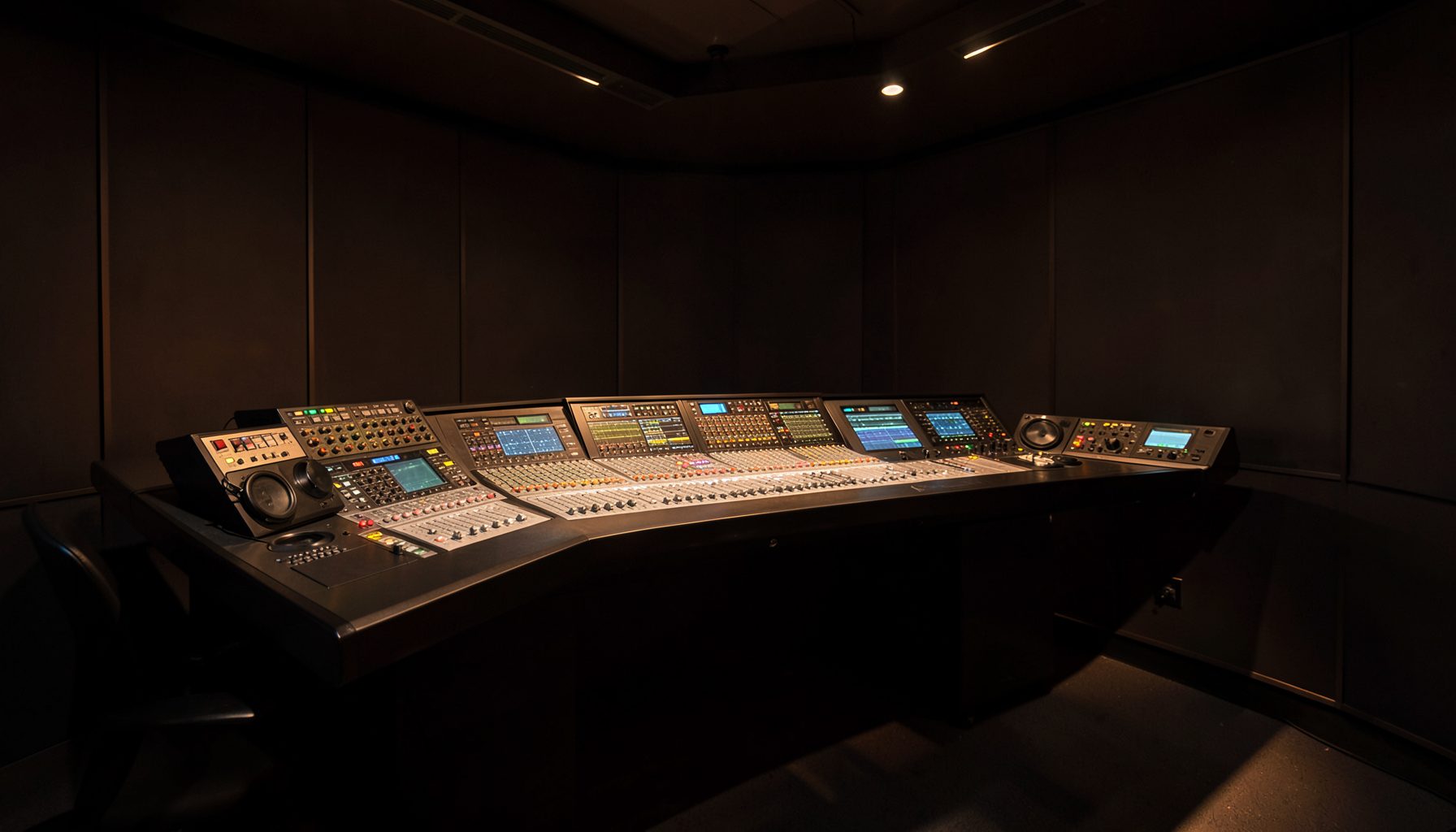
Power Core SFP Fiber Ports for Long-Distance Audio Transport
Radio stations rarely keep everything in one room. In Australia that often means a studio floor in one building, post-production in another, a playout machine room a third floor up and a transmitter hut at the edge of the site. Every audio tie between those spaces was once bound by the same rule: 100 metres of balanced copper. Learn more about Lawobroadcast.com.
Power Core, Lawo's networked audio node, loosens that constraint. Alongside AES/EBU and MADI I/O, the unit carries slots for SFP optical transceivers, so an AES67 or Dante stream can travel over single-mode fibre for tens of kilometres rather than dying at the end of a Cat6 run.
That sounds like a niche box for a handful of sites, but Australian broadcasting makes it far more common than it sounds. National networks, regional stations and live venues all juggle buildings separated by a street, a laneway or a few kilometres of suburban Melbourne or Sydney.
Engineers here describe a short link as two levels of the ABC's Southbank site in Melbourne, and a long one as Ultimo to a rooftop mast. Getting those runs right is less about exotic hardware than about knowing which fibre is actually available, and who owns it.
Where copper runs out and fibre starts
The 100-metre ceiling is not really about cable quality; it is about timing recovery and electrical limits across building floors, loading docks and street-level ducts. A tie line that once cost a weekend of splicing now becomes an awkward, expensive repair job the moment someone adds another piece of equipment.
Regional stations hit the same wall differently. A station in Wagga Wagga or Townsville may run a transmitter hut several kilometres from the studio, with the studio side handling a morning show and a long arvo drive slot that has to reach the mast without a daily glitch.
In Canberra, studio operations can sit apart from technical operations across the precinct, which makes a campus-scale optical link a realistic requirement rather than a luxury. The old workaround — shipping a signal through a carrier's IP service — introduces jitter the station then has to argue about with engineers who would rather "she'll be right" it off.
What SFP ports change inside Power Core
SFP means small form-factor pluggable: a transceiver the size of a matchbox that slots into a cage on the front of the node. With the right module fitted, a port behaves as an ordinary network interface, so the audio network simply extends across the optical link.
Single-mode modules rated from roughly 10 km to 40 km suit the long runs most stations need. Multimode modules are cheaper but limited to a few hundred metres, which makes them useful inside a building rather than between buildings. BiDi transceivers, which send and receive on one strand, halve the fibre count and often let a project finish with a pair already installed in the duct.
Because the transceivers are standard plug-ins rather than fixed proprietary connectors, the same Power Core chassis can be commissioned for a 40 m desk link today and re-fitted for a 15 km campus link later, swapping modules rather than hardware.
Comparing ways to move audio between buildings
Options line up like this:
| Transport option | Typical reach | Media | Timing behaviour | Best suited to |
|---|---|---|---|---|
| AES50 over copper | 100 m | Cat6 or Cat7 | Deterministic, microseconds | Rack-to-rack inside one building |
| AES67 or Dante over optical SFP | 10–40 km | OS2 single-mode fibre plus pluggable transceivers | IP-synchronised, milliseconds | Building-to-building and campus links |
| MADI over fibre | About 2 km | OM3/OM4 multimode | Fixed frame delay, no IP jitter | Short studio-to-studio runs |
| Carrier IP across managed network | Depends on contract | Dark fibre or carrier Ethernet | Varies with switch and path | Sites already holding a fibre lease |
| AES/EBU or analogue tie line | 100 m at 24-bit/96 kHz | Balanced copper | Deterministic | Legacy tie lines within a building |
Copper remains the right answer for everything inside a single floor, and MADI fibre is still excellent for short jumps between adjacent buildings. The case for optical SFP ports appears when the link crosses a street, a campus or a town, where the media type becomes fibre and the question is how far it has to travel.
Routed carrier IP is the fallback many Australian sites already pay for, but it hands timing to a provider whose SLA is written for data, not for a live audio feed that has to survive an afternoon of traffic.
Fibre access, duct routes and building agreements
The transceiver is the cheap part. In Sydney and Melbourne CBDs, spare single-mode strands are scarce, and pulling new fibre means dealing with a building owner, a council for street works, and a carrier such as Telstra, Optus or TPG who controls the duct. Regional sites lean on enterprise fibre rather than the residential NBN build, which changes lead times considerably.
Terminating the fibre properly matters as much as the link itself: fusion splicing, connector cleaning, and an OTDR trace to confirm the actual length and the loss across each splice. Weather and lightning protection should be specified for any run that leaves the building, because a storm front crossing the country can turn an unprotected run into an outage.
Budgeting should also account for Australian labour rates and the documentation burden. Whoever holds the asset register needs the strand counts, the path diagram and the carrier contract number recorded, or the next engineer will spend a day trying to work out what the blue fibre actually does.
Redundancy, monitoring and the studio side
A single optical path is fine for a contribution feed, not for a station's main studio signal. Two diverse routes into separate Power Core nodes, with AES67 or Dante redundancy across them, is the arrangement most sites settle on after one failed cable teaches the lesson.
On the studio side, the same ecosystem keeps the workflow consistent: VisTool handles playout and studio automation, RƎLAY provides virtual radio tools for remote contributions, and AutoMix manages multiple microphone inputs without a person riding the faders. Lawo describes how these pieces fit together as part of its Broadcast 3.0 ecosystem, which is worth reading before committing to a topology, because the redundancy model changes depending on which nodes talk to which.
Monitoring is the other half. Engineers in regional stations often rely on a "she'll be right" culture around minor faults, so alarms, link-loss counters and a spare transceiver in the rack should be treated as part of the purchase rather than an optional extra.
Planning an optical link from survey to sign-off
Start by measuring what exists: which fibre is already in the duct, how many strands are free, what the carrier's contract permits, and whether a second diverse path is even possible. Then decide on module type — single-mode for distance, BiDi if strands are tight — and order a spare pair of transceivers to sit in the rack from day one.
Commission with a documented test: inject a continuous stream, confirm timing and error counters over several hours, and record the result in the asset register alongside the fibre path diagram. Only after that does the link become a dependable asset rather than a hopeful one.
The next step is concrete: commission a carrier fibre survey for the specific building-to-building route, and get a written path diagram showing strand counts, termination points and redundancy options before a single transceiver is ordered.