Power Core’s Dynamic Compression for Loudness Normalization in Live Broadcasts
Live radio and television audiences expect stable, intelligible sound whether they are listening through a car stereo in Melbourne, a smart speaker in Brisbane, or headphones on a train in Sydney. Sudden jumps between a presenter, a commercial, music and outside broadcast commentary can make a programme feel inconsistent, even when every source is technically clean.
Power Core’s dynamic compression provides a practical layer of control inside a networked production environment. Used alongside loudness metering, carefully set gain structure and operator oversight, it helps broadcasters manage peaks and perceived level without flattening the character of live content.
Why Loudness Control Matters On Air
Loudness is shaped by average energy over time, while peak level describes short, intense events. A football commentator may have a modest average level but produce sharp peaks when a goal is scored. A music bed can occupy a denser, more consistent range, making it seem louder even when its peak meter reads similarly.
Compression narrows this difference by reducing the level of signals above a chosen threshold. The result is a more controlled dynamic range, which can then be adjusted towards a target loudness. Compression is therefore part of a normalization workflow rather than a replacement for loudness measurement.
Australian broadcasters must also account for a mixed listening environment. A national network may carry breakfast radio from Sydney, a regional insert from Toowoomba, and live sport from Perth within the same day. Consistent processing helps those handovers sound deliberate rather than like a series of unrelated sources.
How Dynamic Compression Supports Normalization
A compressor typically works through threshold, ratio, attack, release and makeup gain. A lower threshold catches more of the programme, while a higher ratio applies firmer control once the signal crosses that threshold. Attack and release are especially important in live work: an attack that is too fast can dull transients, while a release that is too slow can create pumping.
Power Core can serve as a centralised processing resource for networked audio paths, allowing engineers to apply repeatable processing to microphones, playout, remote feeds and transmission outputs. The exact settings should follow the source. A spoken-word channel may need gentle control for intelligibility, while a crowd microphone or music feed may require different timing.
The safest approach is to combine compression with loudness meters that show short-term, momentary and integrated behaviour. Operators can then see whether a compressor is merely catching peaks or whether excessive makeup gain is pushing the whole programme too hard.
Building A Live Broadcast Signal Path
A dependable path often begins with source alignment. Microphones, codecs, consoles and playout systems should be calibrated so that the compressor receives a predictable operating level. If one remote codec arrives substantially quieter than another, downstream compression cannot automatically make both sources sound natural without additional gain management.
A typical chain might include input trim, corrective equalisation, moderate compression, a loudness meter and final peak control. In a radio studio, the presenter microphone and music bus may use separate settings before they meet at the programme bus. In an outside broadcast, commentary, effects and interview channels can be balanced before the mixed feed returns to the station.
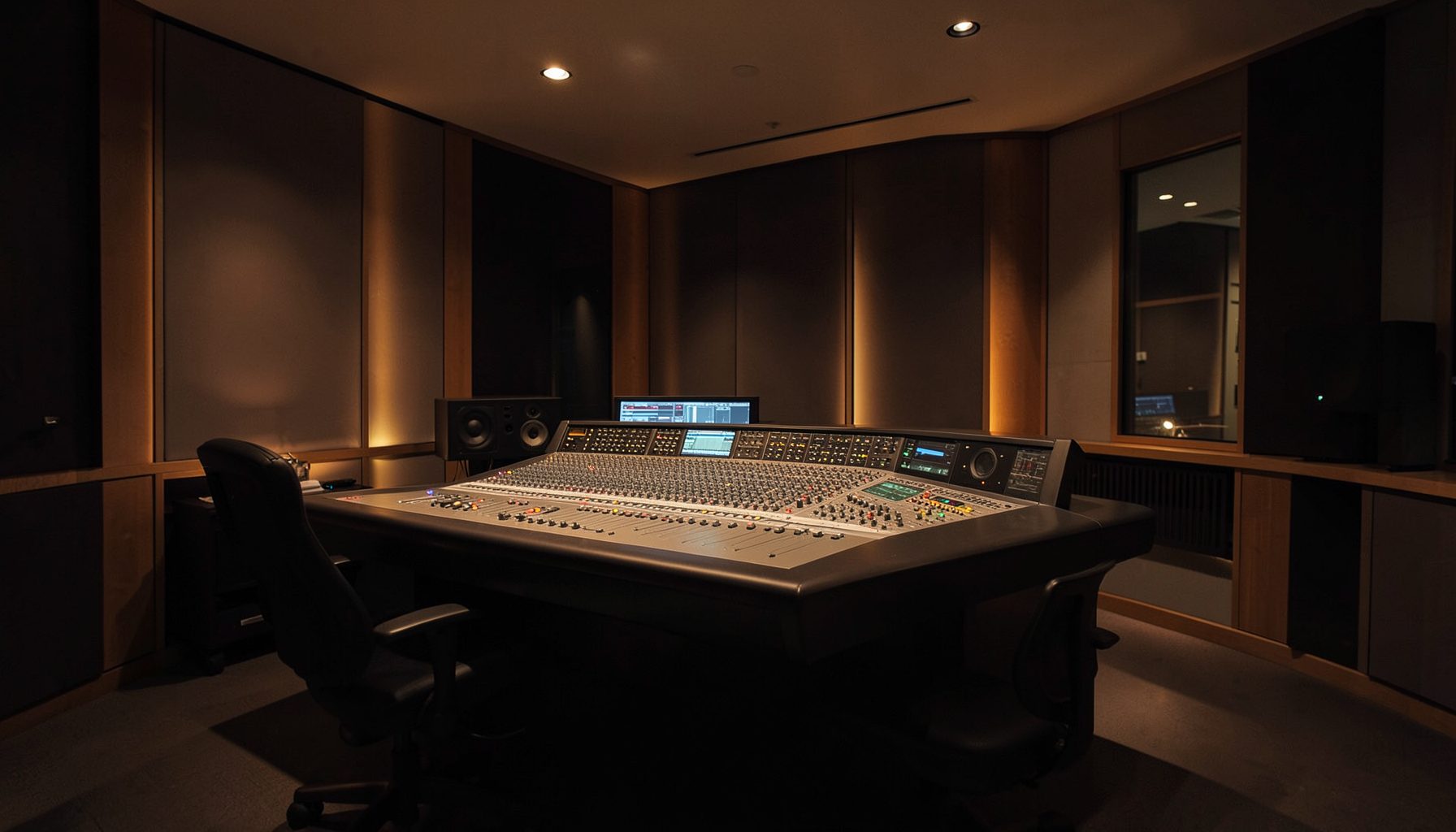
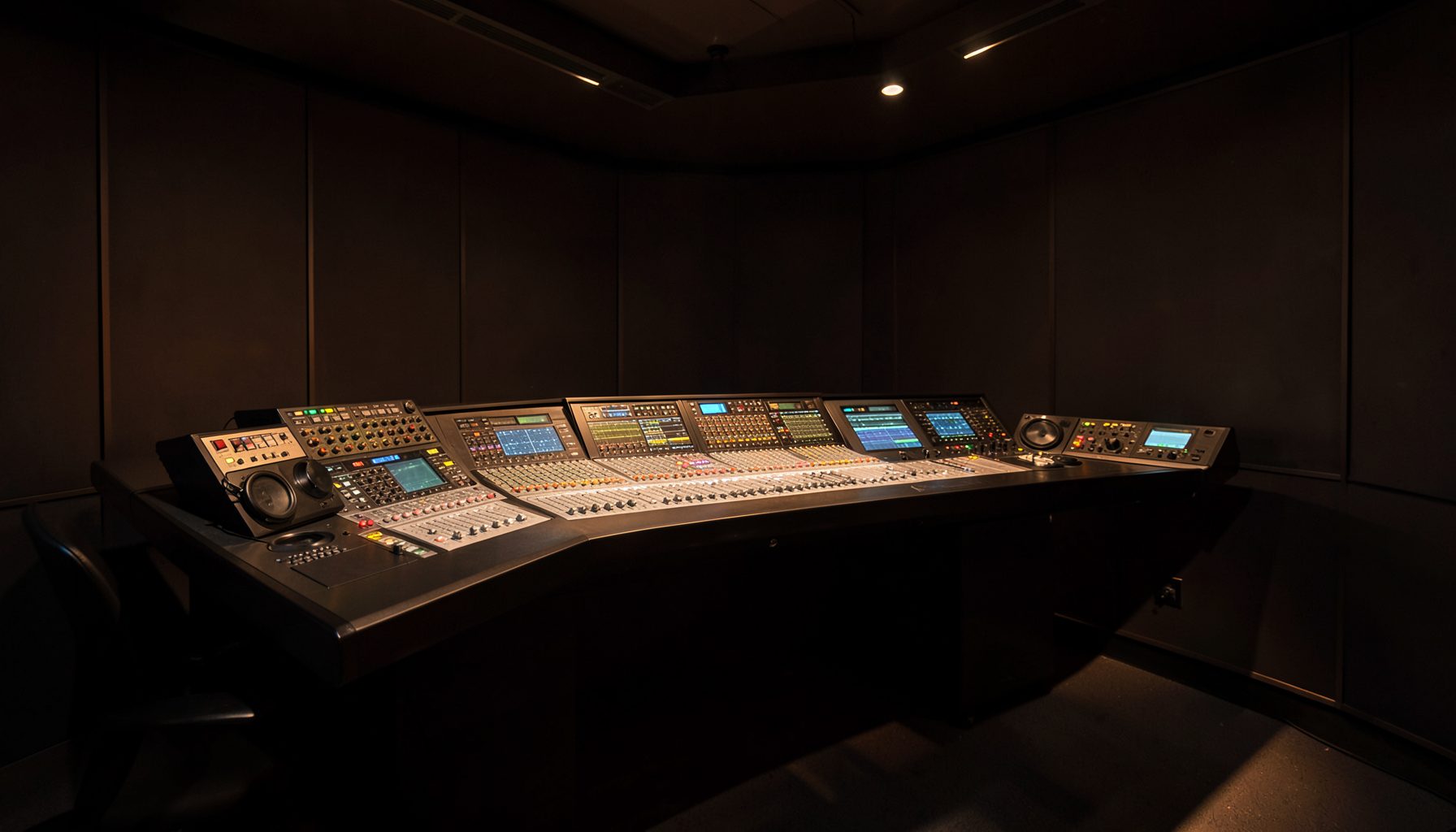
The Ruby mixing console can provide an operator-facing environment for routing and managing these sources, while Power Core handles processing within the wider networked architecture. This separation can reduce duplicated hardware and make a consistent configuration easier to maintain across studios.
Preserving Speech, Music And Atmosphere
Speech intelligibility should remain the first priority. Excessive compression can raise room noise, amplify breaths and remove the natural contrast that helps listeners follow a presenter. A moderate ratio, controlled makeup gain and a release time matched to speech rhythm usually produce a more transparent result than aggressive peak chasing.
Music and live sport need a different balance. Too much control on a music programme can make percussion lifeless, while heavy processing on a match feed can turn crowd ambience into a dense wall of sound. For Australian rules football, cricket and rugby coverage, preserving the difference between commentary and atmosphere helps listeners understand the event’s scale.
Engineers should audition changes at realistic listening levels and across several devices. A feed that sounds controlled on studio monitors may become harsh on earbuds or indistinct in a vehicle. Presets are useful starting points, but they should be refined for each microphone, venue and contribution link.
Managing Australian Broadcast Workflows
Australia’s geography makes contribution consistency particularly important. A live interview from Darwin, a regional news insert from Ballarat and a studio programme from Sydney may travel through different codecs, circuits and local facilities before reaching the same output. Networked processing gives teams a common place to correct level and dynamics without relying on every remote operator to use identical hardware.
Commercial radio also has a strong local identity. A station’s “brekkie” show may move quickly between presenters, traffic updates, sponsorship messages and music, while regional stations often combine local production with networked content. A carefully designed processing profile can preserve that pace while preventing abrupt level changes between elements.
For technical teams reviewing interoperability, independent broadcast technology resources can complement manufacturer documentation and practical testing. The key is to verify the complete chain, including codec behaviour, console routing, automation changes and the transmitter or streaming encoder.
Choosing Settings With Measurable Goals
The following comparison illustrates how processing priorities can change by source. These are starting points rather than universal presets; the final values depend on microphone technique, programme style and the station’s loudness policy.
| Source | Compression priority | Useful starting approach | Main risk |
|---|---|---|---|
| Presenter microphone | Stable speech level | Moderate ratio, medium attack, timed release | Raised room noise |
| Music playout | Preserve musical impact | Gentle bus compression and restrained makeup gain | Loss of punch |
| Live sports commentary | Control excited peaks | Moderate ratio with transparent release | Pumping during crowd peaks |
| Remote interview | Smooth codec variations | Conservative compression after input alignment | Over-processing weak audio |
| Final programme bus | Cohesive output | Light control with loudness metering | Chasing loudness with gain |
Loudness targets should be documented for each delivery path, including broadcast, streaming and contribution feeds. Integrated loudness is meaningful over a programme period, but short-term readings are valuable during live transitions. Peak control also protects downstream equipment and reduces the chance that a codec or streaming service will react badly to overs.
Making The System Sustainable
A good configuration is repeatable, visible and easy to troubleshoot. Name processing blocks clearly, document the intended signal flow and keep source-specific profiles separate from final-output settings. Operators should know which control changes programme character and which one simply corrects level.
Monitoring remains essential. Engineers should check speech, music, silence, applause and dense programme moments rather than judging only a calm studio segment. If a station needs assistance validating a Power Core deployment or broader workflow, its Lawo support team can help clarify product capabilities and integration considerations.
The practical takeaway is simple: use Power Core’s compression to manage dynamic range, use loudness metering to judge programme level, and tune each source for its real Australian broadcast context. That combination delivers a steadier live mix while retaining the energy, clarity and local character listeners expect.