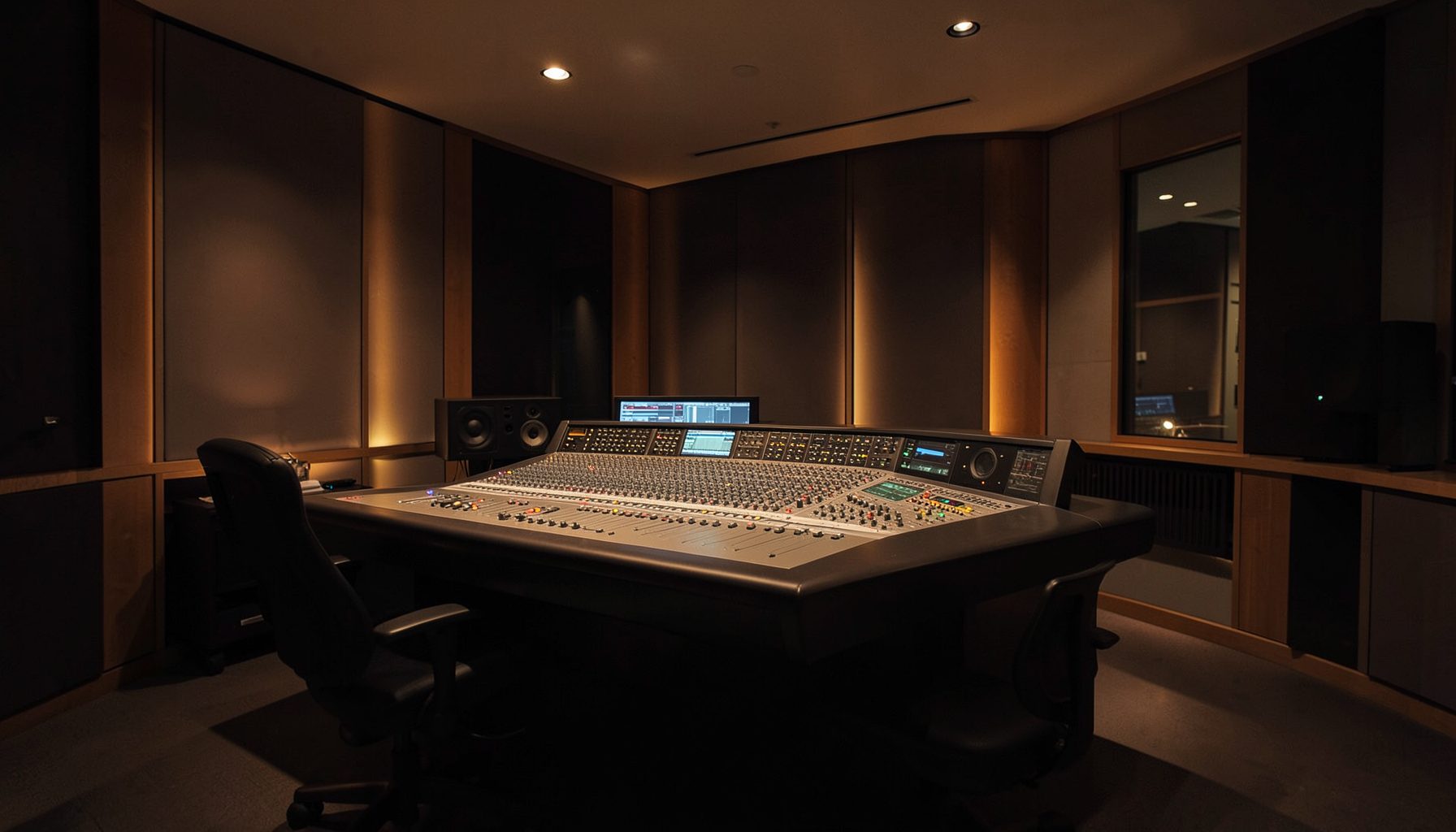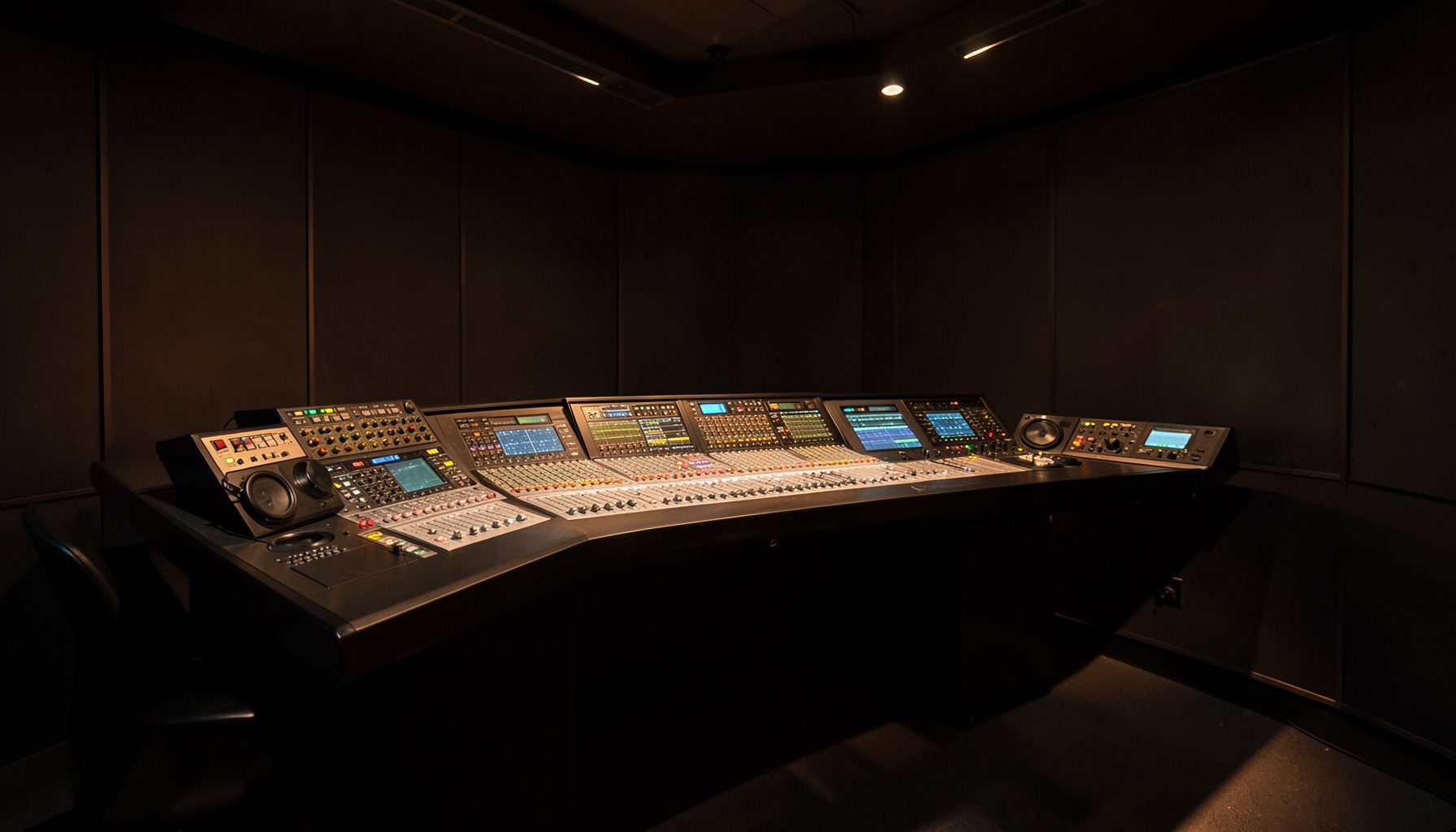
Power Core's Built-In Processing for Telephone Clarity and EQ
Telephone audio has always been the awkward guest in radio production, and Australian broadcasters feel that pressure more than most. The country spans thousands of kilometres between a talkback studio in Sydney and a regional caller in Cairns, and mobile signals from places like Dubbo or Kununurra arrive carrying codec artefacts, latency and unpredictable levels. Engineers in Melbourne and Perth often juggle interstate feeds that have already bounced through compression stages before they ever reach the mixing desk.
Power Core, Lawo's networked audio engine, solves the problem at the source by embedding telephone-grade processing and parametric equalisation directly inside the core. Rather than relying on racks of external hybrids and outboard gear, stations can shape caller audio, manage dynamics and balance multiple feeds from a single 1RU device. For Australian networks handling regional content sharing and remote talent, the outcome is cleaner speech and a more consistent on-air product.
Why Phone Audio Sounds Different in Australia
Australia's geography and telephony infrastructure conspire against clean phone audio. Callers dialling into a commercial station from rural properties outside Toowoomba typically travel through older PSTN exchanges that flatten high frequencies and squash dynamics. Mobile callers in remote mining hubs add packet loss, and codecs like AMR or Opus apply their own filtering that broadcasters cannot override.
The Australian Communications and Media Authority also enforces standards that prize intelligibility for parliamentary simulcasts and emergency information. A muddied call during a broadcast from Parliament House in Canberra risks failing accessibility benchmarks. Studios therefore need processing that recovers articulation without sounding unnatural on FM rebroadcasts in Hobart or Cairns.
Inside Power Core's Audio Engine
Power Core is built around a high-density DSP core that handles routing, mixing and effects within a single rack unit. Up to 192 channels can pass through one engine, with processing available on every input and bus. For broadcasters operating between capital cities and regional hubs, that density means a single device in a Sydney facility can serve multiple studios over IP, including remote sites in Newcastle or Geelong.
AES67, RAVENNA and Dante compatibility place the engine inside Broadcast 3.0 workflows. Audio sources — VoIP contributions, legacy analogue hybrids, playout systems, RƎLAY virtual tools and VisTool touchscreens — feed into the same platform, which keeps signal paths short and predictable for engineering teams.
Telephone Processing Built Into the Engine
Power Core's processing chain recognises the limited bandwidth of typical voice circuits and applies corrective filtering at the input stage. A high-pass removes low-end rumble from handset microphones, followed by gentle noise reduction that suppresses line hum without dulling consonants. A dedicated dynamics section manages level swings so a caller who whispers one moment and shouts the next stays balanced beneath program material.
For shows that take frequent call-ins — long-form interviews on Radio National or sports talk during an AFL match broadcast from Melbourne — the engine handles multiple simultaneous POTS, ISDN or SIP feeds. Each call receives its own processing profile, so a caller on a Tait radio bridge from a regional fire station gets a different EQ curve than a journalist phoning in on a lapel feed from a suburban studio.
Parametric EQ for Voice Shaping
Equalisation on Power Core is parametric on every channel, with up to five bands per strip. Engineers can sketch curves that target the artefacts of phone audio — a notch near 3 kHz to tame harsh codecs, a shelf lift at 5 kHz for presence, and a low-mid cut to clear muddiness from speakerphones in open-plan newsrooms.
Presets can be stored per caller type, per show, or per studio, which suits broadcasters shifting formats between news, music and talk. A breakfast shift in Brisbane might keep a brighter call-in preset loaded while an overnight automated service in Darwin relies on a flatter curve to match its conservative output chain.
Working With VisTool and RƎLAY
Configuring those presets and recalling them in real time is where the broader Lawo toolset pays off. VisTool provides a customisable touchscreen surface where producers adjust parameters without leaving the on-air workflow. RƎLAY virtual radio tools extend control into remote environments, allowing an engineer in Adelaide to tweak processing on a Perth engine over IP from the desk.
This software-led approach suits networks with distributed responsibilities such as ARN or Nova, where regional programming decisions happen locally but processing standards must remain consistent. Adjustments to telephone processing, EQ or AutoMix behaviour can be applied from a central editing seat and pushed to every engine sharing the same management layer.
Multi-Caller Handling With AutoMix
When a panel show stacks four or five callers in rotation, manual fader work becomes a liability. Power Core's integration with AutoMix automation lets the engine manage crossfades and level sharing among talkback feeds without operator intervention. AutoMix detects speech patterns, applies gain sharing across active sources, and ducks muted contributors so listeners never hear a sudden jump.
For nightly panel debates across commercial talk stations, AutoMix combined with telephone processing means producers can run a multi-caller segment out of a Gold Coast studio knowing every voice is intelligible, balanced and tonally shaped from the moment it enters the engine.
Comparing Telephone Processing Approaches
For stations evaluating their options, the table below compares how Power Core's built-in approach stacks up against traditional external hybrids and software plug-ins.
| Approach | External Hybrid Chain | DAW Plug-In | Power Core Built-In |
|---|---|---|---|
| Latency | 5–15 ms per stage | 20–40 ms buffer | Under 5 ms |
| EQ Flexibility | Fixed presets | Full parametric | Full parametric with saveable presets |
| Multi-Caller Scaling | Add more units | CPU-bound | Engine-native |
| Rack Space | 1–2 RU per chain | None | Included in 1RU core |
| Network Integration | Limited | Host-dependent | AES67, RAVENNA, Dante native |
The value of Power Core lies less in any single feature and more in compressing an entire signal chain into one device that sits comfortably inside a modern IP infrastructure — which matters for any broadcaster planning an eventual move away from legacy hardware.
A practical starting point for stations weighing a phone-processing upgrade is to test Power Core against a realistic call-in scenario drawn from the local market — perhaps a regional Victorian caller on a 3G connection, or a sports reporter phoning in from a regional cricket ground. Running that call through the built-in processing chain shows how much on-air quality can be lifted without adding external hardware, and gives engineering teams a benchmark for replacing legacy hybrid racks across the network. Anyone curious about the wider direction of the platform will find the company overview page a useful reference.