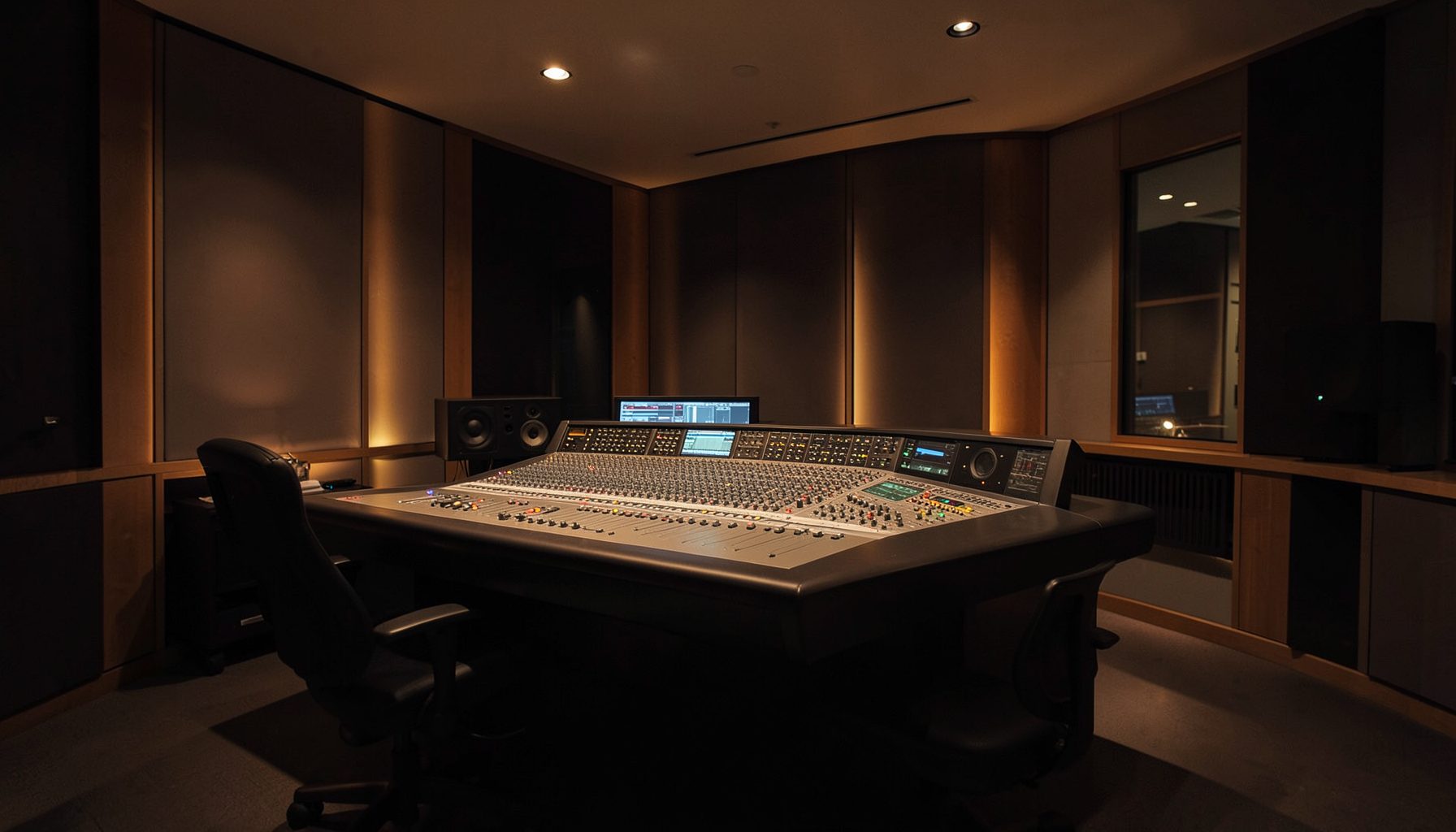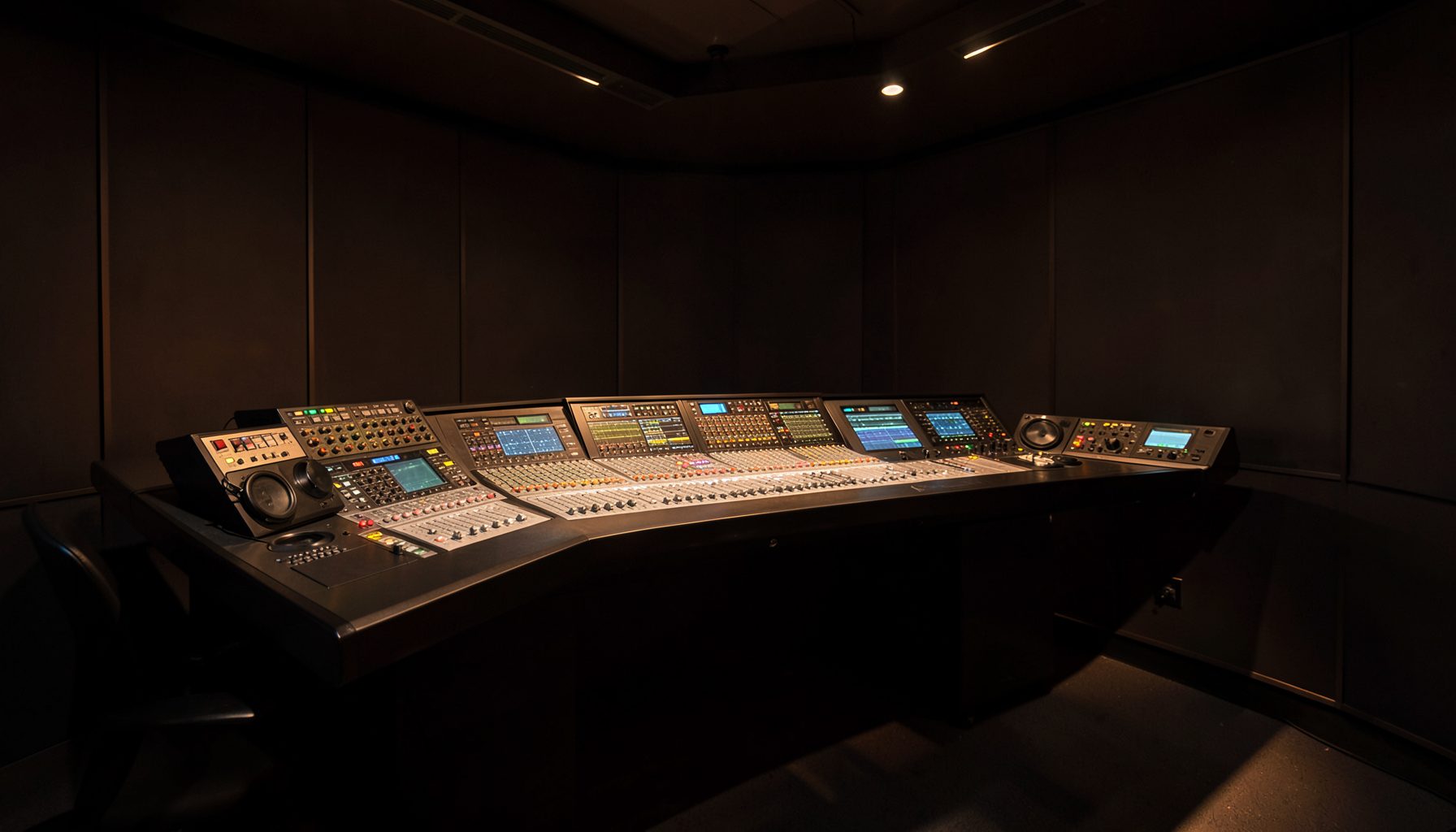
Power Core’s built-in EQ presets for quick microphone tonal shaping
Fast microphone shaping matters in live radio, post-production and performance settings where a presenter, guest or performer may need a usable sound in seconds. A dependable equalisation (EQ) starting point reduces blank-panel hesitation while keeping the operator in control of the final balance.
Within Lawo’s networked audio environment, Power Core offers ready-made microphone EQ templates that can be recalled, evaluated and refined. They are most valuable when treated as editable starting points: choose a sensible contour, listen in context, then make the smallest change needed for the voice, room and programme.
Why fast tonal shaping needs dependable starts
A microphone preset should answer a practical question: what needs to be cleaner, fuller or more present? It should not imply that every announcer, singer or interview guest needs the same frequency curve. Presets become useful when they establish a consistent baseline across a busy production schedule, especially when different engineers cover the same show.
That repeatability is particularly important on Power Core because processing can live with the node while control and monitoring happen elsewhere in the studio. A named preset can become part of an agreed channel recipe rather than an undocumented set of moves. The operator still hears the result, but begins closer to a workable sound.
Turning a preset into a useful starting contour
Begin with subtraction. A low-cut or high-pass preset can remove handling noise, HVAC rumble and energy below the speaker’s fundamental without thinning the whole channel. Then address muddiness in the low mids with a broad cut rather than a narrow one. This usually creates more clarity than an aggressive presence boost and leaves cleaner headroom for the rest of the chain.
Upper-mid presence around 2–4 kHz can help a voice cut through music or distance, though too much exposes sibilance, consonants and fatigue. A broad air lift may open a dull source, but bandwidth matters: a wide boost is gentler than a resonant spike. Use the recalled bandwidth and Q as a starting point, then compare the preset with the channel bypassed.
Designing for Australian broadcast conditions
Australian productions add several contexts to this workflow. Sydney and Melbourne studios commonly combine live, post and networked contributions; ABC and SBS operations connect national services with locally produced material; and community broadcasters often work with lean staffing or volunteers. Fast, repeatable recall can be valuable in each environment without pretending their rooms and audiences are identical.
ACMA regulates broadcasting and spectrum use, but EQ itself is not a compliance control. Clean transmission still matters because artefacts spread easily through FM, DAB+ and streaming distribution. Local voices vary widely by age, region and cultural background, so a contour tuned for one announcer should not become a house rule for every English-speaking presenter in Australia.
Location can also alter the source before any filter reaches it. At Brisbane outdoor events, wind can reach open microphone positions and humid conditions make moisture protection important; Perth’s dry conditions can reveal handling noise in quieter setups. Pop filters, shock mounts and sensible placement should come first, with EQ compensating only for what remains.
Matching common microphone problems
No two microphone jobs are identical, so choose the closest preset by purpose rather than by a favourite button. The comparison below describes practical starting points, not fixed universal curves.
| Production need | Closest preset purpose | Adjustment after recall | Main risk |
|---|---|---|---|
| Room rumble | Low-cut or high-pass | Set the corner below the voice fundamental | A thin or fragile voice |
| Speech clarity | Gentle presence contour | Blend 2–4 kHz modestly | Harshness or exposed sibilance |
| Vocal warmth | Broad low-mid shape | Reduce 200–500 Hz mud before adding warmth | Boominess |
| Harsh upper edge | Upper-mid reduction | Keep the cut broad unless a resonance is proven | A dull or hollow result |
Move gradually and bypass often. If a preset creates a harsh edge, reduce its gain or bandwidth before reaching for a deeper cut. If the source then sounds too thin, revisit the high-pass setting rather than correcting everything with added presence.
Avoiding feedback and false confidence
EQ cannot repair a badly aimed microphone, eliminate unstable acoustic feedback or separate two performers occupying the same space. Narrow cuts can reduce a known resonance, yet a sweep of random notches will remove useful harmonics and make the preset less transferable. Treat each adjustment as a hypothesis that the ear can confirm.
Monitoring must reveal the same balance that the audience will hear. Compare at matched level, watch the signal before clipping and leave enough dynamic range for loud consonants. When many sources feed one production, disciplined channel identity becomes even more important. Lawo’s account of virtual microphone arrays shows how networked capture can build a larger sound field while keeping source control coherent.
Building a consistent preset workflow
In a Ruby console and VisTool workflow, operators can make Power Core processing part of a disciplined show setup: apply a sensible default, name the channel, verify it against the programme feed and document any departure from the standard. AutoMix can take over repetitive level balancing in supported workflows, but it does not determine the tonal identity a voice needs.
That is preset-library design rather than button collecting. Stable descriptions such as speech clarity, warm voice or rumble control help engineers choose quickly and avoid duplicating corrections. A useful library also records why a contour exists, what source it suits and when it should be replaced. The same principle of coherent, repeatable presentation appears in Lawo’s coverage of online themed experiences: recognisable rules work better than improvised variation.
A practical preset discipline
A disciplined preset workflow is simple. Start with the closest template, high-pass before boosting, use broad subtractive moves for general colour, reserve narrow work for a demonstrated problem, and audition every result at broadcast level. Keep a bypass path available and record final changes so the next shift is not left guessing.
The enduring lesson is that Power Core’s built-in starting points are a shortcut to informed action, not a substitute for listening. Remember the preset as a fast, credible baseline that saves setup time while leaving room, tone and dynamics under the engineer’s control.