Planning a Mobile Broadcast Van With Ruby and Power Core Nodes
A mobile broadcast van lets a station leave the studio and cover the moments listeners care about most — a regional football final in Tamworth, a community event in Hobart, or a major music festival outside Melbourne. In Australia, where audiences stretch across vast distances and operators juggle everything from AFL calls to remote mining briefings, the mobile unit has become an extension of the main studio rather than a piece of backup gear. Choosing the right audio core and control surface shapes how far that extension can really reach.
Pairing Lawo's Ruby console with Power Core audio nodes offers a flexible foundation for these vans. The combination scales from a compact two-person OB truck to a larger side-expanding vehicle, while remaining manageable for crews who handle set-up, broadcast and pack-down in a single day. The rest of this piece walks through the planning decisions that turn a blank vehicle shell into a working radio studio on wheels.
Defining the Scope of a Mobile Unit
Start by writing down every kind of event the van is expected to handle. A vehicle built only for outside broadcasts of NRL matches will look very different from one designed for talkback radio, live music capture or remote commercial production. Australian operators often need all three within a single busy season, which pushes the design toward modularity.
Local commercial networks and the SBS rely on regional roaming units that can swap between metropolitan Sydney and outback Queensland within the same week. That kind of flexibility demands a rack layout that can be reconfigured without rewiring the entire truck. Planning the workflow on paper first prevents costly retrofits once the equipment is mounted.
Ruby Console Layout for Compact Spaces
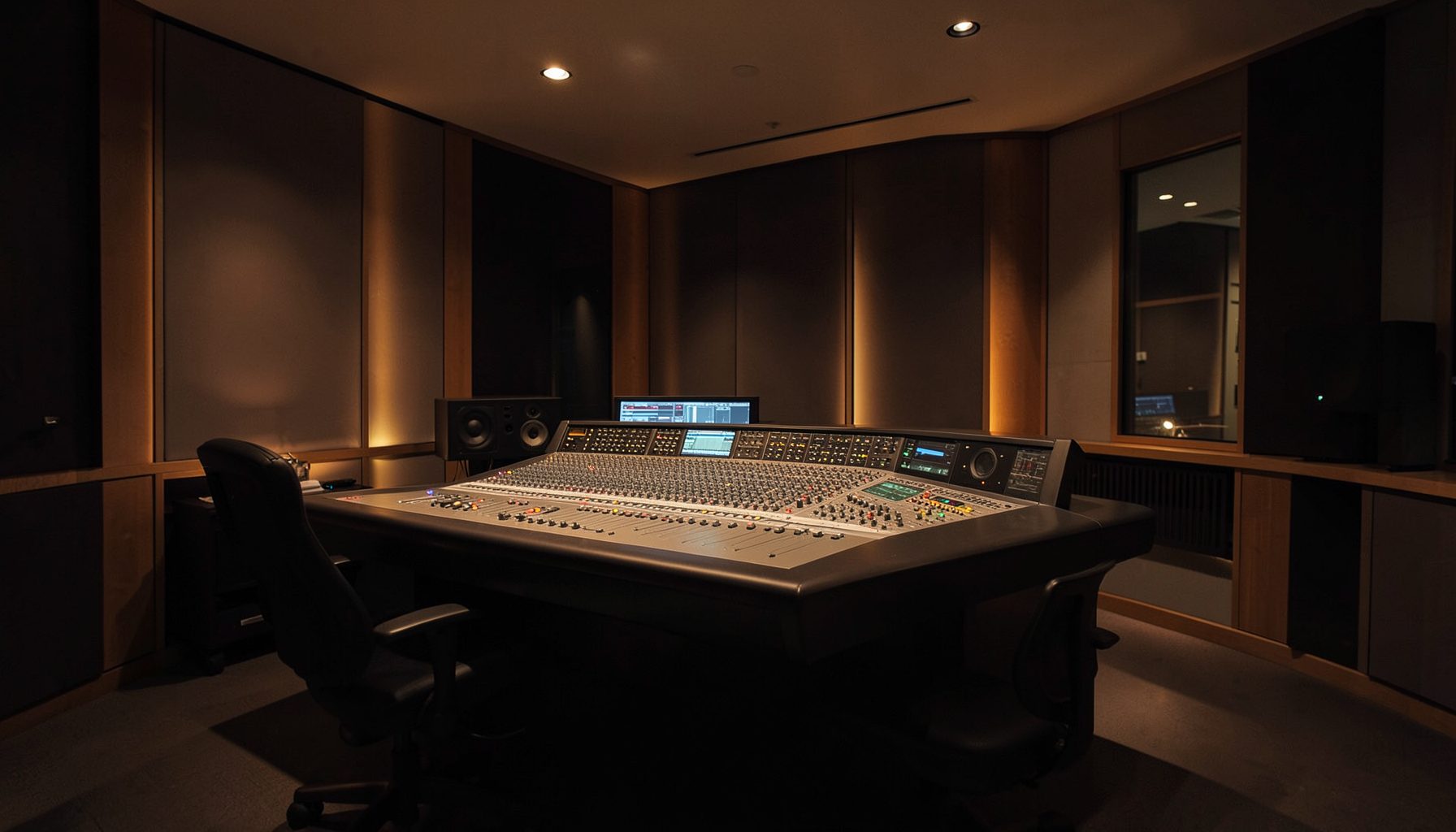
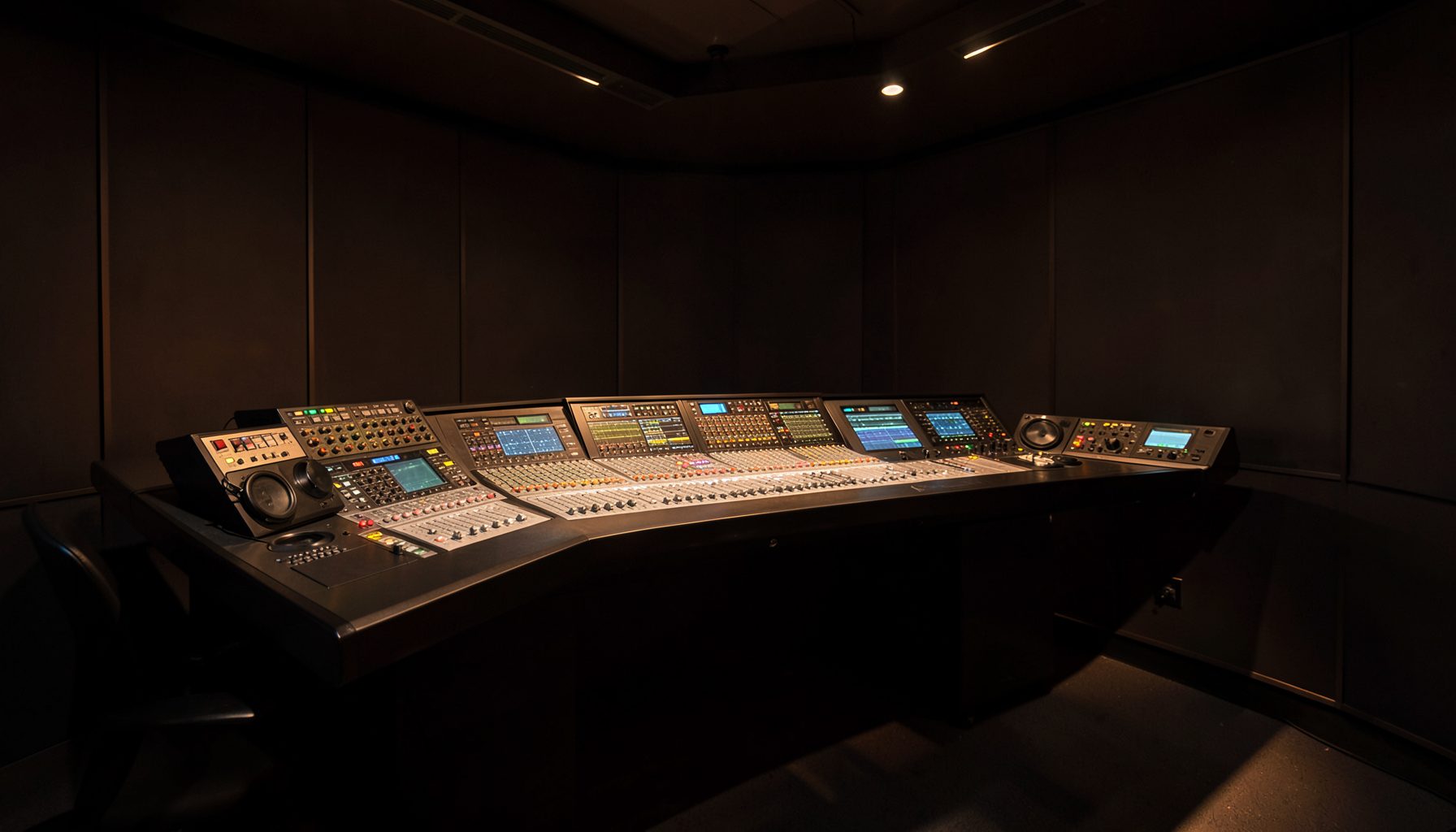
Ruby's small footprint makes it a natural fit for the cramped cabin of an OB van. Its networked design means the physical surface can be smaller than the channel count it controls, allowing the engineer to keep faders close at hand while still routing dozens of sources. When space is at a premium, the console's flexible strip layout lets crews reshape the surface to match the show.
Touring engineers in Brisbane and Adelaide often share the same vehicle for vastly different formats, and Ruby's profile storage makes those handovers quicker. Presets for a call-in breakfast show, a pre-recorded music special and a live commentary job can each be recalled in seconds, cutting rehearsal time on arrival. That kind of responsiveness matters when the venue is a coastal car park at sunrise and the crew has had a 4am departure.
Power Core Nodes as the Audio Backbone
Power Core sits at the heart of the system, providing the mixing engine, I/O capacity and processing muscle that the Ruby surface draws on. For a mobile van, the right node configuration determines how many mics, line inputs and AES streams can be handled simultaneously. Choosing enough headroom for the biggest planned show protects the van from being outgrown within a year.
Hot-swappable cards let engineers replace a failed module on the road without cancelling a broadcast — a serious concern when the nearest backup studio might be hundreds of kilometres away across the Nullarbor. Local technical staff appreciate that Power Core's redundancy options can be tuned to match the risk profile of a single-event booking versus a multi-week touring schedule. Heat tolerance is another practical point; van interiors in Perth summer sun can climb well above 40°C before air conditioning catches up.
Networking and IP Architecture
Australian OB work increasingly runs on AoIP, with AES67 and SMPTE ST 2110 becoming the default languages for new builds. Power Core speaks all of these natively, which simplifies routing between the van, a remote venue and the home studio. Network switches should be sized for current shows and the next two upgrade waves.
Connectivity on the road remains the biggest variable. In regional New South Wales and country Victoria, fibre or fixed ethernet is rarely available, so most vans rely on bonded 4G/5G modems with satellite failover for the long stretches where cellular coverage drops out. Planning for this from the start — rather than bolting on a router later — keeps cabling tidy and makes antenna placement easier on the roof. Engineers who treat the network as core infrastructure, not an accessory, avoid most of the field-day audio dropouts that plagued earlier generation trucks.
VisTool and Reusable Templates
VisTool ties the whole system together by providing a customisable touchscreen layer for routing, metering and show logic. Inside a van, where every centimetre of screen real estate counts, having a tailored GUI means the engineer sees only the controls relevant to that day's job. Templates for recurring formats save setup time week after week.
Crews running standard formats — sports commentary, live music, breakfast radio — can lean on reusable console templates in VisTool to keep their setups consistent across vehicles and operators. That consistency pays off when a relief engineer steps in mid-tour. The same look and feel across the fleet makes training faster and reduces the risk of mis-cued faders during a live crossover.
Power, Cooling and Touring Logistics
Australia runs on 230V at 50Hz, which matches Power Core's PSU options without needing step-down transformers, but generator compatibility still matters in remote deployments. Pure sine-wave inverter generators protect the gear from the dirty power that some festival sites deliver. Cable runs, breaker ratings and earthing all need to be specified against AS/NZS 3000 wiring rules rather than imported defaults.
Crew logistics deserve equal attention. A typical east-coast swing between Newcastle, Sydney and Canberra involves long drive days and overnight stops in regional motels, so the van layout should leave room for hard cases, spares and personal kit. Downtime between gigs is part of the rhythm, and crews often unwind with a meal at a local pub, a quick catch-up on the racing, or a few hands of Newcastle online blackjack on a phone before the next call time. Building those small comforts into the schedule keeps the team sharp across a multi-week booking.
Future-Proofing With the Broadcast 3.0 Approach
Lawo's Broadcast 3.0 philosophy leans into software-defined, IP-native workflows, and a mobile van built on Ruby and Power Core is well placed to ride that wave. New processing features, metering tools and codec options can be added through software updates rather than rack swaps, extending the working life of the vehicle.
Operators looking at the wider product family can explore the full VisTool studio software suite to understand how far the customisation can go. Planning a van today with that growth path in mind keeps the unit relevant through the next standards shift, the next rights deal and the next round of regional content partnerships.
A practical starting point is to spec the van around the smallest realistic show first, then build the rack and surface with spare capacity for the formats most likely to follow. Once the core audio engine and the control layer are settled, the surrounding vehicle trim, antenna placement and cable looms can be finished without risk of rework — and the unit is ready to roll out for its first regional broadcast.