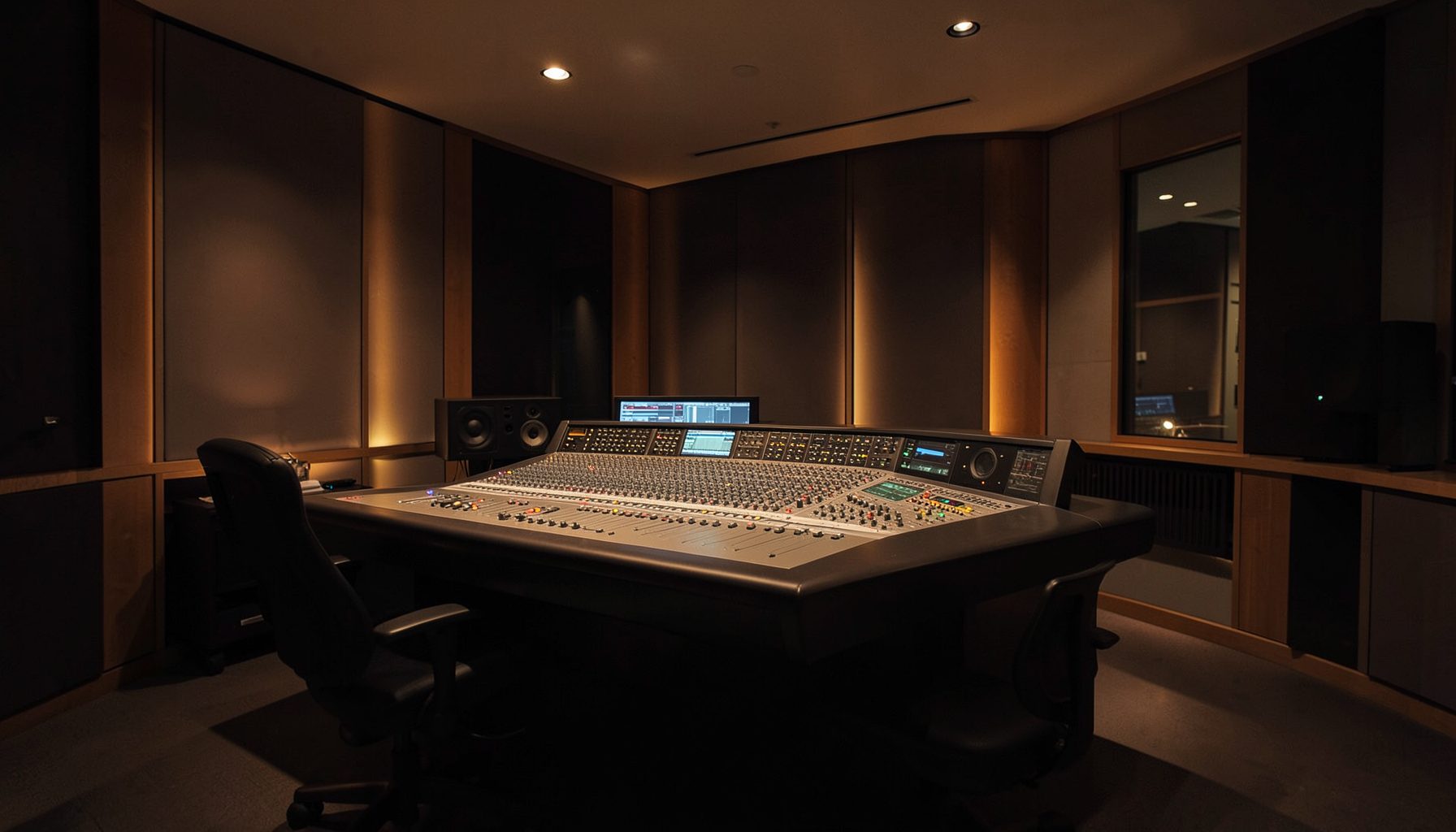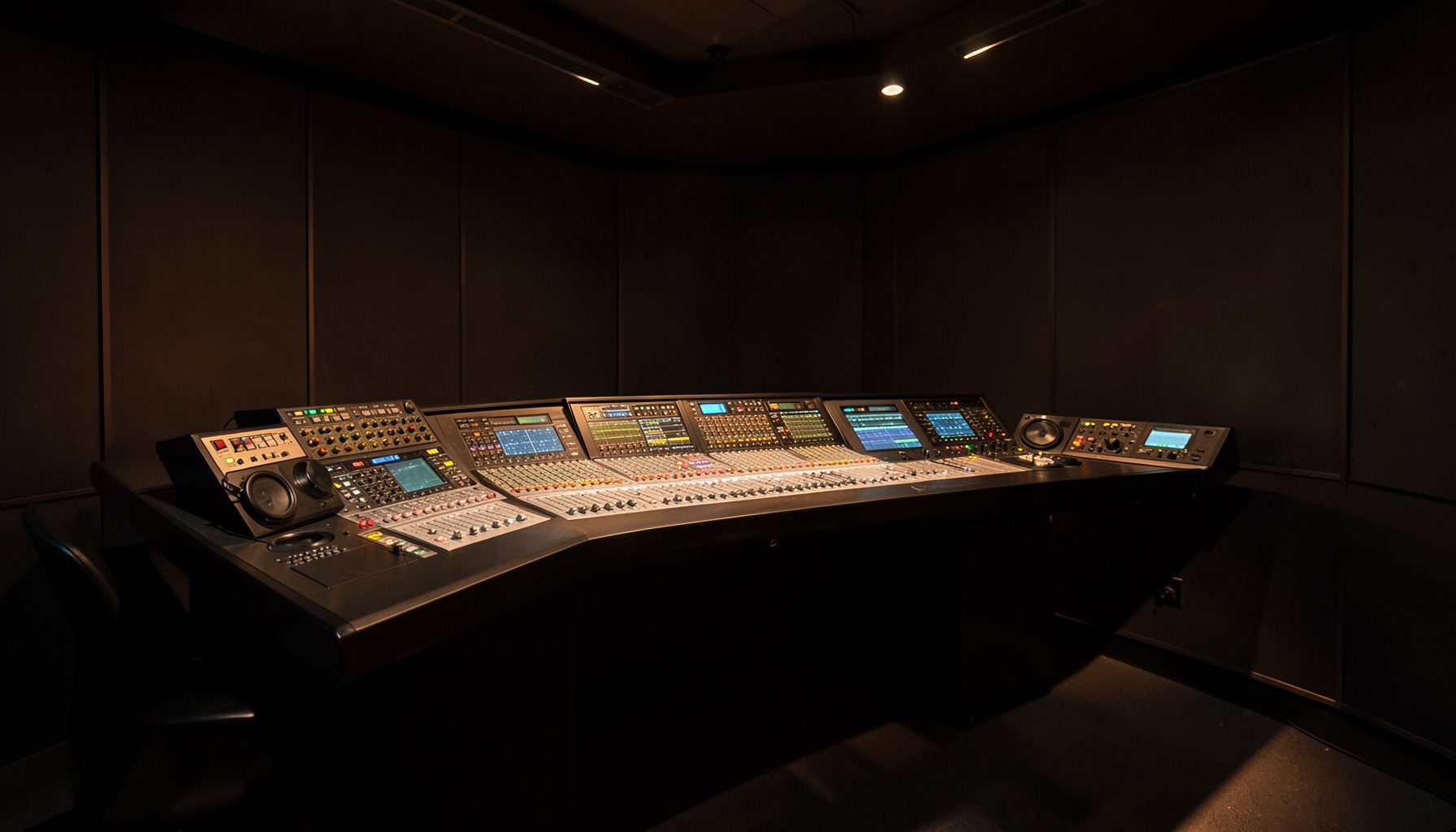
Power Core And Broadcast Routers In Hybrid SDI-IP Studios
Integrating Power Core with a Broadcast Router for Hybrid SDI-IP Environments gives radio and television facilities a practical route between established baseband infrastructure and networked production. The arrangement keeps SDI video routing familiar while moving audio processing, mixing, monitoring and control onto an IP backbone.
For Australian broadcasters, this matters because facilities often evolve in stages. A Sydney network operation may retain 3G-SDI or 12G-SDI infrastructure while adding IP contribution, remote production and shared studio resources. A regional station may need the same flexibility with fewer operators and less tolerance for service interruptions.
Power Core functions as a high-density audio engine and networked I/O platform. It can provide DSP, mixing resources, routing and format conversion within a Lawo-based workflow, while the broadcast router continues to manage video paths, embedded audio and production sources. The result is a hybrid system rather than an abrupt replacement programme.
The wider Lawo broadcast ecosystem links these capabilities with consoles, software control and real-time production tools. A successful design, however, depends on disciplined timing, clear signal ownership and an operational plan that suits local staffing, regulation and transmission requirements.
Architecture That Keeps Audio In Step
A hybrid facility normally separates the roles of the router and the audio core. The SDI router handles camera feeds, programme video, clean feeds and ancillary data. SDI embedder and de-embedder stages expose audio to Power Core, where sources can be mixed, processed, monitored or redistributed as AES67 or other supported network audio streams.
This approach is useful when a station is still producing traditional linear television or radio simulcasts. Audio can follow the video path without forcing every source into one technology. A studio console may use Power Core resources for microphone processing and mix-minus, while the router supplies the correct programme, international sound or contribution feed.
Signal flow should be documented by purpose rather than by equipment name. Define which device owns source selection, which system applies delay, where loudness processing occurs and how an operator restores a failed path. This prevents duplicate processing and makes fault isolation faster during a live bulletin or outside broadcast.
Timing, Routing And Control
Timing is the foundation of SDI-IP integration. SDI equipment usually relies on black burst or tri-level sync, while IP audio and video systems commonly use Precision Time Protocol. A dependable design establishes a clear grandmaster strategy and bridges the timing domains through suitable gateways, ensuring that audio does not drift against pictures or suffer clicks during route changes.
The router and Power Core also need a shared control philosophy. GPIO, tally, router control panels, software interfaces and automation should expose consistent source and destination names. Where an IP management layer is used, discovery and subscription policies should be tested alongside traditional router control, especially when the plant includes multicast traffic and multiple production VLANs.
For an Australian operation, network resilience deserves particular attention. A fibre break between Melbourne and a regional contribution site, or a congested service during a major event, should not affect the local studio mix. Keep essential studio paths inside the facility, use managed switching with suitable redundancy, and treat wide-area links as controlled contribution paths rather than an assumption of unlimited capacity.
Interface Choices For Australian Facilities
A staged deployment can combine SDI, AES3, MADI and IP audio, provided format conversion is deliberate. Power Core can centralise processing while gateways expose the signals required by legacy consoles, playout servers and monitoring systems. The correct balance depends on channel count, latency, redundancy and the availability of engineering support.
| Requirement | Practical hybrid approach | Main consideration |
|---|---|---|
| Existing SDI plant | Router with embed/de-embed interfaces feeding Power Core | Preserve timing and channel mapping |
| Networked microphones and consoles | AES67 or supported IP audio flows | Use managed multicast and PTP |
| Remote contribution | IP gateway into an isolated production VLAN | Control latency and packet loss |
| High-availability transmission | Redundant core, power and network paths | Test failover under load |
| Gradual migration | Keep critical SDI paths while adding IP islands | Document ownership of every conversion |
Australian market conditions often favour this incremental model. Commercial radio groups in Sydney, Brisbane and Perth may standardise central services while retaining different studio generations, whereas ABC, SBS and regional broadcasters may need wide geographic interoperability. Equipment choices should therefore account for local integrators, spare-part access and engineers familiar with both SDI and broadcast IP.
Resilient Operations And Redundancy
Power Core should be treated as part of an availability design, not simply as a replacement for a console frame. Consider duplicated network paths, independent power supplies, protected clocking and defined behaviour when a node, switch or control surface becomes unavailable. A presenter still needs a clean microphone and confidence feed if a secondary service is offline.
Router integration should include tested fallback routes. A default source can feed the programme chain while a second source remains ready for manual selection. Monitoring should reveal whether a fault is at the SDI input, embedder, IP flow, DSP resource or destination output. Clear alarms are more valuable than a large volume of undifferentiated warnings.
Australian broadcasters also need to account for long transmission days and lean overnight staffing. A regional newsroom may have one operator covering breakfast preparation, live crosses and playout checks. Simple presets, protected routes and clear recovery procedures reduce the chance that a complex IP workflow becomes an operational burden.
Workflow, Loudness And Compliance
A networked audio core can simplify shared production. The same processing resources may support a radio studio, an announcer monitor mix, a television voiceover position and a remote commentary feed. VisTool or console control can present role-specific views, allowing operators to change sources without exposing every engineering parameter.
Loudness management must remain visible across the whole chain. Measure at the appropriate delivery point, avoid stacking multiple automatic processors and preserve sufficient headroom through SDI embedding and IP conversion. For Australian services, transmission obligations under the Broadcasting Services Act 1992 and guidance from the Australian Communications and Media Authority form part of the operational context, alongside station-specific contracts and network policies.
Accessibility and audience expectations also influence the design. Captions, clean audio, emergency announcements and reliable alternate feeds need defined signal paths. Australians commonly consume radio during commuting, at work and through connected devices, so a fault may appear simultaneously on terrestrial, streaming and catch-up services. A common monitoring strategy helps identify whether the problem is local or distributed.
A Measured Migration Path
Begin with an inventory of every source, destination, clock reference and control dependency. Mark which signals are critical to transmission, which can tolerate a short interruption and which are suitable for a pilot. A small studio, commentary position or monitoring area is often a safer first deployment than the main programme chain.
Next, build a representative test network with the intended switch configuration, PTP design, router control and Power Core processing. Verify route changes, audio-follow-video behaviour, loss of a network link, clock failure and restoration from saved configurations. Record channel labels and latency values before the system enters service.
The Power Core platform can then be introduced as a controlled audio layer around existing SDI operations, expanding into IP sources as confidence grows. The immediate next step is to produce a signal-flow document for one studio, including every SDI, IP, clock, control and failover connection.