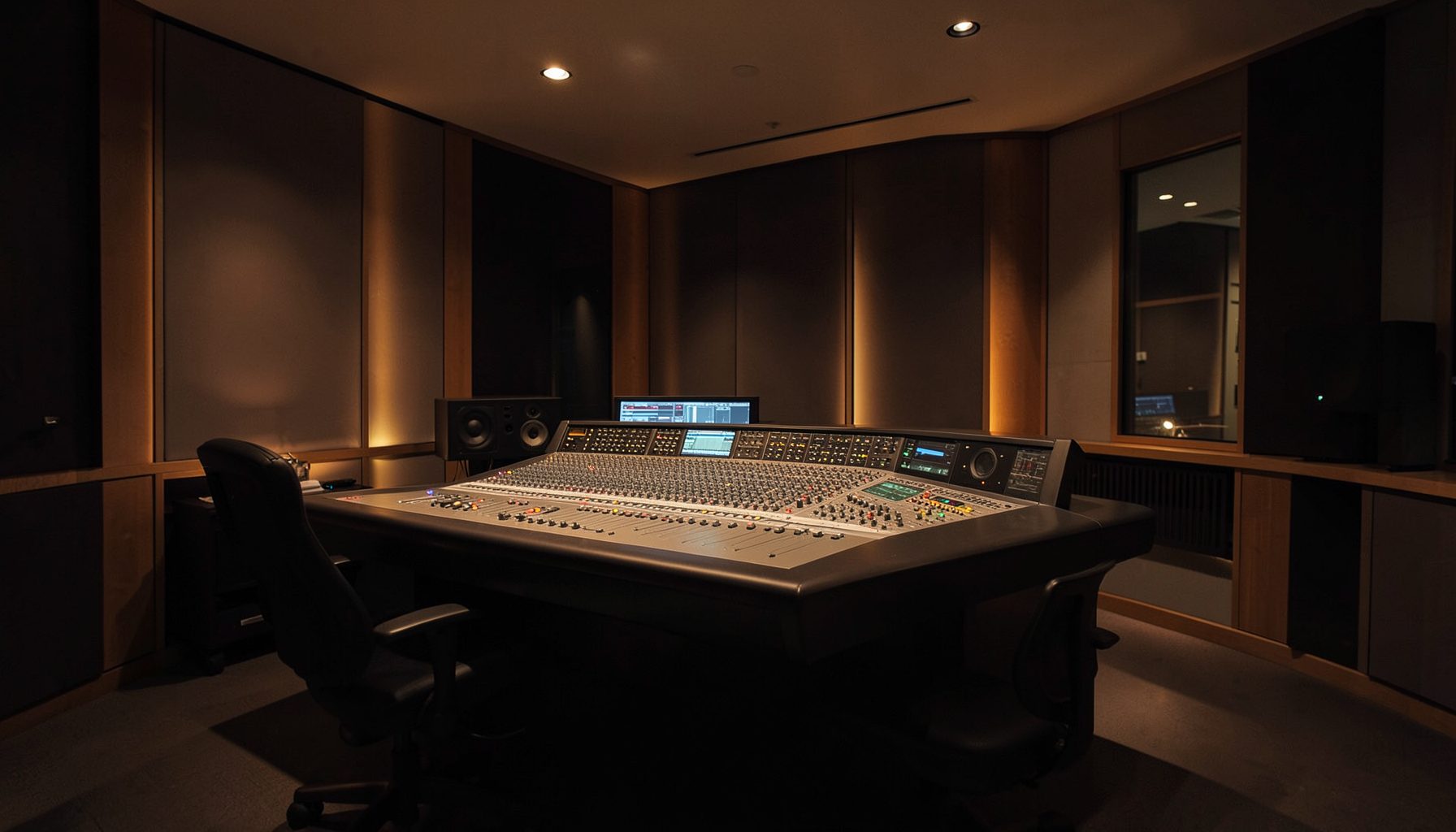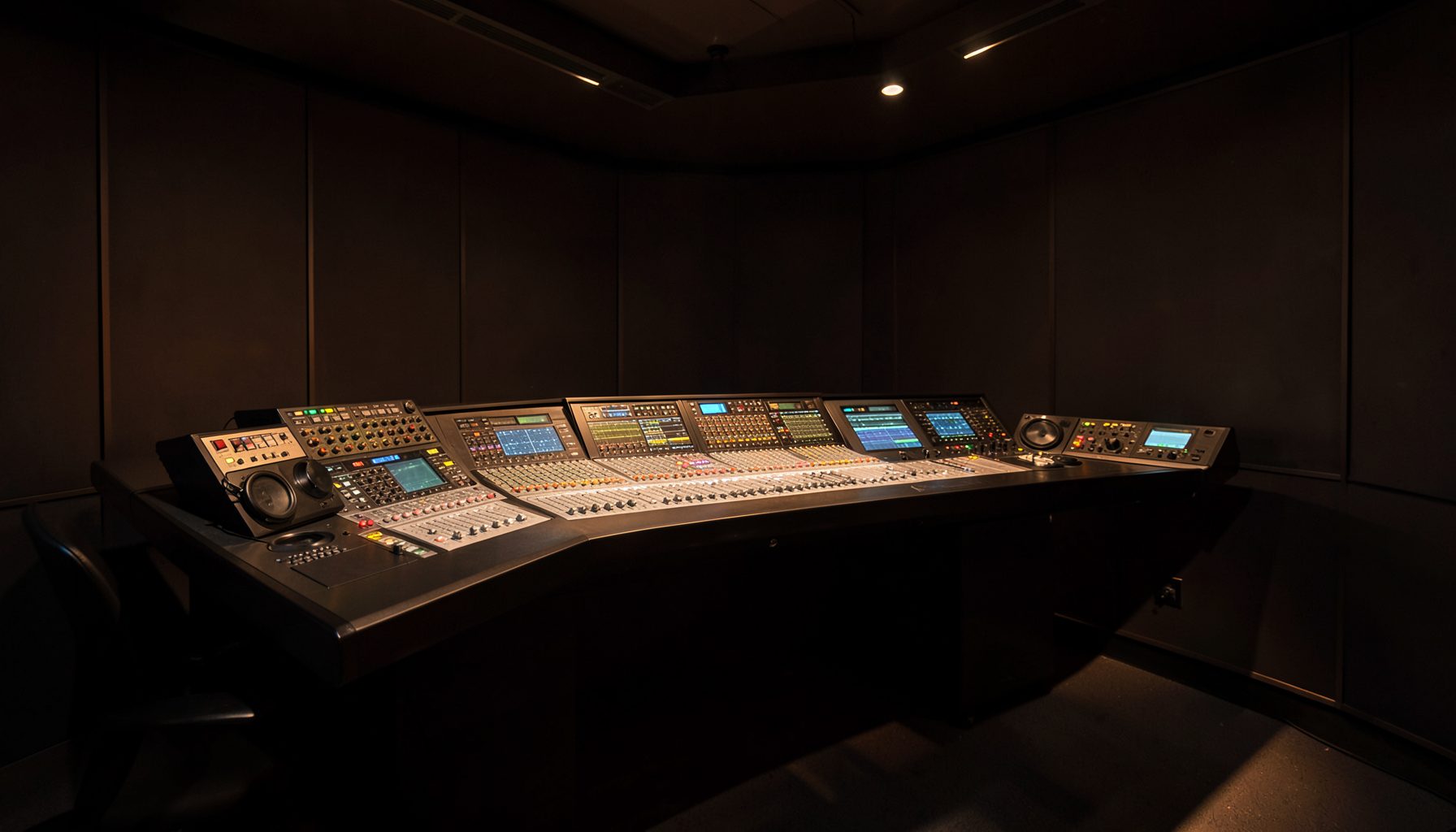
Ruby bus compression for consistent programme loudness
Programme levels often drift between a phone interview, a promotional sweep and live music, even when the studio faders look balanced. This becomes obvious across a station’s main, digital and recording programme outputs, where listeners may be adjusting volume on a phone, DAB+ radio or Bluetooth car system.
Configuring Ruby’s bus compression for consistent loudness across programme outputs starts with controlling the summed mix rather than chasing every vocal or instrument separately. The aim is repeatable, transparent control: measured loudness, sensible gain reduction and enough headroom for the delivery chain.
Set the loudness target before changing dynamics
Begin with a written loudness and peak target for each destination, using the network or client specification where one exists. Integrated and short-term loudness describe perceived programme level, while true-peak limits protect downstream equipment. Measure the real output after all processing rather than an unprocessed console tap.
| Processing method | Main effect | Advantage | Limitation |
|---|---|---|---|
| Compression only | Reduces changes in programme level | Natural control of dynamics | Cannot guarantee a fixed loudness target |
| Limiting only | Caps isolated peaks | Strong protection against overload | Can flatten loud passages without smoothing longer-term differences |
| Compression followed by limiting | Smooths dynamics and then catches peaks | Controlled programme level with a safety ceiling | Requires careful gain staging to avoid excessive reduction |
Bus compression is therefore only one part of the loudness chain. Establish an integrated-loudness target, commonly based on EBU R128-style measurement, and a suitable true-peak ceiling. Confirm which values apply to FM, DAB+, streaming and recording outputs, since one target may not suit every destination.
Configure the Ruby bus compressor
On the Ruby console, select the intended programme bus and confirm that the compressor is correctly assigned. Check that its meter is displaying gain reduction and that the output meter is reading the processed signal. Keep source trims and channel gain staging consistent; a compressor cannot repair inconsistent levels arriving from different sources.
Set the threshold so ordinary speech causes small gain reduction while louder passages receive more. A ratio around 2:1 to 4:1 provides a practical starting range, although the final value depends on the material and required control. Lowering the threshold increases activity across more of the programme, while raising the ratio makes detected peaks more strongly controlled.
Use attack and release times as an initial experiment rather than a fixed recipe. An attack of roughly 5–20 milliseconds can control isolated peaks without weakening consonants, while a release of approximately 100–300 milliseconds can prevent abrupt level changes between phrases. Listen for pumping during dense music and for excessive ride during quiet passages. Apply make-up gain only after the overall reduction is satisfactory, then check that it has not pushed the downstream limiter or transmitter stage into constant limiting.
Match every programme output
Identify which outputs must deliver the same programme level. A transmission feed and a newsroom recording may have different purposes, and an auxiliary output taken before the bus compressor will not inherit its correction. Separate programme buses need matching processing or appropriately chosen output trims.
Where practical, route the same source through parallel output paths and compare them after processing. Measure both loudness and gain reduction, since two feeds can have similar average levels but behave differently when a presenter raises their voice. A temporary meter assignment or parallel test route helps reveal whether routing, processing order or output trim is responsible for a mismatch.
Run a consistent test sequence covering a quiet introduction, normal speech, raised voices, music, promotional material and a short silence. Record integrated and maximum short-term readings for each output, along with true-peak values. Keep the console settings and measurement positions documented so that later adjustments can be reproduced rather than judged only by ear.
Test against Australian broadcast conditions
Australian conditions add practical constraints. Sydney and Melbourne have dense commercial-radio schedules, while regional and community services often operate with smaller teams and shared facilities. ACMA administers broadcasting licences and service obligations under the Broadcasting Service Act 1992, so engineering changes must fit the station’s authorised service, current licence conditions and applicable technical requirements.
An unscripted panel or live performance exposes the same unpredictability described in freeform inspection: predictable production rules give way to sudden changes that cannot be handled by a single nominal level. Melbourne’s active live-music scene provides useful stress material, particularly when a performance has greater dynamics than the station’s spoken-word programming.
Local listening habits make matching more than a metering exercise. FM and DAB+ operate alongside streaming apps, and listeners may move between studio monitors, phones and Bluetooth car units during a commute. These devices have different volume mapping and headroom, so a controlled feed should also be checked under ordinary listening conditions rather than only on calibrated studio monitors.
Lock the settings and verify each shift
Save the working configuration in a labelled snapshot or show file, including the threshold, ratio, attack, release, output trim and metering reference. Store the associated loudness and peak targets with it. If different programmes require different settings, make the changes through controlled snapshots so an engineer can identify exactly which bus configuration is active.
Keep gain reduction, output level and loudness visible during programme changes. After a format, presenter or source-chain alteration, repeat a short standard test and compare it with the stored result. Treat excessive gain reduction, limiting activity or a changed integrated reading as signs that the previous settings no longer match the material.
The practical takeaway is to define the target, tune against measured programme material, and accept a Ruby bus-compressor setting only when every intended programme output delivers the agreed loudness and peak limits with controlled gain reduction.