A Theatrical Sound Designer Rebuilds the Mix Around AutoMix
A major theatrical sound designer faced a familiar production problem: a performance could involve dozens of wireless microphones, playback channels, effects returns, and live musical sources, all competing for attention in a changing acoustic environment. The show needed clarity, but the mix also had to remain expressive and responsive to the director’s artistic intent.
The designer’s existing workflow relied heavily on manual level riding. That approach delivered control, yet it demanded constant concentration during rehearsals and performances. It also made consistency difficult when cast members changed position, scenes moved quickly, or several performers spoke at once.
The adoption of Lawo AutoMix created a different operating model. Instead of treating automation as a replacement for the sound team, the production used it as an intelligent layer for speech management, leaving the engineer free to focus on musical balance, effects, spatial detail, and creative decisions.
The Production Challenge
The show combined dialogue, ensemble movement, live instruments, recorded content, and a demanding loudspeaker system. Microphone levels had to remain controlled while preserving the natural dynamics of the performers. A quiet line needed support, while overlapping voices could not be allowed to produce an indistinct buildup.
Manual mixing became especially demanding during complex transitions. Performers moved between scenes with little time for resets, and the same radio microphone might need a different treatment depending on location, blocking, and vocal intensity. The designer wanted a repeatable foundation that could adapt without flattening the performance.
The challenge extended beyond the auditorium. Rehearsals, previews, touring versions, and technical maintenance all required a workflow that could be understood by multiple operators. A networked audio architecture offered a practical way to keep processing, control, and signal distribution organized across the facility.
How AutoMix Fit The Workflow
Lawo AutoMix was introduced as a controlled assistant for spoken-word sources. It continuously responded to microphone activity and adjusted relative levels, helping prevent several open microphones from raising the overall noise floor. The sound team retained authority over routing, processing, thresholds, priorities, and artistic overrides.
This approach changed the engineer’s role during a performance. Rather than chasing every fader movement, the operator could monitor the system’s behavior and intervene when the dramatic structure required a deliberate departure from the automated mix. Music cues, sound effects, audience interaction, and special vocal treatments remained under direct creative control.
The result was a cleaner division between technical workload and artistic judgment. AutoMix handled repetitive adjustments, while the designer concentrated on intelligibility, perspective, timing, and the relationship between sound and stage action.
A Networked Signal Path
The production used a software-oriented signal flow in which microphone inputs, processing, control, and console operation could be distributed across a network. This reduced dependence on a single physical mixing position and made it easier to adapt the system during rehearsals.
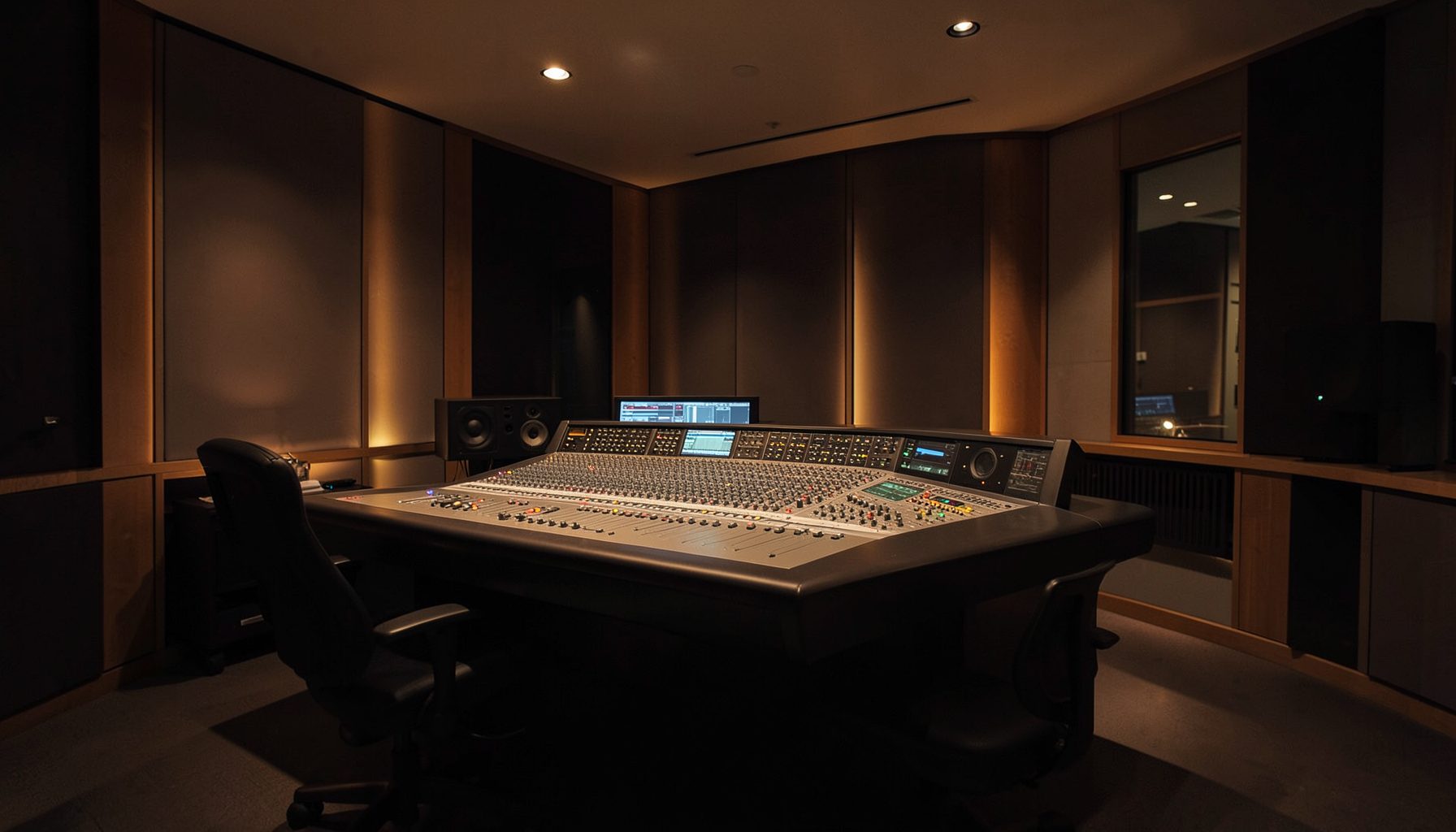
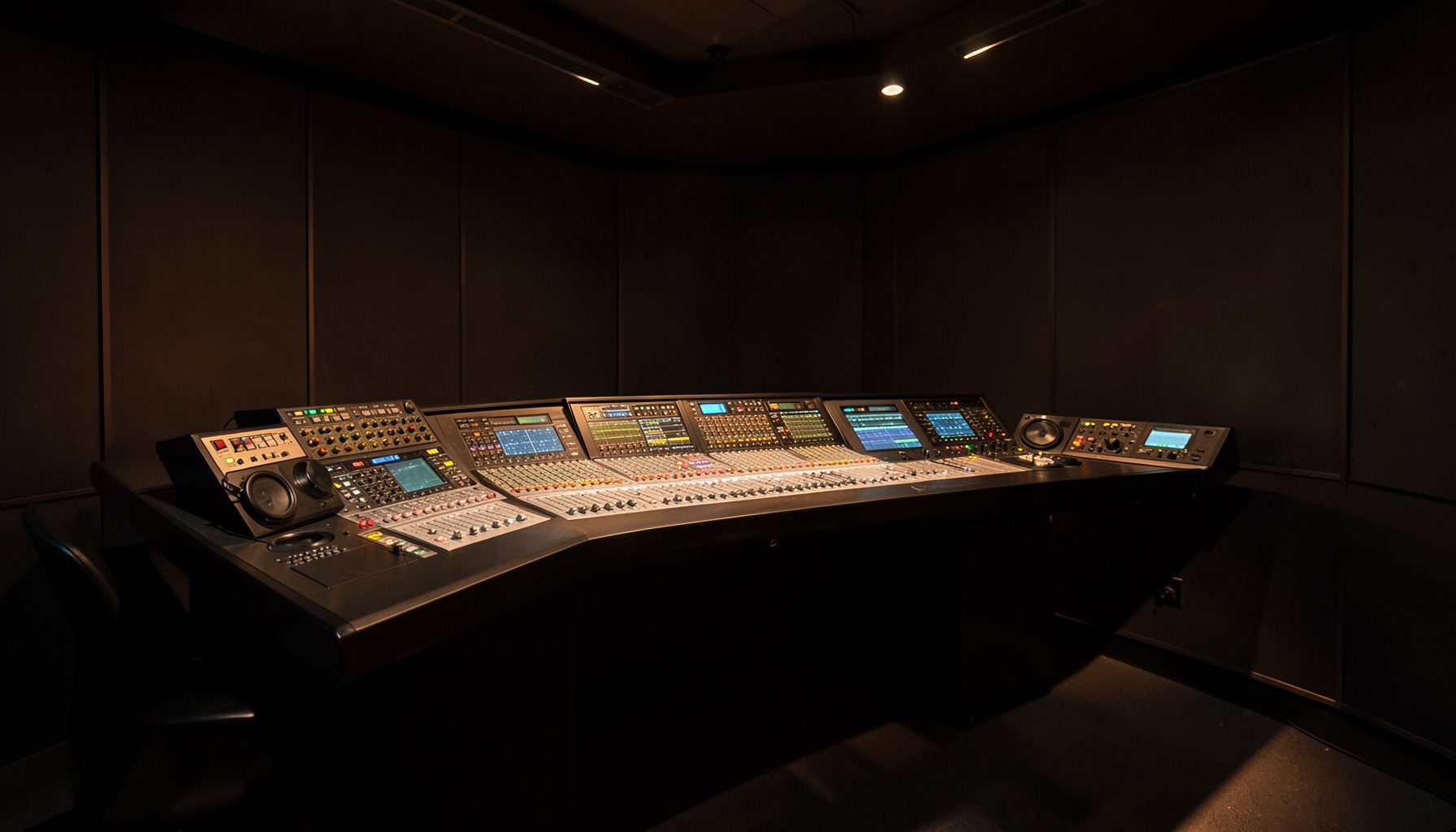
The designer also evaluated Lawo’s Ruby mixing console as a control environment for operations that required hands-on access. Ruby’s networked design supports a flexible arrangement in which physical controls and software-defined signal paths can work together, a useful combination when a theatrical production must move between detailed programming and rapid live intervention.
This architecture also helped the technical team document changes. Source names, routing decisions, processing settings, and control assignments could be organized more consistently than in a system built around isolated hardware units. For a large show, that clarity can shorten troubleshooting and simplify handovers between operators.
Before And After The Adoption
The improvement was measured through working results rather than a single technical specification. Rehearsal time became more productive because the team could evaluate the overall behavior of the mix instead of correcting every small level fluctuation manually. The engineer gained more capacity to listen critically to the room.
| Workflow area | Earlier method | AutoMix-enabled method |
|---|---|---|
| Speech balance | Frequent manual fader rides | Automated relative level management |
| Open microphones | Controlled mainly by operator attention | Managed through configured activity response |
| Rehearsals | Repeated corrective adjustments | More time for creative and acoustic decisions |
| Operator focus | Constant level surveillance | Monitoring, overrides, and show interpretation |
| System expansion | Hardware-centered changes | Networked and software-based adaptation |
The change was especially valuable in scenes with multiple simultaneous speakers. Instead of allowing every microphone to remain equally prominent, the system supported a more disciplined presentation. The audience could follow the dialogue, while the engineer preserved room for music and effects.
The designer also found that automation improved repeatability between performances. Variations in vocal projection or performer position still required judgment, but the baseline response was more stable. That consistency was valuable during previews, understudy rehearsals, and technical calls.
Bridging Existing And New Equipment
Adopting a modern audio workflow did not require discarding every analog device already trusted by the production team. Many theatrical facilities contain a mixture of legacy consoles, analog splits, wireless systems, amplifiers, and network-capable processors.
Lawo’s discussion of hybrid audio facilities illustrates how networked nodes can help connect analog and digital domains. In this case, that principle supported a gradual transition: established sources could remain in service while new control and processing capabilities were introduced where they delivered the greatest benefit.
This reduced operational risk. The designer could test AutoMix with selected microphone groups, compare manual and automated behavior, and expand the approach once the team understood its response. A phased rollout also made training easier for operators who were accustomed to conventional signal paths.
What The Sound Team Learned
The adoption demonstrated that automated mixing works best when it is treated as part of a wider design strategy. Source organization, microphone choice, gain structure, acoustic treatment, and loudspeaker tuning still determine the quality of the final result. AutoMix cannot compensate for poor input discipline or unclear production goals.
The team also learned to define where automation should stop. Dialogue groups benefited from consistent management, while featured vocals, musical instruments, dramatic effects, and intentional overlaps often required direct control. Clear group boundaries helped the system support the show without imposing a uniform character on every scene.
For theatrical designers considering a similar deployment, the most useful principles are:
- Start with a limited group of spoken-word sources and evaluate behavior in rehearsal.
- Establish clear priorities for dialogue, music, effects, and featured performers.
- Preserve manual override paths for dramatic cues and exceptional moments.
- Document source names, routing, processing, and control assignments.
- Train every operator to monitor automation rather than assume it is invisible.
The case shows how a major theatrical sound designer can use AutoMix to reduce repetitive mixing work while protecting creative authority. With a networked Lawo environment, automated control becomes part of a scalable production system rather than an isolated feature.
Explore Lawo AutoMix, Ruby, and the wider Broadcast 3.0 ecosystem to design a theatrical workflow that combines precision, adaptability, and hands-on artistic control. Begin with a focused rehearsal deployment, measure its impact on intelligibility and operator workload, and build from proven results.