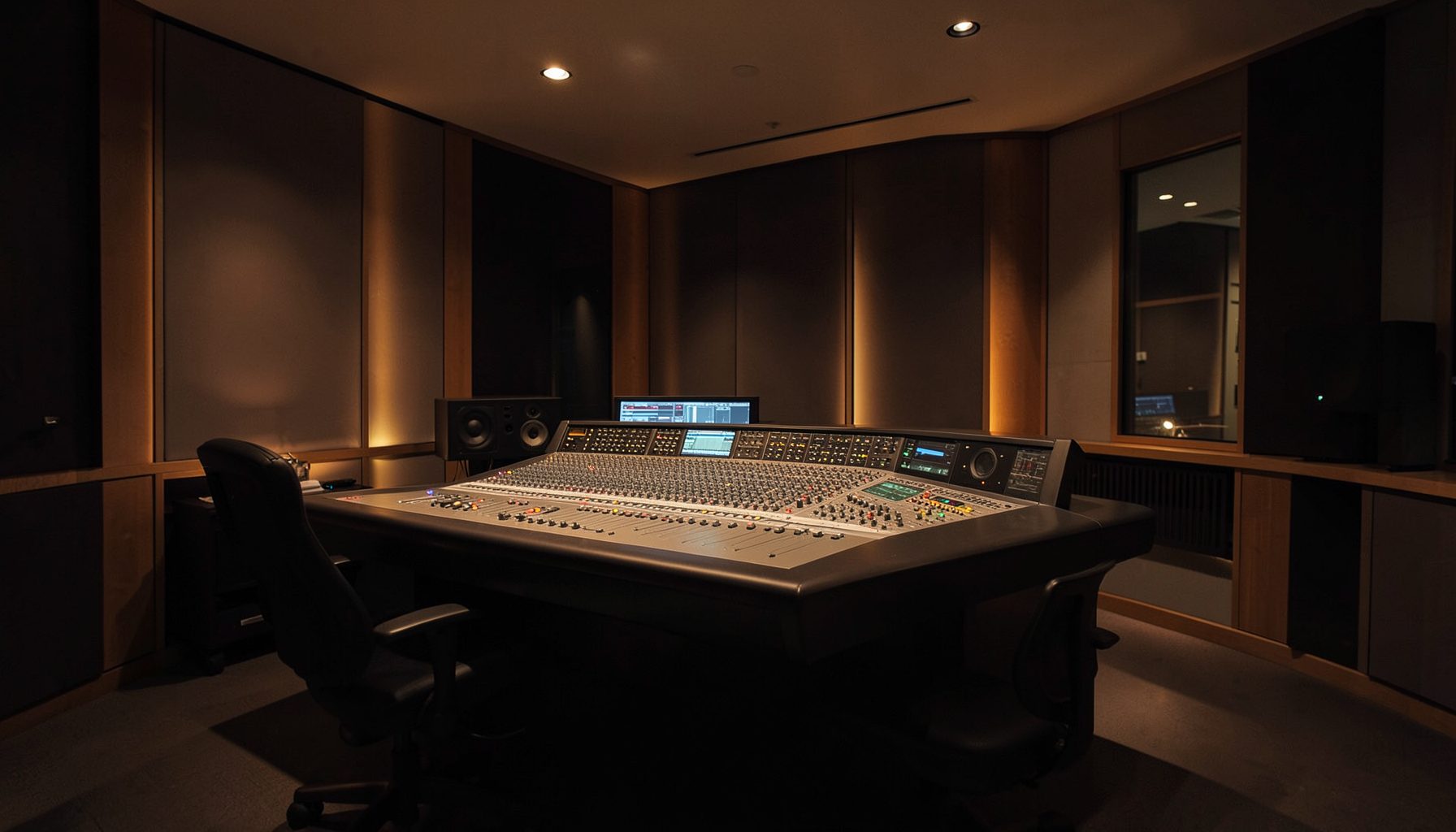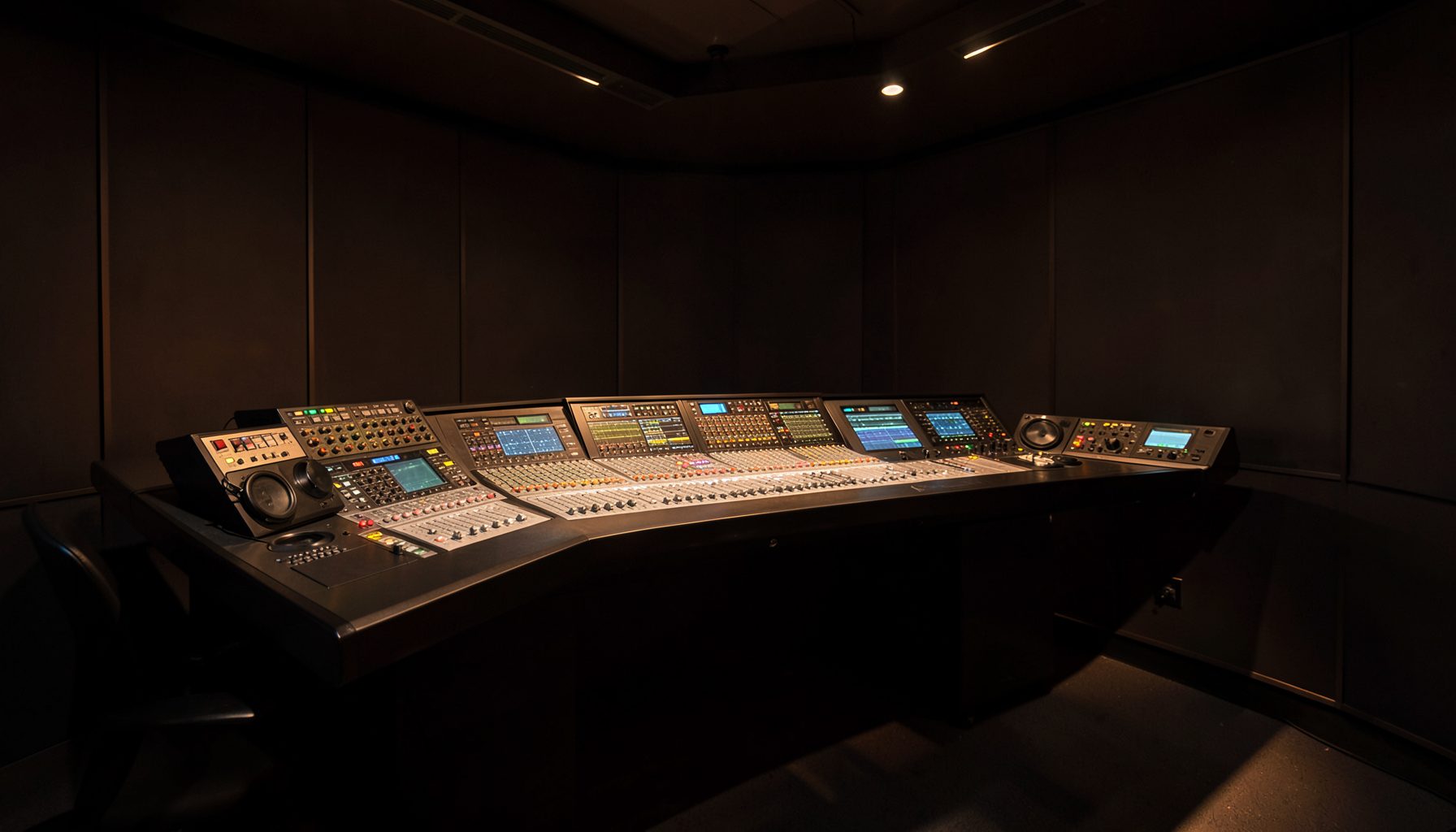
How Broadcast 3.0 Multicast Filtering Keeps Audio Networks Efficient
Modern radio facilities carry far more audio than a single studio or control room needs at any moment. A console, playout engine, commentator position, production workstation and monitoring system may all share the same IP infrastructure, while networked AoIP streams move continuously between them.
Broadcast 3.0 addresses this reality through an ecosystem built around software, audio networking, centralised control and scalable hardware. Its multicast filtering approach helps direct streams only towards the network ports and devices that require them, reducing unnecessary traffic without reducing operational flexibility.
This matters in Australia, where broadcasters may connect metropolitan studios in Sydney or Melbourne with regional sites in Queensland, Western Australia or South Australia. A carefully designed network can support live programming, remote contribution and production while keeping bandwidth predictable across local and wide-area links.
The result is a more disciplined IP workflow. Engineers gain clearer visibility of audio paths, switches handle fewer irrelevant packets, and facilities have more room for additional services such as remote production, virtual mixing and automated content distribution.
Why multicast matters in broadcast audio
In an IP audio environment, multicast allows one source to send a stream to multiple authorised receivers. That is more efficient than creating a separate unicast stream for every destination. A studio microphone mix, for example, could be consumed by the main console, a producer’s workstation, a recorder and a monitoring application at the same time.
The difficulty arises when every multicast packet is flooded across every switch port. Devices that do not need a particular audio stream still receive and process the traffic. On a small test network this may go unnoticed, but a larger facility can experience congestion, unnecessary processor load and more complicated fault diagnosis.
Multicast filtering uses network information to control distribution. IGMP snooping switches observe membership requests from endpoints and forward a stream only towards ports with active subscribers. In a professional AoIP deployment, this behaviour works alongside VLAN design, managed switching and clear separation between control, media and general IT traffic.
Broadcast 3.0 and a cleaner IP workflow
Broadcast 3.0 treats the broadcast plant as a connected, software-aware system rather than a collection of isolated appliances. Lawo’s Broadcast ecosystem brings together products such as Ruby mixing consoles, Power Core audio nodes, VisTool interfaces and automation-oriented software. These components can share network resources while retaining defined roles for operators and engineers.
Multicast filtering is especially useful when several Power Core nodes or console surfaces subscribe to overlapping groups. The network does not need to carry every available source to every corner of the facility. A production room can receive its assigned feeds, while a newsroom or transmission area receives a different set of programme, talkback and monitoring channels.
This approach also supports staged expansion. A station can begin with a compact studio network, then add a second control room, outside-broadcast connection or regional contribution path without treating the entire switch fabric as a single unrestricted audio bus.
Reducing traffic without limiting access
Filtering does not mean hiding audio from authorised users. It means making subscriptions explicit. When a receiver joins a multicast group, the switching infrastructure can establish the required forwarding path. When that receiver leaves, the path can be removed, limiting the time that unused traffic occupies the network.
| Network behaviour | Unfiltered multicast | Filtered multicast |
|---|---|---|
| Packet distribution | Flooded to many ports | Sent to subscribed ports |
| Switch workload | Higher and less predictable | More controlled |
| Fault finding | Unwanted streams complicate analysis | Audio paths are easier to trace |
| Network growth | Extra services increase congestion quickly | Capacity is used more efficiently |
| Operational control | Broad access by default | Subscription-based delivery |
For Australian broadcasters, this is valuable during high-demand periods such as election coverage, major sporting events or emergency information programming. A Sydney newsroom may need multiple live contribution feeds for a short window, while a regional studio requires only a programme mix and return feed. Filtering helps accommodate those changing demands without permanently replicating every stream everywhere.
Network teams should still validate switch capabilities, IGMP querier settings, group limits and failover behaviour. Filtering is a design feature, not a substitute for documented addressing, clocking, redundancy and monitoring.
Practical deployment across Australian facilities
A sensible design begins by mapping audio sources and destinations. Engineers can identify which services belong in the studio VLAN, which are required by production and which should cross a routed boundary. Multicast groups should have a consistent naming and documentation scheme so that operators can distinguish programme audio from confidence monitoring, intercom and contribution paths.
In Melbourne or Brisbane, where a station may combine permanent studios with flexible workspaces, subscription-based delivery can reduce the need for dedicated point-to-point wiring. In regional Australia, where links may be more constrained and technical support may be remote, avoiding unnecessary traffic can make performance easier to predict.
The same principle applies when integrating network equipment from different vendors. Specialist suppliers such as network silicon experts can help organisations understand switching performance and packet-handling requirements, while the broadcast engineering team ensures that the design suits audio timing, redundancy and day-to-day production.
Supporting software-defined radio production
Software-based tools make multicast discipline even more important. Virtual radio applications can create additional sources and destinations without adding a physical box for every function. Lawo’s RƎLAY virtual tools illustrate how radio operations can move into flexible software workflows for processing, contribution and distribution.
A virtualised environment may host several services on shared compute and network infrastructure. If each application subscribes broadly, the traffic pattern becomes difficult to predict. Filtering keeps those subscriptions aligned with actual workflows, whether a producer is monitoring a remote guest, an announcer is checking a return feed or an engineer is recording a selected bus.
Automation can also benefit. A system that changes subscriptions as shows move between studios or sources can release unused multicast paths after a programme ends. That reduces manual patching and helps maintain a consistent operational model during busy schedules.
What engineers should remember
Multicast filtering works best when it is treated as part of the complete Broadcast 3.0 architecture. Switch configuration, VLANs, clock distribution, endpoint behaviour and operator control all need to agree. IGMP snooping should be tested under normal load and during realistic changes, including a studio transfer, a remote contribution session and a switch or link failure.
Monitoring is equally important. Engineers should watch multicast group membership, packet loss, port utilisation and timing status rather than relying on audio complaints as the first warning. Clear diagrams and repeatable commissioning tests make it easier to support both metropolitan facilities and remote Australian sites.
The central principle is simple: send each audio stream where it is needed, and avoid carrying it everywhere else. Broadcast 3.0 multicast filtering turns that principle into a practical way to protect bandwidth, simplify troubleshooting and leave more capacity for the next service the network must support.