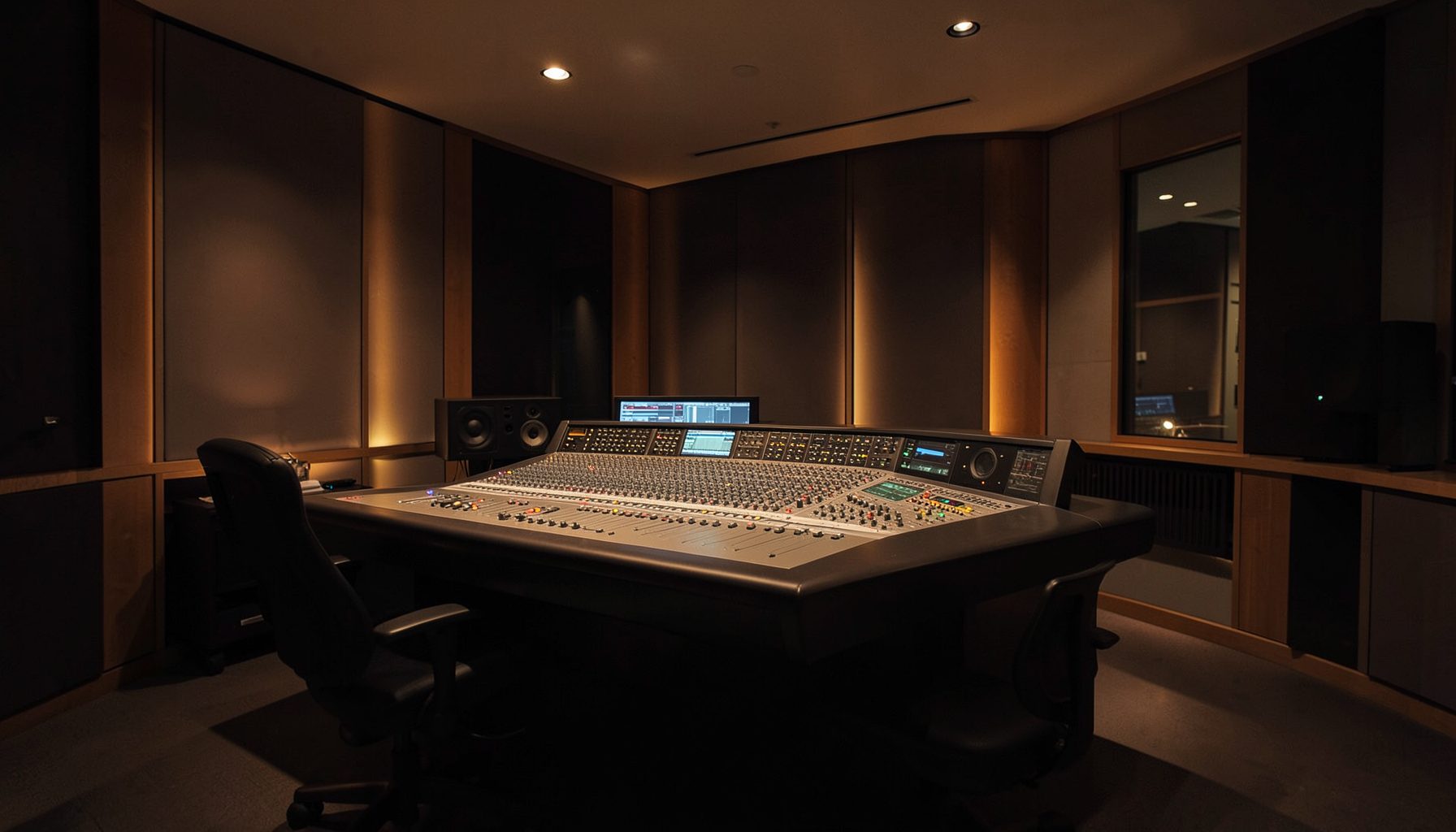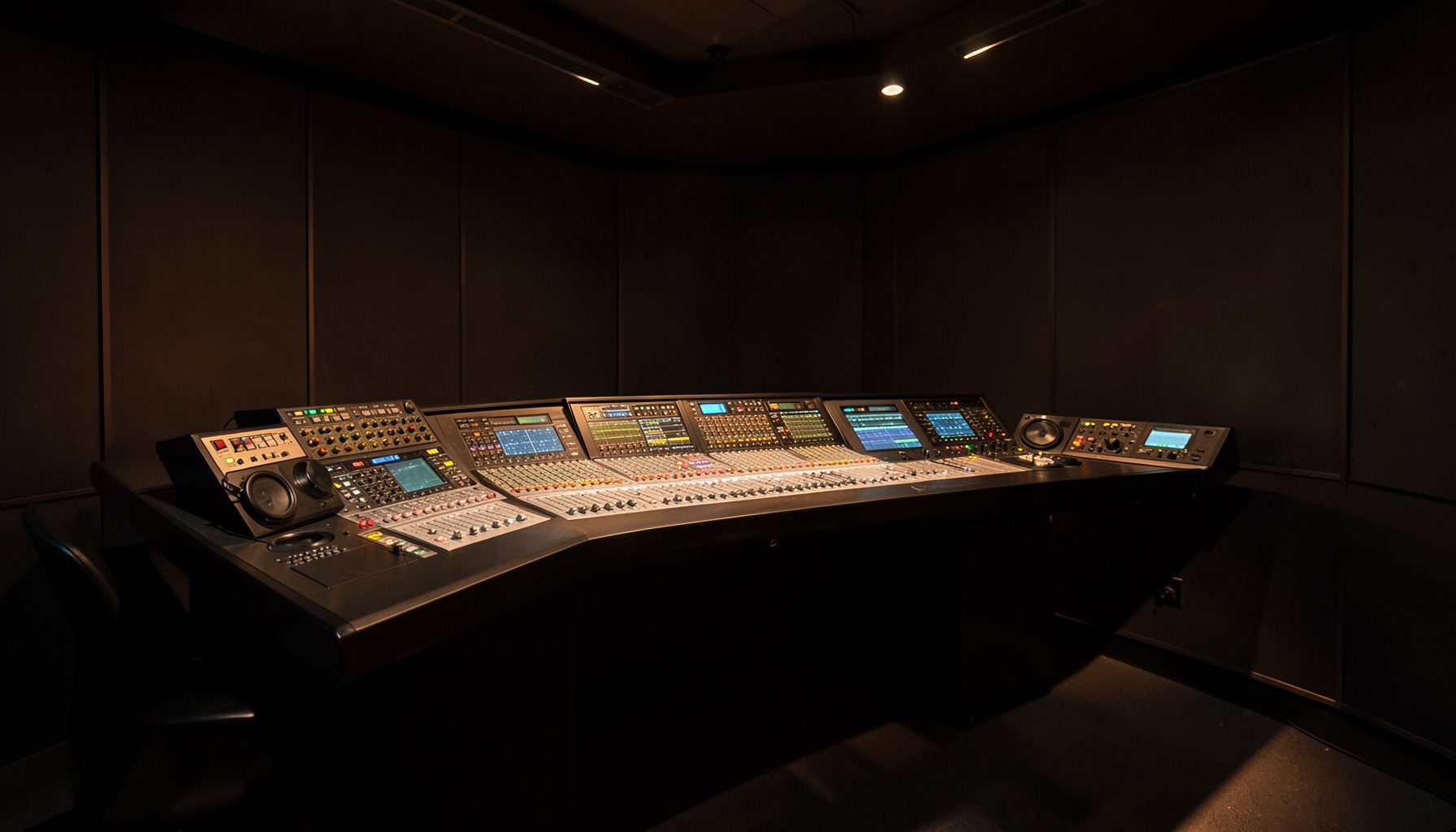
Building a resilient Ruby control plane for Broadcast 3.0
Broadcast 3.0 treats the radio studio as a connected production environment rather than an isolated console. Mixing, routing, processing, playout, control, and monitoring can share a managed IP infrastructure, giving broadcasters greater flexibility while introducing new design responsibilities. Redundancy must therefore cover the control layer as carefully as the audio path.
A dual-controller Ruby setup is designed to keep operators productive when a control processor, network connection, or software service becomes unavailable. The goal is not simply to install two controllers. It is to create a predictable relationship between primary and standby resources, with clear ownership, rapid recovery, and minimal disruption to the presenter.
The most effective architecture combines Ruby control surfaces with Power Core audio nodes, resilient network switching, and operational tools such as VisTool or RƎLAY where appropriate. Each component should have a defined role during normal operation and during a fault.
Why controller redundancy matters
In a conventional studio, a failed console engine can interrupt mixing, source selection, monitoring, and communication at the same time. A networked Lawo workflow can distribute those functions, but distribution only improves availability when the remaining resources can assume control safely.
The dual-controller model separates the user interface from the processing and routing resources. Ruby remains the operator-facing environment, while the audio engine and I/O may reside in Power Core nodes. If the active controller fails, a standby controller can take over the control session and preserve access to the underlying signal paths.
This distinction is important for recovery planning. A controller switchover should not be treated as a replacement for audio-node redundancy, switch redundancy, or power protection. It is one layer in a wider business continuity design.
Shape the dual-controller architecture
Begin by identifying the services that must remain available: fader control, source selection, monitoring, talkback, mix-minus feeds, GPIO, automation control, and user authentication. Map each service to its physical or virtual dependency, then decide whether the standby controller mirrors the active configuration continuously or loads a validated state when required.
A practical arrangement places both Ruby controllers on separate power circuits and separate network paths. Each should be able to reach the required Power Core nodes, control servers, timing sources, and management systems without depending on a single switch or uplink. The standby unit should be located close enough for quick maintenance access but far enough away to avoid sharing the same local hazard.
| Design area | Primary controller | Standby controller |
|---|---|---|
| Operator control | Active Ruby session | Synchronized or ready-to-load session |
| Network path | Independent switch and uplink | Separate switch and uplink |
| Configuration | Authoritative working state | Validated mirrored state |
| Power | Protected circuit or UPS | Separate protected circuit or UPS |
| Recovery role | Handles normal operation | Assumes control after verified failure |
Ruby control redundancy should also account for user behavior. If operators see different layouts, labels, or permissions after failover, they may lose valuable time during a live program. Keep surfaces, aliases, access rights, and monitoring destinations consistent between controllers, and document any functions that intentionally differ.
Separate failure domains
Redundancy works best when each controller is protected from the same failure. Two appliances connected to one switch do not provide meaningful network resilience. Likewise, two power supplies connected to one unprotected circuit remain vulnerable to a shared electrical event.
Use diverse paths for network traffic where the site design permits it. Consider separate top-of-rack switches, independent uplinks, dual UPS systems, and physically separated rack locations. Check multicast, timing, VLAN, and management behavior across both paths, since a failover can expose configuration errors that remain hidden during normal operation.
Power Core nodes should be assessed separately from Ruby controllers. A controller handover cannot restore an audio engine that has lost power or network access. Where the application requires continuous audio, pair controller redundancy with redundant processing, I/O, clocking, and network infrastructure, then test the complete chain rather than each component in isolation.
Engineer failover behavior
A failover policy should define what triggers action, who authorizes it, and what the operator sees. Automatic takeover may reduce recovery time, but a poorly configured automatic decision can create split control, conflicting commands, or an unnecessary switchover. Manual takeover may be safer in some studios, especially when engineers are present around the clock.
The handover sequence should preserve the most important operational state. This can include crosspoint assignments, monitor selections, fader positions, talkback routes, and source labels. Some transient states may not be recoverable, so operators need a short checklist that explains how to verify the output, monitor path, and contribution feeds after control is restored.
Software-based workflows deserve the same attention. RƎLAY can support recording and playback tasks that extend beyond the live console, and its automated radio logging capabilities should be evaluated against the station’s retention, storage, and recovery requirements. A controller failover plan should state whether logging continues independently, pauses, or requires operator intervention.
Validate operations before launch
Testing should begin with configuration comparison. Export or inspect the active and standby settings, check software versions, verify permissions, and confirm that both controllers can reach every required service. Record the expected recovery time and identify any actions that must be completed from a separate engineering workstation.
Next, perform controlled fault tests during a maintenance window. Disconnect one controller, disable its network path, interrupt a switch uplink, and simulate a Power Core or timing fault where the platform permits. Observe whether audio remains stable, whether control changes are accepted, and whether alarms provide enough information to distinguish a controller issue from a wider infrastructure problem.
Repeat testing with realistic studio activity. Move faders, switch sources, run talkback, monitor off-air output, trigger automation, and test remote contribution routes. Recovery that works in an idle room may fail when multiple operators and software clients are active.
Recommended design practices
A resilient Ruby deployment benefits from concise standards that engineers can apply during commissioning and maintenance:
- Keep primary and standby controllers on independent power, switching, and network paths.
- Maintain identical layouts, labels, permissions, software versions, and configuration backups.
- Define whether failover is automatic, manual, or dependent on the type of fault.
- Test controller, audio-node, timing, storage, and network failures as a connected system.
- Give operators a short recovery checklist and train them during realistic live-production exercises.
Document every dependency, including DNS, authentication, NTP or PTP timing, VLAN access, GPIO, storage, and monitoring. Review the design after software updates, rack moves, network changes, and studio expansion. A redundant system is a maintained operating practice, not a one-time installation.
A dual-controller Ruby environment becomes most valuable when it is invisible to the audience and understandable to the team. With independent failure domains, synchronized configuration, defined takeover behavior, and regular testing, broadcasters can use Broadcast 3.0 workflows without making the control layer a single point of failure.
Bring these principles into the engineering design phase, then validate them with Lawo specialists and a documented commissioning test. Build the Ruby, Power Core, network, and software layers as one resilient production system so the studio can keep working when individual components cannot.