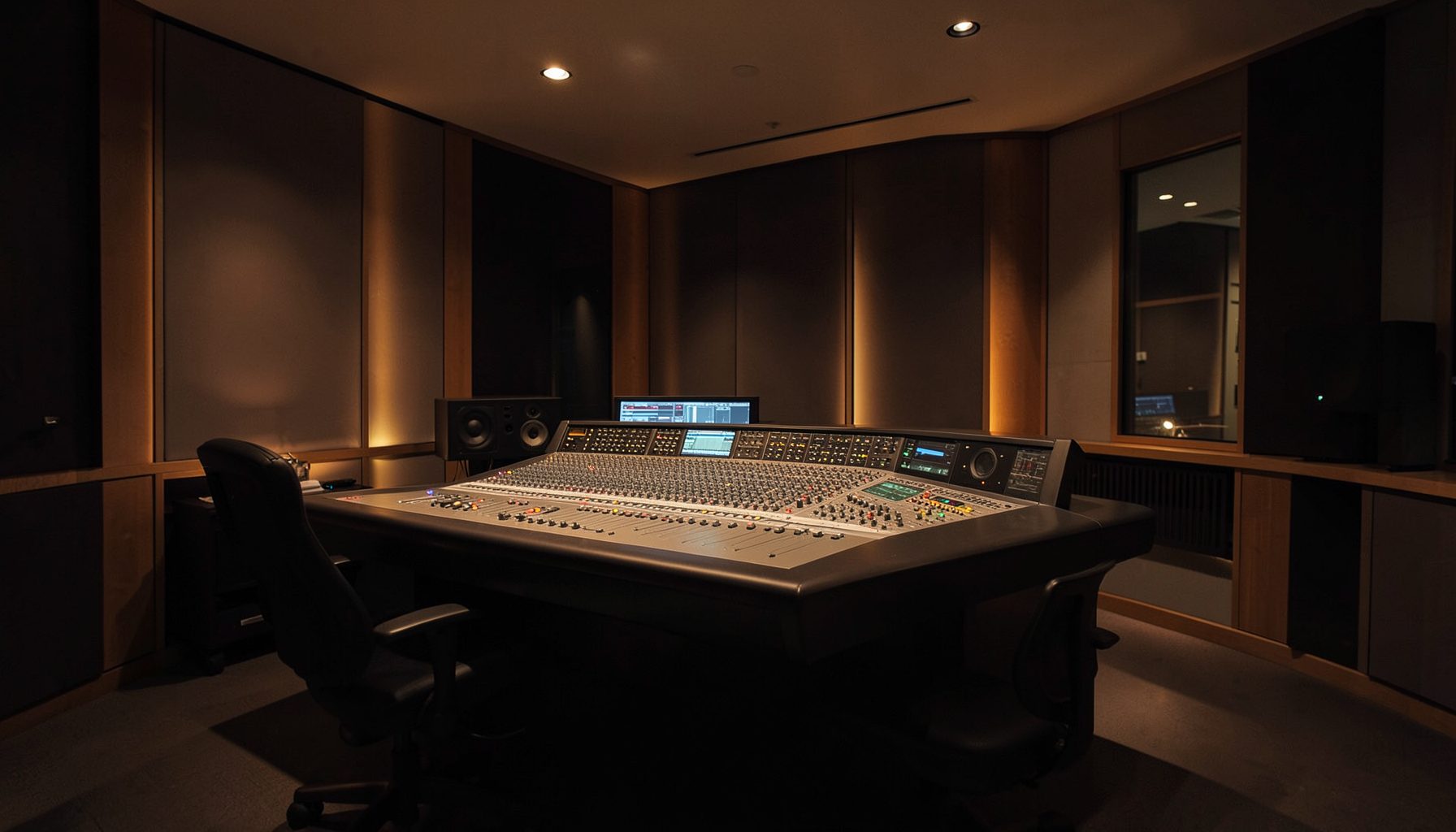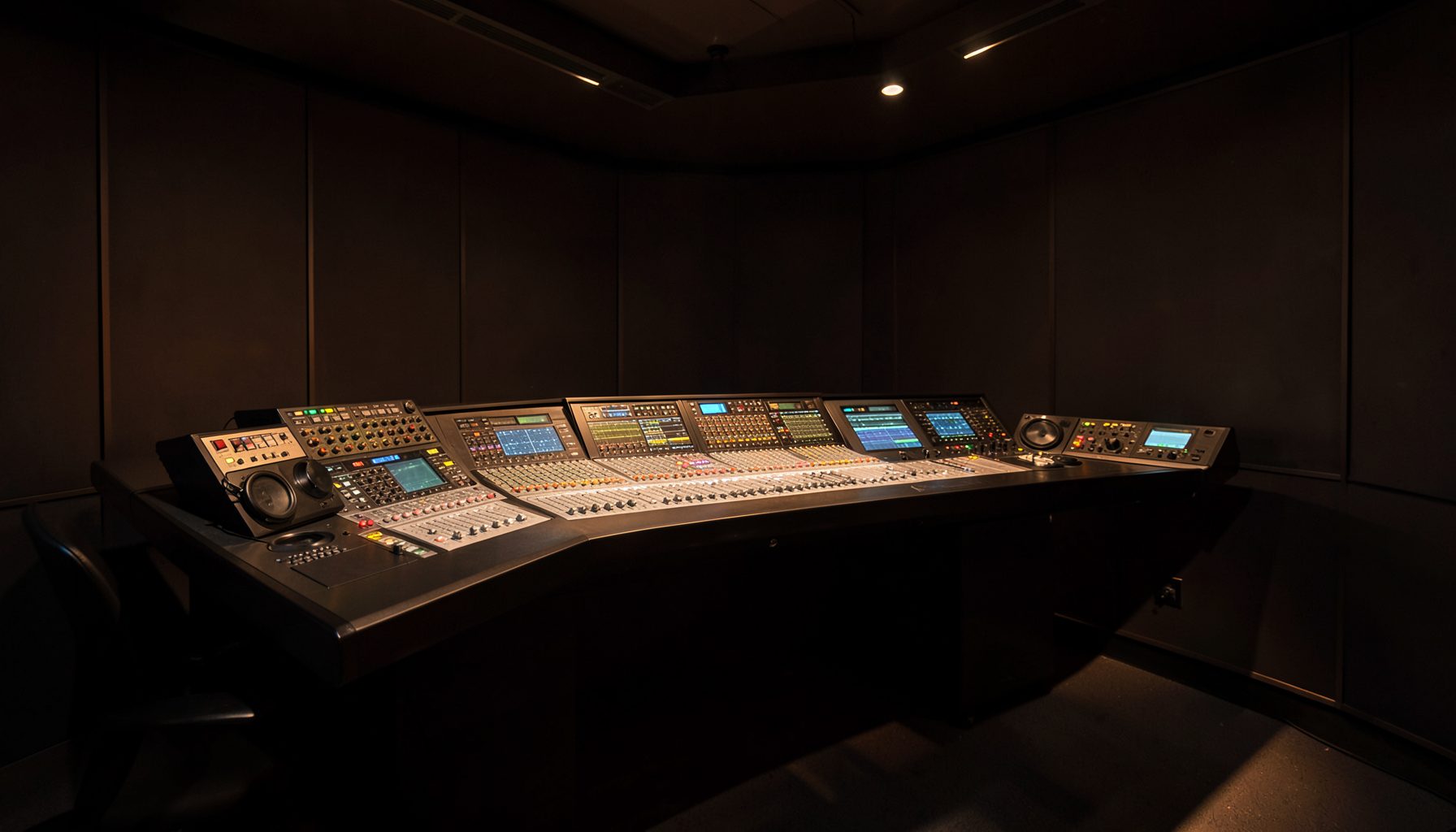
AutoMix voice-over mode for automatic radio ducking
Radio presenters often have to manage music, microphones, telephone calls and recording cues at the same time. A missed fader move can obscure a voice or let music surge between links. Automatic ducking removes that division of attention, allowing the presenter to speak naturally while the audio system manages the program balance.
Lawo AutoMix’s Voice-Over Mode automatically lowers a music bed when the host speaks. Speech-driven attenuation protects vocal intelligibility, then restores the music to its programmed level after the voice ends. The result is a more consistent radio sound without requiring constant manual control of every music channel.
The feature is particularly valuable in busy production environments where presenters work alongside producers, reporters and automated playout. It suits live radio, hosted music shows, news bulletins, drama, podcast production and theatrical work where dialogue regularly sits over a musical background.
Australian broadcasters can apply it across a diverse market, from commercial operations in Sydney and Melbourne to regional and community stations. The local need extends beyond major metropolitan studios: lean crews, several presenter voices and Australian speech patterns all make predictable speech-to-music control valuable.
From manual riding to controlled ducking
Manual ducking depends on an operator anticipating the timing and depth of every reduction. That can work well in a controlled studio, but live links, interviews and emergency announcements make timing unpredictable. Automatic response gives the presenter a stable acoustic environment without turning every sentence into a technical task.
Voice-over mode creates a priority relationship between the host microphone and the music bed. When vocal activity is present, the background is attenuated by an appropriate amount; once the voice stops, the music returns smoothly. This is not intended to replace broadcast judgement, but it can handle routine level changes consistently and leave the producer to focus on content.
Building the source chain
Begin by separating the priority voice from the program material that should respond to it. The host microphone should have clean gain, adequate headroom and consistent processing before it drives the ducking control. The music source should arrive at AutoMix with its intended balance already established, rather than relying on excessive source-level reduction.
The wider Lawo Broadcast 3.0 ecosystem supports this kind of structured workflow. Power Core audio nodes can handle distributed signal paths, VisTool provides studio control, RƎLAY supports virtual radio tools, and Ruby consoles serve conventional live production desks. Broadcast engineers can also use CSD WANd as an external reference when comparing networked audio and control practices.
Setting speech-driven attenuation
A reliable setup starts with the detection threshold. It must recognise a normal speaking voice without reacting excessively to room noise, papers, music leakage or a lightly touched microphone. Australian presenters often use varied accents, and names of cities, suburbs and sporting teams can change syllable length, so testing with several voices is more useful than relying on one presenter’s delivery.
The transition times and attenuation depth determine whether the result feels natural. A fast reduction protects the first word of a link, while a controlled return prevents the music from appearing to pump between phrases. The music should remain audible enough to retain its character, but never compete with important speech. Monitoring with meters and by ear is essential because waveform levels alone cannot reveal masking or an abrupt recovery.
Designing for local broadcasts
In Sydney and Melbourne, the mode can support live crossing, artist interviews and music-heavy entertainment programs where the host moves continuously between speech and recorded tracks. The ABC, commercial networks and independent producers can apply the same principle, although each format will need different attenuation settings and operating procedures. An overnight music program may favour a deep reduction, while a news bulletin might require a shorter, more restrained response.
Regional and community radio offers a similarly practical benefit. Smaller teams often cover news, community notices and sponsored material with limited technical staffing. Automatic level control helps maintain consistency when a producer is also operating playout, handling a guest or preparing a recording. Live-music festivals and community events, where speech is frequently mixed over a continuous bed, provide another natural Australian application.
Operating networked audio securely
Voice-over control may operate locally in a studio or as part of a distributed production chain. Once audio and control travel across a venue or corporate network, authentication, access control and transport protection become operational concerns. Broadcasts from regulated or high-traffic locations require the same discipline as other networked services.
For transmissions from venues such as casinos in Sydney and Melbourne, a useful background resource on casino security and encryption illustrates why protected connections and controlled access deserve attention. Each Australian deployment should follow its own policies, but the principle applies wherever remote contribution crosses a managed or public network.
Operational resilience matters alongside the automatic response. Engineers should document the manual fallback, verify recovery after an interruption and ensure that a network or control failure cannot create an unexpected audio surge. Clear monitoring, restricted credentials and tested routing make automation safer without reducing its usefulness.
A practical broadcast takeaway
Introduce the mode with real program material rather than a synthetic test tone. Record ordinary links, interviews and music transitions, then check the first word, the depth of the reduction and the return to the background. Keep a documented manual override available for unusual guests, damaged sources or emergency announcements.
The practical takeaway is to tune the Voice-Over response around actual speech, preserve musical continuity and judge the result by intelligibility and predictable recovery rather than by how much of the console can be automated.