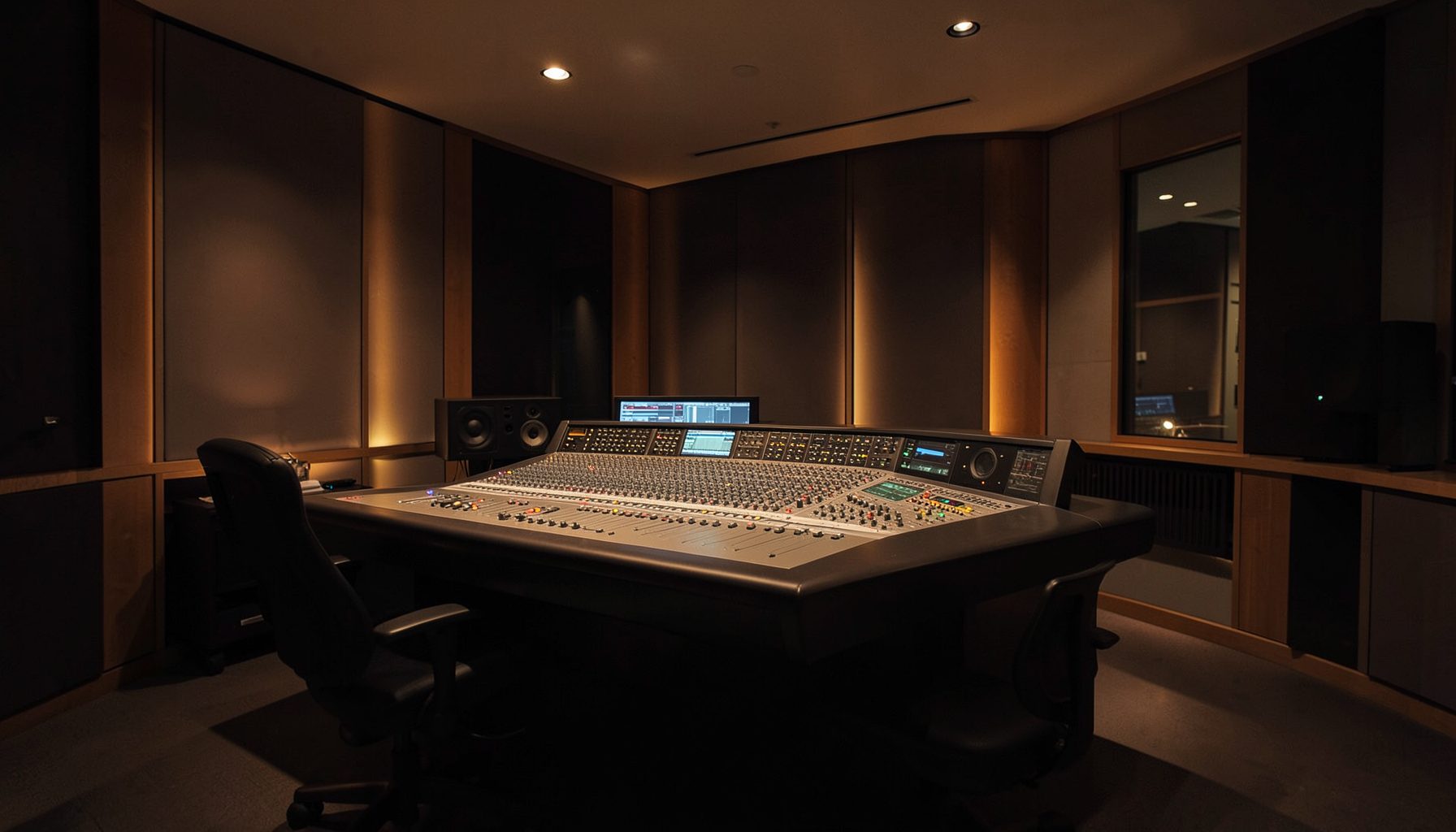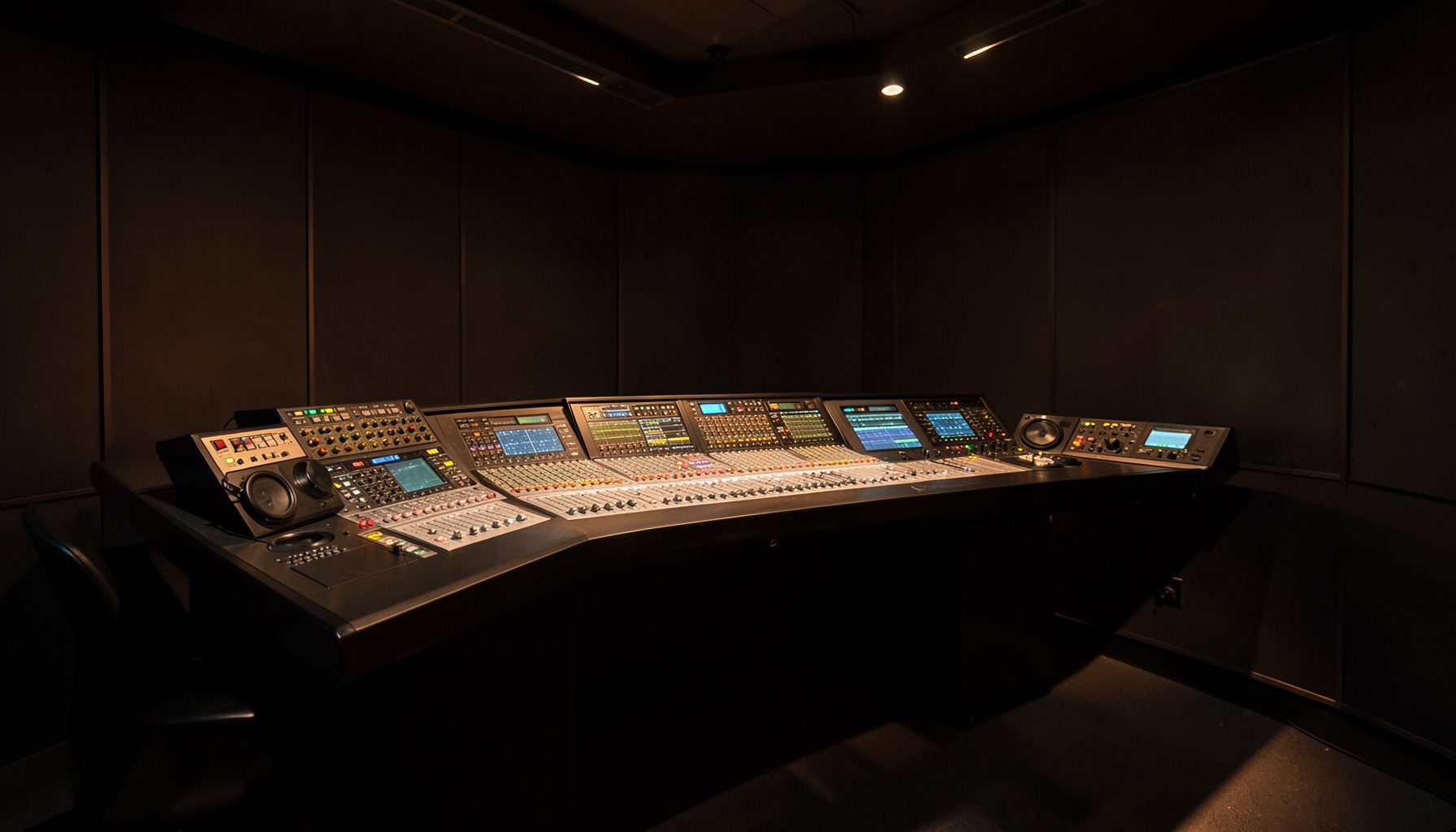
Cleaner corporate panel audio with Lawo AutoMix
A corporate panel can look effortless from the audience while presenting a demanding audio problem behind the scenes. Several speakers share the same room, microphones remain open between comments, and a moderator may need to move quickly between contributors. Without careful control, the result can be uneven levels, room noise, feedback risk and a distracting sense that the mix is operating the event rather than supporting it.
AutoMix in corporate AV helps simplify this process by managing microphone priority and level relationships automatically. Used within a networked Lawo workflow, it can give operators a steadier starting point while preserving the flexibility to intervene when the production calls for a deliberate change.
Why multi-microphone panels are difficult
A panel discussion usually includes a host, two or more guests and sometimes questions from the floor. Every open microphone captures some combination of voices, air conditioning, chair movement and loudspeaker spill. As more channels remain active, the combined ambience can make speech less distinct, particularly in reflective hotel ballrooms or convention rooms.
Manual fader riding is possible, but it demands constant attention. An operator must anticipate who will speak next, maintain a natural balance and avoid abrupt level changes. This becomes harder when a session is streamed, recorded and sent to an in-room PA at the same time. A polished corporate event in Sydney or Melbourne may also include remote panellists, presentation playback and live captions, adding further routing and monitoring tasks.
An automixer approaches the problem by reducing the contribution of inactive or less relevant microphones while allowing the active speaker to remain clear. The technique is valuable for discussion formats because it follows conversational movement instead of relying on a fixed order of speakers.
How AutoMix supports a natural conversation
AutoMix can help maintain consistent speech levels as the conversation moves from the moderator to a guest and back again. Rather than leaving every microphone equally exposed, the system continuously manages the relative gain of the channels assigned to the discussion. This can reduce accumulated room sound and give the mix a more controlled, intelligible character.
The goal is not to make every transition noticeable. Good automation should feel transparent: a speaker can pause, another person can respond, and the audience hears a coherent exchange without waiting for an operator to chase each fader. For a deeper look at the logic behind scripted transitions, Lawo’s explanation of automated crossfades shows how automation can be shaped for specific production requirements.
Operators still retain creative and technical control. They can set which microphones belong to the automix group, establish appropriate priorities and handle exceptions manually. A presenter who must remain available for announcements, for example, may need a different treatment from a guest microphone used only during a scheduled segment.
A practical fit for Australian corporate events
Australian corporate AV often has to support flexible room layouts. A session in a Brisbane hotel may move from a keynote into a panel, while an event in Perth can combine local speakers with contributors joining from the east coast. In regional venues, production teams may also work with limited setup time and fewer spare operators. A dependable automated mix can reduce the workload during these transitions.
The local market also includes conferences designed for both in-person and online audiences. Attendees are accustomed to joining meetings through collaboration platforms, while organisers expect recordings, web streams and on-demand clips to sound consistent. AutoMix can form part of a wider signal path that separates the room mix, broadcast feed and recording requirements rather than treating every output as identical.
Compliance and venue practice matter as well. Australian workplaces operate under state and territory work health and safety frameworks, so cable management, equipment placement and efficient crew workflows are practical considerations, not cosmetic details. If sessions are recorded, organisers should also establish appropriate notice and handling procedures under the Privacy Act 1988 and applicable organisational policies, especially when audience questions are included.
Building the workflow around networked control
AutoMix is most useful when it is integrated into a coherent production environment. Lawo’s Power Core audio nodes can provide networked processing and I/O, while Ruby consoles give operators a physical control surface for sources, buses and outputs. VisTool can extend control to custom touch interfaces, useful when a corporate technician needs a simplified panel view rather than a full broadcast console.
This approach can make room changes easier to manage. Microphone inputs, playback devices and remote contribution feeds can be routed over a network, with control points placed where the operator actually works. A presenter’s confidence monitor, overflow room or streaming encoder can receive an appropriate mix without forcing the front-of-house position to handle every adjustment manually.
The wider Lawo Broadcast 3.0 ecosystem also supports software-led workflows, including RƎLAY virtual radio tools where a production requires flexible playout or remote operation. Corporate AV teams do not need to use every component, but the common networked philosophy can help venues standardise how audio is controlled across conferences, town halls, training sessions and live performances.
Setting up a dependable panel mix
Good results begin before the first microphone is opened. Use consistent microphone types where possible, position each capsule correctly and ask panellists to maintain a practical speaking distance. Gain structure should be established with real voices, not only a quick line check. The operator should then test pauses, interruptions, laughter and audience questions, since these moments reveal whether the automation behaves naturally.
The automix group should contain sources that share a conversational purpose. Presentation playback, music and a remote return generally need separate treatment. A moderator may receive a priority setting, but that decision should reflect the format: giving one channel excessive dominance can make handovers sound unnatural. The final mix should be checked in headphones, through the venue system and on the streaming path.
| Production need | Manual mixing approach | AutoMix-supported approach |
|---|---|---|
| Several panellists speaking | Operator rides multiple faders continuously | System manages relative microphone contribution |
| Short interruptions | Fast hand movement and anticipation required | Automation responds to changing speech activity |
| Hybrid or streamed event | Separate outputs increase workload | Networked routing can provide tailored feeds |
| Moderator priority | Repeated manual corrections | Defined priority can support consistent control |
| Last-minute room change | Rebuild the mix under pressure | Saved routing and control views can speed setup |
For a venue planning a new panel workflow, it is useful to map the microphones, outputs, recording destinations and operator controls before selecting the final configuration. Lawo’s contact team can provide product context for organisations assessing how AutoMix, Power Core, Ruby or VisTool may fit an existing installation.
The practical takeaway is simple: assign the right microphones to the discussion group, prepare the routing in advance, test realistic speaking behaviour and keep an operator ready for exceptions. With that foundation, AutoMix can make multi-microphone corporate panels clearer, calmer and easier to manage across Australian venues.