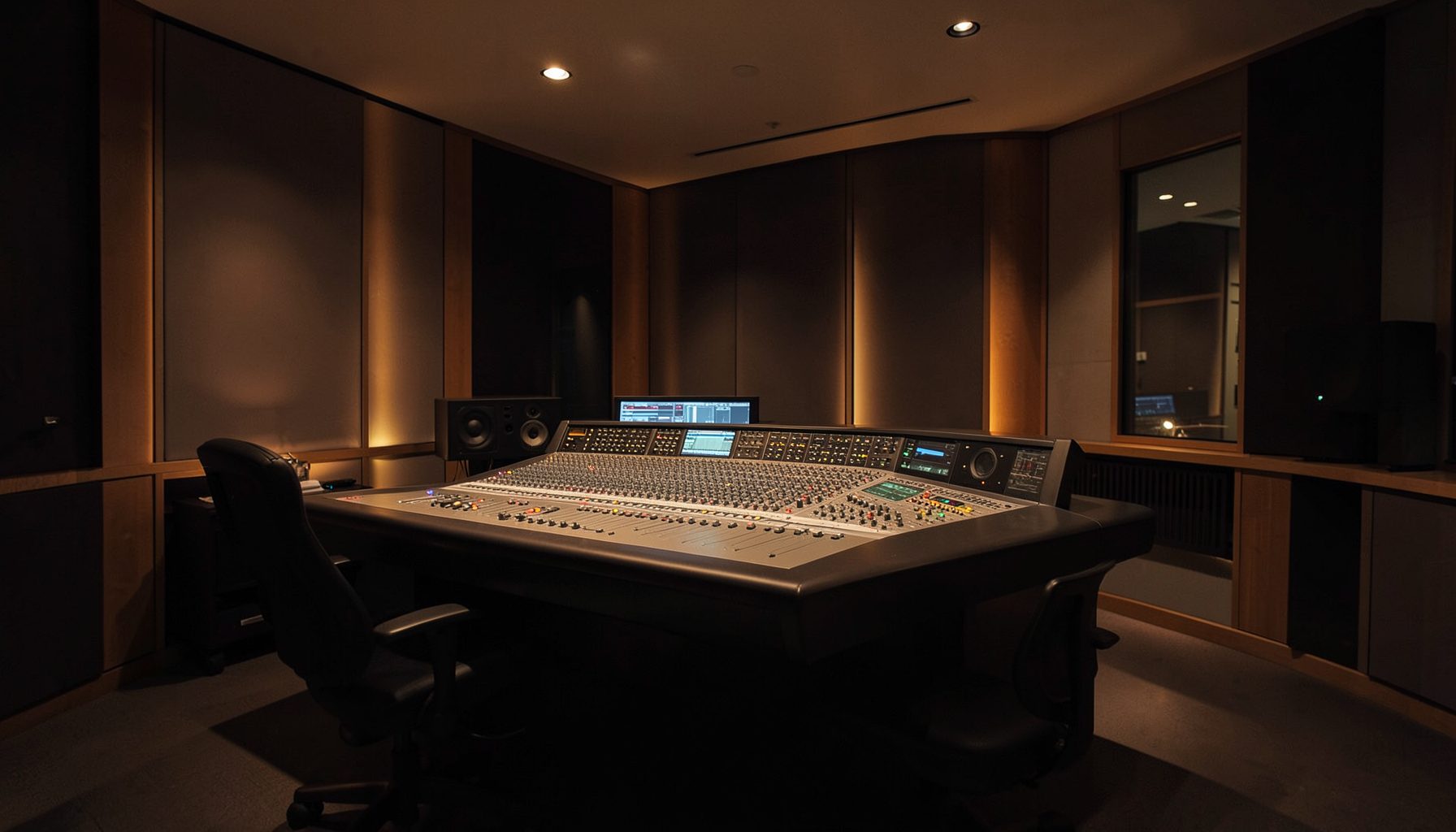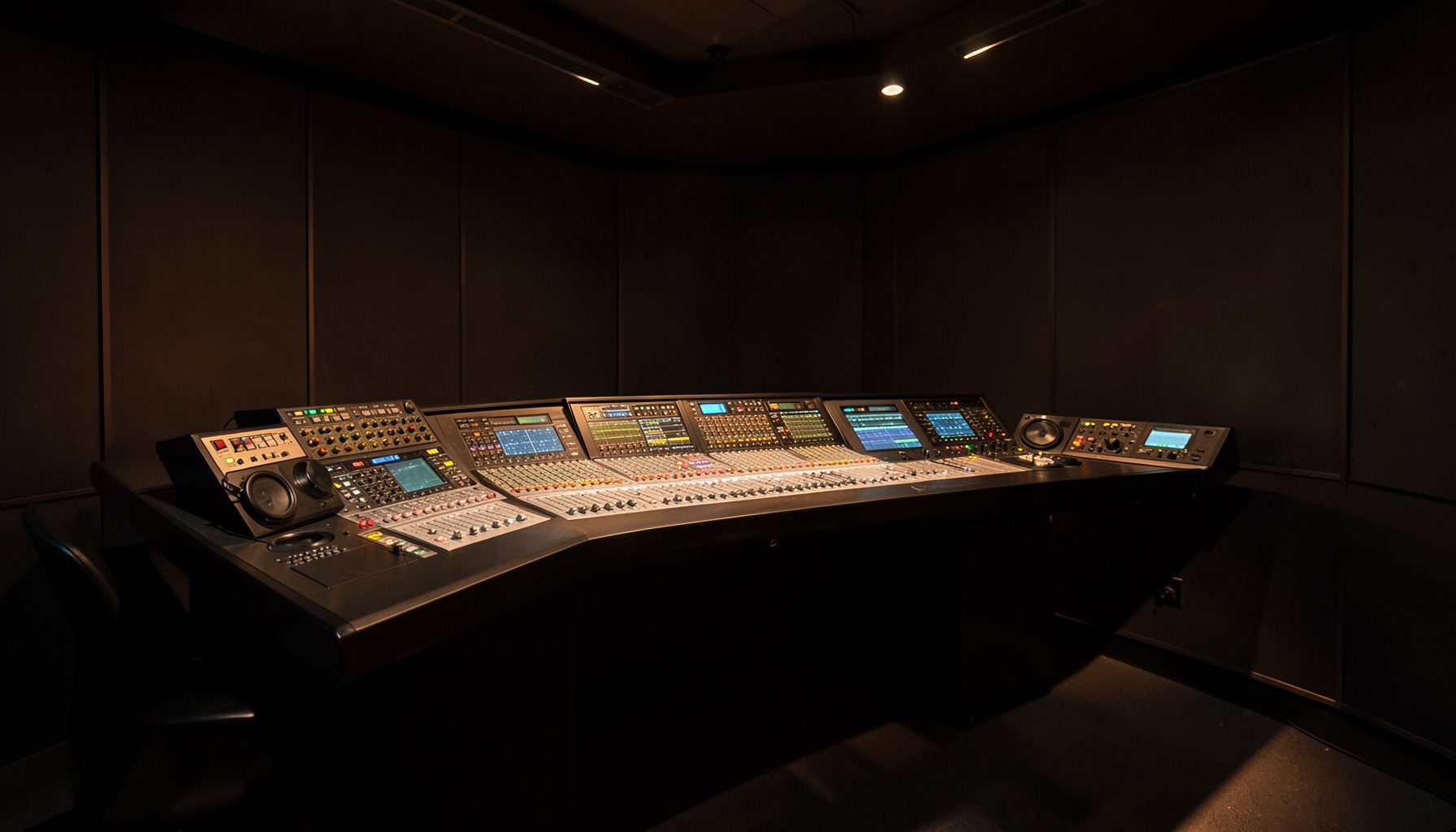
AutoMix for clear dialogue with multiple lavalier microphones on stage
Stage productions often place several lavalier microphones on performers who move, overlap, and speak at changing distances from the audience. Keeping every microphone open can produce a cloudy mix, excess room sound, feedback risk, and distracting clothing noise. Closing microphones manually is equally difficult when dialogue changes rapidly.
AutoMix provides an intelligent way to manage these speech channels while preserving a natural conversation. In a Lawo-based workflow, it can complement console automation, networked audio processing, and operator control rather than replacing the sound engineer’s judgment.
The result is a cleaner dialogue mix with fewer open microphones competing for attention. This is especially valuable for theatre, panel discussions, awards shows, corporate events, and live productions where every spoken word must remain intelligible.
Why multiple lavalier microphones create problems
A lavalier microphone is positioned close to the wearer, but it still captures stage reflections, nearby performers, audience noise, and movement. When several channels remain active, their combined ambient sound raises the noise floor. The issue becomes more noticeable in reverberant venues or on stages with loud monitors and playback.
Open microphones also increase the potential for acoustic feedback. Even when each channel is below the feedback threshold individually, their combined contribution can reduce system stability. Manual muting may solve one moment while creating another problem when a performer begins speaking unexpectedly.
Dialogue overlap adds another layer of complexity. Two people may speak at once, yet the mix still needs to establish a clear primary voice. AutoMix can continuously adjust channel contributions according to speech activity, helping the mix follow the conversation without abrupt cuts.
How automatic microphone mixing supports speech
AutoMix works by coordinating the levels of multiple microphone inputs so that active speech remains prominent while inactive channels contribute less. This approach maintains a consistent overall ambience instead of switching every channel fully on or off.
For stage dialogue, smooth gain sharing is important. A performer should not sound unnaturally distant simply because another person has started speaking. Properly configured automatic mixing reduces competing signals while retaining enough room tone for a coherent and realistic sound image.
The operator still defines the boundaries of the system. Channel assignments, priority behavior, thresholds, attack and release characteristics, and overall gain structure should reflect the production. AutoMix is most effective when it handles repetitive level decisions and leaves creative balance, routing, and emergency intervention to the engineer.
Preparing lavalier channels before enabling AutoMix
Automatic control cannot correct a poor input signal. Begin with secure microphone placement, consistent transmitter settings, fresh batteries, and suitable high-pass filtering. Check clothing contact and cable movement, since rustling can be interpreted as activity and may pull attention toward the wrong channel.
Set preamp gain so that normal speech has healthy headroom without forcing the automatic system to work around clipped peaks or excessive noise. Performers should speak at representative levels, including quiet lines, projected dialogue, laughter, and movement across the stage.
Channel naming and routing also matter. Clearly labeled inputs make it easier to identify a performer, isolate a problem, or bypass automatic control. In a networked system, centralized processing can simplify the distribution of microphone sources to the front-of-house, monitor, broadcast, or recording positions.
A Lawo Power Core installation can provide a flexible foundation for this type of signal distribution; its role in networked venue reinforcement is described in Power Core live sound workflows, where processing and routing can be integrated across a broader production environment.
Choosing the right control approach
AutoMix is not a replacement for every mixing method. The best choice depends on the number of microphones, the pace of the dialogue, the amount of overlap, and the desired level of operator involvement.
| Production situation | Manual mixing | AutoMix support | Recommended approach |
|---|---|---|---|
| Two presenters with clear turn-taking | Simple and transparent | Useful for consistency | Manual control with light automation |
| Large panel discussion | Demanding during interruptions | Reduces competing open channels | AutoMix with priority settings |
| Scripted theatre dialogue | Precise but labor intensive | Helps manage rapid cues | AutoMix combined with scene control |
| Unscripted stage event | Difficult to predict | Follows changing speech activity | AutoMix with active operator oversight |
| Music-heavy production with occasional speech | Easy to over-process | Can react to non-speech noise | Careful gating, filtering, and selective use |
A fully manual mix can remain the right option when microphone cues are fixed and the engineer has enough preparation time. Conversely, automatic mixing becomes increasingly useful as the number of lavaliers grows and the dialogue becomes less predictable.
Integrating AutoMix into a Lawo workflow
A networked Lawo environment can place microphone processing, console control, and signal distribution within a coordinated workflow. Ruby consoles can provide the operator interface, while Power Core audio nodes can host or distribute processing close to the relevant inputs and outputs. VisTool can support customized control views when a production requires dedicated layouts for performers, scenes, or zones.
This architecture is useful when the same microphone sources must serve several destinations. The dialogue mix for the room may require one balance, while a broadcast feed, recording, or backstage monitor mix may need another. Keeping signals and control logically organized helps engineers make changes without disrupting the entire production.
AutoMix should be tested in the context of the complete signal path. Listen for how the system responds to simultaneous speech, pauses, laughter, offstage comments, and audience participation. A setting that sounds effective in a quiet rehearsal may behave differently once the venue, performers, and program playback are fully active.
Practical recommendations for stage dialogue
Use these operating principles when configuring automatic mixing for lavalier microphones:
- Group microphones by dialogue scene, cast, or discussion area so unrelated channels do not compete.
- Apply appropriate high-pass filtering and remove obvious handling noise before automatic control.
- Set conservative thresholds that recognize quiet speech without opening channels on every stage sound.
- Preserve natural release times so the mix does not pump between phrases.
- Keep a clearly accessible manual override for entrances, emergencies, and unusual microphone behavior.
Rehearsal should include realistic spacing and overlapping lines rather than isolated microphone checks. Ask the engineer to monitor both the room mix and any broadcast or recording feed, since automatic gain changes can affect each destination differently.
It is also useful to establish a repeatable starting scene. Store the AutoMix configuration with the production’s routing, input trim, and output assignments, then document which channels are excluded or given priority. This reduces setup time and makes handover between operators safer.
With careful preparation, AutoMix turns a difficult collection of open lavalier channels into a controlled dialogue system. Configure it within the Lawo workflow, test it under real stage conditions, and let the engineer retain creative authority over the final sound.